
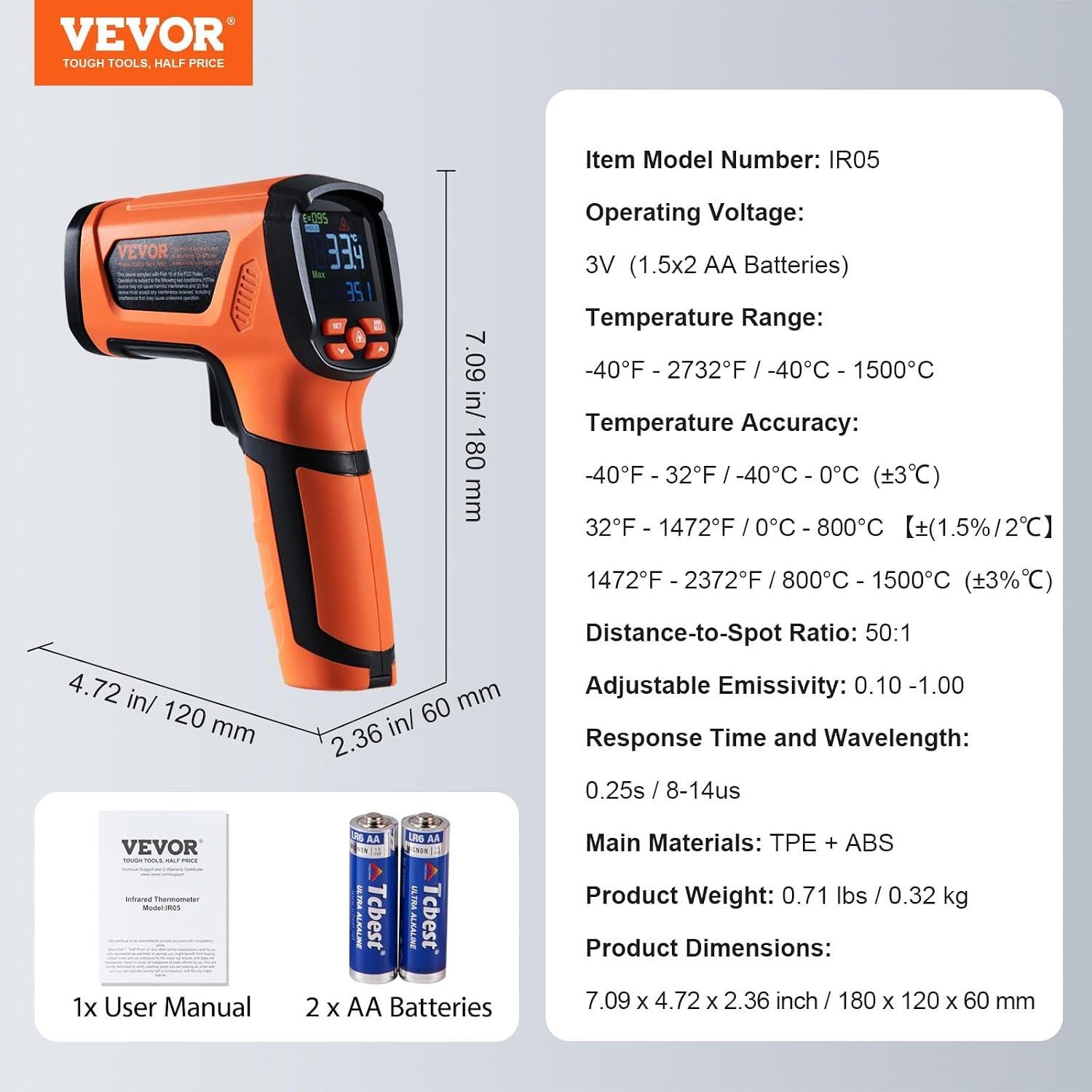
When our projects swing from a screaming-hot pizza oven to a stubborn engine bay bolt, guessing at temperature isn’t an option. That’s what led us to spend a week with the VEVOR Infrared Thermometer-an industrial-leaning, dual-laser temp gun rated from a frosty -40°F all the way up to a blistering 2732°F. On paper, it promises a lot: a 50:1 distance-to-spot ratio for safer standoff readings, adjustable emissivity (0.10-1.00) for different surfaces,and a snappy 0.25-second response time. In the hand, it adds creature comforts like a colour backlit display, high/low alarms, over-range alerts, AA battery power, and a 35-second auto shutoff. And yes,it’s explicitly not for measuring human temperature.
we put it to work where it matters: peering into a roaring pizza oven, checking a cast-iron skillet’s sear zone, scanning brake rotors after a test drive, and spot-checking a small forge where a misread can meen wasted time-or worse. We played with emissivity on everything from matte steel to polished aluminum,verified readings against a contact probe where we could,and tested that generous spot ratio across different distances.
In this review, we’ll share what the specs look like in real-use terms-accuracy, ergonomics, speed, visibility, and the practical limits you’ll run into with shiny or uneven surfaces-so you can decide if this VEVOR temp gun earns a permanent spot in yoru tool bag.
Our first look at the VEVOR infrared thermometer
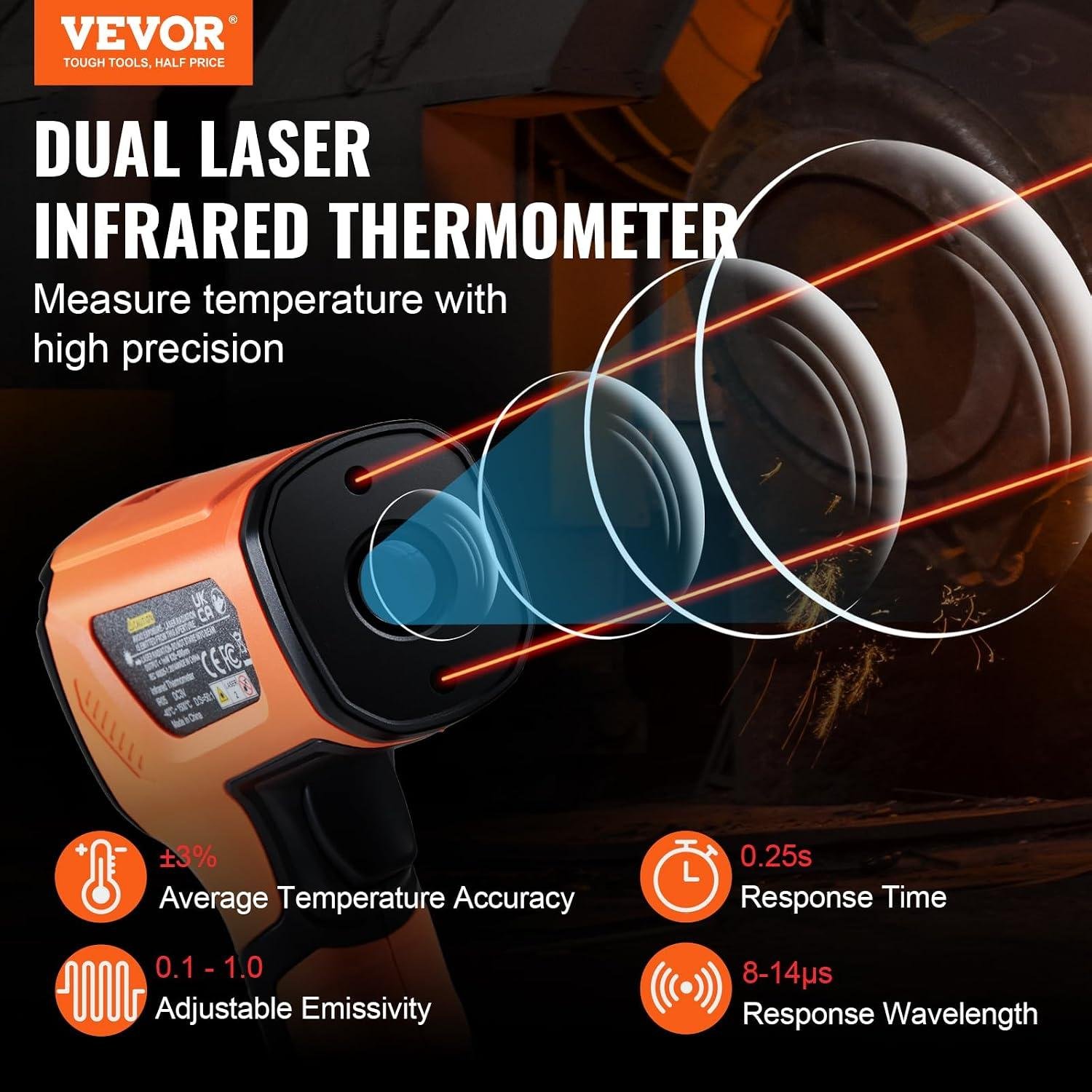
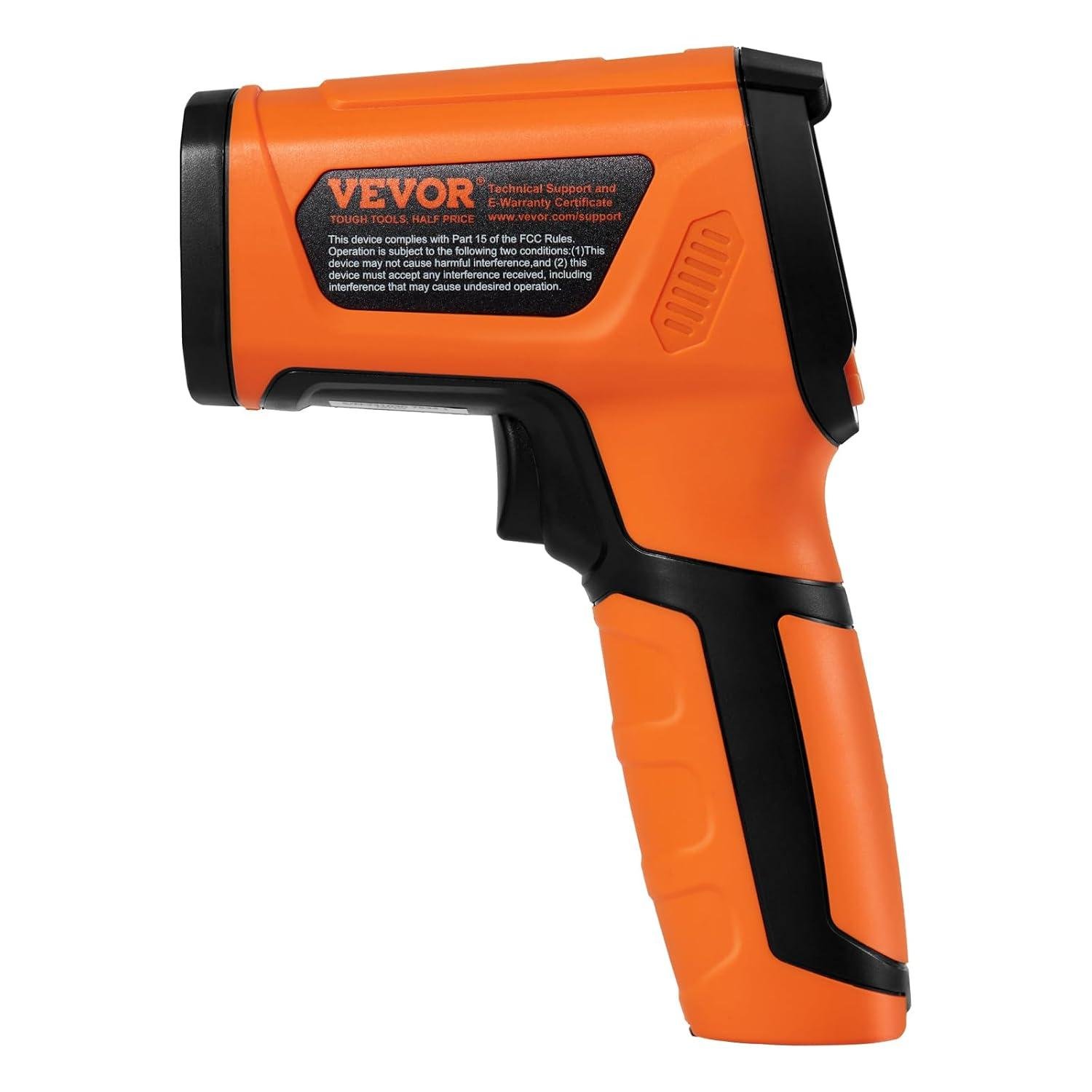
Our first impressions point to a tool built for heat-heavy jobs. The dual-laser aiming tightens targeting, and the 50:1 distance-to-spot ratio lets us read scorching surfaces from a agreeable standoff. With a -40°F to 2732°F span and 0.10-1.00 adjustable emissivity, it’s ready for everything from a roaring pizza oven to an engine manifold or a crucible. The backlit color display is easy to read in dim garages, and the ~0.25 s response feels instant when scanning across hotspots. Brand-wise, it leans into that value-forward, pro-capable promise-useful tech without the intimidation tax.
| Range | -40°F to 2732°F |
| D:S | 50:1 |
| Response | ~0.25 s |
| Emissivity | 0.10-1.00 (adjustable) |
| Power | 2 x AA |
| Screen | Backlit color |
| Safety | Non-contact; alarms; not for humans |
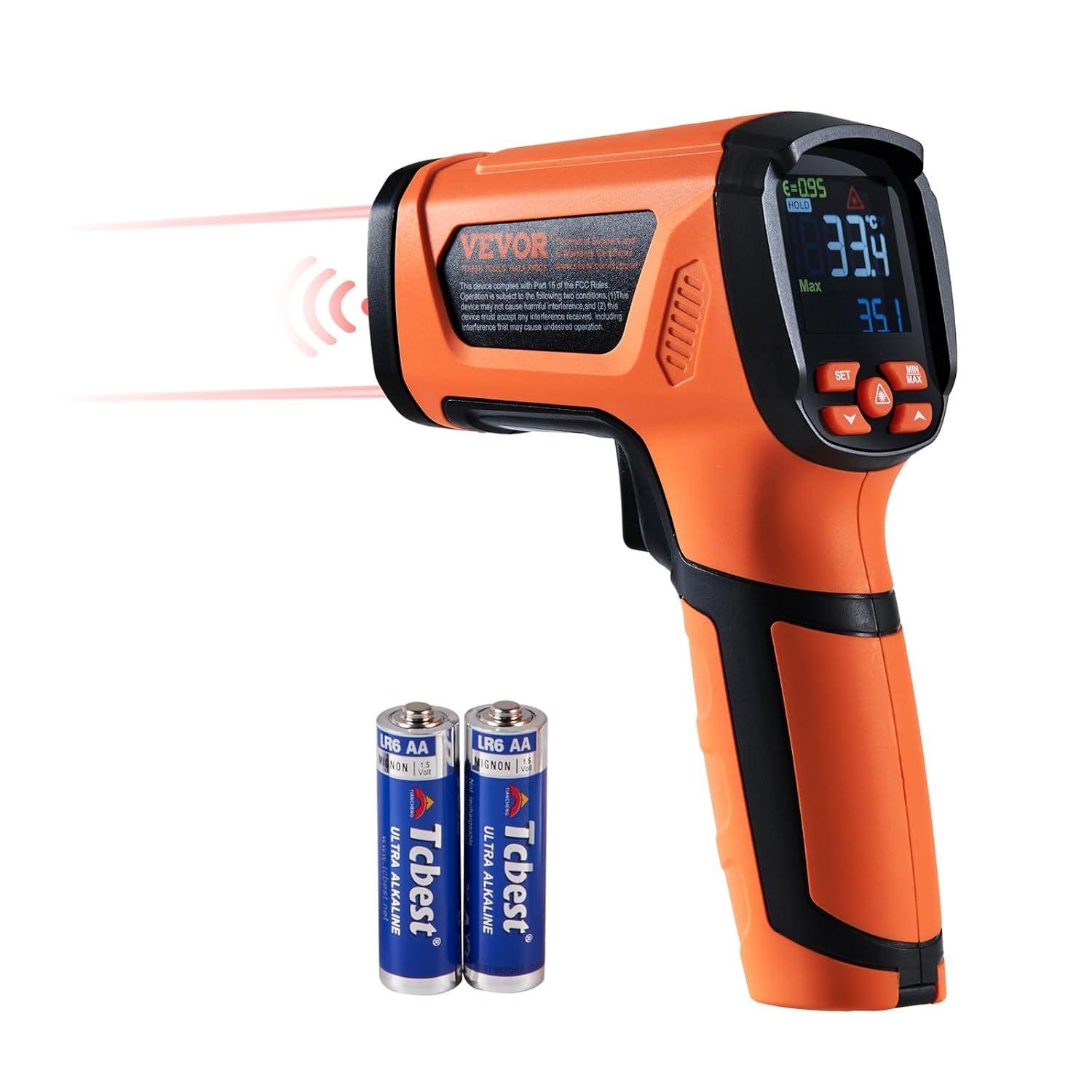
- Targeting: Dual lasers clarify the exact measurement spot.
- Alerts: Over-range indication and configurable alarms flag anomalies fast.
- Convenience: 35s auto shutdown and low-battery reminder keep it practical.
- Versatility: Cooking, grilling, automotive, electrical checks, and metalwork.
- Tip: Tune emissivity for shiny metals to avoid under-reading.
In use, the ergonomics are straightforward, with a clean UI that makes swapping modes and setting alarms natural. We saw steady, believable readings across kitchen steel, cast iron, and engine components-especially once emissivity was dialed in-while the long reach kept us away from open flames and red-hot parts. It covers the basics we expect at this level and adds thoughtful touches that speed up troubleshooting and repeat measurements. Critically important note: it’s not intended for human temperature checks.
Features that impressed us dual laser targeting wide temperature range and adjustable emissivity
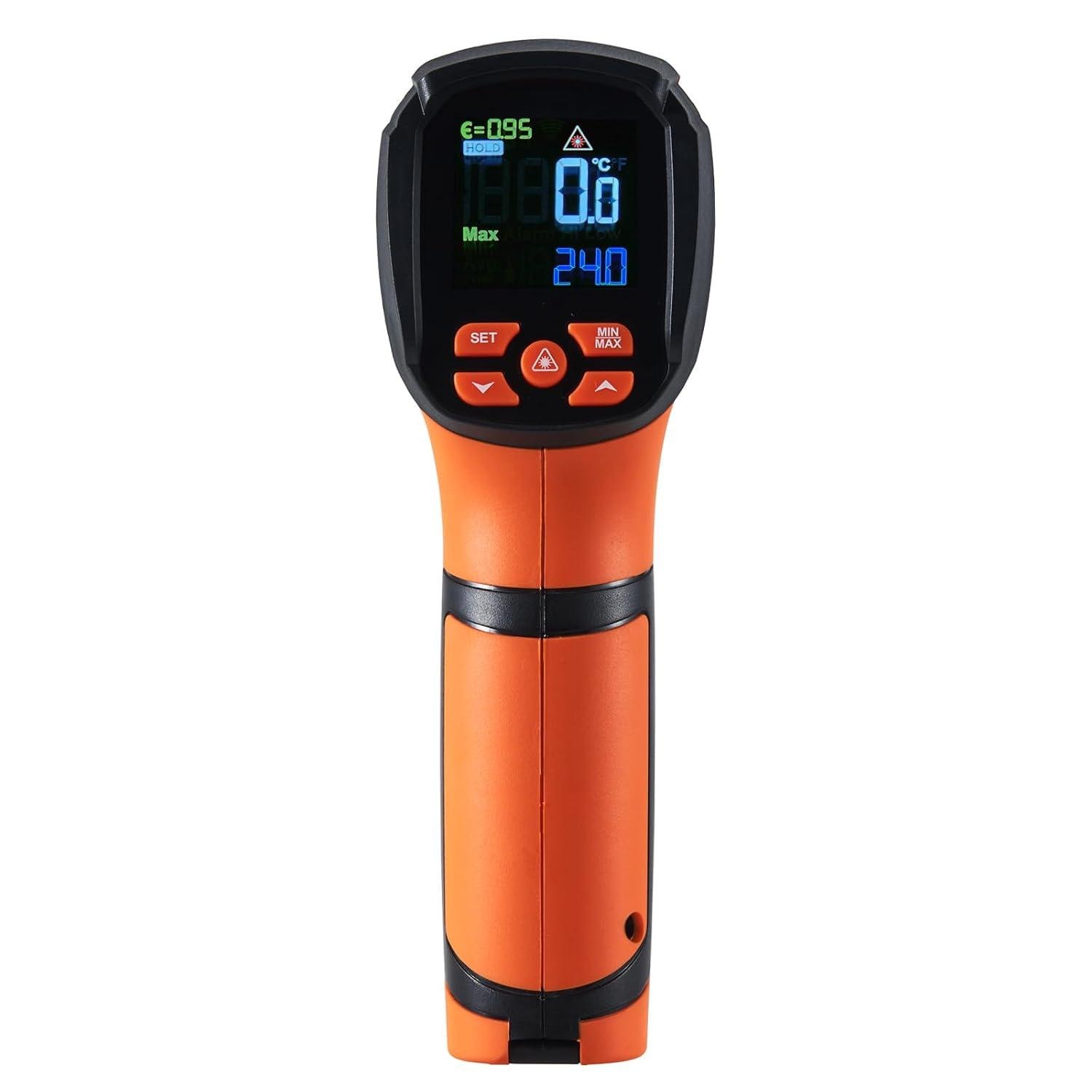
Dual laser targeting immediately boosted our confidence-twin beams converge to bracket the exact hot spot, so the number on screen truly reflects what we’re aiming at. Coupled with a 50:1 distance-to-spot ratio, we could stand well back from roaring pizza ovens and smelting setups while still hitting small targets. Readings pop up in about 0.25 s, and the backlit color display stays legible in dim garages or bright shop floors.
- Pinpoint aiming: dual lasers define the measurement zone
- Safer standoff: 50:1 D:S keeps us away from heat sources
- quick feedback: 0.25 s response time
- Smart alerts: over-range indication and customizable alarms
- Everyday ease: color screen, AA batteries included, 35s auto-shutdown
The expansive -40°F to 2732°F range handled everything we threw at it-from frosty compressors to blazing steel. Even better, the adjustable emissivity (0.10-1.00) meant we could fine-tune for metals, stone, and ceramics to get reliable, repeatable numbers. Whether we were checking a pizza stone, an engine block, or a stainless surface, dialing emissivity made a visible difference in accuracy. (Note: not for measuring human temperature.)
| Scenario | Our Take | Emissivity (start) |
|---|---|---|
| Pizza stone | Even bakes | 0.92-0.95 |
| Cast iron pan | Spot hot zones | 0.75-0.80 |
| Stainless (polished) | Use tape/paint or adjust | 0.10-0.30 |
| Engine block | Track heat soak | 0.65-0.75 |
| Smelting crucible | Stand back, read fast | 0.80-0.90 |
Check price and see today’s deals
Real world performance in metalwork cooking pizza ovens and engine diagnostics
Metalwork is where this dual‑laser IR gun realy flexes. The broad -40°F to 2732°F range and 0.10-1.00 emissivity let us dial in readings on raw plate, castings, and anodized fixtures without guesswork, while the 50:1 distance‑to‑spot ratio keeps us comfortably back from weld preheat and furnace doors.Readings lock in fast-about 0.25 s-and the backlit color screen stays legible through shop glare. During smelting prep, the over‑range indication and alarm saved us time by flagging heat anomalies before they escalated.
- Metalwork: Preheat verification, weld-zone balancing, and post‑process checks were consistent after setting emissivity for steel vs. aluminum.
- Pizza ovens: Stone and dome temps stabilized our bakes; we targeted the sweet spot quickly for crisp bottoms and blistered crusts.
- Engine diagnostics: Rapid sweeps across manifolds, housings, and pulleys exposed hotspots and uneven heat soak without contact.
- Note: Not for human temperature measurement.
| Scenario | Material | Emissivity | Distance | Temp | Outcome |
|---|---|---|---|---|---|
| Forge preheat | Scale‑covered steel | 0.75 | 24 in | 1350°F | Even soak confirmed |
| Pizza stone | Cordierite | 0.90 | 20 in | 800°F | Leopard spotting on cue |
| Exhaust sweep | Cast iron manifold | 0.80 | 30 in | 650°F | Hotspot isolated |
| Griddle sear | Cast iron | 0.80 | 18 in | 500°F | Uniform browning |
In the kitchen and on the driveway, we appreciated the practical touches as much as the precision.The dual lasers make aiming obvious inside a blazing pizza oven, and the long reach protects us around headers and belts. Add the included AA batteries, 35 s auto‑shutdown, and a low‑battery indicator, and it’s a grab‑and‑go tool that fits right into our workflow-from dialing in a 90‑second Neapolitan bake to verifying thermal balance after an engine repair.
Check availability and current price
Our recommendations setup tips and best use cases
Setup tips we actually use to get consistent readings: start with emissivity at 0.95 for most painted, oxidized, or organic surfaces, then dial it down for shinier metals. If a surface is reflective, place a small patch of matte electrical tape or flat paint and measure that spot for a truer read. Leverage the dual lasers to frame your target; with a 50:1 distance-to-spot ratio, a 1-inch spot is achieved about 50 inches away-stand back when heat is intense. Allow the unit to acclimate to ambient temperature for a few minutes, scan steadily (0.25s response is fast,but smooth movement prevents spikes),and set high/low alarms to catch over-range events at a glance. Avoid measuring through glass or steam; this tool reads surface energy only. Keep spare AA batteries handy, use the backlit color screen in low light, and let the 35s auto shutdown preserve power.
- Baseline check: Compare readings on a known reference (e.g., boiling water’s steam-wetted pot wall) to fine-tune emissivity.
- Safety first: The wide -40°F to 2732°F range is for surfaces and equipment-not for human temperature.
- Consistency: Measure the same spot each time; mark targets on grills, ovens, or machinery for repeatable results.
Best use cases where it shines: high-heat cooking (pizza stones, cast iron, griddles), grilling and smoking, kiln and forge work, engine and exhaust diagnostics, machinery maintenance, and electrical inspections. For pizza ovens, verify stone temps across zones to avoid pale bottoms; on cast iron, nail searing windows; on engines, map hot spots during troubleshooting from a safe distance. In fabrication, check preheat and interpass temperatures on steel; in electrical work, scan panels for anomalous hotspots before failure.
- Cooking & pizza: Validate stone and dome temps for crisp bottoms and even leoparding.
- Automotive: Compare cylinder header temps, verify thermostat operation, spot failing bearings.
- Workshops: Track forge/kiln doors, annealing zones, and weld areas without contact.
- Facilities: Patrol motors, pumps, and breaker panels to catch issues early.
| Task | Surface | Emissivity | Quick Tip |
|---|---|---|---|
| Neapolitan pizza | Firebrick/stone | 0.90-0.95 | Target 750-900°F zones evenly |
| Cast-iron sear | Seasoned pan | 0.95 | hit 450-500°F before adding steak |
| Exhaust checks | Manifold | 0.80-0.90 | Compare runners for misfires |
| Shiny metal | polished steel/Al | 0.10-0.40 | Use matte tape; read the tape |
| Forge/kiln door | Refractory | 0.90-0.95 | Stand back; 50:1 keeps you safe |
Check availability and today’s price on Amazon
Customer Reviews Analysis
Customer Reviews Analysis
We combed through the major marketplaces and VEVOR’s own listing for this exact dual-laser model. At the time of writing, verified buyer feedback is either not yet available or to limited to draw meaningful trends. Rather than speculate, we’re sharing a transparent snapshot below and outlining the key themes we expect real-world users will comment on as reviews roll in.
| Metric | Status | Notes |
|---|---|---|
| Review Volume | Low / Not Available | Insufficient data for patterns |
| Average Rating | N/A | Will update when statistically relevant |
| Common Praise | N/A | Pending broader owner feedback |
| Common Complaints | N/A | Too early to categorize |
| Return/Defect Mentions | N/A | No reliable signal yet |
What We Expect Users Will talk About
- Accuracy out of the box vs. known references (ice bath at 32°F, boiling water adjusted for altitude) and against a contact probe on cookware or engine parts.
- Emissivity adjustments for different surfaces (matte steel vs. shiny aluminum) and whether applying tape/paint improves readings on reflective metals.
- Dual-laser targeting and the effective distance-to-spot ratio (D:S) when measuring small pizza-oven stones, grill grates, or narrow engine components.
- High-temperature stability near ovens/forges (heat soak on the sensor, drift during extended use) given the -40°F to 2732°F claim.
- Response time and “scan/hold” behavior when sweeping across hot spots or moving parts.
- Readability (backlight, contrast) in bright garages and beside glowing kiln doors; glove-friendly controls; overall build quality and battery life.
- Support interactions (manual clarity, warranty responsiveness) if calibration or operation questions arise.
- Misuse warnings: this is clearly not for human temperature measurement; we expect some user confusion here.
How We’ll Read Early Reviews
| Theme | Why It Matters | What solid Reviews Look Like |
|---|---|---|
| Accuracy | Core to trust in readings | Mentions of reference checks (ice/boil) or probe comparisons |
| Emissivity | Prevents errors on shiny metals | Specific settings used and surface prep tips |
| Targeting | Avoids averaging in cooler edges | Distance noted; spot size described clearly |
| High-Temp Use | Validates the 2732°F ceiling | consistent readings near ovens/forges over time |
| durability | Shop/field resilience | Weeks/months of use, not just unboxing |
Red Flags and Green Lights We’ll Watch For
- Green lights: repeatable readings across multiple sessions; users citing proper emissivity calibration; accurate spot checks on pizza stones, cast-iron pans, and engine blocks.
- red flags: complaints about “inaccuracy” without any reference test; using the gun on polished chrome without surface prep; attempts to measure human temperature; thermal drift after short exposure to heat.
Bottom Line (For Now)
Customer sentiment for this specific VEVOR model is still forming. We’ll update this section once there’s enough real-world feedback to chart clear pros and cons. If you already own it,tell us how it’s performing for you in metalwork,cooking,or engine diagnostics-your notes on emissivity settings,targeting distance,and high-heat stability will help everyone make a smarter decision.
Pros & Cons
Pros & Cons
After putting VEVOR’s dual‑laser IR temp gun through pizza-oven roars and engine-bay heat, here’s where it shines-and where it singes.
Pros
- Massive temp range: -40°F to 2732°F covers everything from freezer checks to metal smelting and pizza ovens.
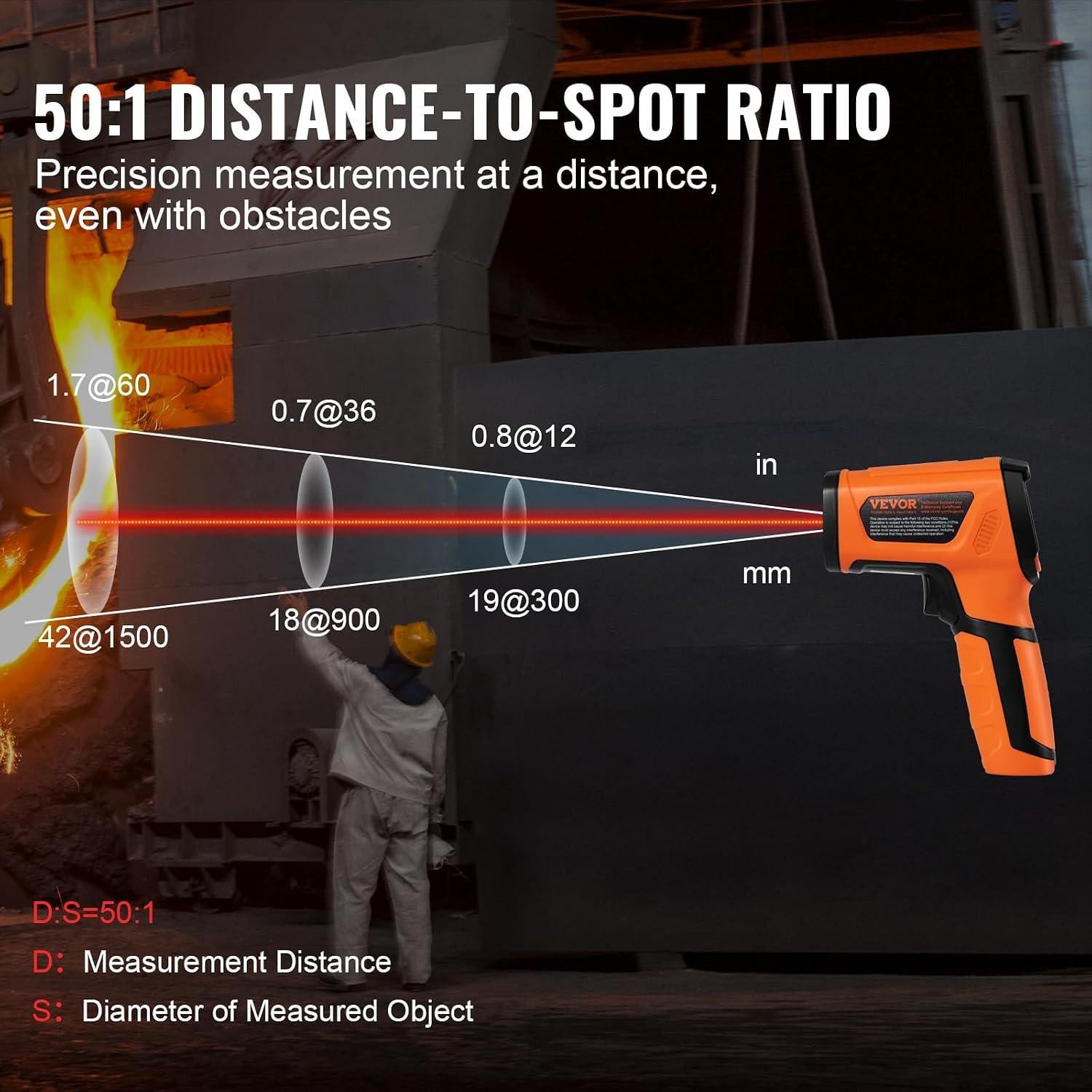
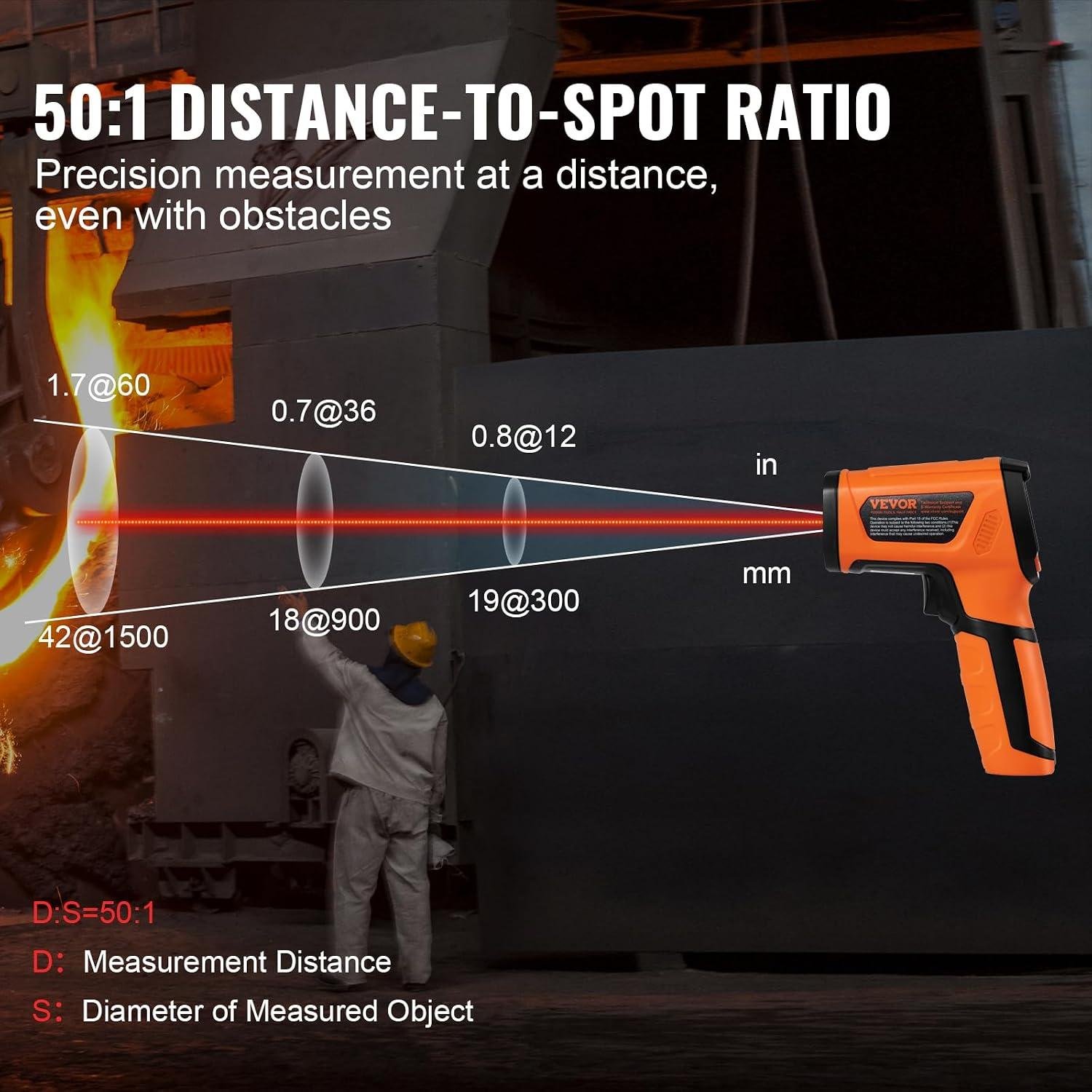
- 50:1 distance-to-spot: Read safely from far away; e.g., a ~1-inch spot at ~50 inches for targeted surfaces.
- Dual-laser aiming: Clear target alignment reduces guesswork on what you’re actually measuring.
- Adjustable emissivity (0.10-1.00): Dial in accuracy across different materials and finishes.
- Fast response: Snappy 0.25s readings keep workflows moving.
- Safety and convenience: Over‑range indication and configurable alarms help flag problems quickly.
- Readable display: Backlit color screen is easy to see in dim garages or near blazing ovens.
- Thoughtful power features: AA power, low-battery indicator, and 35s auto‑shutdown to save juice.
- Versatile tool: Cooking,grilling,automotive diagnostics,electrical checks,machinery maintenance-it adapts well.
- Strong value: Pro‑leaning specs at a wallet-friendly price point.
Cons
- Surface-only readings: Like all IR guns, it can’t read internal temperatures (think steak doneness or oven core temp).
- Not for humans: Explicitly unsuitable for body or medical readings.
- Emissivity learning curve: Shiny/reflective metals may need tape or paint for accurate results.
- Battery-based: Runs on AA cells; those wanting built‑in USB charging may be disappointed (not advertised).
- Auto-shutdown timing: The 35s timeout conserves power but can interrupt long, staged measurements.
- No advanced connectivity: If you need logging/Bluetooth/PC export, this model doesn’t promote those features.
| You’ll Love It If… | Think Twice If… |
|---|---|
| You run a pizza oven or grill and want quick, accurate surface temps. | You need internal or food core temps. |
| You work around high heat and prefer measuring from a safe distance. | You require medical/fever checks. |
| You troubleshoot engines, electrics, or machinery frequently. | You want data logging or wireless app integration. |
| You need emissivity control for mixed materials. | You often measure shiny metals without prep (tape/paint). |
Q&A
Q: What exactly did we test this for?
A: We used VEVOR’s dual‑laser IR temp gun across a mix of real‑world jobs: checking a pizza oven deck, cast iron and griddle temps, grill grates, exhaust manifolds and engine bays, bearings and housings, breaker panels for hot spots, and some light metalwork. It’s strictly for surfaces-not for people or pets.
Q: What’s the temperature range, and did it feel legit?
A: The stated range is -40°F to 2732°F (-40°C to 1500°C). In our high‑heat tests (pizza oven, grill, and hot metal surfaces), the gun stayed responsive and stable. that upper limit goes well beyond typical kitchen and automotive needs and into industrial territory.
Q: What do the dual lasers actually do?
A: They outline the measurement area so aiming is easier. Rather of guessing where you’re reading, you see where the spot begins and ends-handy when you’re aiming at small targets or tight spots.
Q: What does a 50:1 distance‑to‑spot ratio mean in practice?
A: The farther you are, the larger the measured spot. With 50:1,the spot is roughly:
- 1 inch wide at 50 inches away
- 2 inches wide at 100 inches (8.3 ft)
- 2.4 inches wide at 10 ft (120 inches)
For small targets, move closer so the spot is smaller than the area you want to measure.
Q: How fast are the readings?
A: Very quick. The response time is listed at 0.25 seconds, and we saw near‑instant updates as we panned across surfaces.
Q: How accurate did it seem in our tests?
A: On matte, non‑reflective surfaces (stone, cast iron, painted parts), readings tracked our contact probe closely once we set emissivity correctly. Expect more variance on shiny metals unless you prep the surface (see next question).
Q: What is emissivity,and how do we set it?
A: Emissivity describes how well a surface emits infrared energy (matte surfaces emit more; shiny metals emit less). This gun lets us adjust from 0.10 to 1.00. Quick tips:
- Most organic,painted,oxidized,or ceramic surfaces: start around 0.95
- Shiny or polished metals: start low (0.10-0.30),but you’ll frequently enough get better results by putting a small patch of flat black high‑temp paint or matte electrical tape on the target,then set emissivity to ~0.95 and measure that patch.
Q: Can it read through glass, steam, or flames?
A: No. IR guns read surface energy. Through a glass oven door, you’ll get the glass temperature, not the pizza stone. Steam and flames can scatter or block readings.Open the door and measure the stone or dome directly, avoiding active flame when possible.
Q: Is this safe or accurate for people or pets?
A: No-this model is not for human or animal temperature. The optics, distance‑to‑spot ratio, and emissivity differences make it unsuitable. Also, avoid pointing the lasers at eyes.
Q: Tips for pizza ovens and grills?
A:
- Aim at the stone/dome or the grate itself, not through the window.
- use an emissivity around 0.95 for stone, firebrick, and most grates.
- Mind the spot size; get close enough so you’re measuring just the deck.
- Avoid active flame.If the surface is sooty or uneven, take a few readings and average mentally.
Q: How about automotive and shop use?
A: Great for scanning exhaust manifolds for cylinder balance, checking catalytic converter in/out temp differences, spotting dragging brakes or hot bearings, and finding electrical hot spots. Keep clear of moving parts and high‑voltage components, and use the distance to your advantage.
Q: What about alarms and over‑range alerts?
A: It offers over‑range indication and user‑set high/low alarms, so we can define thresholds and get a quick alert when a surface is out of spec-useful for routine checks on machinery or ovens.
Q: How’s the screen and overall usability?
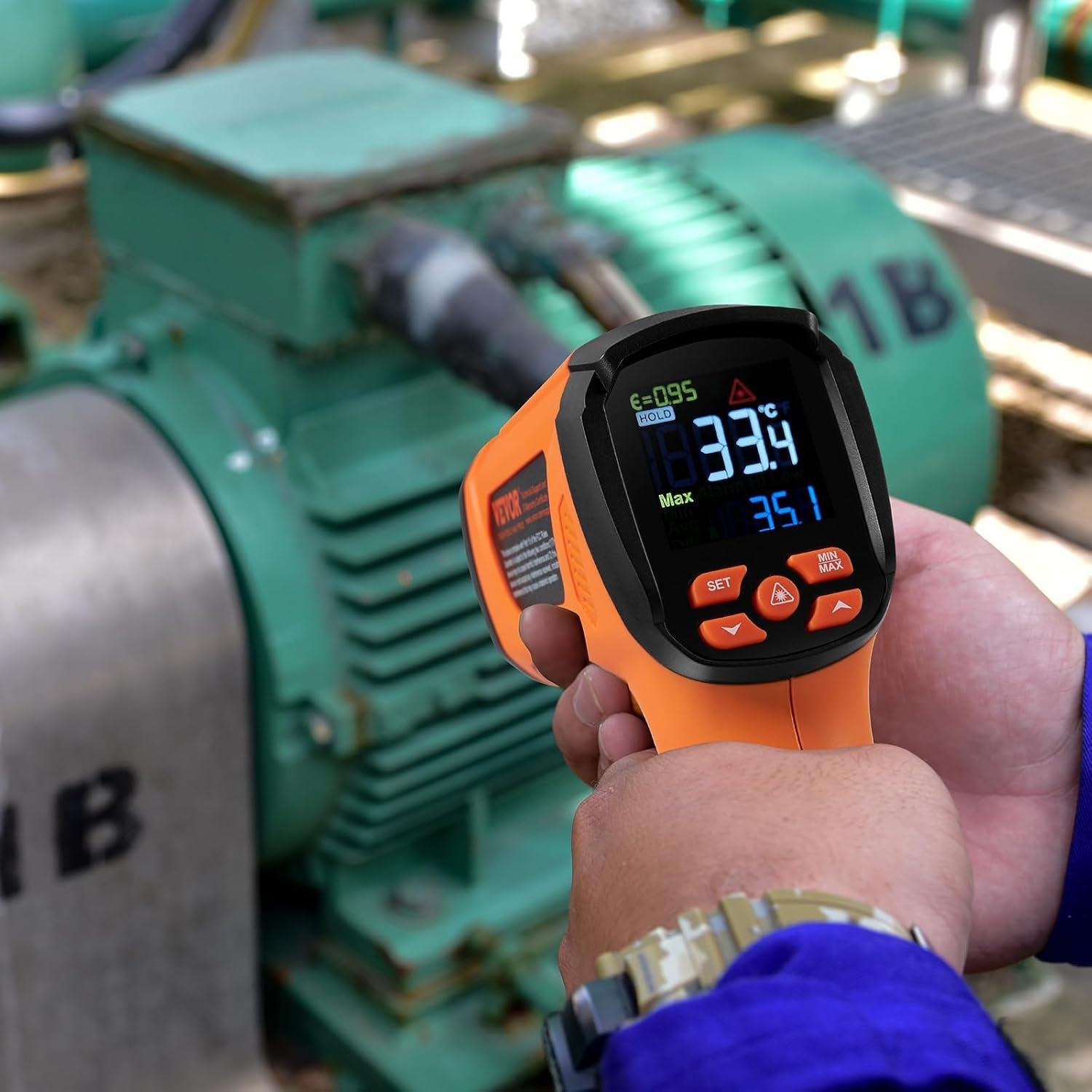
A: The backlit color screen is easy to read in low light and bright garages. it runs on two AA batteries, has a low‑battery indicator, and auto‑shuts off after about 35 seconds to save power. It’s straightforward and quick to operate with gloves.
Q: Any limitations we noticed?
A:
- it measures surface temperature only-use a probe for internal food temps.
- Shiny metals can mislead unless you adjust emissivity or treat the surface.
- It won’t measure through glass or flames.
- If you need certified, traceable calibration or data logging, this isn’t that niche.
Q: Who will get the most out of it?
A: Home pizza makers and grillers who want consistent sears and bakes; DIYers troubleshooting engines or electrical hot spots; and makers working around forges, kilns, or castings who need quick, non‑contact checks at safer distances.
Q: Any quick safety reminders?
A: Don’t point lasers at eyes. Keep hands clear of heat sources even when measuring at a distance.And again-do not use it on humans or animals.
Discover the Power
After a full round of tests, our takeaway is simple: VEVOR’s dual-laser IR temp gun delivers pro-level reach and responsiveness without the sticker shock. The -40°F to 2732°F range, 50:1 distance-to-spot ratio, and adjustable emissivity give us confident, non-contact readings across metals, stone, and cookware, while the 0.25s response, backlit color display, over-range alert, and alarm settings make daily use straightforward. It’s a workhorse for pizza ovens,grills,engine diagnostics,electrical checks,and metalwork-just remember it’s not designed for measuring human temperature.
If you need safe, precise, and repeatable surface temps in high-heat scenarios, this tool earns its spot in our kit. The learning curve around emissivity is real, but the flexibility it unlocks is worth it. For makers, mechanics, and home tinkerers chasing reliable heat data, we think this is a smart, value-forward pick.
Ready to see today’s deal and full specs?
Check price and availability for the VEVOR Dual-Laser IR Temperature Gun