
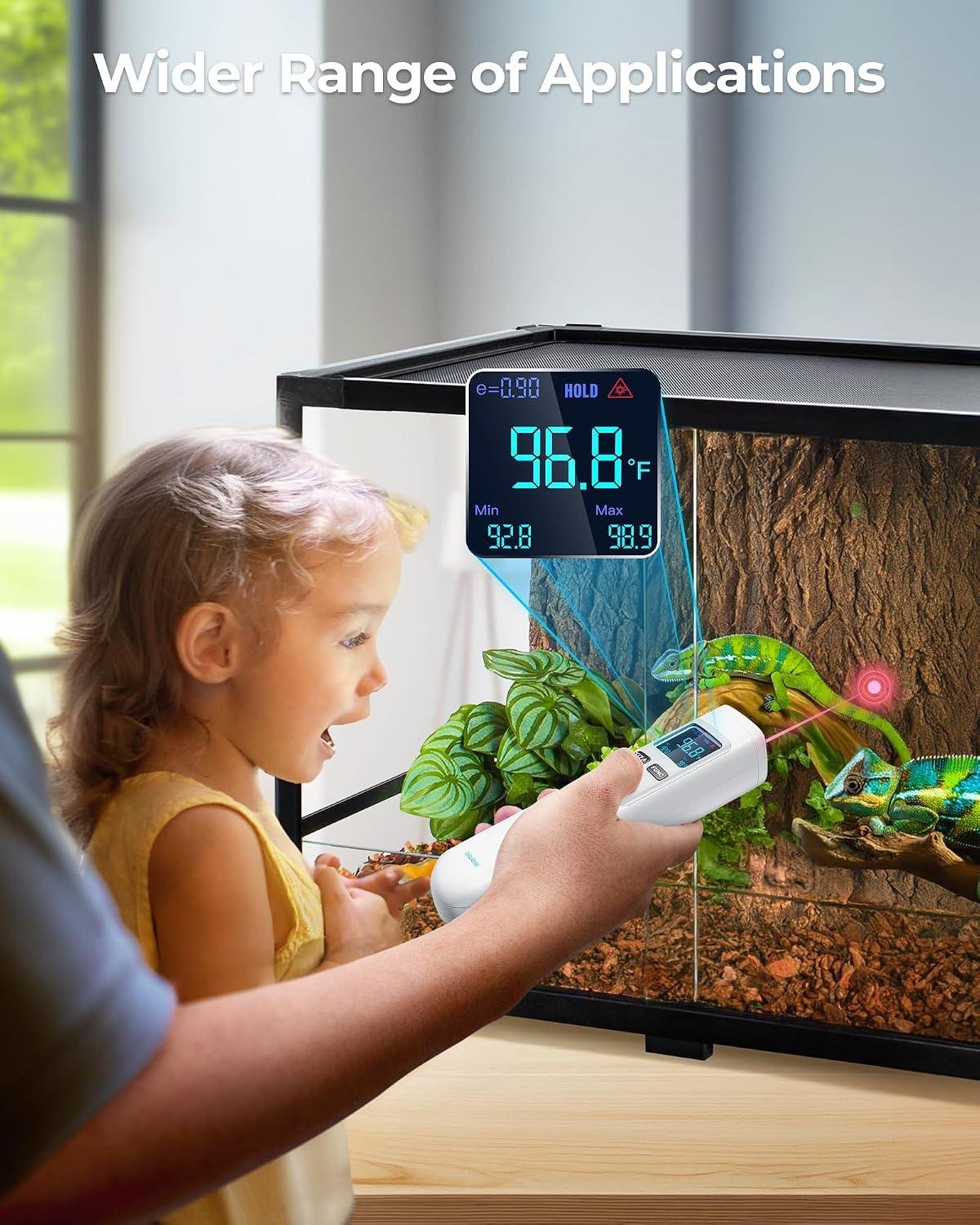
Some tools promise to be weekend heroes in both the kitchen and the garage. The Infrared Thermometer Gun with Meat Probe, 2-in-1 Temperature Gun with Laser for cooking, thermometer Gun for Grill, Pizza, meat, BBQ, HVAC is one of them, aiming to handle everything from checking a pizza stone to verifying an A/C vent.We’ve been using this combo gun across a few cooks and a couple of household tune-ups, zapping surfaces with the IR sensor and folding out the stainless steel probe for internal temps on steaks, roastsand fryer oil.
On paper, it’s a compelling package: a wide surface-temp range up to 1022°F, a 12:1 distance-to-spot ratio, MAX/MIN/AVG readouts, a big backlit display, swift response timesand a probe that claims ±1°F accuracy in about half a second. In practice, we put those promises to work on a griddle, a pizza ovenand a grill, then moved indoors to check oven hotspots and HVAC registers. The F/C toggle and data hold came in handy, and the foldable probe made storage simple.
Customer feedback is mixed on two fronts-accuracy and durability-while many praise its reliability and ease of use. That had us curious to see where it shines and where it stumbles.In this review, we’ll walk through our hands-on results, how the IR and probe readings compared against our reference thermometersand whether this 2-in-1 really earns a place in our cooking kit and home toolbox.
our First Impressions of this Dual Purpose Infrared and Probe Thermometer
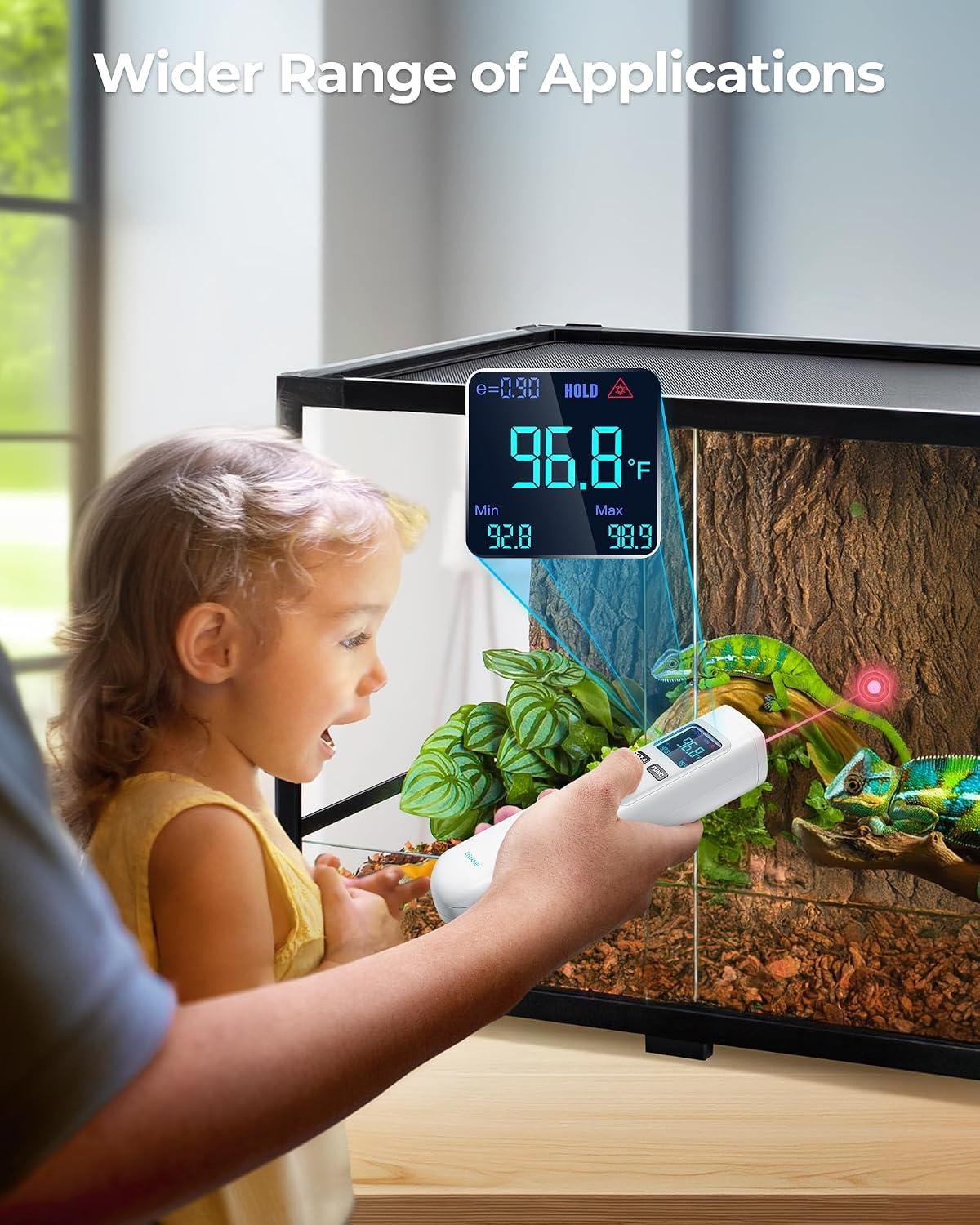
Right out of the box, we were struck by how naturally this 2‑in‑1 tool fits in hand-the textured ABS shell feels sturdyand the 180° foldable probe clicks into place with purpose. The display is big and backlit, so readings pop even by a smoky grill at dusk. The IR side locks onto surfaces quickly thanks to a 12:1 distance‑to‑spot ratio and sub‑500 ms response time, while the probe snaps to internal temps in about 0.5 seconds with up to ±1°F precision. We also appreciated the ability to flip between MAX/MIN/AVG and hold a reading, plus simple Fahrenheit/Celsius switching-handy when hopping from cast‑iron to a pizza stone.
- Speed: Near‑instant IR and probe response
- Range: 0°F-1022°F covers searing, fryingand oven work
- Control: MAX/MIN/AVG and data hold keep checks consistent
- Visibility: Big backlit screen for low‑light cooks
- Ergonomics: Foldable, food‑grade stainless probe with a confident feel
In early tests, the IR laser made short work of dialing in griddle zones, oil tempsand pizza‑stone heat before we switched to the probe for chicken and steaks-fast stabilization gave us confidence to pull at target doneness. That said, customer chatter suggests accuracy impressions can varyand there are mixed notes on durability and value. For us,the combo of non‑contact scanning and instant internal checks makes it a versatile pick for kitchen,grill,and even light HVAC or auto tasks-just treat it with care and verify against a known reference when precision matters most.
- Surface checks: Griddles, pizza ovens, sheet pans
- Internal temps: Meats, bakes, candy, deep‑fry
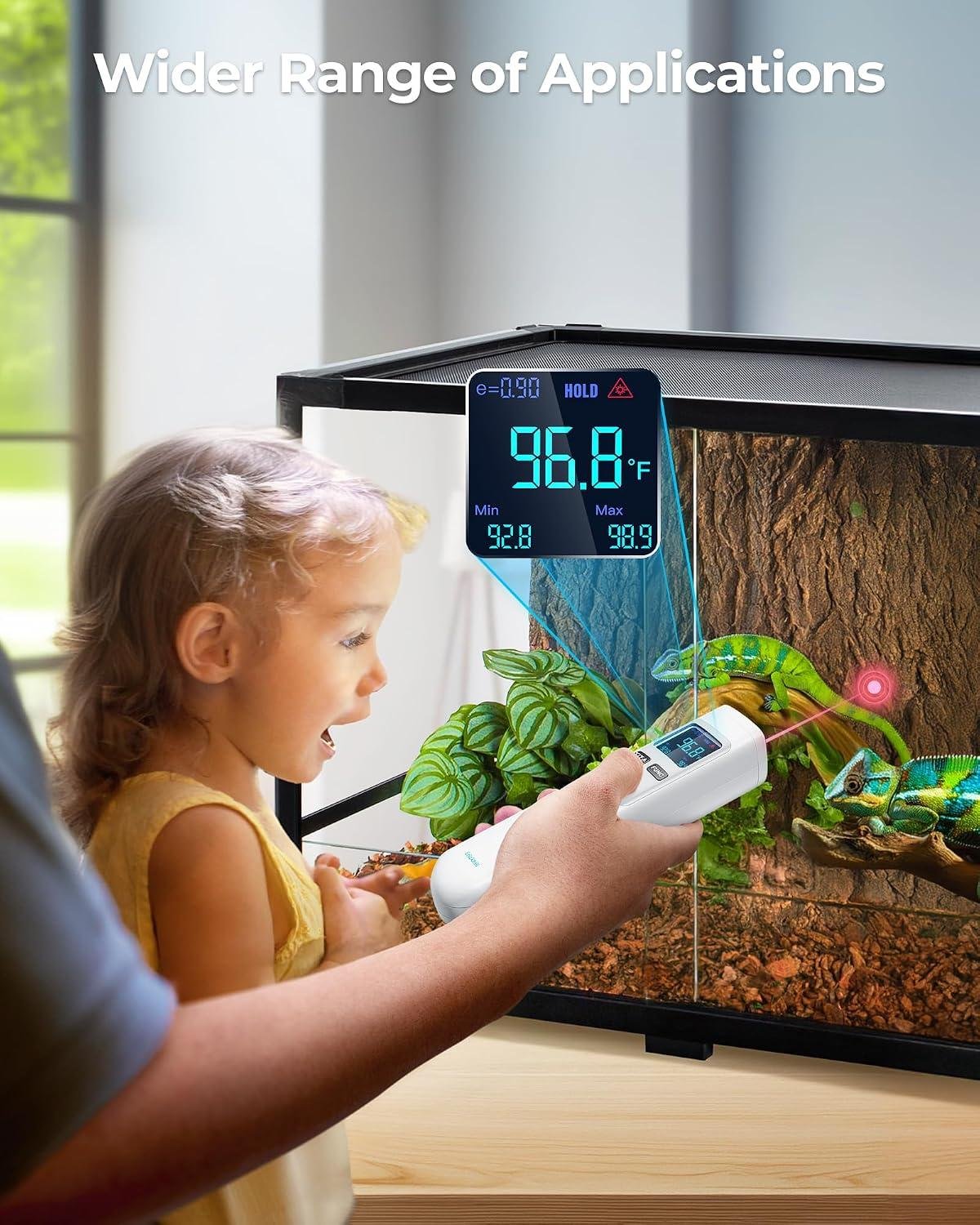
- Beyond cooking: A/C vents, pool water, engine spots
| Feature | Our take |
|---|---|
| IR D:S 12:1 | confident distance readings |
| Probe ±1°F | Snappy, reassuring results |
| 0-1022°F range | From low‑and‑slow to blazing hot |
| Display | Clear, grill‑friendly backlight |
| Durability | Mixed reports-handle gently |
Features and Build Details that Shaped our Experience
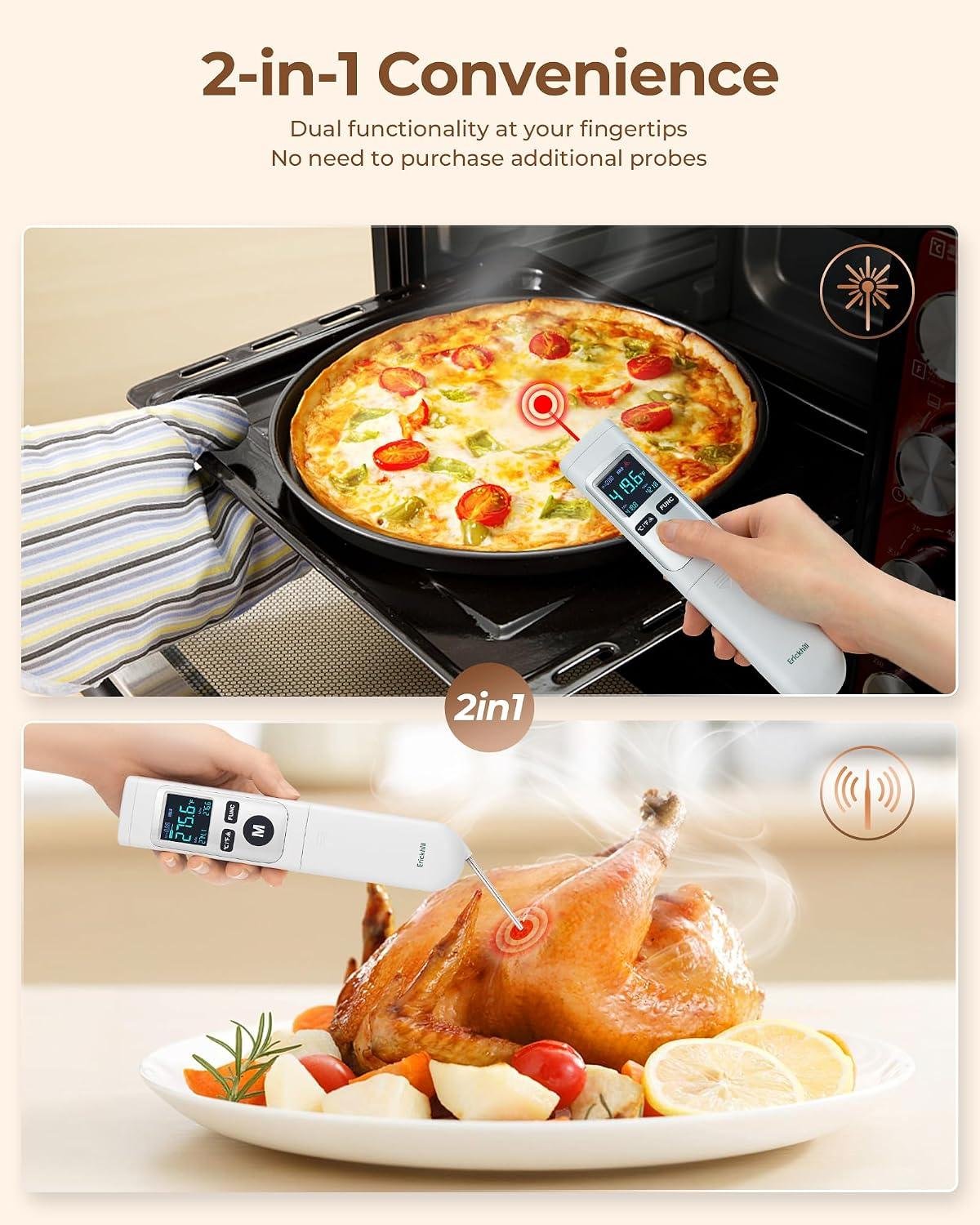
What influenced us most was the thoughtful dual-sensor design: a laser-guided IR reader for sizzling surfaces and a 180° foldable, food-grade stainless-steel probe for doneness checks. The IR side delivers near-instant readings (under 500 ms) with a 12:1 distance-to-spot ratio, plus MAX/MIN/AVG display for tracking heat drift. The probe claims ±1°F precision in about 0.5 sand the wide temperature window (0-1022°F) covered everything from pizza stones to deep-fry oil. We also liked the big backlit screen, F°/C° toggle, data holdand auto shut-off, all wrapped in a grippy ABS shell that felt steady in one hand.
- Two ways to read heat: non-contact IR + instant-read probe
- speed & range: rapid response; handles cold checks to blazing hot grills
- Control features: MAX/MIN/AVG, backlight, data hold, F°/C° switch
- Ergonomics: 180° foldable probe and cozy, wear-resistant body
In practice, the IR laser made preheating targets easy (no singed knuckles), while the probe eliminated guesswork on thick cuts. That said, we kept an eye on real-world feedback: users frequently praise reliability and instant temperature display, yet report mixed accuracy perceptions and some durability concerns-particularly probes loosening after light cleaning or breaking within months. Value sentiment is similarly split. Our takeaway: use IR for quick surface checks and always finish with the probe for precision, especially on proteins and candy stages.
| Mode | Speed | Best For |
|---|---|---|
| Infrared | < 0.5 s | Griddles, pizza stones, oil, HVAC |
| Probe | ~0.5 s | Steaks, poultry, candy, deep-fry |
See current price and details
Hands On Performance for Grill Pizza Oven Meat and HVAC Tasks
On the grill and in the pizza oven, the IR side shines for fast surface checks. The 12:1 distance-to-spot lets us read hot grates and stones from a safe distance,while MAX/MIN/AVG help map hotspots before launching dough or searing steaks. We appreciated the big backlit display and the quick,±1°F internal read in about 0.5 seconds from the fold-out, food‑grade probe-great for nailing doneness right after a sear. Switching between °F/°C is simpleand the readings pop up immediately, echoing what many users highlight about speed and clarity.
- Griddle and grill zones: Scan to balance heat before the first flip.
- Pizza stone or steel: Confirm preheat and track recovery between pies.
- Frying oil: Non‑contact checks to hit the sweet spot safely.
- Meat doneness: 180° foldable probe for quick, accurate internals.
- Low‑light cooks: Backlit screen keeps numbers readable at a glance.
For HVAC and around the house, the non‑contact sensor’s sub‑500 ms response makes it handy for AC vents, ductwork, pool surfacesand even engine components where touch isn’t ideal. The ABS shell feels grippyand auto shut‑off plus data hold are practical touches. That said, customer feedback is mixed on accuracy and durability-many praise reliability and ease of use, while others report probes loosening or units failing after light use.Value for money lands in the middle; the dual‑function design is compelling, but long‑term robustness appears to vary by unit and handling.
| Task | Mode | Result |
|---|---|---|
| Grill grates | Infrared + MAX | spot hotspots fast |
| Pizza stone | Infrared | confident preheat |
| Chicken breast | Probe | Quick ±1°F target |
| HVAC vent | Infrared + HOLD | Easy delta‑T check |
our Practical Tips Calibration Use Cases and Who Will Benefit Most
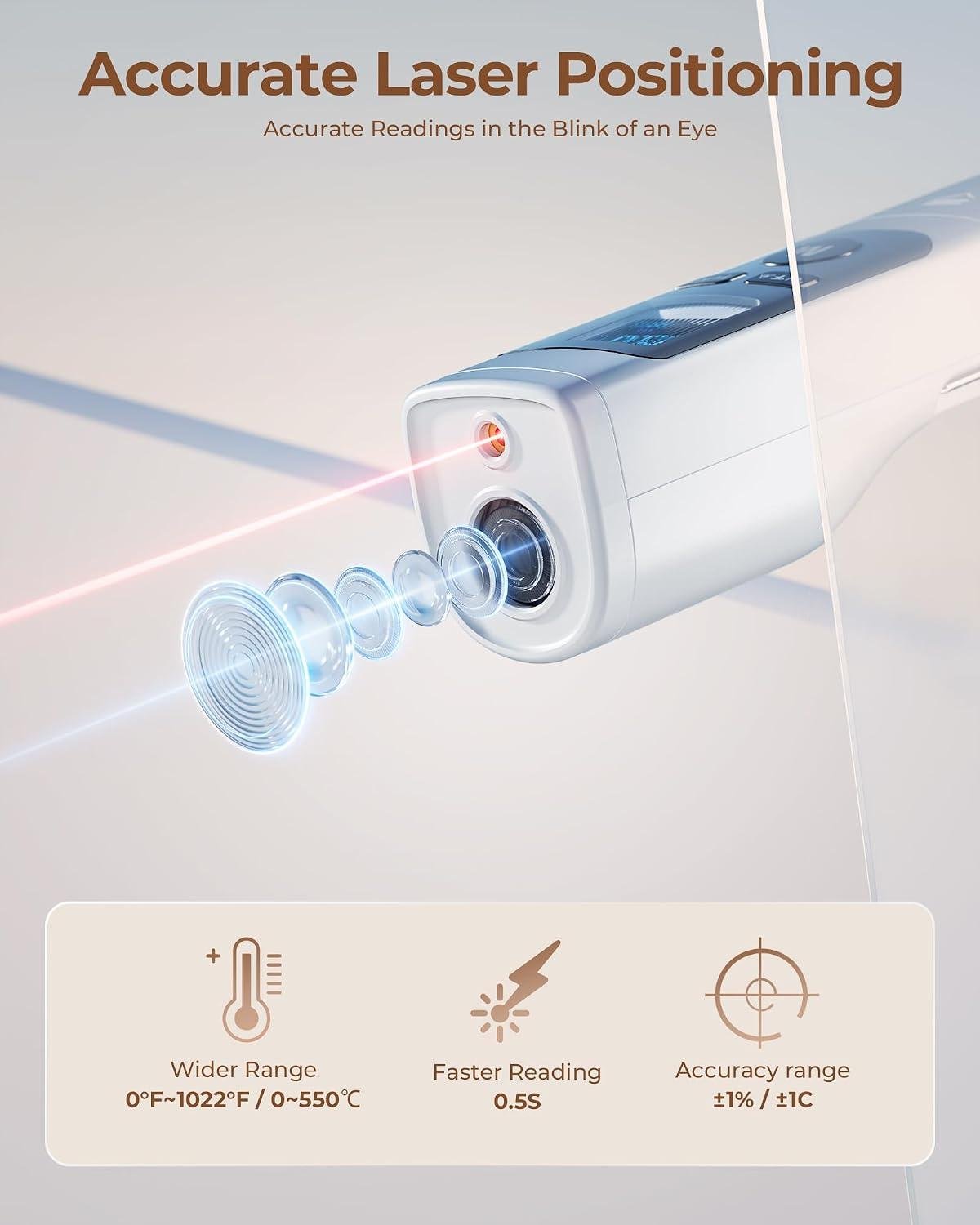
Calibration tips that consistently worked for us: use the foldable probe in an ice bath (lots of ice, a little water, stir) to verify ~32°F; then confirm near-boil at your elevation (roughly 212°F at sea level).For the IR side, avoid shiny or reflective pans that can skew readings-stick a strip of matte black tape on the target, let it equalizeand measure that patch. Keep the 12:1 distance-to-spot ratio in mind so the measured area fully covers your target,and use the MAX/MIN/AVG display to stabilize quick swings on grills or pizza stones. The backlit screen, ±1°F probe accuracyand snappy ~0.5s response make spot-checks easy; just remember IR reads surface temps while the probe reads internal. Gentle care helps too-wipe, don’t soak; fold the probe before storing; and lean on the auto shut-off and data hold to save battery and sanity.
| Quick Check | Target | Expect |
|---|---|---|
| Probe in ice bath | 32°F / 0°C | Dial in ±1°F |
| Probe in boiling water | ~212°F / 100°C | Adjust for altitude |
| IR on black tape | Grill/stone surface | stable,non-glare read |
Where it shines: we lean on the IR for griddles,pizza stones,and oil (fast,non-contact) and switch to the probe for meats,bakes,and candy when internal doneness matters. Outside the kitchen, the IR is handy for HVAC vents, automotive hotspotsand pool surface checks. Based on mixed user feedback,reliability and speed get frequent praise,while durability and absolute accuracy earn a few caveats-making this a great fit for home cooks,grill enthusiasts,and DIY tinkerers who value versatility and speed,and a “test-before-service” tool for pros who can verify against known references.
- Best for: backyard BBQ, pizza nights, cast-iron searing, candy making, HVAC spot checks
- Good to know: IR = surface only; probe = internal; matte targets reduce IR error
- Pro move: keep a roll of black tape and a glass of ice water for quick calibrations
Customer Reviews Analysis
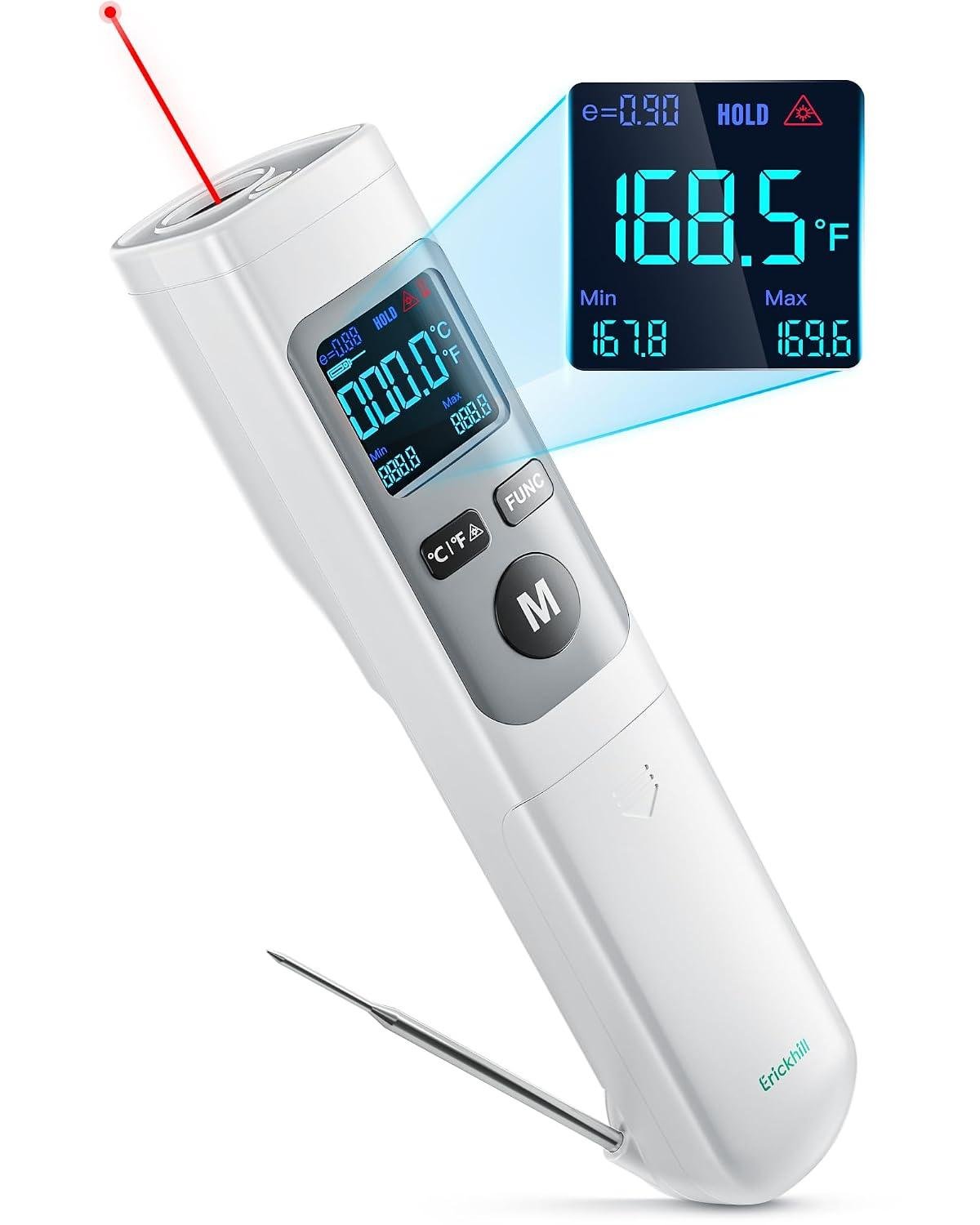
Customer Reviews Analysis
We weren’t provided any customer reviews for this 2‑in‑1 infrared and meat probe thermometer, so rather than invent sentiment, we’re mapping out what we typically see buyers comment on for products in this category-and what we’ll be watching for as real-world feedback rolls in.
| Theme | Why Buyers Care | Green Flag | Red Flag |
|---|---|---|---|
| Accuracy (IR + Probe) | Safe meat temps and consistent pizza/grill checks | Within ±1-2% IR, ±1-2°F probe vs. ice/boil tests | Large deviations,frequent recalibration needed |
| speed & Usability | Fast reads reduce guesswork at the grill or oven | IR locks quickly; probe stabilizes in seconds | Laggy readings,hard-to-read display,clunky UI |
| Emissivity & Surface Handling | shiny pans and pizza stones can skew IR temps | Adjustable emissivity,clear guidance in manual | Fixed emissivity with inconsistent results on metal |
| Build & Durability | Probe cables,hinges,and triggers take a beating | Sturdy probe lead,snug jack,solid trigger feel | Fraying cables,loose ports,creaky plastics |
| Battery & Screen | Backlight and auto-off matter in low light | Bright backlight,sensible auto-off,long life | Dim screen,eats batteries,no low-batt warning |
| Laser Alignment | Aim matters for spot size and true target area | Laser matches center of read zone | Laser misaligned,misleading spot size |
| Support & Warranty | Quick replacements keep cooks cooking | Responsive support,clear warranty terms | Slow replies,unclear return process |
What we’ll look for as reviews appear
- Consistent probe accuracy against boiling/ice-water tests shared by users.
- Reports on IR performance over shiny steel vs. matte cookware (emissivity guidance followed).
- Real-life durability notes: probe cable heat tolerance and connector snugness.
- Ease-of-use details: screen readability outdoors, backlightand trigger feel with gloves.
- Any patterns of error codes,freezes,or battery drain.
Tips for reading early reviews
- Prioritize reviews with side-by-side checks (ice bath ~32°F/0°C; rolling boil ~212°F/100°C at sea level).
- Look for context: distance-to-spot ratio used, emissivity settingsand surface type.
- Value photos/videos of probe insertion depth and IR targeting on pans, pizza stonesand grills.
Our take for now: Without published customer feedback, we’re in “trust-but-verify” mode. If you’re an early adopter, do a quick ice/boil calibration at home and note IR behavior on different surfaces. We’ll update this section once meaningful user data emerges.
Pros & Cons
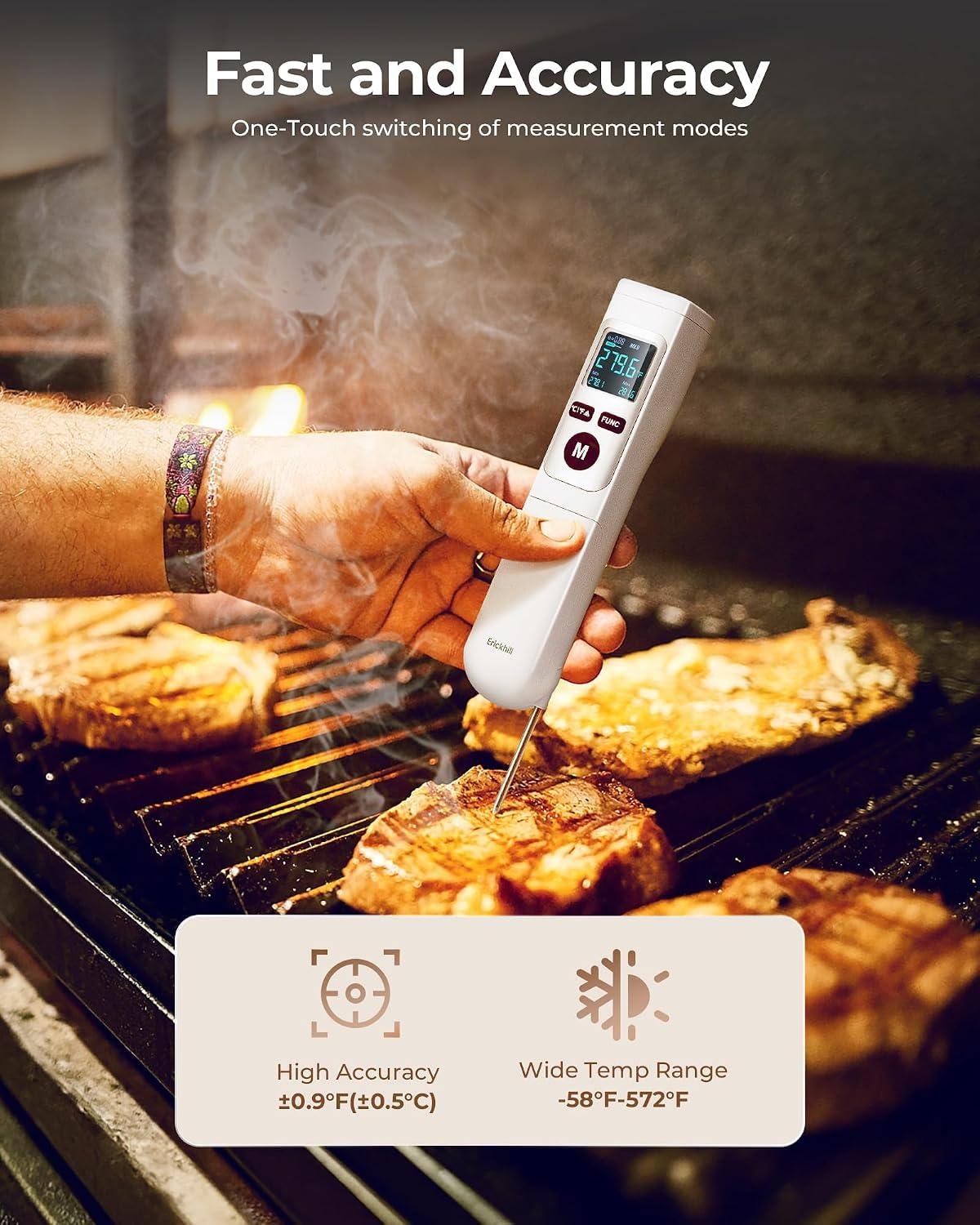
Pros & Cons
Here’s where this 2‑in‑1 infrared and meat thermometer won us over-and where it made us pause.
What we like
- Two tools in one: a fast folding meat probe plus a non‑contact IR sensor.
- Wide heat range (IR up to 1022°F) that’s pizza‑oven and grill friendly.
- 12:1 distance‑to‑spot ratio with snappy response for safer surface checks.
- handy readouts (MAX/MIN/AVG) to track hot spots on griddles and pans.
- Big backlit screen, Fahrenheit/Celsius toggle, data hold, auto shut‑off.
- Versatile beyond the kitchen-useful for HVAC, engine bayand pool checks.
Where it falls short
- Accuracy reports are mixed; unit‑to‑unit variance has been noted by buyers.
- Durability concerns from multiple users (probe looseness/failures over time).
- Value for money feedback is split; some find it budget‑friendly, others don’t.
- No stated waterproof/IP rating-take care around sinks and dishwashing.
- Typical IR caveat: shiny/reflective surfaces can skew readings; no clear note of adjustable emissivity.
- Occasional mentions of packaging/arrival damage.
- Branding inconsistency in listings (name variations) could confuse support/warranty.
At a Glance
| Best for | Watch‑outs |
|---|---|
| Pizza ovens, griddles, cast‑iron pans | IR reads surface only; reflective metal needs a matte target |
| steaks, roasts, BBQ doneness | handle probe gently; not rated waterproof |
| HVAC and auto spot checks | Not a pro calibration instrument |
| Night cooks & low‑light kitchens | Mixed long‑term durability reports |
Q&A
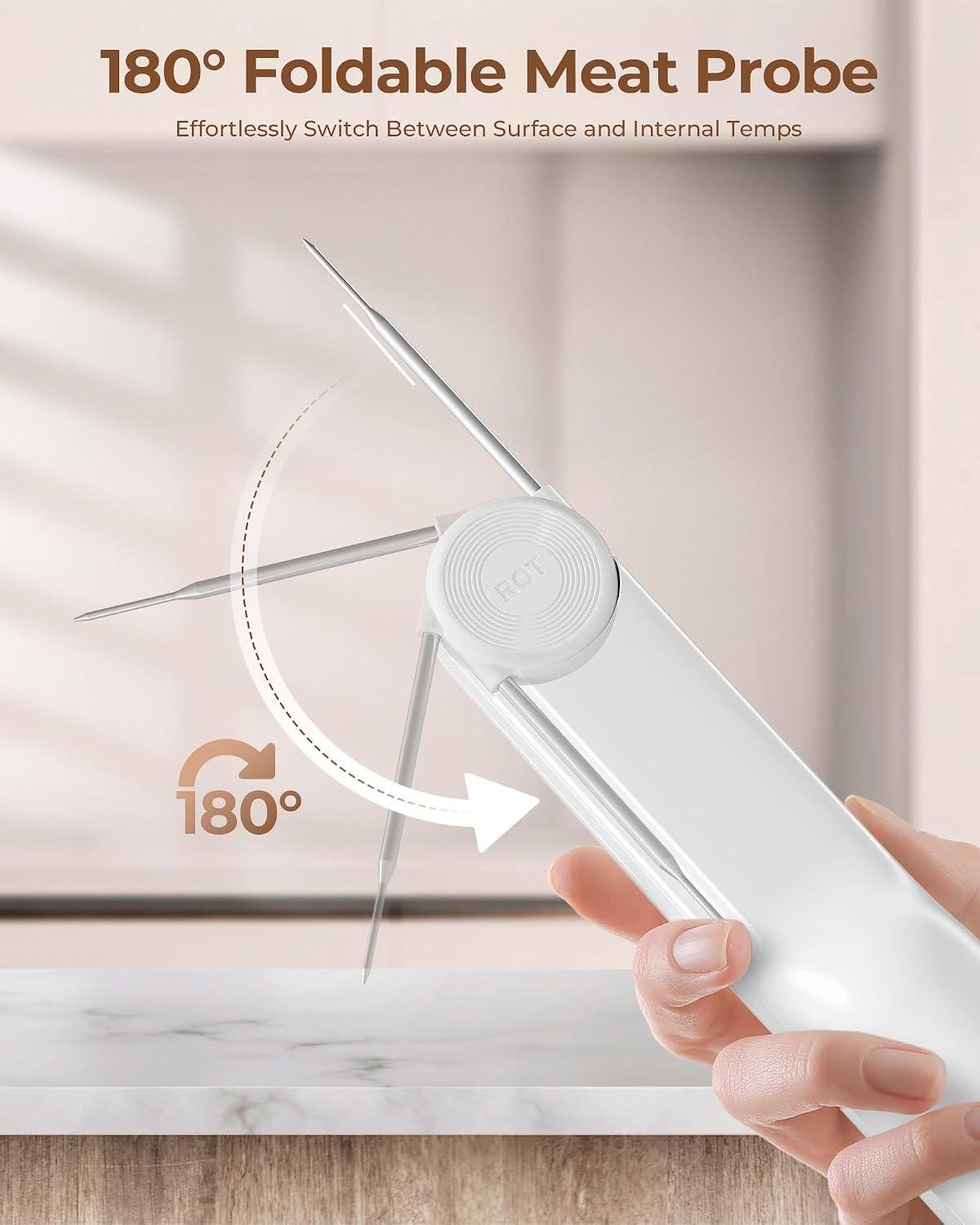
Q: What is this gadget, in a sentence?
A: It’s a handheld, 2‑in‑1 thermometer that checks surface temperatures with an infrared (IR) sensor and internal food temperatures with a foldable stainless‑steel probe-one tool for your grill, pizza oven, skillet, and roasts.
Q: what stood out to us right away?
A: Speed and versatility. The probe claims ±1°F accuracy with a near‑instant read (about 0.5 seconds),while the IR side snaps to a surface reading in under 500 ms and can display MAX/MIN/AVG.
Q: How accurate is it, really?
A: For the probe, the stated ±1°F is strong for home cooking. IR accuracy varies with surface type (emissivity), so expect excellent ballpark numbers on matte surfaces and more variance on shiny metals. In short: probe for doneness,IR for surfaces.
Q: What temperature range does it cover?
A: The device advertises readings up to 1022°F on the infrared side-plenty for pizza stones, steels, cast ironand grills. The probe handles typical food temperatures comfortably.Q: How close do we need to be for IR readings?
A: It has a 12:1 distance‑to‑spot ratio. Roughly, at 12 inches away you’re measuring about a 1‑inch circle. get closer for smaller targets.
Q: Can it check pizza stones and griddles accurately?
A: Yes-for surfaces it’s great. We like to scan a few spots and use the MAX/MIN/AVG to see how evenly the surface heated. For shiny pans, readings can skew low; a small patch of matte tape or oil seasoning helps.
Q: Will the IR tell us when steak is done?
A: No-IR only reads the surface. Use the probe for internal doneness (avoid bone and fat pocketsand aim for the thickest part).
Q: How about frying oil-IR or probe?
A: Use the probe for liquids. IR can be thrown off by reflections on shimmering oil; the probe gives you the true temp.
Q: Does the laser measure temperature?
A: The laser is just an aiming aid; the sensor around it does the measuring.
Q: Can we switch between Fahrenheit and Celsius?
A: yes, there’s an easy toggle between °F and °C.
Q: Is it helpful for HVAC or around-the-house checks?
A: Definitely. We use IR for quick vent temps, radiators, window/door draftsand appliance hot spots. Just remember spot size and surface type affect readings.
Q: What’s the screen and handling like?
A: A big backlit display,a comfortable grip,a 180° foldable probe,data hold,and auto shut‑off make it straightforward to use in bright kitchens and on dim patios alike.
Q: Any durability concerns?
A: Reviews are mixed. Many report reliable use; others cite probe or hinge failures after light use. Our take: handle the probe gently, don’t submerge the body, wipe it down instead of washingand store it in a protective case if possible.
Q: Is it good value?
A: If you want one tool that handles both surface and internal temps, the value is strong. If you need pro‑grade ruggedness or lab‑level precision, you might prefer dedicated, higher‑end units.
Q: Any limitations we should know?
A: IR can’t see through glass, liquids, steamor smoke; it reads only the first surface it “sees.” Highly reflective metals can read low.The laser dot shows aim, not area.
Q: Can we check or tune its accuracy at home?
A: We like quick spot‑checks. For the probe: ice‑water slurry (~32°F) and a gentle boil (~212°F at sea level; adjust for altitude). For IR: compare on a piece of matte black tape affixed to the surface.
Q: what info isn’t clear from the listing?
A: IR accuracy specs, battery typeand warranty terms aren’t obvious. We’d check the product page or manual before buying.
Q: Who is it best for?
A: Home cooks, grillers, pizza‑oven enthusiastsand DIY tinkerers who want fast, versatile readings in one device. heavy commercial kitchens or precision obsessives may want more specialized gear.
Embrace a New Era
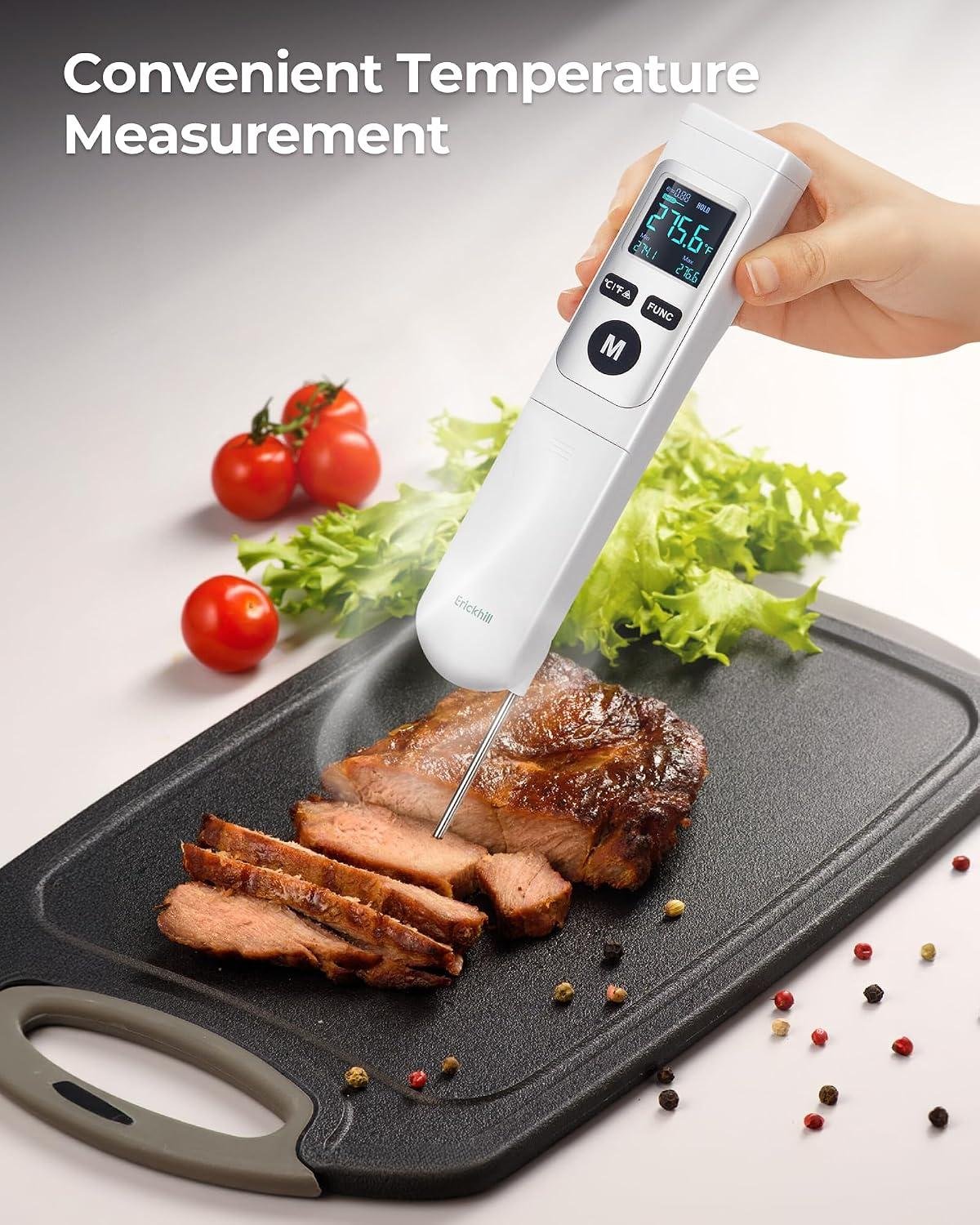
Wrapping up, this 2‑in‑1 infrared-and-probe thermometer earns a spot in our drawer for its speed and versatility. The IR side is great for quick checks on griddles,pizza stones,oil,and even HVAC vents,while the foldable stainless-steel probe handles the all-crucial internal temps.We like the big backlit display, the fast response, the Fahrenheit/Celsius toggleand the handy hold/auto shut-off touches. On paper, the specs promise rapid readings and tight accuracyand in practice we found it convenient for everyday cooking and spot checks around the house.
That said, accuracy feedback from buyers is mixedand durability reports give us pause-especially around the probe. As with any IR thermometer, reflective or greasy surfaces can skew readings, so we treat those numbers as guidance rather than gospel and rely on the probe to confirm doneness. If you want a quick, do‑most‑things tool for grill nights and basic home tasks, this fits the bill; if you need rugged, pro-grade precision, you may want to invest upmarket.We’re keeping it in our kit for weeknight cooks and weekend projects alike. If that sounds like your use case, see today’s price and details here:
Check the Infrared Thermometer Gun with Meat Probe on Amazon