
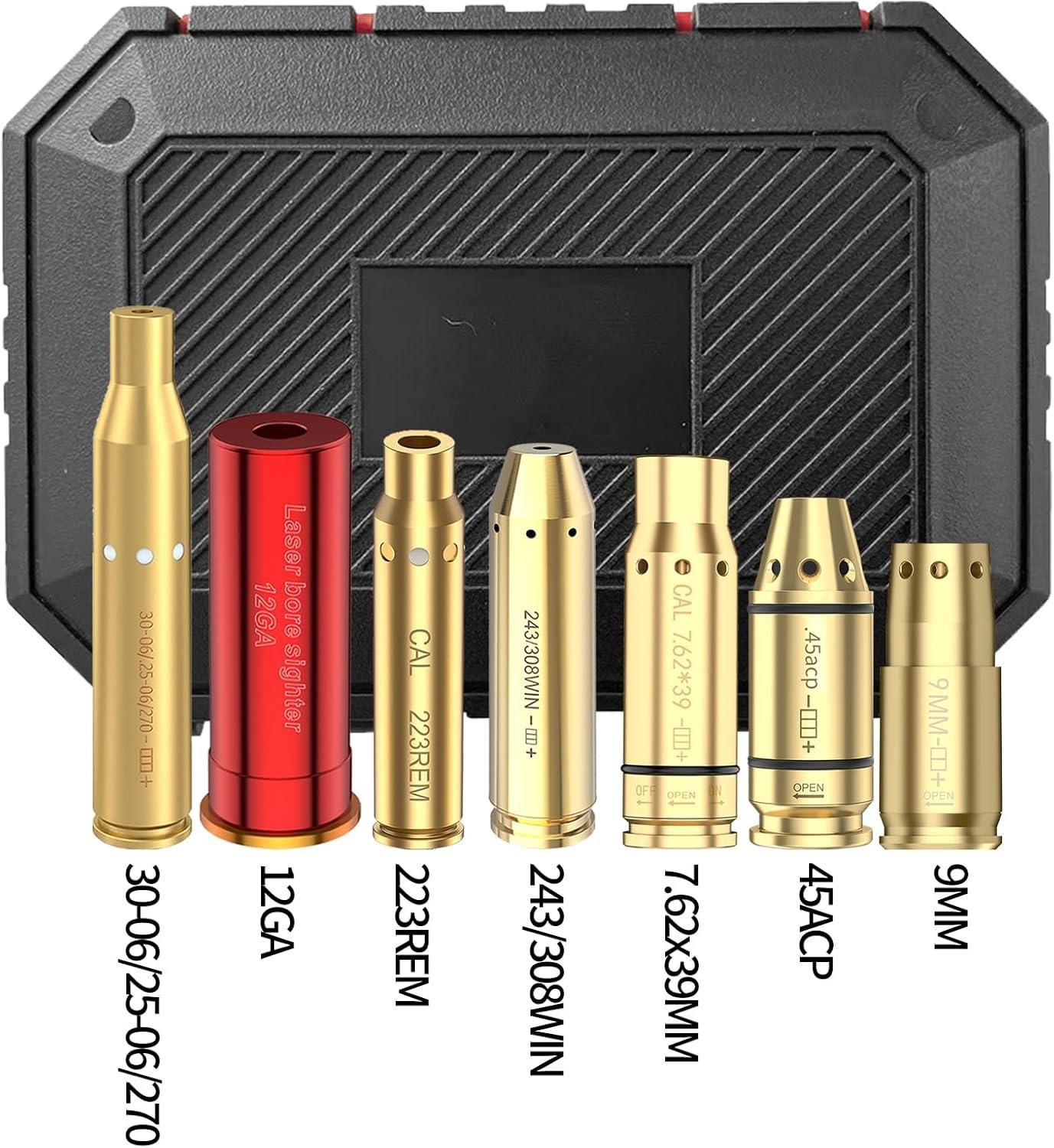
zeroing optics can be the most tedious part of setting up a new rifle or pistol, so we were curious whether a budget-friendly, multi-caliber laser kit could actually streamline the process. Over the past few weeks, we put Tipfun’s Laser Bore Sights kit through its paces across a handful of platforms-an AR chambered in .223, a compact 9mm, a bolt gun in .308, and a 12-gauge pump-to see how well a single set of brass boresighters could cover our most-used calibers.
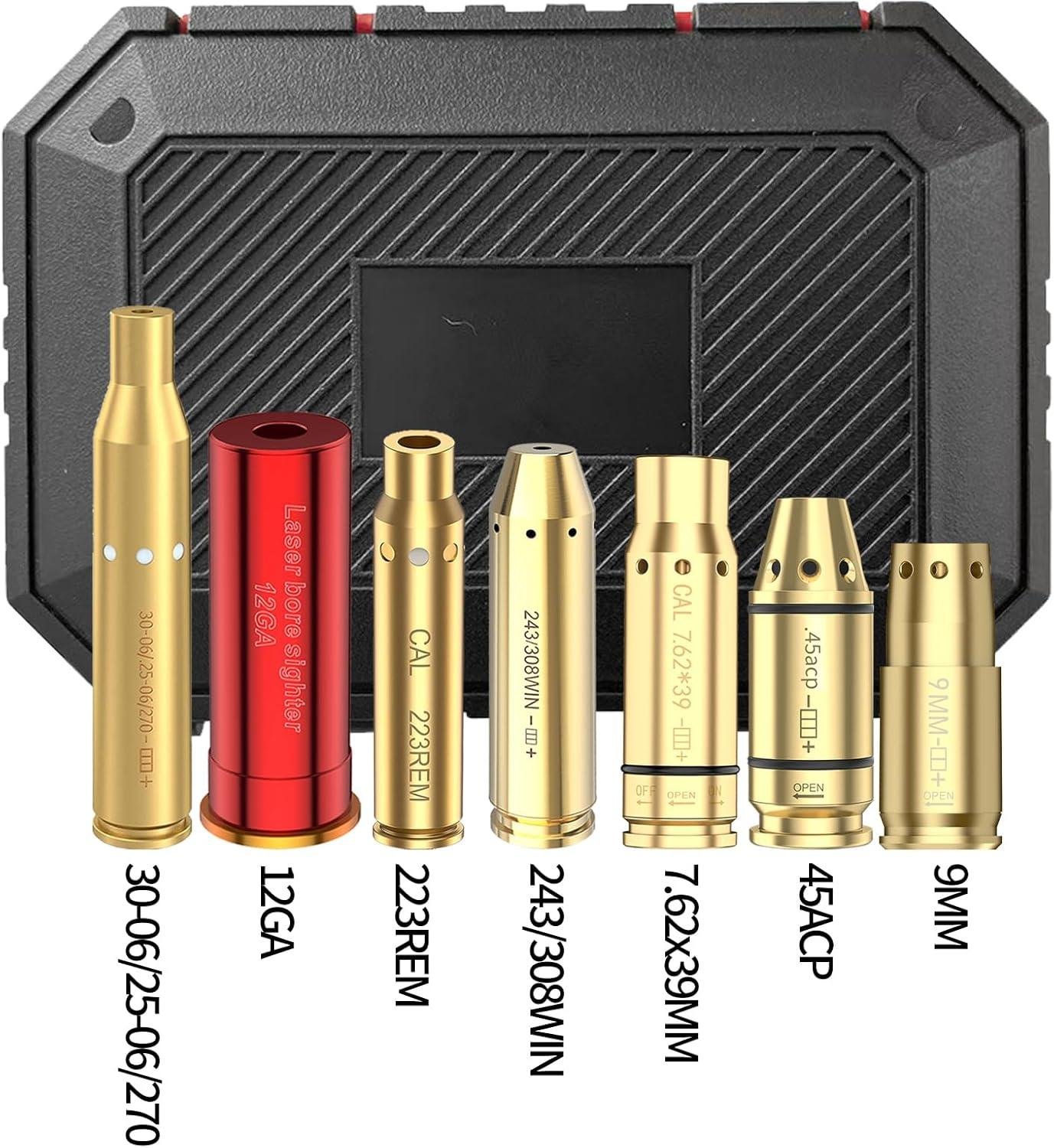
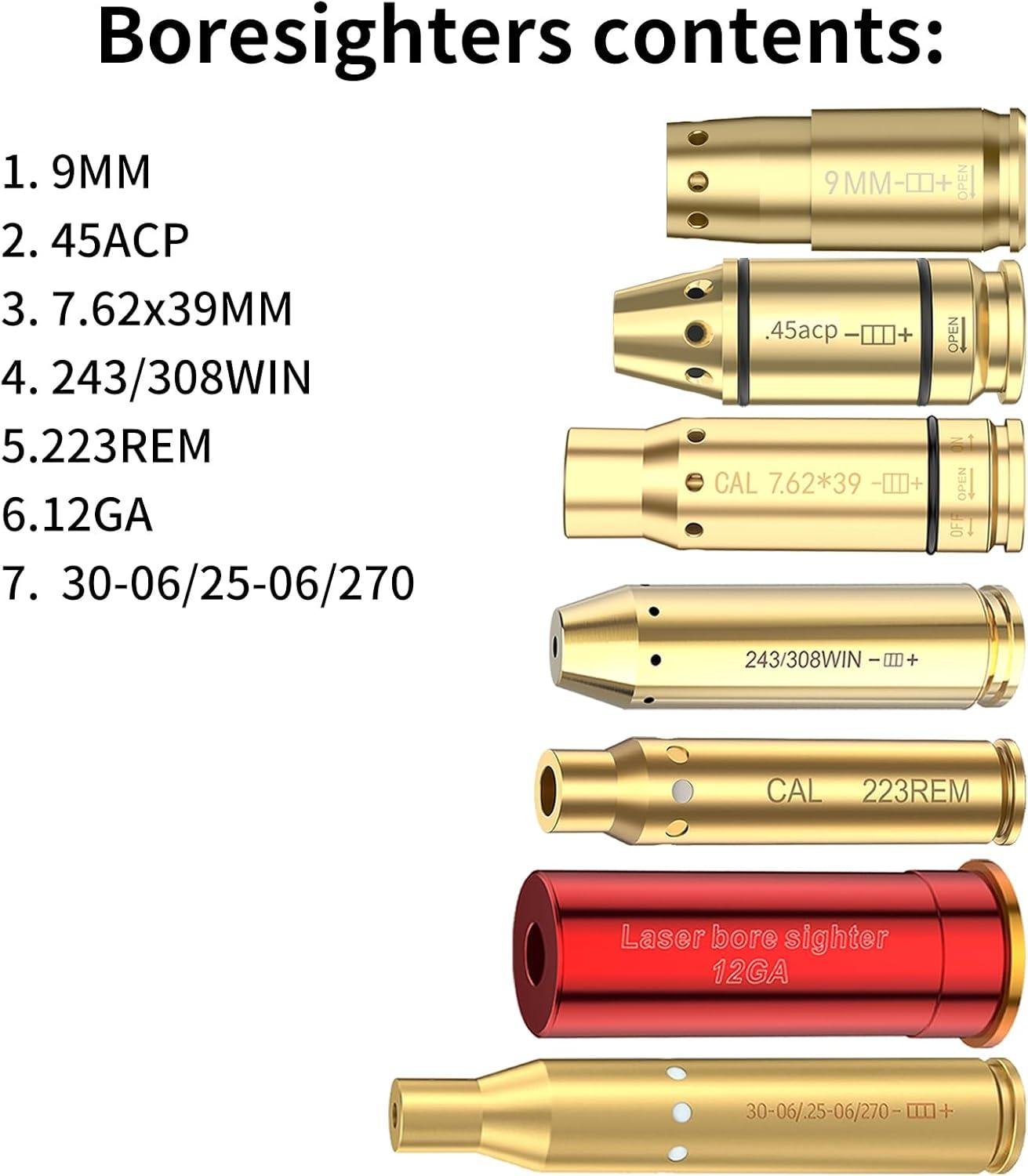
Right out of the box, the kit makes a practical first impression: seven chamber-style boresighters (223REM, 9MM, 7.62×39 with an on/off switch, .243/.308WIN, 45ACP, 12GA, and a 30-06/25-06/270 combo) and a generous pack of 20 LR41 batteries. Each unit is machined from brass, feels solid in hand, and houses a Class IIIA red laser rated under 5mW with a 625-650nm wavelength. Tipfun lists a sighting range of 15 to 100 yards, which lined up with how we typically bore-sight-indoors at shorter distances to get on paper, then confirming at the range.
In use, we found the compact size and chamber-fit design convenient for swift checks after swapping mounts or optics. The lasers were luminous enough for indoor work and shaded outdoor benches, and the extra batteries meant we weren’t rationing runtime while dialing in multiple firearms. We also appreciated the consistent machining; each unit seated cleanly and extracted without drama in our test guns.
In this review,we’ll break down build quality,ease of use,accuracy,battery life,and overall value-and we’ll note a couple of quirks we ran into along the way. As always, we followed safe firearm handling practices and avoided direct eye exposure to the laser.
Our first impressions of a versatile red laser boresight kit

Our hands-on start with this Tipfun kit was promising. The compact, brass-bodied modules feel solid and seat cleanly, and the red dot presents sharply in typical indoor lighting. Coverage is genuinely versatile: seven boresighters span .223 Rem,9mm,7.62×39 (with a handy on/off switch), .243/.308 Win, .45 ACP, 12 GA, and the .30‑06/.25‑06/.270 family. Specs land where we expect for a chamber boresighter-Class IIIA red laser at <5mW, 625-650 nm-and the inclusion of 20 LR41 batteries (a full extra set) meant we were powered up immediately without scrounging for spares.
| Build | Machined brass |
| Laser | class IIIA,<5mW |
| Wavelength | 625-650 nm |
| Sighting range | 15-100 yds |
| Caliber coverage | 7 units,multi-platform |
| Batteries | 20× LR41 (extra set) |
In quick trials,setup was straightforward: insert batteries,thread the cap to activate,and align the dot to bring optics close to zero before live fire. Visibility was practical at 15-50 yards indoors and in shade, and the modules locked in with reassuring consistency. It’s not a replacement for range confirmation, but it noticeably trims time and ammo spent getting on paper across rifles, shotguns, and handguns. We also appreciated the tidy machining, the positive cap threads, and the simple safety-minded operation-just keep the beam away from eyes and follow standard firearm handling.
- Faster zeroing with less wasted ammo
- Broad caliber coverage from pistols to 12 GA
- Bright,crisp dot for setup distances
- Durable brass construction,tidy fit
- Extra batteries for field backup
Check price and availability on amazon
What stood out in build, fitment and battery life across calibers
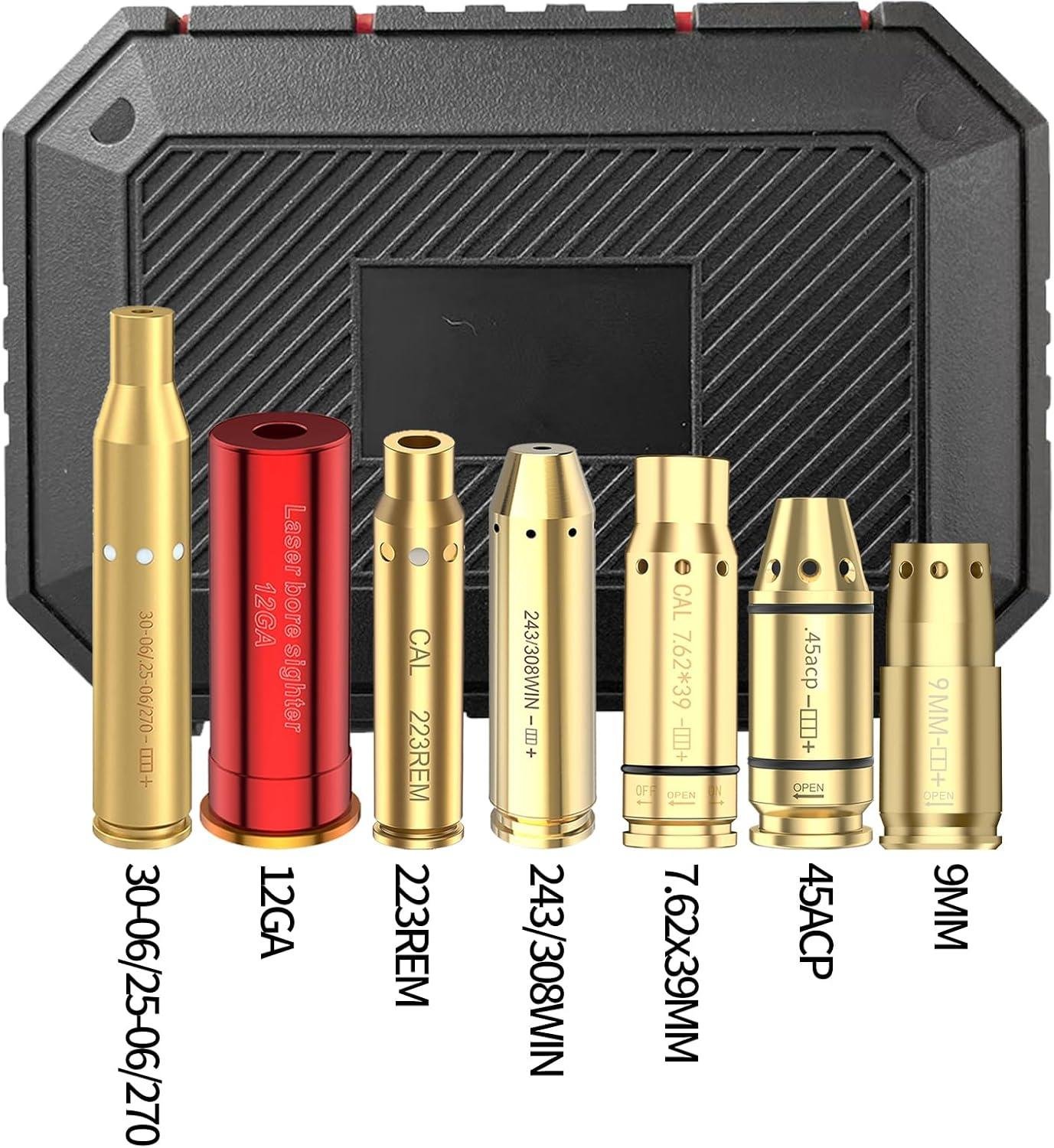
Build quality was the first standout: the chamber-style units are cut from machined brass and assembled by professional craftsmen, pairing a high-quality laser module with qualified electronic components for a long service life. The Class IIIA red beam (<5 mW, 625-650 nm) stayed crisp within the practical 15-100 yard zeroing window, and the compact form factor kept handling simple. We appreciated the no-nonsense construction that favors durability and repeatable alignment over gimmicks.
- Material: Machined brass housing; solid, uniform feel.
- Laser spec: Class IIIA, <5 mW, 625-650 nm red.
- Sighting range: 15-100 yards for preliminary zeroing.
- Safety: Keep the red beam away from eyes.
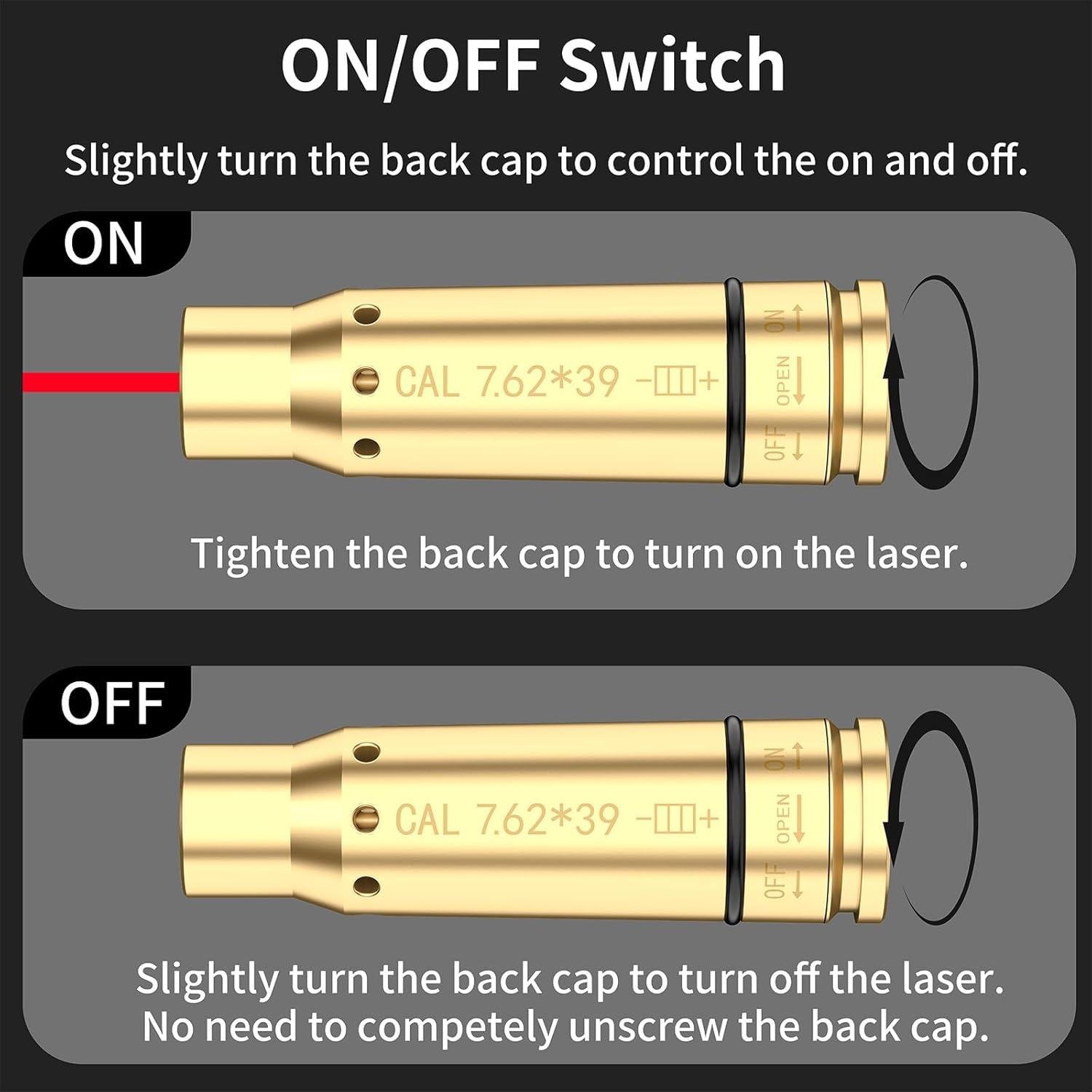
On fitment, the lineup covers the essentials without overlap or guesswork-.223 Rem, 9mm, .243/.308, .45 ACP,12 GA,a 30‑06/25‑06/270 multi-cal body,and a dedicated 7.62×39 model. Chambering was straightforward across platforms, and the 7.62×39 stands out with its on/off switch, a simple touch that helps preserve the included LR41 cells.With 20 batteries in the box (an extra set), we had enough juice for repeated sessions; the other units use a twist-cap to power, which is quick to manage between adjustments.
- Included calibers: .223 Rem,9mm,7.62×39, .243/.308, .45 ACP, 12 GA, 30‑06/25‑06/270.
- Controls: 7.62×39 has an on/off switch; others use the screw-cap to power.
- Batteries: 20× LR41 included; plenty for repeated zero checks.
| Caliber | Fitment note | Power control |
|---|---|---|
| .223 Rem | Chamber drop-in | Twist-cap |
| 9mm | Pistol chamber | Twist-cap |
| 7.62×39 | Dedicated body | On/Off switch |
| .243 / .308 | Shared unit | Twist-cap |
| .45 ACP | pistol chamber | Twist-cap |
| 12 GA | Shotgun chamber | Twist-cap |
| 30‑06 / 25‑06 / 270 | Multi-cal body | Twist-cap |
Check current price and availability
How we zeroed faster and what accuracy to expect at the bench and range
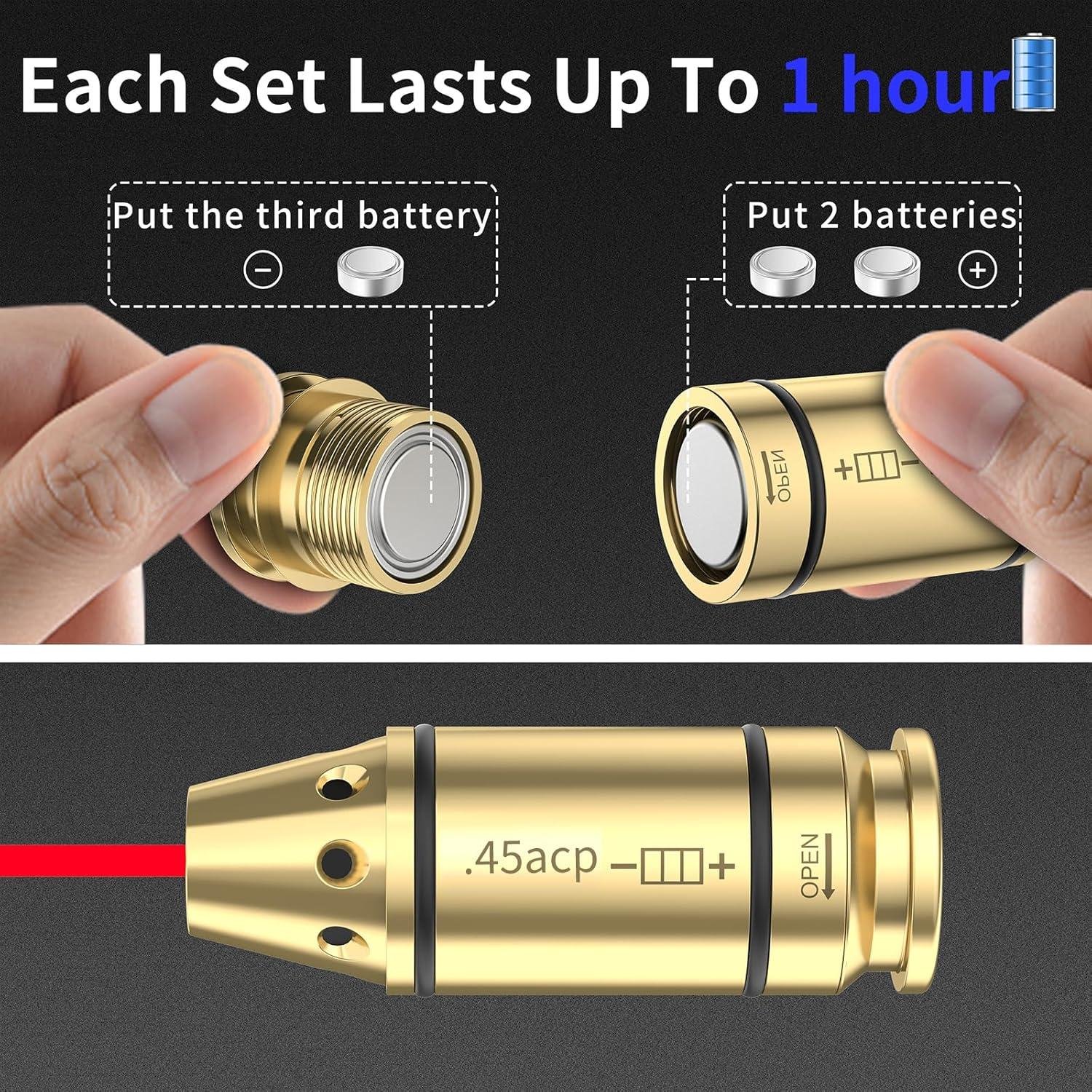
We zeroed faster by treating the red laser as a bore-axis reference, not a finish line. With the brass-bodied modules for .223, 9mm, .243/.308, 7.62×39 (handy on/off switch),.45 ACP, 12 GA, and 30‑06/25‑06/270, we moved between platforms without retooling. The Class IIIA beam (625-650 nm,<5 mW) and a 15-100 yd sighting range let us establish a 25‑yard baseline indoors and confirm at 50 yards outside. Installing the LR41 cells (+ side up) and dropping the unit into the chamber was quick; the sturdy machined brass slid and extracted smoothly. Net result: faster zeroing, fewer wasted rounds, and enough spare power from the included 20 batteries to run multiple sessions.
- Start close: 15-25 yd to center reticle/irons on the dot.
- Confirm at 50 yd; fine‑tune at 100 yd with live fire.
- Mind sight height over bore (especially ARs) to avoid parallax surprises.
- Work in shade or low light for better dot visibility; midday sun shortens usable distance.
- Safety first: keep the beam away from eyes; remove batteries to turn off.
What accuracy to expect: This tool gets us reliably ”on paper,” then live ammo finishes the job. From a bench, we typically saw first impacts within 1-2 inches at 25 yd, 2-3 inches at 50 yd, and 3-6 inches at 100 yd depending on platform, barrel length, ammo, and chamber fit.The 12‑gauge and short‑barrel pistols trended toward the wider end; bolt guns in.308 and long‑action ’06 stayed tighter. The laser shows where the bore points; gravity and ballistics decide the final zero, so we always shoot a confirming group and lock torque afterwards.
| Distance | Typical first‑Shot Window | Best Use |
|---|---|---|
| 25 yd | ±1-2 in | Initial alignment (all calibers) |
| 50 yd | ±2-3 in | Carbines/bolt guns confirmation |
| 100 yd | ±3-6 in | Fine‑tune with live fire |
Zero faster-see current price and details
Our practical tips for setup, safety and getting the most from this kit
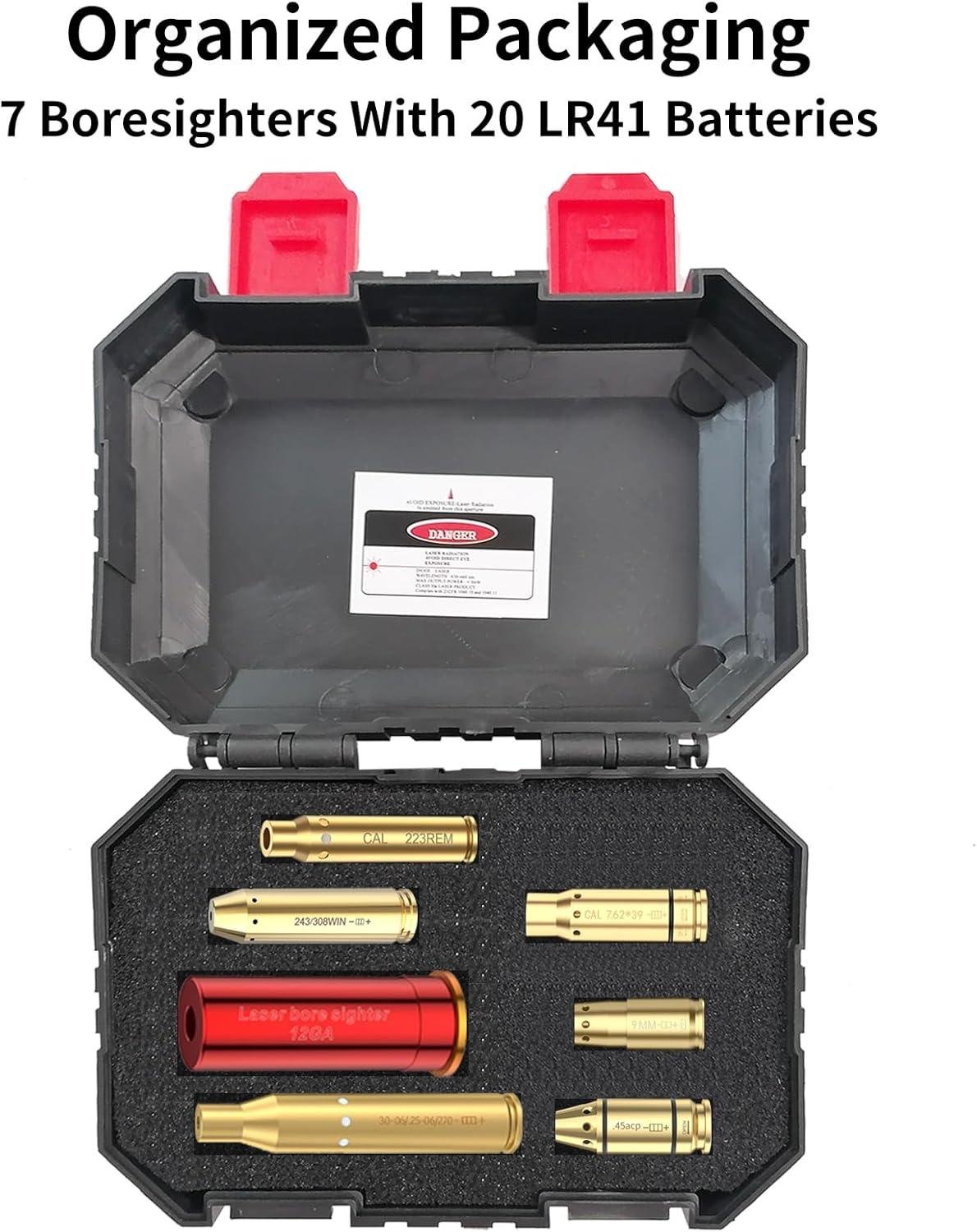
Quick setup that saves ammo begins with discipline. We start by confirming the firearm is completely unloaded, then give the chamber a quick wipe so the brass body seats smoothly. Install the LR41 cells with the + side up; tightening the rear cap powers the unit, while the 7.62×39 insert uniquely adds a dedicated on/off switch. We like to function-check the dot on a wall before chambering, then rest the firearm on bags or a vise and aim at a high-contrast target at 15-25 yards to establish a clean baseline.With the multi-caliber set (from 9mm up to 12GA and the.223/.308 families), we match the insert to the chamber, close the action gently, and dial the optic until the reticle and the laser overlap.
- Battery tip: Rotate the 20 included LR41s and remove them after use to prevent parasitic drain.
- Thread care: Snug the cap-don’t over-tighten-to protect the machined brass threads.
- Targeting: Use a matte or reflective bull in subdued light; red (625-650nm) is easiest to see at dawn/dusk.
- Elevation/windage: Adjust your optic to the laser while the firearm is locked solidly in place.
Safety and best results go hand in hand. this is a Class IIIA tool (<5mW), so we keep the beam away from eyes and never look into a bore-ever.We treat the firearm as loaded, maintain muzzle discipline, and remove the boresighter by opening the action and tilting the muzzle upward. The laser gets us on paper fast (15-100 yards is its sweet spot), but we always confirm with live fire and fine-tune at our preferred zero distance. Clean the lens with a microfiber cloth, avoid oil on the aperture, and store each insert dry to preserve electronics and alignment.
- Reality check: laser zeroing is a starting point; finish with 1-3 live rounds to confirm true POI.
- Platform pacing: Pistol: initial at 10-15 yds; rifle: start 25 yds, confirm 50/100; 12GA slugs: 50 yds.
- Surroundings: Heat shimmer and bright sun dilute visibility; shade improves dot clarity.
- Storage: Keep inserts in a small parts case; label by caliber for grab-and-go range days.
| Use Case | Quick Reference |
|---|---|
| Pistol zero | 10-15 yds align, confirm at 25 |
| Rifle zero | 25 yds align, confirm 50/100 |
| 12GA slugs | Align 25, confirm 50 |
| Laser class | IIIA, <5mW, 625-650nm |
See today’s price and get the kit
customer Reviews Analysis
Customer Reviews Analysis
Reading through buyer feedback, we see a strong tilt toward satisfaction. Most users report that Tipfun’s chamber-style lasers make initial zeroing fast, frugal, and fuss-free across multiple calibers, with a tidy case keeping everything organized. A minority voice calls the kit “junk,” and one mixed review flags repeatability issues on units lacking O-ring seals. the sentiment is solidly positive, with a couple of caveats worth noting.
| Sentiment | Count | Share |
|---|---|---|
| Positive | 6 | 75% |
| mixed | 1 | 12.5% |
| Negative | 1 | 12.5% |
| Theme | What We heard | Representative Quote |
|---|---|---|
| Ease of Zeroing | Quick setup; gets optics “really close” out of the box. | “tremendous help… gets you really close out of the box.” |
| Ammo & Time Savings | Users appreciate saving shells and range time. | “Save a whole lot of shells…” |
| Multi-Caliber Versatility | Works across different calibers in one kit. | “Zeroing in my different caliber of guns.” |
| Form Factor Advantage | Chamber-style fits platforms where muzzle sighters don’t. | “Couldn’t use [muzzle type] for my CCW or bull pup… this works.” |
| Kit Presentation | Case and contents feel complete and organized. | “Nice, well equipped kit… Good case to hold everything!” |
| Repeatability Concern | Units without O-ring seals may shift after re-insertion. | “Ones that didn’t have o ring seals… would change ever so slightly.” |
| Outlier Negative | A single blunt dismissal. | “Junk.” |
What We’d Watch For
- check each caliber insert for O-ring seals; users noted better repeatability when present.
- If you plan to remove and reinsert to double-check,be mindful of slight shifts on units lacking O-rings.
- Great fit for compact platforms (e.g., CCW, bullpup) where muzzle-insert sighters may not work.
Bottom Line From Customers
most buyers say this kit shines for quick, close-to-zero alignment across calibers, saving ammo and hassle. A well-organized case adds to the appeal. The main caution: ensure O-ringed inserts for consistent re-checks; aside from one outlier, satisfaction runs high.
Pros & Cons
Pros & Cons
After spending time with Tipfun’s kit for our “We Zero In” review, here’s where it shines-and where it stumbles.
Pros
| What we liked | Why it matters |
|---|---|
| Seven-caliber coverage | One kit handles 223, 9MM, 7.62×39 (w/ switch), .243/.308WIN, .45ACP, 12GA, 30‑06/25‑06/270-less gear to buy. |
| Ammo-saving zero | Gets us on paper fast at 15-100 yards, reducing time and costs at the range. |
| brass build | Machined brass feels solid and seats consistently in the chamber. |
| 20 LR41 batteries included | We get an extra set out of the box; no last‑minute runs to the store. |
| Class IIIA red laser | <5 mW, 625-650 nm is widely compatible and easy to see indoors or in low light. |
| Compact pieces | Small, range‑bag friendly kit that’s easy to keep on hand. |
Cons
| What gave us pause | Why it could be a dealbreaker |
|---|---|
| Inconsistent on/off | Only the 7.62×39 unit has a switch; others require removing batteries to power down. |
| LR41 power quirks | Button cells can drain quickly and are fiddly to replace; not rechargeable. |
| Daylight visibility | Red lasers wash out faster than green in bright sun, especially past moderate distances. |
| Fit varies by chamber | Extraction isn’t always automatic; we occasionally had to tilt the barrel to remove. |
| Not a final zero | Excellent for alignment, but you’ll still need live‑fire fine‑tuning. |
| No labeled storage case | Easy to mix up calibers unless you organize them yourself. |
Safety note: It’s a Class IIIA laser-keep the beam away from eyes and always follow safe firearm handling practices while bore‑sighting.
Q&A
Q: What exactly comes in Tipfun’s Laser Bore Sight Kit?
A: We get seven brass chamber boresighters and 20 LR41 button-cell batteries. The included calibers are: .223 Rem, 9mm, 7.62×39 (this one has an on/off switch), .243/.308 Win, .45 ACP,12 Gauge,and a combined 30‑06/25‑06/.270 unit.
Q: Is this for rifles, pistols, or shotguns?
A: All three. Each insert is shaped like a cartridge for its chamber: .223/.308/30‑06 family for rifles, 9mm and .45 ACP for handguns, and a 12GA shell for shotguns.
Q: How bright is the laser and how far can we use it?
A: It’s a red Class IIIA laser (625-650 nm, <5 mW). Tipfun lists a sighting range of 15-100 yards. In our experience, red shines best indoors or in shade; at high noon it's tougher to see unless you use a reflective target.
Q: Red vs. green laser-should we wish this were green?
A: Green is typically more visible in bright daylight.Red is more budget‑friendly and works well indoors and in typical bench conditions. If you boresight mostly in bright sun,green can be easier to see; otherwise,red is fine.
Q: Is it weatherproof?
A: There’s no waterproof rating.We treat it as a dry‑use bench tool and keep it out of the rain.
Q: What about warranty or support?
A: Tipfun emphasizes quality inspection and service. for specific warranty terms or replacements, we reach out to the seller or Tipfun customer support with our order info.
Q: Bottom line-who is this kit for?
A: For anyone who wants a compact, multi‑caliber way to speed up zeroing across common rifle, pistol, and shotgun chambers. It won’t replace live‑fire zeroing, but it will get us there faster with fewer wasted rounds.
Discover the Power
wrapping up, Tipfun’s Laser Bore Sight Kit delivers what we expect from a budget-friendly, multi-caliber boresighter: sturdy brass builds, a red Class IIIA laser that gets us on paper fast, and broad coverage from 9mm and .45 ACP to .223/.308,7.62×39, 12 gauge, and 30-06/25-06/270. The extra LR41 batteries are a practical touch, and the dedicated on/off switch on the 7.62×39 unit helps stretch runtime. On the flip side, red lasers can be harder to spot in bright daylight, and button batteries are always a bit fiddly-but neither is a deal-breaker for bench work or indoor setup.
If we’re zeroing a new optic or confirming alignment after transport, this kit saves us time and ammo. It won’t replace a final live-fire zero,but it’s a solid starting point for hunters and range-goers who want quick,repeatable alignment across multiple platforms.As always, follow safe firearm handling and avoid direct eye exposure to the laser.
Ready to see if it fits your setup? Check current price and availability here:
Shop the Tipfun laser Bore Sight Kit on Amazon