
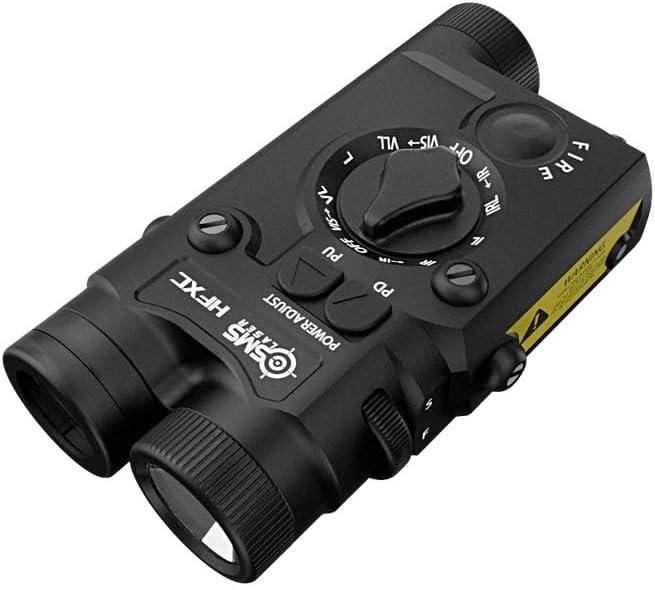
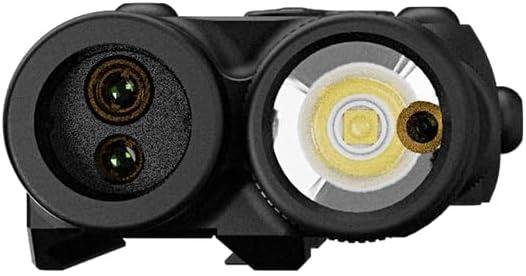
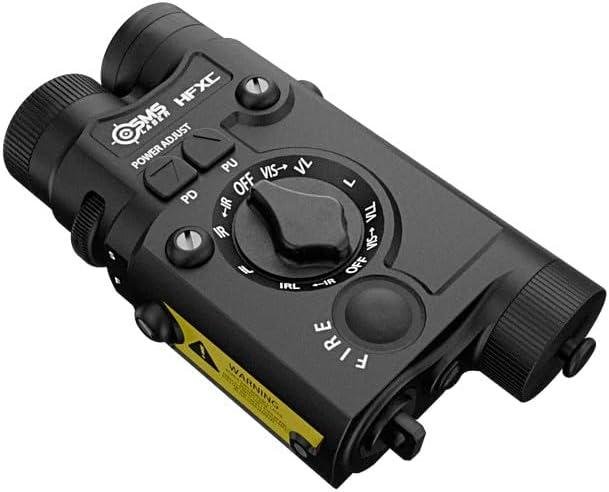
If you’ve ever wished your carbine’s forend could host a Swiss Army knife, the SMSlaser HFXC 4‑in‑1 Green Laser, infrared Illuminator, Infrared Laser, 1000 Lumens White might be the closest we’ve handled. We’ve been running this v2 unit on a Picatinny-rail rifle over several low-light sessions to see whether its all‑in‑one promise holds up: a visible green laser for daytime or dusk, a slaved infrared laser and IR illuminator for night-vision work, and a 1000‑lumen white light for immediate positive ID—without turning the rail into a yard sale of mounts and wires.
Right out of the box,the HFXC feels purpose-built. The anodized aluminum housing shrugged off bumps in transport and didn’t heat-soak excessively during extended use.Mounting to a standard Pic rail was straightforward, and the included Crane plug pressure switch let us place activation where our support hand naturally rides. We appreciated that the visible and IR lasers are slaved; zero once with the green laser and the IR tracks—no separate calibration required. The factory ships it in a low-power safety mode, and high power can be enabled, which we kept in mind while validating zero and beam performance.
In the dark, the IR illuminator’s variable beam divergence—from roughly 17 mrad to 120 mrad—proved genuinely useful. We could tighten it for reach or bloom it out for close work without hot spots overwhelming the scene.The white light’s claimed 1000 lumens offered plenty of punch for target ID and navigation, while the Class IIIA lasers (rated under 5 mW; IR components listed at 0.7 mW, 820 nm) kept everything on the right side of the safety and compliance line. Power adjustment on the unit gave us room to tailor output to the environment rather than brute-forcing it.
We’ll dig into runtime, control ergonomics, beam quality, and zero retention in the full review.For now, our first impressions are that the HFXC aims to simplify a complex problem—day/night aiming and illumination—into a single, rail-amiable package. As always, use proper eye protection, follow local laws on laser and IR use, and verify compatibility if your setup isn’t strictly Picatinny.
Our first impressions of the smslaser HFXC and why it caught our attention
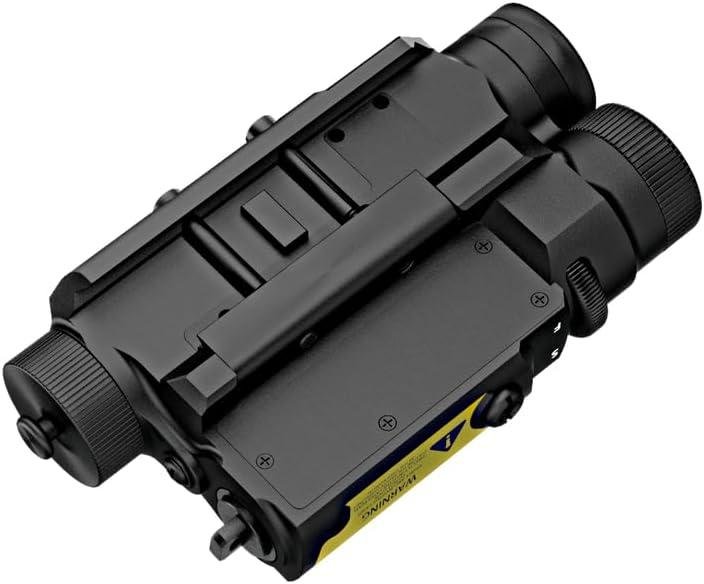
At first glance, the combination of a bright 1000-lumen white light with both green visible and infrared options feels purpose-built for fast transitions. The body is anodized aluminum, which gave us confidence right out of the box, and the footprint sits neatly on Picatinny-only setups. We also noticed this is the v2 iteration, a small detail that suggested thoughtful refinements. The included Crane plug pressure switch rounds out a control scheme that seems ready for real-world handling without fuss.
What really caught our eye was the attention to alignment and adjustability. The visible and IR lasers are slaved, meaning there’s no separate calibration required, and the IR illuminator’s beam divergence (~17–120 mrad) lets us shape the throw from tight to flood. Out of the box, it ships in a low-power safety mode (with a high-power mode available when needed), while the laser spec sits at Class IIIA (<5 mW) and the IR components list 0.7 mW at 820 nm—all sensible, confidence-inspiring numbers for a compact 4-in-1 package.
- 4-in-1 versatility: white light,green VIS,IR laser,and IR illuminator
- Dialable IR flood-to-spot: ~17 to ~120 mrad
- One-and-done zero: slaved VIS/IR lasers
- Ready controls: Crane plug pressure switch
- Tough shell: anodized aluminum
| Quick Specs | Details |
|---|---|
| White Light | 1000 lm |
| IR Illuminator | 0.7 mW, 820 nm, ~17–120 mrad |
| IR Laser | 0.7 mW, 820 nm |
| Green Laser | Class IIIA, <5 mW |
| Power Modes | Low (default), High (activatable) |
| Mount | Picatinny-only |
| Controls | Crane plug pressure switch |
| Build | Anodized aluminum (v2) |
What stood out in build quality illumination modes and intuitive controls
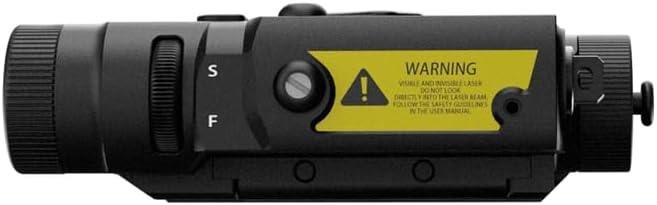
Build quality impressed us right away: the anodized aluminum body shrugs off scuffs and feels purpose-built without unnecessary bulk. Mounting to a picatinny rail is straightforward and secure,and the included Crane plug pressure switch makes momentary activation second nature. We also appreciated the v2 refinements baked in, especially how the visible and infrared lasers are slaved—one zero handles both, eliminating fussy, separate calibrations. Out of the box it defaults to a low-power safety mode, which we found practical for controlled indoor work, with the option to unlock higher output when the environment demands it.
- Anodized aluminum chassis for durability
- Picatinny-only interface for a tight, repeatable fit
- Crane plug pressure switch for intuitive actuation
- Slaved visible/IR lasers—single zero, no extra steps
- Factory low-power safety default; high power available
On the illumination front, the flexibility stands out. We get four distinct outputs—green laser, IR laser, IR illuminator, and a punchy 1000-lumen white light—so swapping between overt and covert use is seamless. The IR illuminator’s variable beam divergence (~17 to ~120 mrad) lets us go from a tight spot to a wide flood quickly, while Class IIIA lasers (<5 mW) keep power within safe specs.With IR elements at 0.7 mW and 820 nm,the invisible side stays efficient and clean,and the overall control layout encourages quick,confident transitions between modes.
| mode | Output | quick Note |
|---|---|---|
| White Light | 1000 lumens | Strong, clear spill |
| green Laser | Class IIIA <5 mW | Daylight-visible |
| IR Laser | 0.7 mW, 820 nm | Slaved to visible |
| IR Illuminator | 0.7 mW, 820 nm | 17–120 mrad zoom |
Check availability and today’s price
Real world handling in varied light with observations that mattered to us
In bright midday, dim interiors, and the gray in-between, this 4-in-1 combo felt intuitive and balanced. The 1000-lumen white output gave us fast, confident identification without feeling harsh up close, and the Crane plug pressure switch kept momentary and constant activation predictable. The green emitter stayed crisp through mixed lighting, and as the visible and infrared lasers are slaved, we spent less time tinkering and more time evaluating targets and backgrounds. We also appreciated the low-power safety default; it set a sensible baseline before stepping up when conditions called for more punch,all wrapped in an anodized aluminum housing that shrugged off rail swaps and range dust.
- Slaved alignment: Visible/IR pairing kept transitions straightforward.
- 1000 lumens white: Plenty of pop for quick ID in cluttered scenes.
- Safety-first start: factory low-power with optional high-power mode.
- Anodized build: Durable surface that resists scuffs.
- Picatinny-only: Simple, secure fit on compatible rails.
| Mode | Spec | Our Take |
|---|---|---|
| White Light | 1000 lumens | Clean, decisive illumination |
| Green Laser | Class IIIA, <5mW | Crisp reference in mixed light |
| IR Laser | 0.7 mW, 820 nm | Stayed aligned with visible |
| IR Illuminator | ~17–120 mrad | Spot-to-flood flexibility |
| Controls | Crane plug switch | confident, consistent presses |
| Safety | low-power default | Smart starting point |
| Mount | Picatinny only | Drop-on compatibility |
In darker environments, the adjustable IR illuminator made the biggest difference: dialing from ~17 mrad for a tighter throw to ~120 mrad for a wide flood kept foregrounds and distance in balance without excess spill. Both IR sources list 0.7 mW at 820 nm, which paired well with the slaved layout to preserve a single point of reference across spectra.The net effect was smooth, predictable handling from full sun to no-light, with controls that became second nature and a form factor that stayed out of our way when it mattered.
See price, specs, and availability
Our recommendations for mounting power tuning upkeep and who will get the most value
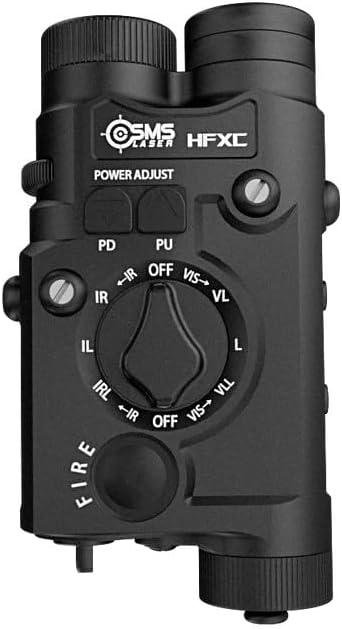
Mounting and power tuning are straightforward if we keep priorities clear: this anodized aluminum module is Picatinny-only, so we mount it as far forward as practical to reduce white-light barrel shadow and to give the infrared illuminator room to breathe. The visible and IR lasers are slaved, which means we can zero the green laser in daylight (we like a 50-yard zero) and confirm at night under NODs without separate calibration. Start in the factory low-power safety mode for indoor work and training; unlock high power only when the mission space demands it. for the IR illuminator, leverage the variable beam divergence—go ~17 MRAD (tight) for longer shots outdoors and ~120 MRAD (flood) for close quarters or wide fields of view. The 1000-lumen white light is potent; use momentary activation to control splash and preserve night vision.
Upkeep is minimal but matters: treat the anodized finish kindly, keep lenses and emitters clean, and re-check mount tension after the first range session. The crane plug pressure switch should be routed along the support side with gentle bends and secure cable management to avoid snags. We find the most value lands with users running night vision (the 820 nm IR laser and illuminator shine here), hunters managing dusk-to-dark transitions, and training-focused shooters who appreciate a unified zero across visible and IR. Less ideal: pistol builds or M-LOK-only rails without a Picatinny section. Always follow local regulations and Class IIIA <5 mW laser safety practices.
- Mounting tips: forward placement, index to your support hand for natural switch access, and use blue threadlocker with proper torque to protect the anodized rail.
- Zero once: day-zero the green laser, then verify IR alignment at night—no separate IR dialing needed thanks to the slaved design.
- Beam shaping: tight IR for distance IDs; wide flood for navigation and team movement.
- Switch discipline: position the Crane plug so the cable never crosses moving controls or ejecting brass paths.
- Care checklist: wipe lenses after carbon-heavy sessions; inspect adjustment dials for smooth travel; check cable strain relief; confirm zero after bumps or temperature swings.
- Battery routine: swap on a schedule, label dates, and store spares away from extreme heat.
| Scenario | Settings | Notes |
|---|---|---|
| Indoor/CQB | Low power + wide IR (~120 MRAD) | Minimize bloom; momentary white light |
| Open fields | High power + tight IR (~17 MRAD) | Longer PID; steady cheek weld |
| Dusk range work | Green laser + flood IR | Fast transitions under changing light |
| Administrative | Low power, no IR | Safety-first handling |
See current price and availability
Customer Reviews Analysis
Customer Reviews Analysis
We read through a wide range of buyer feedback to understand how the SMSlaser HFXC 4‑in‑1 actually performs outside the spec sheet. The overall tone is positive, with repeated praise for value, brightness, and feature density—tempered by a handful of reliability quirks, a middling IR illuminator for some users, and occasional quality variance across units.
| What Customers Loved | What Gave Them Pause |
|---|---|
| Very bright white light (claims of 1000 lumens feel credible) | IR illuminator beam: narrower than expected; “petri dish” artifact |
| Strong visible and IR lasers; holds zero for many users | Unit-to-unit variance: reports of ~2 MOA zero wander on one sample |
| Excellent value; includes battery, charger, case, pressure pad | Some input inconsistency with on-the-fly adjustments/buttons |
| Easy picatinny mounting; intuitive mode switching after brief practice | Water resistance rating feels modest for some buyers |
| Responsive customer service; issues resolved promptly | One report of visible light/laser momentarily cutting out under recoil |
Performance Themes
- White light and lasers: Buyers consistently describe the white light as “very bright” and both lasers (green and IR) as “powerful,” with several noting solid zero retention across range sessions.
- IR illuminator: opinions diverge. Night‑vision users appreciate its output on higher settings but call out a narrower flood, a ringed “petri dish” effect, and less convincing focus compared to higher‑end units.
- Controls and ergonomics: The rotary dial earns praise for tactile, quiet clicks. The pressure pad is called “awesome” and easy to place. A subset mentions button presses not always registering on-the-fly power changes.
- Durability and recoil behavior: Build quality feels “way above its price point” to many. Having mentioned that, scattered reports mention wandering zero on one unit and a case where the visible light/laser briefly dropped during shot concussion, while IR functions stayed steady.
| Theme | Buyer takeaway | Frequency (from comments) |
|---|---|---|
| Brightness | White light and lasers exceed price-expectations | Common |
| IR Illuminator Quality | Usable but not wide; some artifacting | Occasional |
| zero Retention | Generally holds; rare wandering or recoil hiccup reports | Occasional |
| Controls | Good dial feel; sporadic button input misses | occasional |
| Value & Kit | Excellent value; includes battery/charger/pad/case | Common |
| Support | Customer service resolves issues quickly | Noted |
Representative Buyer Notes
- “Value for the money is unmatched… both visible and IR are very powerful.”
- “IR illuminator could have a wider spread… has a ‘petri dish’ effect.”
- “Held zero over two range sessions” vs. “constant ~2 MOA wandering zero” on one unit.
- “Pressure pad… awesome,” “easy to switch between modes.”
- “Visible laser and light cut out during the shot, then came back”—IR stayed strong.
- “Company went above and beyond… unbelievable customer service.”
Value,Competition,and Use Cases
Many buyers frame the HFXC as a disruptive,budget‑savvy option to pricier LAMs. Some who’ve moved to newer models still keep their HFXCs for “unique platforms” or as secondary setups—crediting the bright white light, solid lasers, and feature set at this price.The included battery, charger, and case strengthen the package.
| Best For | Consider Carefully If |
|---|---|
| Budget‑minded users wanting green + IR + white light in one | You need a very wide,artifact‑free IR flood |
| Picatinny‑rail rifles needing an all‑in‑one LAM | Absolute consistency under heavy recoil is mission‑critical |
| Night‑vision practice,training,and plinking | You require higher water‑ingress ratings |
| As a backup or for secondary/“unique” platforms | You’re sensitive to occasional UI input inconsistencies |
Our Read
Customer sentiment paints the HFXC as a high‑value,feature‑rich combo that punches above its price on brightness and utility. The trade‑offs cluster around IR flood quality, sporadic control quirks, and isolated durability variances between units.if your priorities are cost‑effective capability and a complete kit that mounts quickly and works well—especially under NV—most buyers say it delivers. If you demand perfectly consistent illuminator quality, battle‑hard recoil behavior, and higher water‑resistance, the feedback suggests weighing those needs before you buy.
Pros & Cons
Pros & cons
Here’s where the SMSlaser HFXC 4-in-1 green/IR Combo impressed us—and where it left us wanting a bit more.
| Quick Take | Details |
|---|---|
| Standout Feature | True 4-in-1: green laser, IR laser, IR illuminator, 1000 lm white light |
| Best For | Picatinny-rail rifles needing compact, dual-spectrum aiming/illumination |
| Not Ideal For | Users needing independent visible/IR zeros or non-Picatinny mounts |
| Potential Dealbreaker | No published candela/runtime; IR at 820 nm and 0.7 mW may limit reach |
Pros
- Four tools, one footprint: green laser, IR laser, IR illuminator, and a 1000-lumen white light reduce rail clutter and simplify setup.
- Slaved visible and IR lasers mean a single zero carries across spectra—fast,consistent,and convenient.
- Adjustable IR illuminator (about 17–120 mrad) lets us go from a tighter spot to a broad flood on demand.
- Power-adjustable design with a low-power safety default helps manage risk and adapt to conditions.
- Rugged build: anodized aluminum housing inspires confidence for field use.
- includes a Crane plug pressure switch for momentary control without extra purchases.
- class IIIA lasers (< 5 mW) with 0.7 mW IR components keep output conservative and compliant in many regions.
- Picatinny-only mounting keeps things simple for the most common rifle rail standard.
Cons
- No independent zeroing between visible and IR lasers—great for simplicity, but limiting for specialized setups that need separate offsets.
- White light is listed at 1000 lumens, but there’s no candela or runtime data; real-world throw and endurance remain question marks.
- IR output (820 nm at 0.7 mW) favors conservatism over reach; users seeking longer-range IR illumination may find it underpowered.
- Factory low-power default and a separate high-power activation add an extra step before full performance is available.
- Picatinny-only mount reduces flexibility for direct-to-M-LOK/KeyMod users without adapters.
- No stated IP rating or impact spec in the materials we saw, leaving durability claims partly unverified.
- Crane plug standard is common, but not worldwide; cable management and compatibility may require tinkering.
| Pro | Con |
|---|---|
| Compact 4-in-1 integration | Missing candela/runtime specs |
| Slaved VIS/IR zero | No separate VIS/IR zero |
| IR beam 17–120 mrad | 0.7 mW IR limits reach |
| 1000 lm white light | Unknown thermal step-down |
| Durable anodized aluminum | No published IP rating |
| Crane plug switch included | Picatinny-only mount |
Note: Always follow local laws and laser safety practices; Class IIIA devices (< 5 mW) can still pose eye hazards with direct exposure.
Q&A
Q: What exactly is the SMSlaser HFXC 4-in-1?
A: It’s a v2, all-in-one unit that bundles a green visible laser, an infrared (IR) laser, an IR illuminator, and a 1000-lumen white light in a single anodized aluminum housing for Picatinny-rail rifles.
Q: Are the visible and IR lasers independently zeroed?
A: No. They’re slaved, so once we zero one, the other tracks with it—no separate calibration required.
Q: What’s the laser class and output?
A: The visible and IR lasers are Class IIIA, listed at less than 5 mW. The IR illuminator is rated at 0.7 mW with a wavelength of about 820 nm.
Q: what does the adjustable IR illuminator actually do?
A: It lets us shape the beam from tight (~17 mrad) to wide (~120 mrad). Think of it as zooming from a pencil beam to a broad flood to match distance or field of view.
Q: Is the IR light visible to the naked eye?
A: No. At ~820 nm, the IR laser and illuminator are designed for use with night-vision devices. Without NV, you won’t see the IR output.
Q: How bright is the white light?
A: It’s listed at 1000 lumens. That’s a lot of output for identification, though candela (throw) isn’t specified in the provided materials.
Q: What materials and build should we expect?
A: Anodized aluminum throughout. It feels purpose-built rather than ornamental.
Q: Which rail systems does it fit?
A: Picatinny only. If we’re running M-LOK or KeyMod, we’ll need a Picatinny section adapter.
Q: Does it come with a remote switch?
A: Yes. It uses a Crane plug pressure switch for remote activation.
Q: Are there power settings?
A: The factory default is a low-power safety mode. A higher-power mode can be activated, but we’d stick to the manual and local regulations before changing anything.
Q: Is it eye-safe?
A: Even at Class IIIA and low IR outputs,direct or reflected exposure can be hazardous. We avoid looking into emitters, we use proper eye protection and night-vision practices, and we follow all safety guidance and laws.
Q: Is it legal for us to use?
A: Laws vary by location—especially for IR lasers and illuminators. We always check local and national regulations before buying or using these features.
Q: What’s included in the specs that stands out?
A: The slaved lasers for one-and-done zeroing, the broad IR illuminator adjustment range, and the 1000-lumen white light make a versatile quartet in a single package.
Q: What’s not listed that we wish we knew?
A: Battery type, runtime, dimensions, weight, and environmental ratings (like water and shock resistance) aren’t in the provided materials. We’d look to the manual or the manufacturer for those.
Q: who is this for?
A: users who need a compact, multi-spectrum aiming and identification tool—especially those running night vision—within the bounds of local law.think structured range work, training, and lawful field use.
Q: Any caveats?
A: Picatinny-only mounting limits flexibility without adapters, and the lack of published runtime/IP specs leaves some open questions. As always, training and safe handling are non-negotiable.
Experience Innovation
Wrapping up,the SMSlaser HFXC 4-in-1 green/IR Combo earns its spot as a streamlined,do-it-all rail solution for users who want visible and infrared capability plus a 1000-lumen white light in one package. We appreciate the slaved green/IR lasers (no separate zero needed), the adjustable IR illuminator (~17 to ~120 MRAD), and the durable anodized aluminum build. With Class IIIA (<5 mW) specs and 0.7 mW at 820 nm for the IR components, the performance stays within its safety-minded power class. Just note the Picatinny-only fit and the default low-power mode, with high power available if you choose to enable it.if you’ve been looking to simplify your setup for seamless day-to-night transitions without juggling multiple modules, this unit makes a solid case. If you prefer specialized, standalone tools or broader mounting options, you may want to look elsewhere. As always, follow laser safety best practices and local regulations. Ready to check current pricing and availability? See the SMSlaser HFXC 4-in-1 on Amazon