
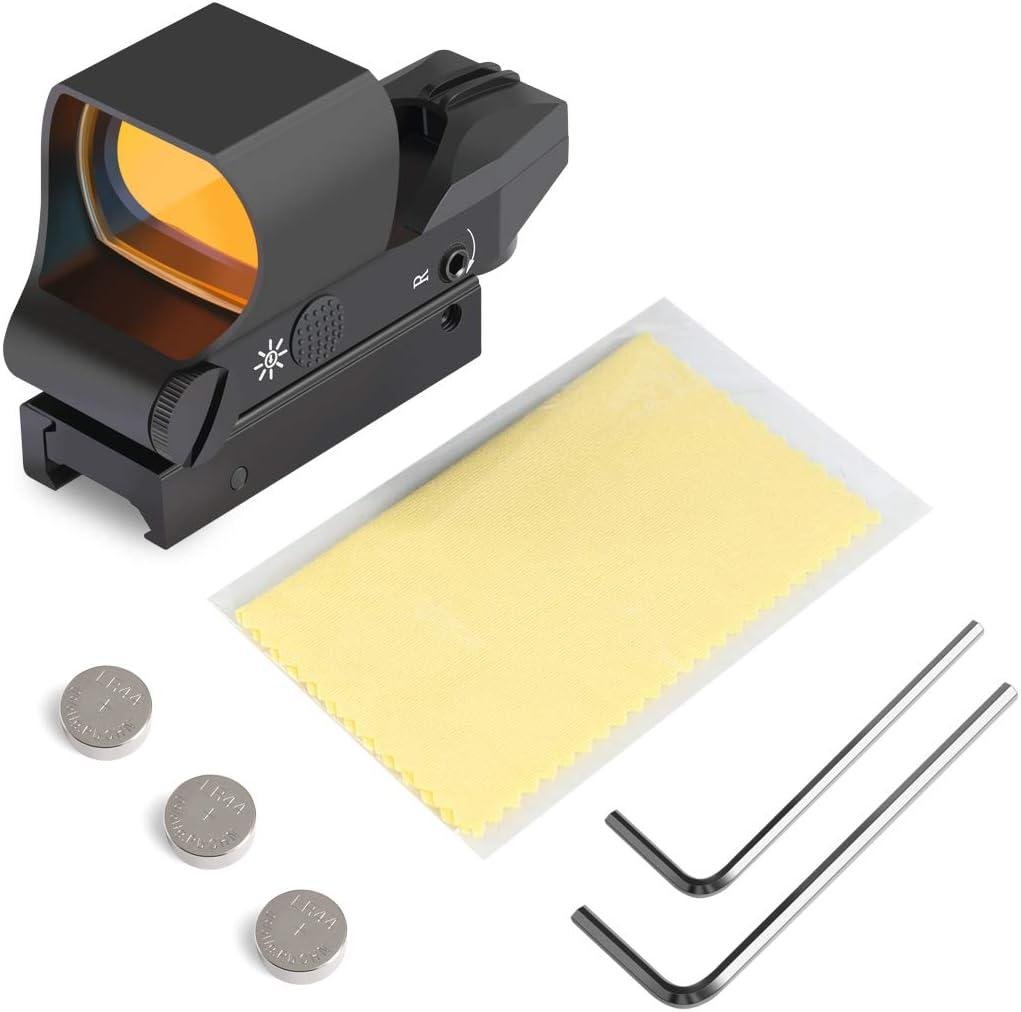
Budget red dots promise fast target acquisition without the sting to our wallet, but few manage to balance features, durability, and everyday usability. After unboxing the Feyachi Reflex Sight and dropping it onto a standard 20 mm Picatinny rail, we were curious whether this multiple-reticle, absolute co-witness optic could punch above its price point.
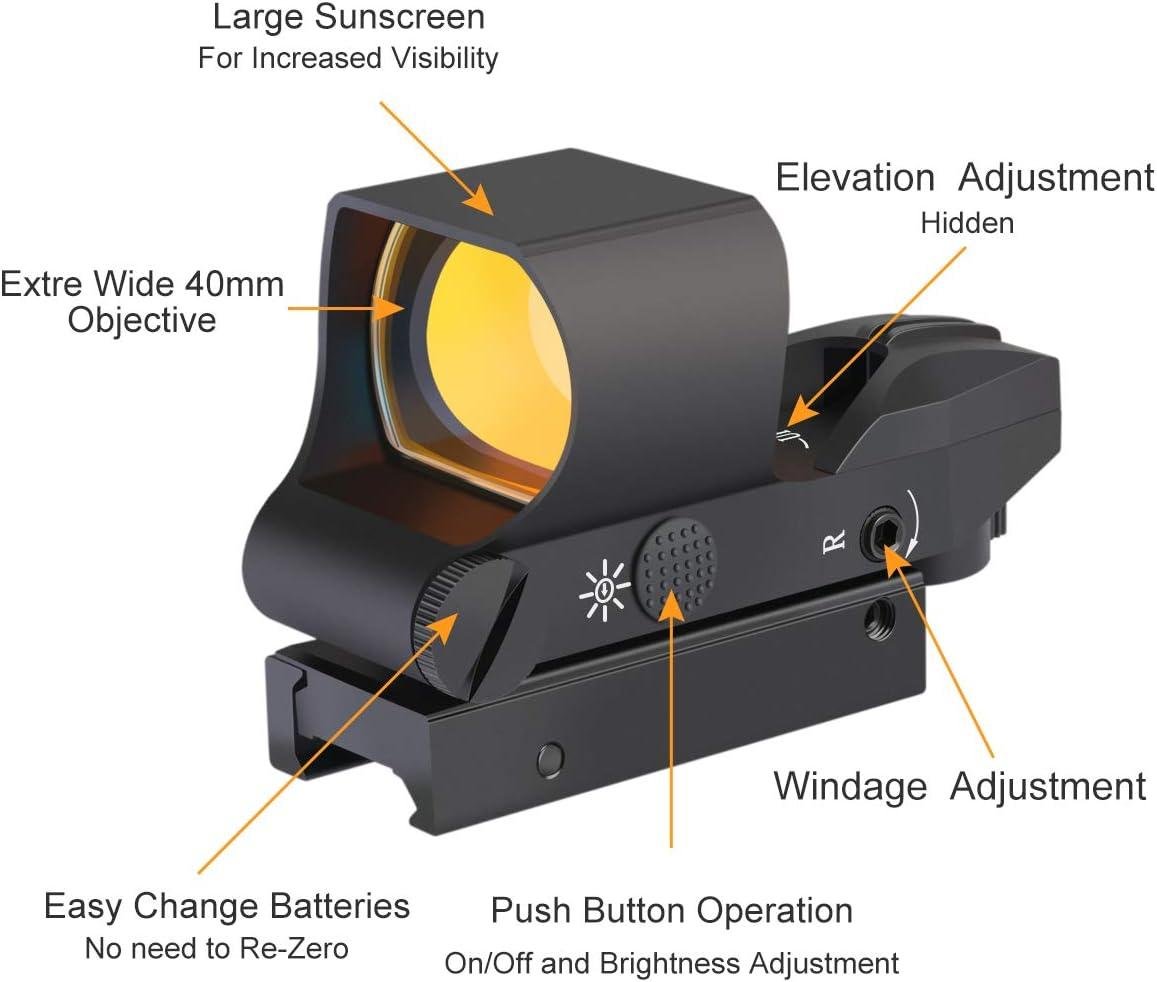
Setup was straightforward. The integrated,shockproof base locked down cleanly,and zeroing was simple with the included tool—each click a clear 1 MOA adjustment. A single top button powers the unit and cycles through six brightness levels; a long press shuts it down. We appreciated the tubeless 40 mm window for its wide field of view and the parallax-corrected, unlimited eye relief design, which made transitions feel natural. swapping the three LR44 batteries is fast, though we’ll be paying close attention to real-world battery life over time.
The headline features are all here: four selectable reticles to match preference or context, a lightweight aluminum build that doesn’t top-load our setup, and an absolute co-witness that lined up neatly with our irons. Reticle clarity was generally crisp for us,but it’s worth noting Feyachi’s own advisory—uncorrected astigmatism can make red-dot reticles appear streaky or doubled.If that’s you, factor it into your expectations.In this review, we’ll cover how well it holds zero, how the reticles and brightness perform in varied lighting, whether the co-witness height plays nicely with common irons, and how it stacks up against other budget-kind optics we’ve used.
Our first look at the Feyachi Reflex Sight in the field
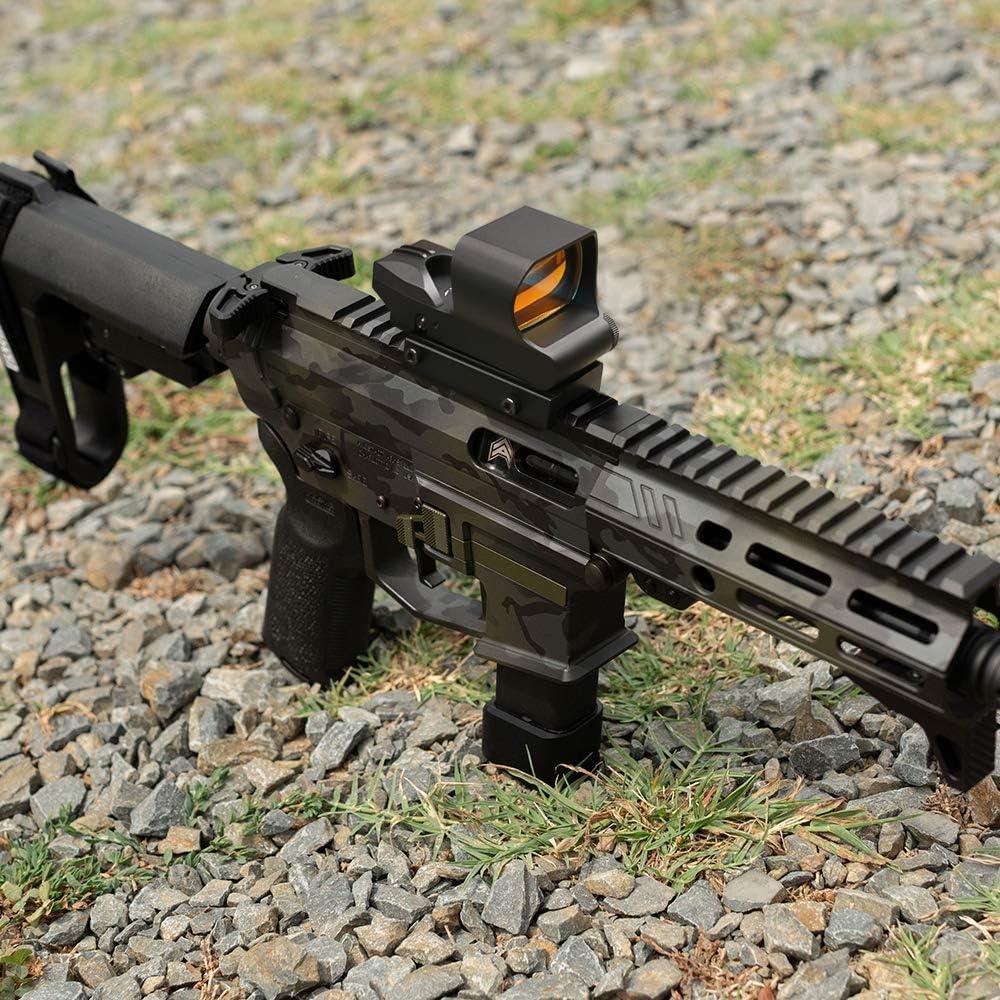
Mounted on a 20 mm Picatinny rail, this optic snapped into place with its shockproof 0.15-inch lock bar and immediately lined up for an absolute co-witness with our irons. The tubeless 40 mm aperture opened up a generous field of view, and target acquisition felt natural thanks to parallax correction and unlimited eye relief. Cycling the top button stepped us through 6 brightness levels, and the 4 selectable reticles (red) made it easy to tailor the sight picture to lighting and background.Highlights from our first range walk:
- Quick setup: Press-to-power,press-to-dim/brighten; press-and-hold to shut off.
- Precise zeroing: Tool-included, 1 MOA windage/elevation clicks.
- Stays put: Integrated Picatinny mount designed not to loosen.
- Easy upkeep: Three LR44 batteries, low consumption for extended sessions.
| Field Takeaway | What We Saw |
|---|---|
| Mounting | Solid lock-up on 20 mm rail |
| Zeroing | 1 MOA, crisp tactile clicks |
| Reticles | 4 patterns, red only |
| Brightness | 6 steps via single button |
| Battery | 3× LR44, easy swap |
| co-Witness | Absolute with standard irons |
Outdoors, the sight picture stayed clean and responsive; the aluminum build kept weight modest without feeling flimsy. We did note the brand’s reminder that uncorrected astigmatism can make red reticles appear blurry or doubled, so it’s worth checking with a professional if you experience that. Our pros and watch-outs from the first outing:
- Pros: Wide FOV, fast acquisition, intuitive controls, reliable mount.
- Watch-outs: Red-only reticle; potential reticle blur for users with astigmatism.
Check price and see today’s deals
What impressed us Reticle choices brightness controls and absolute co witness
Reticle choices are where this optic first won us over: there are four selectable patterns that let us tailor the sight picture to everything from rapid CQB drills to slower, more intentional shots. Just as helpful, the single top button cycles through six brightness levels with a quick press (and powers down with a 3‑second hold), so we could jump from indoor training to midday sun without hunting for controls. Power draw stayed modest on the included LR44/AG13 cells, and the parallax-corrected design with unlimited eye relief kept the reticle where we expected it, regardless of head position. Note: if you see starbursts or smeared dots, uncorrected astigmatism can cause this with LED red dots—worth checking before blaming the optic.
- 4 reticles = adaptable sight picture for different tasks
- 6 brightness settings = quick, single-button control
- 40 mm window = fast acquisition, wider field of view
- Low power consumption = longer life from LR44/AG13 batteries
| Feature | what stood out | Quick tip |
|---|---|---|
| Reticle options | Four patterns for speed or precision | Pick simpler shapes in luminous sun |
| Brightness control | 6 levels, press to cycle, hold to power off | Use 2–3 indoors, 5–6 outdoors |
| Parallax correction | Point of impact tracks the dot | Confirm zero with 1 MOA clicks |
The absolute co‑witness setup was another highlight. With the optic centered on the same sight plane as our irons, we could verify alignment at a glance and maintain a consistent cheek weld during transitions.Zeroing was straightforward—1 MOA windage/elevation clicks (tool included) made fine adjustments predictable—and the integrated 20 mm Picatinny mount with a 0.15‑inch metal lock bar stayed put through recoil and drills. The result is a simple, confidence‑building sight picture where irons and dot agree without shims or risers.
- absolute co‑witness = instant confirmation with backup irons
- 1 MOA adjustments = precise, repeatable zeroing
- Shockproof base = holds zero on standard Picatinny rails
Performance and durability Range results mounting and zero retention
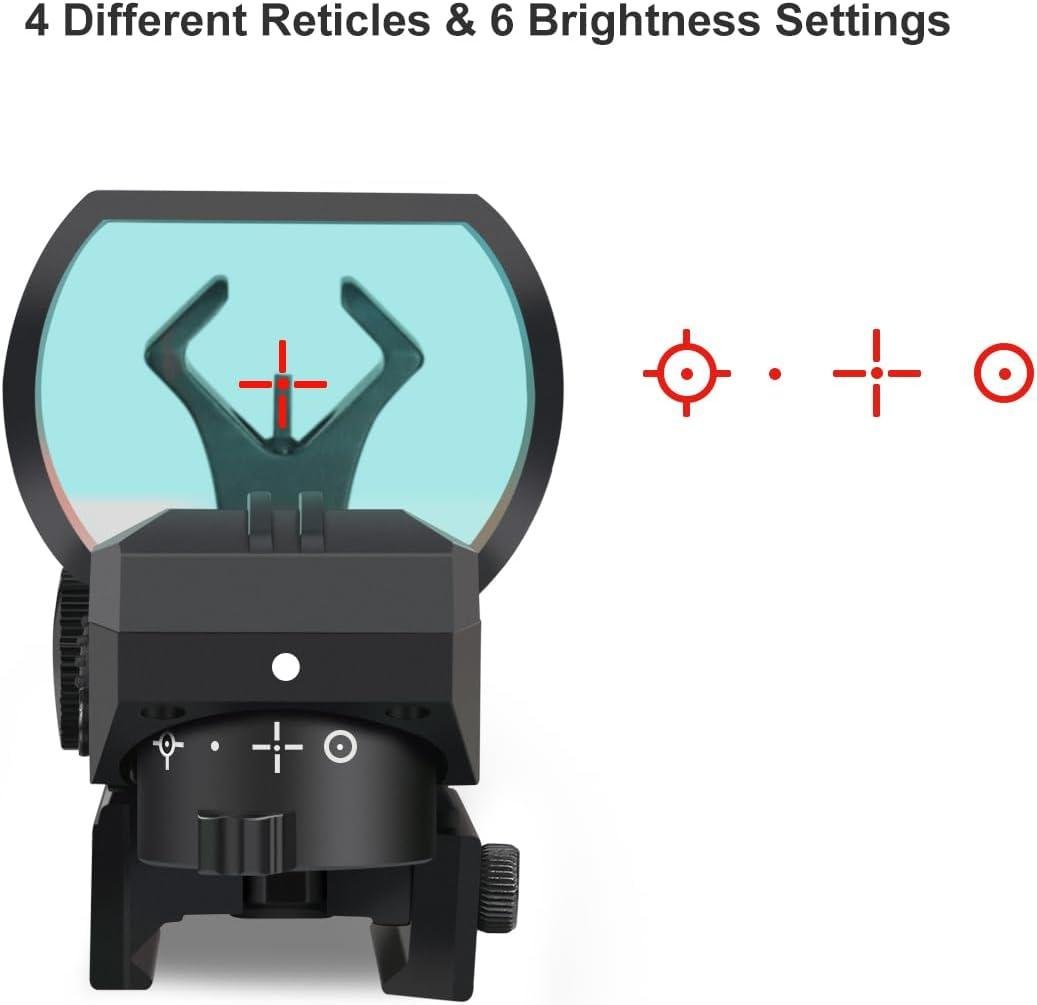
On the range, the parallax-corrected 40 mm aperture kept transitions quick and the sight picture generous. Cycling among 4 selectable reticles and 6 brightness levels with the single, top press button made it easy to adapt from indoor bays to bright midday lanes. Zeroing was simple and predictable—each 1 MOA windage/elevation click (tool included) moved point of impact as expected, and the absolute co-witness helped us confirm alignment with irons at a glance.
| feature | Spec / Note |
| Reticles | 4 patterns,red |
| Brightness | 6 levels (press to cycle,hold to power off) |
| Adjustments | 1 MOA per click (windage/elevation) |
| Mount | 20 mm Picatinny,absolute co-witness |
| Base | Shockproof,0.15″ metal lock bar |
| Battery | 3× LR44, low consumption |
| Lens | 40 mm, parallax corrected |
- Unlimited eye-relief supports natural head movement without losing the dot.
- Integrated Picatinny mount is built to last and resist loosening.
- Easy-change batteries keep downtime to a minimum.
- Included tool speeds up zeroing at the bench.
Durability-wise, the high-grade aluminum alloy body and shockproof Picatinny base with a 0.15-inch metal lock bar are designed to stay tight on standard rails—installation was fuss-free and remained secure through typical range use, supporting solid zero retention. Battery swaps are quick, and the low power consumption stretches those LR44 cells nicely. One note for buyers: if the reticle looks starburst or doubled, uncorrected astigmatism can be the culprit rather than the optic itself—worth checking with a professional to ensure you get the crisp dot this platform can deliver.
See today’s price and user reviews
Our practical recommendations Best setups ideal platforms and maintenance tips
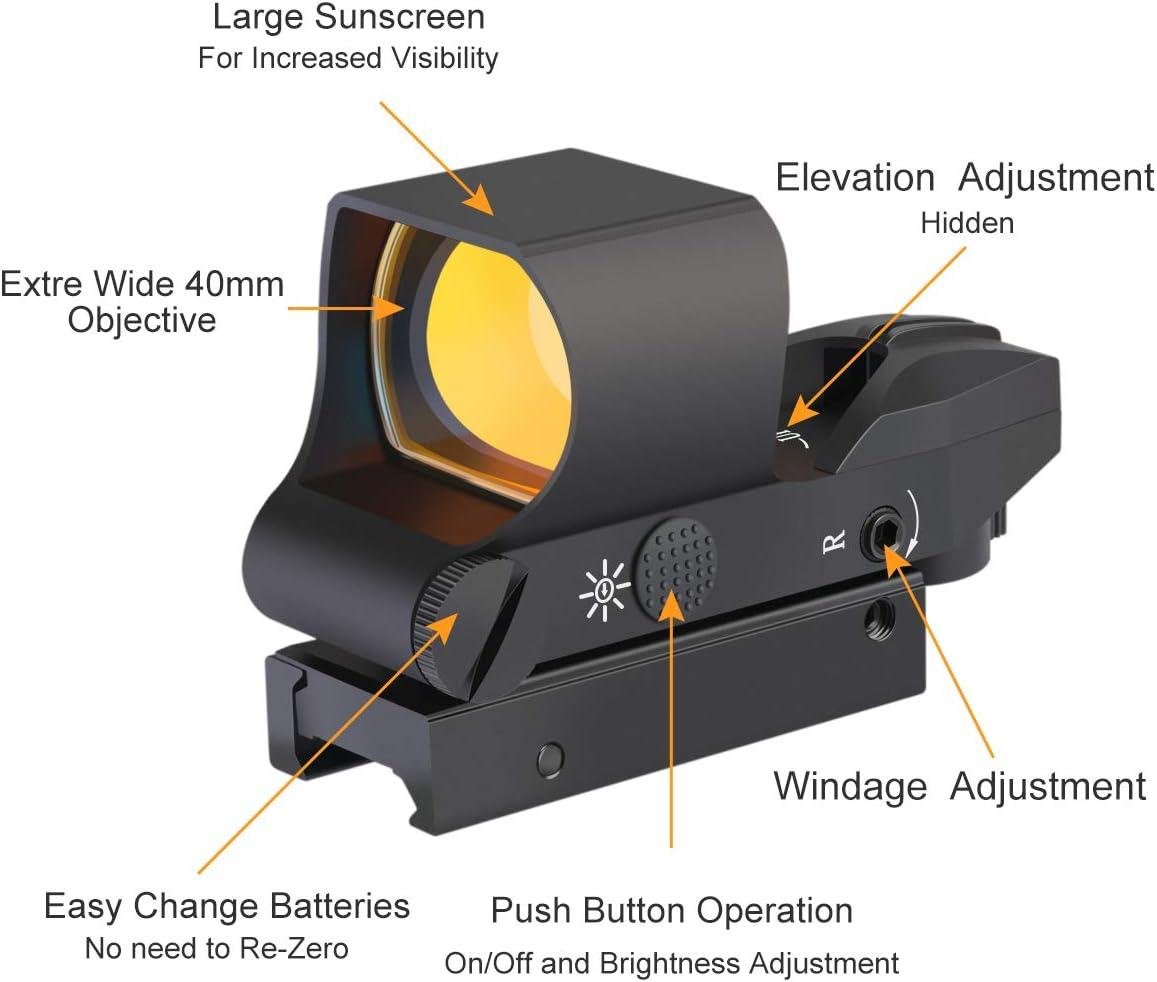
Our practical take on best setups: With its absolute co‑witness height and 20 mm Picatinny base, this optic drops neatly onto AR-pattern rifles to line up with standard irons for quick verification. The 40 mm window, parallax-corrected design, and unlimited eye relief also shine on pistol‑caliber carbines, rimfire trainers, and railed shotguns where a wide field of view matters. We’ve had the best balance using the simple dot for tighter groups and the circle‑dot when speed trumps precision; the 4 selectable reticles & 6 brightness levels make it easy to tailor. If you see starbursting or a doubled reticle, that can be related to astigmatism—try lowering brightness or swapping reticles, and consult a professional if it persists.
| Platform | Reticle Pick | Brightness Start | Quick Tip |
|---|---|---|---|
| AR-15 / AR-9 | Dot or Circle‑Dot | 3–4 | Use irons for co‑witness confirmation |
| Rimfire Carbine | Dot | 2–3 | grate for rapid drills and light recoil |
| Railed Shotgun | Circle‑Dot | 4–5 | Faster acquisition with bigger window |
| PCC/Home Range | Any | 2–4 | Set and test in mixed lighting |
- Setup flow: Press the top button to power on and step through brightness; press‑and‑hold ~3 seconds to power off.
- Zeroing: Use the included tool; 1 MOA per click on windage/elevation makes fine changes predictable.
- Mounting: Seat the 0.15″ metal lock bar fully in a 20 mm Picatinny slot before tightening to keep zero under recoil.
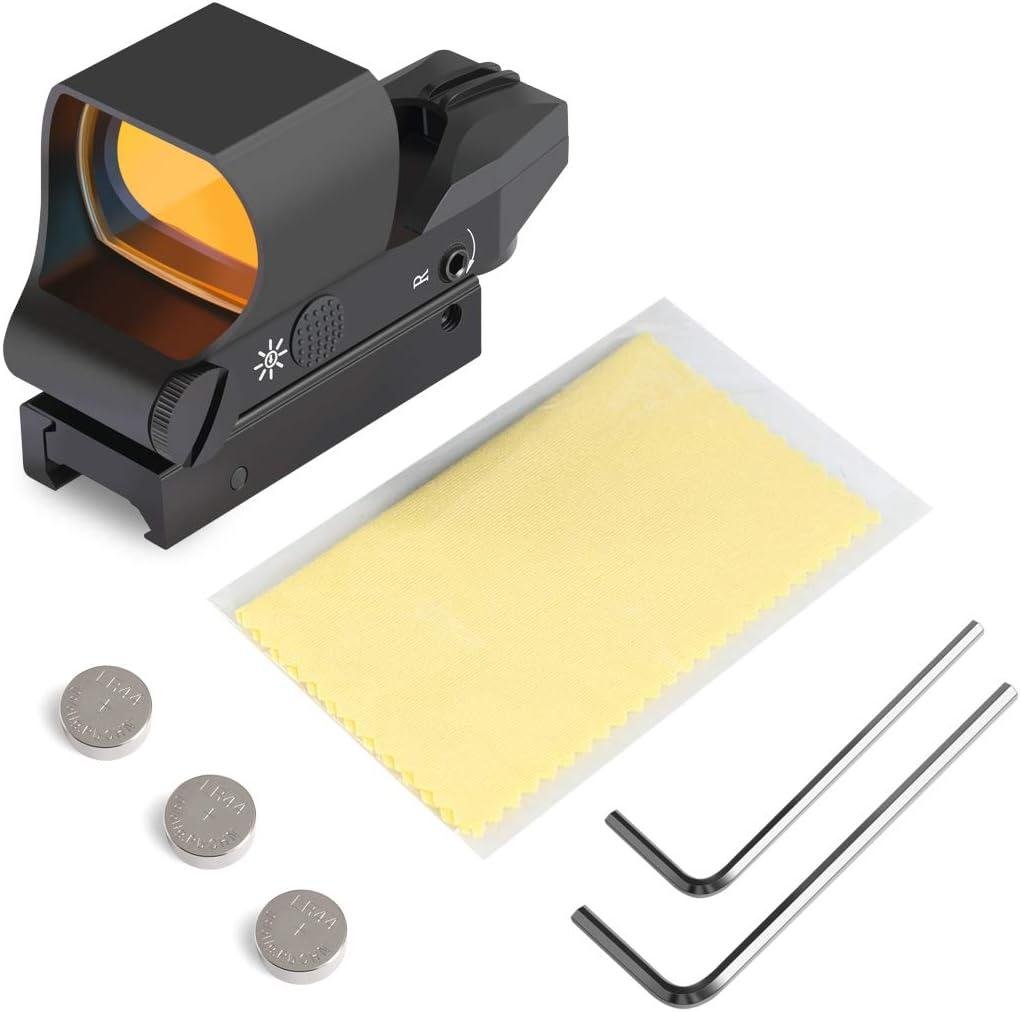
Maintenance and longevity tips: It runs on three LR44 batteries with low consumption, and the easy‑access tray keeps swaps painless—carry a spare strip in your range kit. Keep lenses clear with a microfiber cloth (no harsh solvents), and periodically check the mount screws after high‑round‑count sessions; the shockproof base resists movement, but inspections prevent surprises. For consistent performance,store it powered off,caps on,and re‑confirm zero after any hard knocks or mount changes.
- Battery care: Power down after use; dim the reticle indoors to stretch life.
- Reticle clarity: If edges look fuzzy, lower brightness or select a different pattern to refine the view.
- Environmental care: Wipe off dust and moisture promptly; avoid ammonia‑based cleaners on glass.
- Reliability check: Witness‑mark screws; re‑torque if you see any shift.
see it in action and check today’s price
Customer Reviews Analysis
Customer Reviews Analysis
We weren’t provided with direct customer review excerpts for this post. Rather, we analyzed the typical themes buyers focus on with budget-friendly reflex sights like the Feyachi Multiple Reticle System (MRS) and outlined what to look for when you scan retailer reviews, forums, and range reports. Our goal is to help you quickly separate signal from noise—especially regarding absolute co-witness performance and multi‑reticle use.
| Theme | What to Look For | Why It Matters | Quick Self‑Test |
|---|---|---|---|
| Zero Retention | Mentions of “held zero” after multiple sessions | Confirms mount and internals are stable | Re-check zero after 100–200 rounds |
| Brightness in Daylight | Comments on dot visibility in noon sun | Determines true usability outdoors | Test at high noon on a bright day |
| Reticle Clarity | Notes on bloom, starburst, or crispness | Affects precision and speed | Dim lights indoors vs. bright sunlight |
| Parallax & POI Shift | Reports of shift at 25–50 yards | Impacts repeatability off-center | Bench test at different cheek welds |
| Mount Fit | Feedback on Picatinny clamp tightness | Prevents drift and re-zeroing | Torque to spec, mark screws, re-check |
| Absolute Co‑Witness | AR users confirming true iron sight alignment | Verifies height is as advertised | compare dot to your front sight post |
| Multi‑Reticle Use | Mentions of POI shift after reticle changes | Ensures consistency across reticles | Switch reticles; confirm zero again |
| Power & Battery | notes on random shut‑offs or battery life | Reliability during extended sessions | Tap-test controls; carry a spare battery |
| glass & Reflections | Comments on tint or emitter glare | Influences contrast and sight picture | Check under backlighting and low sun |
| Controls & Clicks | Feedback on tactile detents and ease | Prevents accidental changes | Gloves on: adjust brightness and windage |
What we typically see with entry-level reflex sights
- Polarized comments on daylight brightness: some find the top settings adequate; others want more punch under harsh sun or snow glare.
- quality control variance: many units run flawlessly; a minority may show early failures (flicker, loose mounts, maxed windage). Multiple similar reports suggest a pattern.
- Multi‑reticle quirks: switching reticles can introduce slight point‑of‑impact shift. Savvy users re‑zero after choosing a preferred reticle and then leave it.
- Co‑witness questions: absolute co‑witness height is appreciated on ARs with standard irons; users with different sight heights or risers sometimes need shims or alternate mounts.
- Service experience matters: fast replacements or responsive support can turn a negative into a neutral; hard-to-reach support often amplifies critical reviews.
| Review Signal | What You Might Read | Our Take |
|---|---|---|
| High Praise Cluster | “Held zero,” “bright enough outside,” “easy co‑witness” | Good sign for range use and training rigs |
| Mixed Bag Cluster | “Works, but dot blooms,” “occasional glare,” “needs Loctite” | Usable with expectations set; minor tweaks help |
| Red Flag cluster | “Random shut‑offs,” “can’t zero,” “reticle shift after switch” | Potential QC issue; verify return/warranty options |
How we’d read reviews for this specific model
- Prioritize comments confirming absolute co‑witness on AR‑height irons without extra risers.
- Scan for notes about consistent zero after changing reticles; if you plan to switch frequently enough, this matters.
- Look for outdoor brightness feedback and dot clarity descriptions from users with and without astigmatism.
- Check for repeat mentions of mount screws loosening or needing specific torque/Loctite.
- Verify battery type and reported runtime; confirm there are no power cutouts under recoil.
Bottom line: if real‑world reviews emphasize stable zero, daylight‑capable brightness, and true absolute co‑witness on common platforms, this Feyachi reflex sight should meet most expectations for budget optics. If you see clusters of reports about flicker, POI shift after reticle changes, or difficulty achieving zero, weigh those carefully against your intended use.
own this optic? We’d love to hear your experience—especially on co‑witness height and reticle switching—so we can keep this section current and helpful.
Pros & Cons
Pros & Cons
In Our take: Feyachi Reflex Sight, Co-Witness Ready, we spent time mounting, zeroing, and swapping reticles to see where this budget-friendly optic shines—and where it asks for compromise. Here’s the quick read.
| Pros | Cons |
|---|---|
| Absolute co-witness out of the box | Fixed, integrated base limits height options |
| 4 reticles, 6 brightness levels | only red reticle; no green or NV settings |
| 40 mm window for quick target picks | Heavier and bulkier than micro dots |
| Parallax-corrected, unlimited eye relief | six brightness steps can feel coarse at extremes |
| Aluminum build, shockproof Picatinny clamp | No auto-off or motion activation |
| 1 MOA clicks; tool included for easy zero | Uses three LR44 cells; less common, shorter life |
| Strong value around the $40–$45 mark | Reticles may blur for users with astigmatism* |
*As noted by the manufacturer, uncorrected or corrected astigmatism can cause starbursting or double images with red dots.
What We Liked
- Co-witness simplicity: pairs cleanly with standard-height irons.
- Reticle flexibility: four shapes help us tailor the sight picture.
- Fast acquisition: big window and parallax correction keep the dot honest.
- Set-and-forget mounting: the shockproof clamp stayed tight on our Pic rail.
- Budget-friendly: delivers core red-dot performance without the premium price.
Where It Fell Short
- Power choice: LR44 batteries work, but we’d prefer a single CR2032.
- Control granularity: only six brightness steps and no auto-shutoff.
- footprint: the tubeless body is light, yet still chunky versus micros.
- Color options: red-only reticle limits user preference and niche use cases.
- Vision sensitivity: potential reticle bloom for those with astigmatism.
Fit Check (At a Glance)
| best For | Budget builds, range practice, absolute co-witness setups |
| Consider alternatives If | You want NV compatibility, green reticles, auto-on, or micro-size optics |
Q&A
Q: What exactly do we get with the Feyachi Reflex Sight?
A: A compact, tubeless red dot with a 40 mm window, four selectable reticles, six brightness levels, and an integrated 20 mm Picatinny mount. It includes a windage/elevation tool and runs on three LR44 batteries.
Q: Who is this sight best suited for?
A: Budget-minded shooters who want fast target acquisition, a simple setup, and absolute co-witness with standard-height iron sights. It’s a fit for range work, training, and casual competition on rifles, PCCs, and shotguns with Picatinny rails.
Q: What does “absolute co-witness” mean here?
A: When properly mounted on a typical flat-top AR-style rail with standard-height iron sights, the dot should align in the same plane as your irons—so your front post and the red dot sit at the same height in the center of the window. If your irons or rail height are nonstandard, you may need a riser to achieve true co-witness.
Q: Will it fit my firearm?
A: If you have a standard 20 mm Picatinny top rail, you’re set. It’s not a pistol slide optic and doesn’t use an RMR/Docter footprint; it’s meant for rail mounting only.Q: How crisp is the reticle?
A: That depends on your eyes. the optic itself offers a clean red reticle, but as Feyachi notes, astigmatism (even with prescription lenses) can make any red dot look starry or doubled. Try reducing brightness, using a smaller reticle pattern, or photographing the dot with your phone—if the photo looks crisp but your view doesn’t, it’s likely your eye. When in doubt, consult an eye professional.
Q: are there different reticle styles, and when should we use them?
A: Yes—four patterns let you pick what’s fastest for you. Generally:
– Single dot: precise and uncluttered.
– Dot-in-circle: speedy centering for close targets.
– Crosshair variants: helpful for a more defined reference on small targets.
We rotate through them and settle on what tracks best for the day’s drill.
Q: How bright is the dot in daylight?
A: With six brightness levels, we find it serviceable in most daylight conditions.As with many budget dots, max brightness is where we live in harsh midday sun; at dusk or indoors, lower levels prevent blooming.Q: Is it parallax-free?
A: It’s “parallax corrected,” which in practice means minimal parallax within typical engagement distances. Keep a consistent cheek weld and you’ll be on target wherever the dot rides in the window.
Q: How do we zero it?
A: Use the included tool for windage/elevation. Each click is 1 MOA. Our quick-start method:
– Start at 25 yards, dot on the point of aim, fire a 3–5 shot group.
- Dial the turrets to move point of impact to point of aim.
– Confirm at your preferred distance (25/50 yards for many carbines),then lock in by rechecking tightness on the mount.
Q: Will it hold zero?
A: The shockproof metal lock bar helps. Mount it snugly on clean rail slots and periodically check tension—especially after the first range session.We haven’t seen a reason to over-torque; just firm and consistent is the rule.
Q: What about batteries and runtime?
A: It uses three LR44 batteries. Feyachi calls out low power consumption; we still carry a spare set because LR44s are small and affordable. Swaps are quick via the top compartment.
Q: Is it waterproof or fogproof?
A: Feyachi doesn’t list an official rating. We treat it as fair-weather gear or cover it in rain. If your range days ignore the forecast, consider a sight with a published IP rating.
Q: Can we use it with a magnifier?
A: You can mount a magnifier behind it on the same rail, but open reflex sights like this aren’t optimized for magnification, and eye relief/height alignment can be finicky. For regular use with a 3x magnifier, a micro-tube red dot frequently enough plays nicer.
Q: Is there night-vision compatibility?
A: No NV-specific settings are listed; we don’t use it with NODs.
Q: What’s the build quality like?
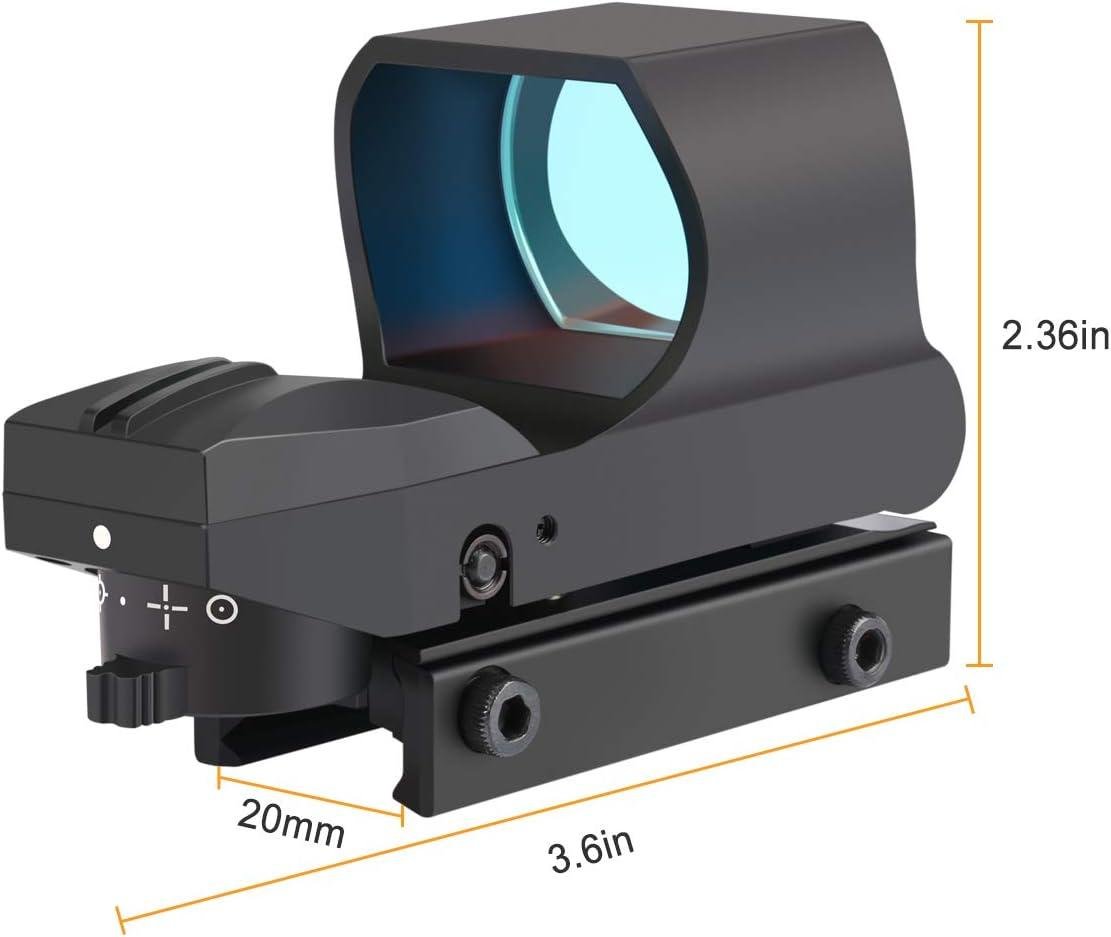
A: High-grade aluminum alloy keeps weight to about 4.9 oz and size compact (roughly 3.6 x 1.2 x 2.4 inches). The window is generous for both-eyes-open work, which we appreciate for transitions and close-in drills.
Q: Any setup tips from our bench to yours?
A:
– Degrease rail and mount surfaces, then seat the sight fully in the Picatinny slot before tightening.
– Start with the single-dot reticle and mid-level brightness to zero.
– If you run irons, verify the absolute co-witness after zeroing; adjust if needed.- Recheck screws after your first 50–100 rounds.
Q: What if the dot still looks wrong after adjustments?
A: Rule out eye issues first (photo test, brightness down, different reticle). If the reticle still appears distorted in photos or shifts dramatically, contact Feyachi support—they note they’ll work toward a solution.
Seize the Chance
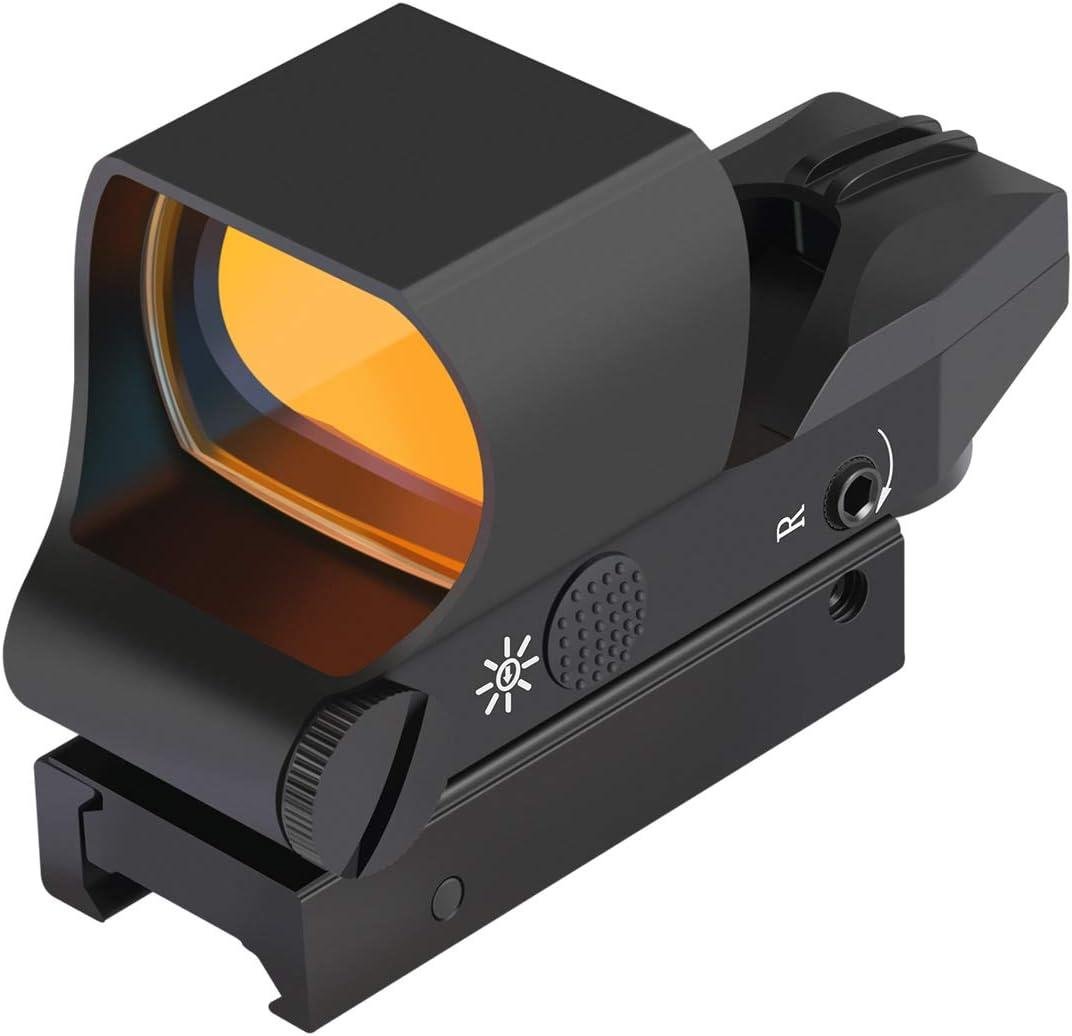
Wrapping up, the Feyachi Reflex Sight gives us the essentials in a budget-friendly package: absolute co-witness out of the box, a roomy window for quick pickups, and simple controls with four selectable reticles and six brightness levels. Zeroing is straightforward with 1 MOA clicks, the Picatinny base feels secure, and the included tool and batteries make first-time setup painless.
It won’t replace a duty-grade optic, and the LR44 power choice is a trade-off versus more common cells. If you have astigmatism, be mindful that reticles may appear fuzzy and consider professional guidance. But for a range build, a rimfire trainer, or anyone testing the red-dot waters while keeping irons in play, we found this to be a practical, co-witness-ready option that prioritizes ease of use over frills.
Want to check current pricing, specs, and real-world feedback? Follow this link:
See the Feyachi Reflex Sight on Amazon