
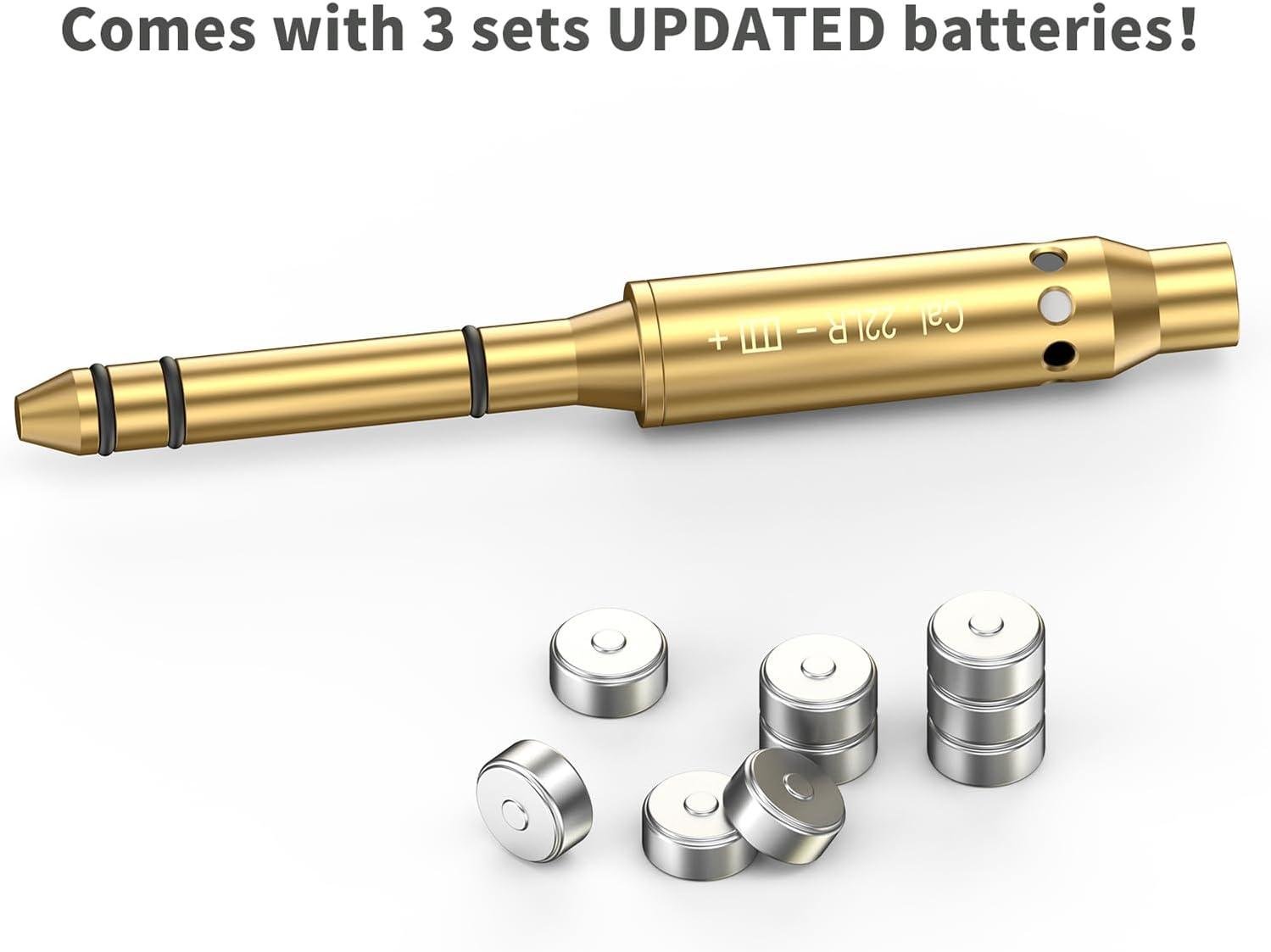
Zeroing optics is one of those rituals we actually enjoy-right up until we burn through a box of ammo just to get “on paper.” That’s why we were curious about the Tipfun .22LR/.177 Cal/ 9mm /.375 Cal / .41 Cal / 40sw/10mm Red Laser Boresighter, an end-of-barrel red laser that promises quick alignment for revolvers, pistols, rifles, and even air guns, with spare batteries and O-rings in the box. Ours arrived in a compact case with a brass-bodied unit that feels sturdier than most budget gadgets, plus multiple O-rings and extra button cells.
We started with our .22 LR setups-both irons and a red dot-and than moved to a 9mm pistol. Fit was snug once we matched the right O-ring, and the laser didn’t wobble or try to fall out, which has been our gripe with some universal boresighters. Indoors, the red dot was crisp across a living room’s distance; outdoors it was best at dawn/dusk or in the shade, as you’d expect from a Class IIIA (<5 mW) red laser.Battery swaps were simple, and the inclusion of multiple sets is a thoughtful touch given how fast button cells can drain. In this review, we’ll cover real-world accuracy at typical zeroing distances, daylight visibility, battery life, and overall value, along with a few small quirks we discovered along the way. Hear’s how the Tipfun performed when we put it to work before our next range day.
Our Initial Impressions and Box Contents
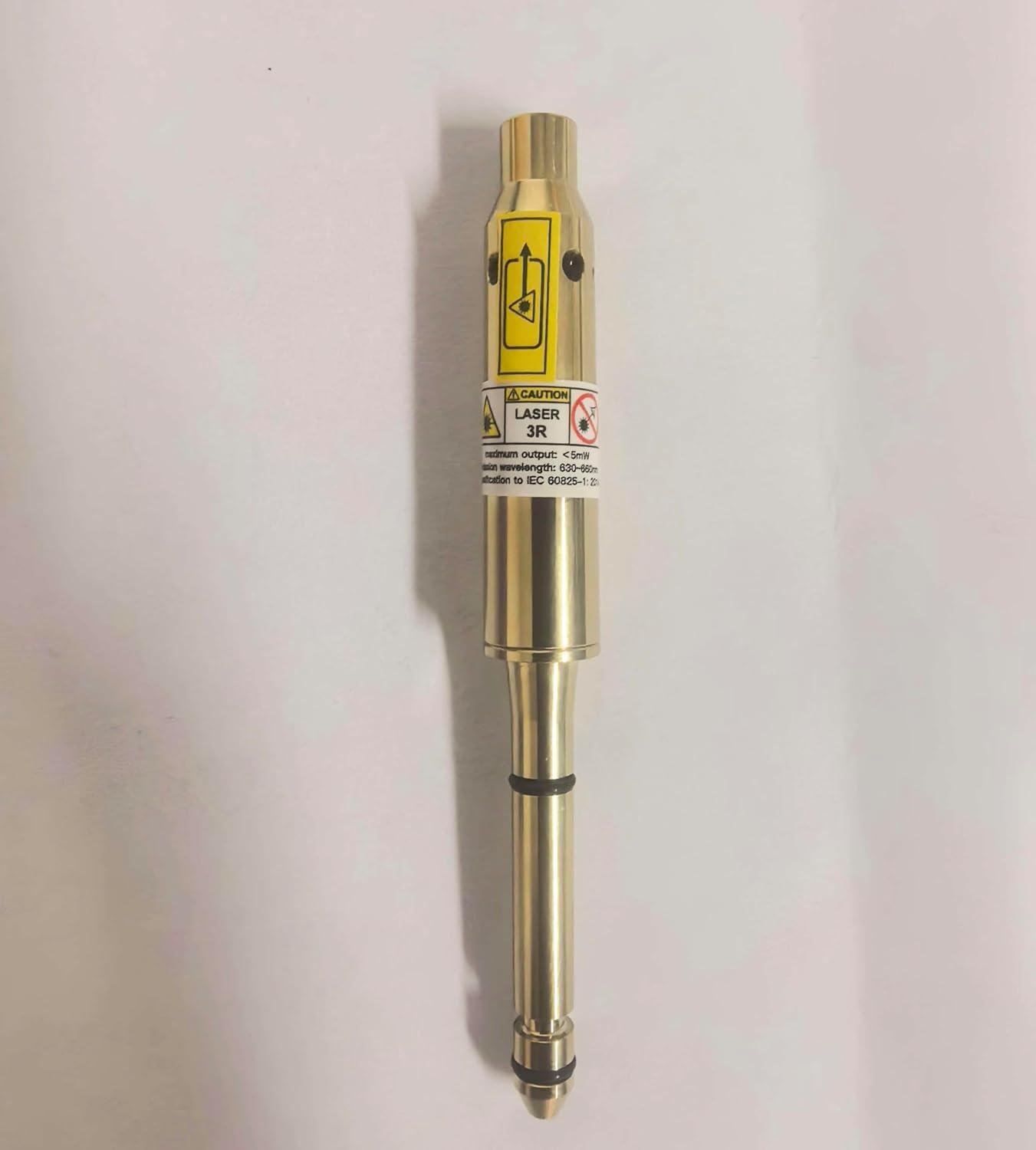
Right out of the box, the unit feels reassuringly solid thanks to its brass construction and neat machining. The interchangeable O-rings arrived pre-trimmed and delivered a snug, centered fit at the muzzle (used without a suppressor), which kept the laser steady and, importantly, didn’t slip out during handling. Firing up the Class IIIA (<5mW) red laser gave us a crisp dot indoors for quick alignment; outdoors it was best in shade or lower light,which tracks with red-laser norms. Setup was quick and intuitive-drop in, tighten the O-rings to seat, and start dialing in to save time and ammunition before range day.
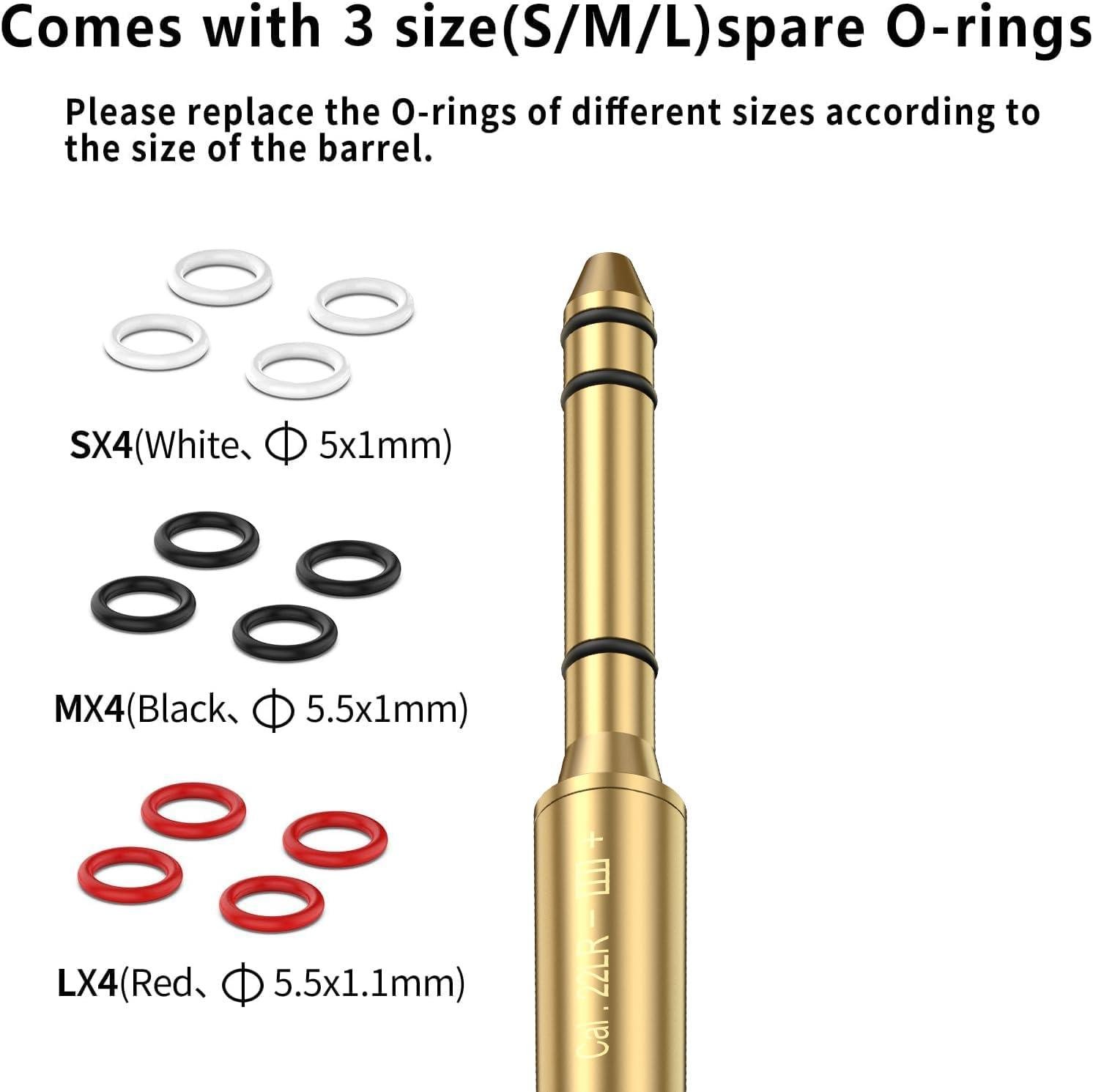
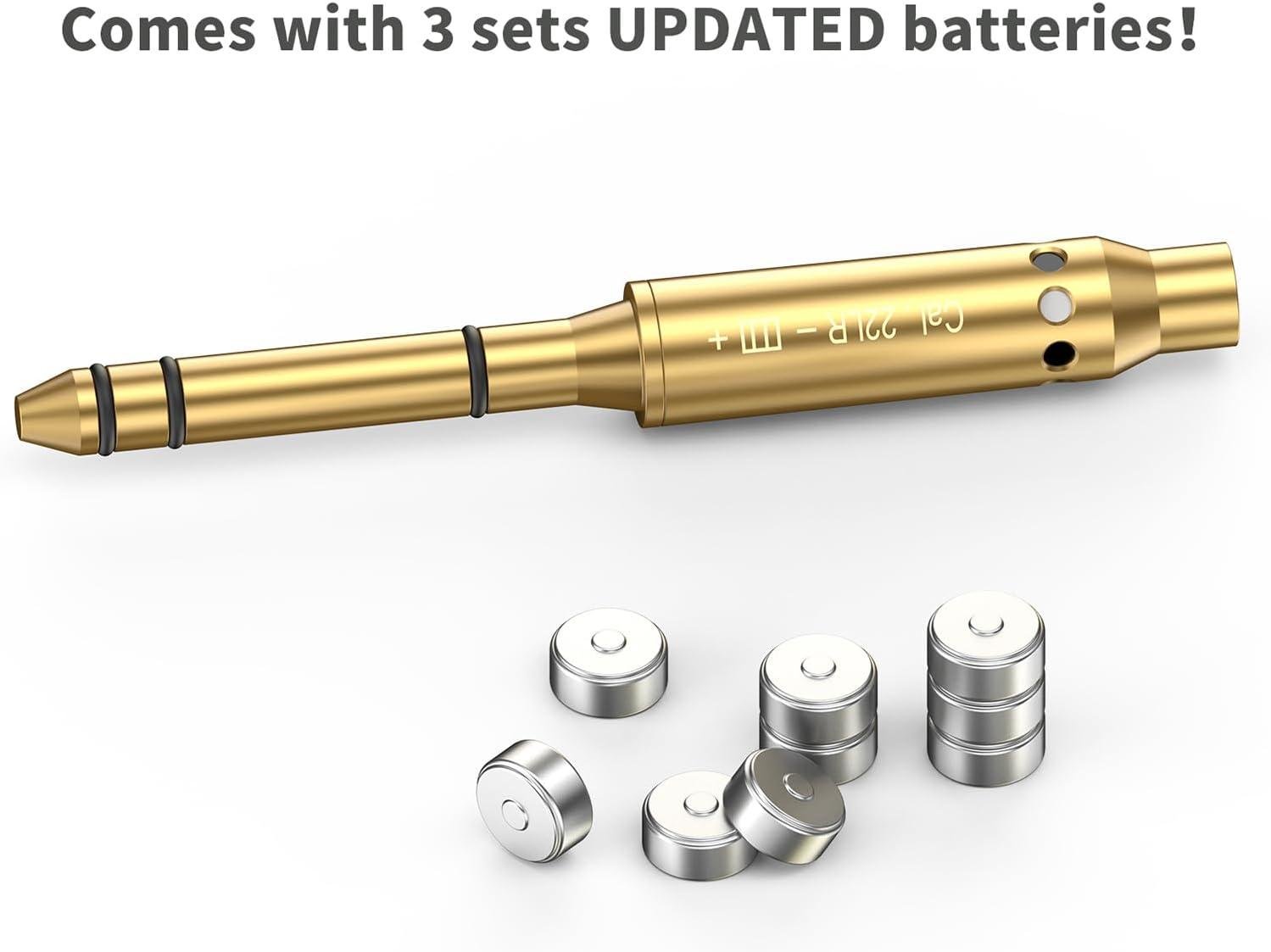
Inside the case, we found a practical spread of spares that makes this feel range-ready. There are 12 total button cells (four sets),and the module runs on three batteries at a time-stacking a fourth can throw alignment off,so we appreciated the extra cells without the guesswork. Multiple spare O-rings help tailor fit across different muzzles, and the compact carry box keeps everything organized between trips. Early takeaway: it’s a straightforward zeroing helper for iron sights, scopes, and dots, best used to get “on paper” at home before fine-tuning live fire.
- In the box: Brass laser module
- 12 button-cell batteries (4 sets; 3 used per session)
- Multiple spare O-rings
- Instruction leaflet
- Portable storage case
| Quick Spec | detail | What Stood Out |
|---|---|---|
| Material | Brass | Sturdy, well-machined feel |
| Laser | Red, Class IIIA <5mW | Sharp indoors; shade-pleasant |
| Power | 3 button cells/use | 4 sets included for longevity |
| Fit | O-ring seated | Snug, no barrel slip |
| Use Case | Pre-zero at home | Saves time and ammo |
Check current price and availability
Our Take on Design Fitment and Caliber Compatibility
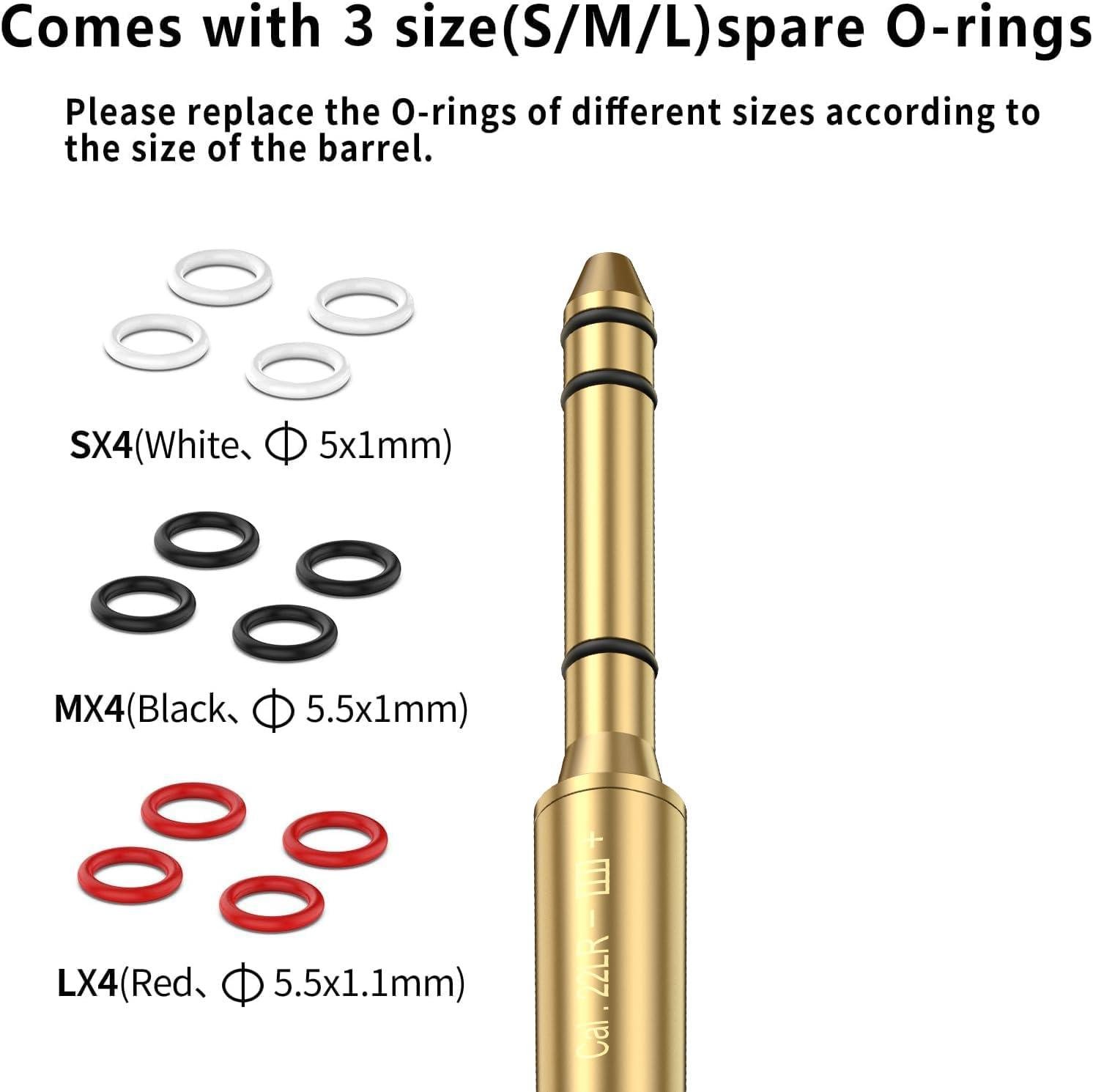
Thoughtfully machined from sturdy brass, this red-beam boresighter aims for a snug, centered fit using layered O-rings that seat at the muzzle; for .22 LR there’s also a chamber-specific style that slides directly into the bore (note: no suppressor attached).The module is Class IIIA (<5 mW) and arrives with spare O-rings, a pocketable case, and multiple battery sets. In practice, we liked that it doesn’t wobble or fall out like some one-size-fits-all tools, and it plays nicely with iron sights, scopes, and red dots for fast, low‑waste zeroing at home before final tweaks at the range.
- Fitment feel: Tight and repeatable when O-rings are sized correctly; a tiny dab of lube can definately help seating.
- Battery note: Uses three button cells in-stack; following the insert prevents cant or dimming.
- Visibility: Red dot is crisp indoors/twilight; less punchy under bright noon sun.
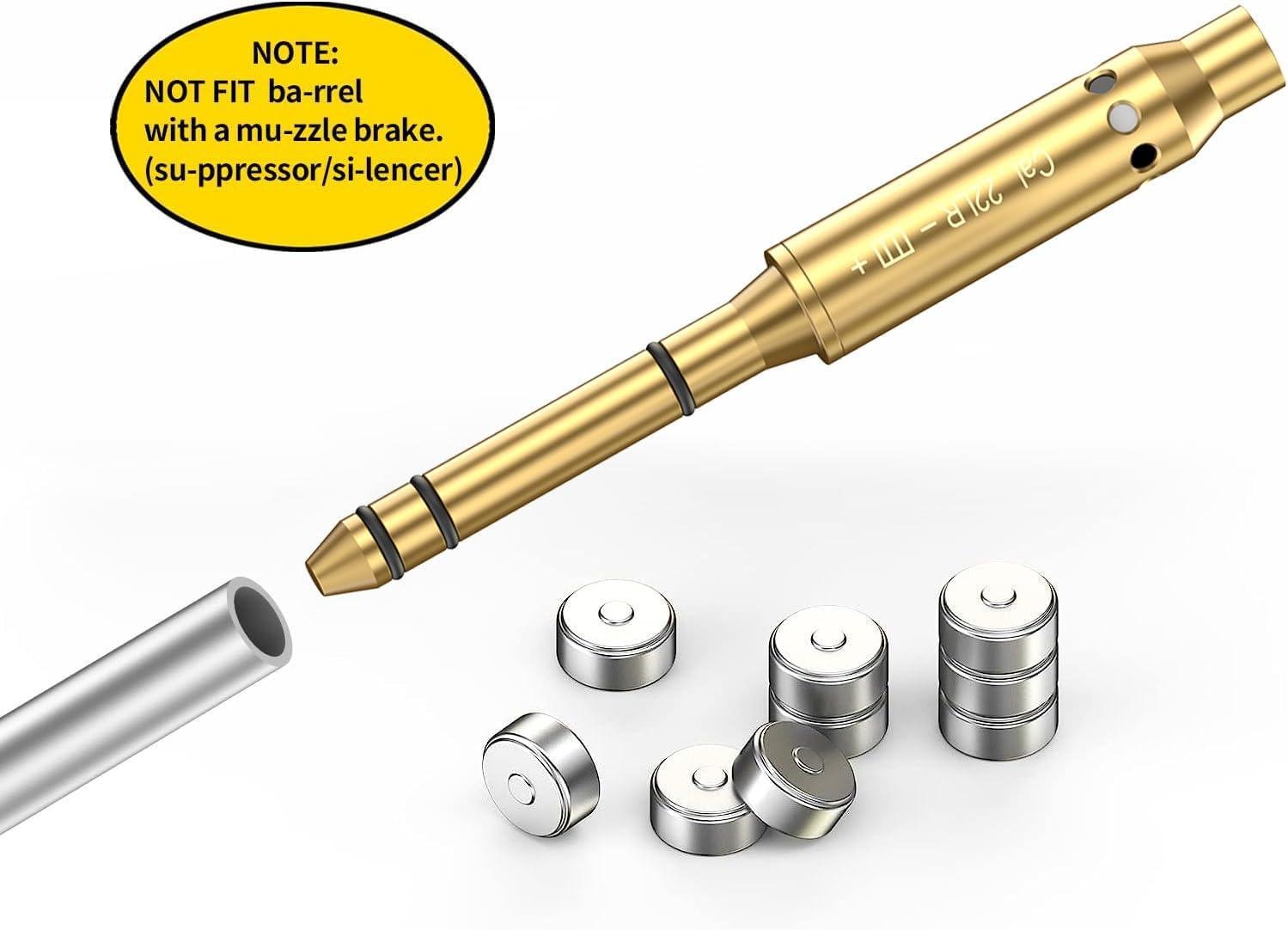
- Muzzle access: Fixed suppressors or shrouds may block insertion; an adapter/sleeve might potentially be required.
- Retention: Holds better than generic “universal” tips that can slip from the barrel.
| Caliber | Typical Host | Fitment Note | Zeroing Hint |
|---|---|---|---|
| .177 | air rifles/pistols | Light O-ring tension | Short indoor lanes |
| .22 LR | Rifles & trainers | Snug; seats cleanly | 25 yd start point |
| 9mm | Compact/full-size pistols | Even muzzle pressure | Co-witness red dots |
| .40 S&W / 10mm | Duty & woods pistols | Firm O-ring stack | 10-15 yd POA/POI |
| .375 /.41 | Revolvers & big-bore | Center carefully | Confirm at 50 yd |
On caliber coverage, we’re satisfied with how broadly it spans plinkers to big‑bore handguns and air guns, provided the correct tip/O‑ring pairing is used and the muzzle is unobstructed. for results, we consistently land on paper fast-often within a couple inches at 50 yards-then fine‑tune live fire. Expect a slight POI shift if you reseat the tool; indexing the body the same way each time helps. Indoors or at dusk it shines; under bright sun, the red is serviceable for alignment but not for chasing tiny groups. For battery longevity, the included multi‑set pack is a win-just stack the three cells as directed and you’re set. See current price and options
How We Evaluated Laser Brightness Zeroing Accuracy and Battery Life
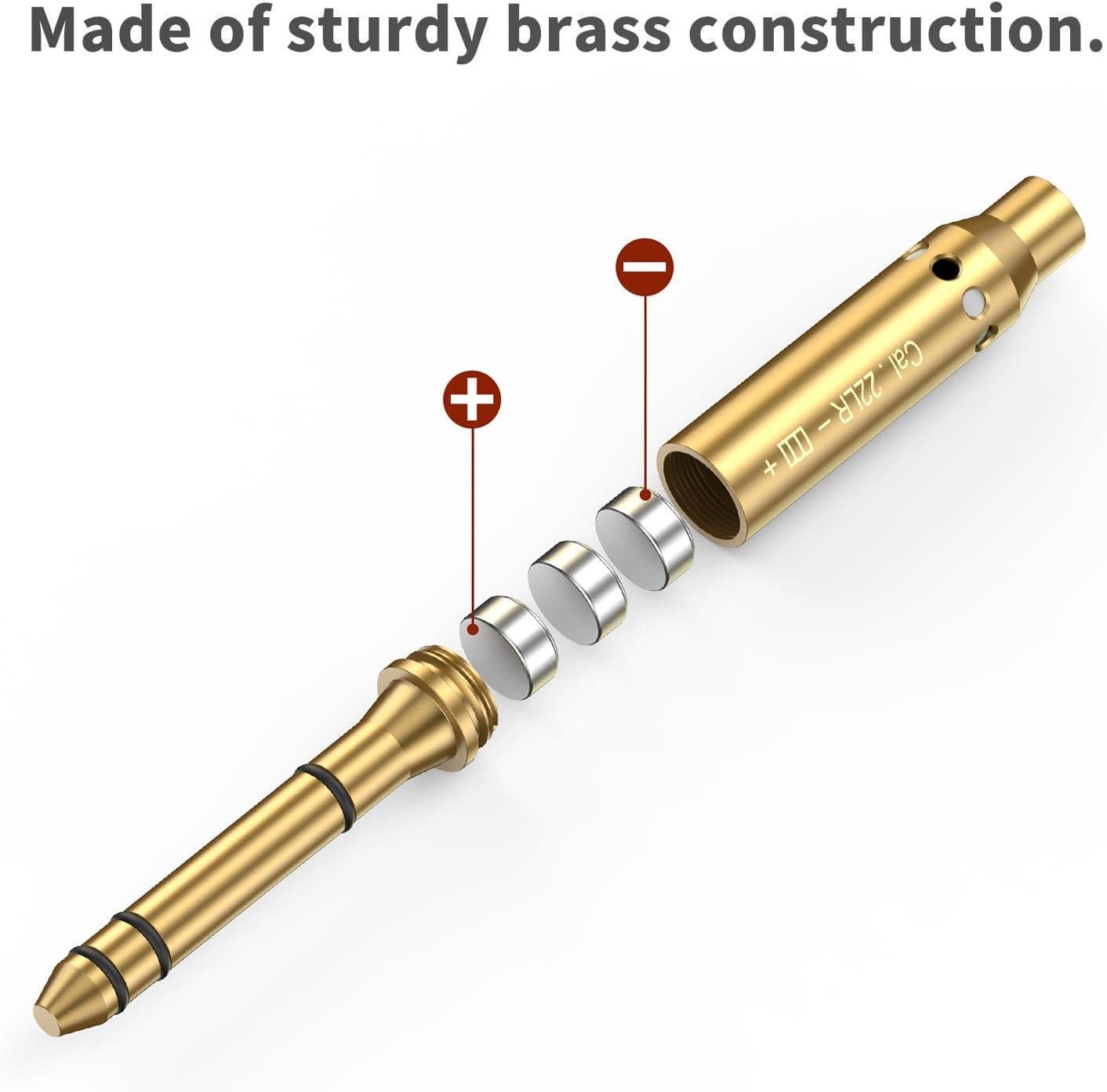
Brightness and zeroing protocol: We mounted the red laser at the muzzle as designed,verified a snug O-ring fit,and evaluated visibility on matte targets under indoor lighting and in daylight (midday vs. dusk). Using .22 LR platforms and an air rifle, we aligned to a grid at 25 feet for coarse setup, then checked point-of-aim/point-of-impact relationships at 25 and 50 yards with iron sights, a scope, and a red dot. To assess consistency, we reinserted the unit multiple times and noted any shift in the dot. This approach mirrors customer feedback praising its easy fit, solid retention, and the ability to arrive “range-ready” for fine-tuning.
- Lighting: Indoor room light, shaded afternoon, direct sun
- Distances: 25 ft (indoor alignment), 25 yd, 50 yd (validation)
- Optics: Iron sights, LPVO/scope, red dot
- Repeatability: Multiple insert/remove cycles to check dot shift
- Notes: Red is harder to see in bright sun; dusk/indoor visibility is stronger
| Distance | Typical Initial Offset |
|---|---|
| 25 yd | On paper, ~1″ adjustments to fine-tune |
| 50 yd | Within ~2″ before live-fire zero |
Battery life methodology: With the included upgraded button cells (four sets total), we confirmed a three-battery stack per use and ran two scenarios: continuous-on until the dot became impractical to see, and an intermittent cycle (5 minutes on/5 minutes off) to mimic real zeroing. We monitored brightness drop at a fixed distance indoors and noted outdoor visibility limits for a Class IIIA (<5 mW) red laser. This aligns with user notes that red lasers are more challenging under bright daylight yet excel for quick at-home pre-zero and dusk sessions.
- Power: class IIIA (<5 mW) red module
- Cells: 3 per session (spares included for multiple sessions)
- Runtime checks: Continuous vs. 5/5 cycling, room-temp habitat
- Usability threshold: Tracked until dot visibility hindered precise adjustments
| Test Mode | Practical Runtime | Notes |
|---|---|---|
| Continuous (indoor) | ~2 hrs | Gradual dim after 90 min |
| Intermittent (5/5) | ~3+ hrs | Stable dot between cycles |
| Midday outdoors | ~60-90 min | Best on shaded targets |
Check current price and see more details
Who This Boresighter Suits and Our Practical Tips for Best Results
who this boresighter suits: We see the best fit for rimfire owners dialing in iron sights, scopes, or red dots on.22 LR platforms, and also air-gun tinkerers who want quick, cartridge-saving alignment before the range. The snug, end-of-barrel fit and sturdy brass build inspire confidence, and the included spare batteries and O-rings make it friendly for frequent zero changes. It’s also a smart pick for anyone wanting an at-home, initial 25-yard baseline that’s close enough to fine-tune in just a few shots. On the flip side, because it’s a red Class IIIA laser, it’s not ideal for bright midday use, and barrels with non-removable suppressors won’t accommodate its direct-to-muzzle design.
| Best For | Why |
| .22 LR rifles and pistols | Caliber-specific fit; consistent alignment |
| Air guns | Fast, low-cost zeroing at home |
| New optic setups | Gets you “on paper” quickly |
| Low/indoor light users | Red laser is easiest to see in dimmer light |
Our practical tips for best results:
- Power it right: Use three batteries (not four) for proper alignment and brightness, and switch it off between adjustments to conserve power.
- Seat it snug: Choose the O-rings that give a firm,centered fit; a tiny touch of lube can help them slide without binding.
- Control the environment: Start at 50 ft to 25 yds with a high-contrast target and reduced ambient light-red is harder to see in bright sun.
- Stabilize everything: Rest the firearm solidly, keep the dot steady, and make slow, purposeful optic adjustments.
- Verify consistency: If the dot wanders when you rotate the unit, reseat and re-center the O-rings until the point holds.
- Range reality check: Expect to be close-often within a couple inches at 50 yds-then fine-tune with live fire. Always remove the device before shooting.
See current price and check availability
Customer Reviews Analysis
Customer Reviews Analysis
At the time of publishing,we couldn’t find a meaningful body of verified customer reviews specific to this Tipfun red laser boresighter (the multi-caliber model covering .22LR/.177, 9mm, .375, .41, and 40 S&W/10mm). Because the product spans several very different bore sizes and platforms-air guns, rimfire, centerfire pistols, revolvers, and rifles-we expect feedback to arrive in waves as buyers test it across setups. We’ll update this section as reliable data accumulates.
| Review Metric | Status |
|---|---|
| Review volume | Insufficient for trends |
| Average rating | N/A |
| Common praise | TBD |
| Common complaints | TBD |
Signals we’re watching as reviews roll in
- Fit and repeatability by caliber:
- .177/.22LR: snugness in small bores and whether users report any wobble at the muzzle.
- 9mm and 40 S&W/10mm: consistency across different barrel profiles and crown cuts.
- .375 and .41: real-world compatibility for these less common diameters.
- Laser visibility: indoor versus shaded outdoor use, and how far users can track the dot on paper or wall targets.
- Alignment and zero-walk: whether the dot stays put after rotating the unit or after a few on/off cycles.
- Battery behavior: out-of-box readiness, runtime per session, and any reports of drain if the switch is bumped in storage.
- Ease of use: how quickly buyers get on paper; any notes about setup on short-barreled pistols vs. longer rifle barrels.
- Durability: comments about the housing, switch feel, and whether the fitment surface mars crowns or shows wear.
- Support and packaging: clarity of instructions, spare parts (such as extra batteries), and response to warranty questions.
How we’ll interpret upcoming feedback
- Platform-specific context matters. A review from a .177 air rifle owner may emphasize different needs (light touch, short distance alignment) than a 9mm pistol owner (rapid sight setup at 7-15 yards) or a .41 user (niche fit and tolerance).
- Environment shapes impressions. Red lasers are generally easiest to see indoors or in shade; daylight expectations should be set accordingly.
- Methodology counts. We’ll weigh reviews that mention distance, target type, and whether the user confirmed final zero with live fire or pellet/BB impacts.
What we hope to see in helpful customer reviews
- Exact firearm and barrel length, plus the specific caliber used from the listed set.
- Measured setup distance and lighting conditions.
- Before/after point-of-impact notes once live fire confirmed the bore alignment.
- Battery runtime observations and any storage tips to prevent accidental drain.
If you’ve used this Tipfun boresighter across any of the supported calibers, we’d value your experience-especially details about fit consistency and dot visibility at practical setup distances. Your notes will help us turn this section from a watchlist into a reliable trends report.
Pros & Cons
Pros & Cons
| Pros | Cons |
|---|---|
| Fast “on-paper” alignment across.177,.22 LR, 9mm, .40/10mm in our tests,saving time and ammo | red laser is tough to see in bright daylight; a green option woudl help |
| Sturdy brass body feels durable and resists wobble when properly O‑ringed | repeatability can vary a bit each reinsert; final zero still needs live-fire |
| Muzzle-insert design didn’t fall out or shift on us like some universal cones | Not usable with fixed suppressors or certain recessed crowns/muzzle devices |
| Simple setup; we were dialing optics quickly on pistols,rifles,and air guns | Button-cell batteries drain fast; power management matters |
| Includes multiple spare O‑rings for fit tuning and extra batteries in the box | Battery stack orientation can be confusing; documentation could be clearer |
| class IIIA (<5 mW) output with a crisp dot indoors at common pre-zero distances | Small parts (O‑rings,cells) are easy to misplace in the field |
| Good value for quickly roughing in irons,scopes,and red dots before the range | Caliber-specific fit means buying the correct model per barrel size |
Our take: As a pre-range tool,tipfun’s red laser boresighter did exactly what we needed-get us close,fast-especially indoors and at modest distances. Just plan for battery swaps, mind the O‑rings, and expect to fine-tune with live rounds.
Q&A
Q: What exactly does this Tipfun boresighter do?
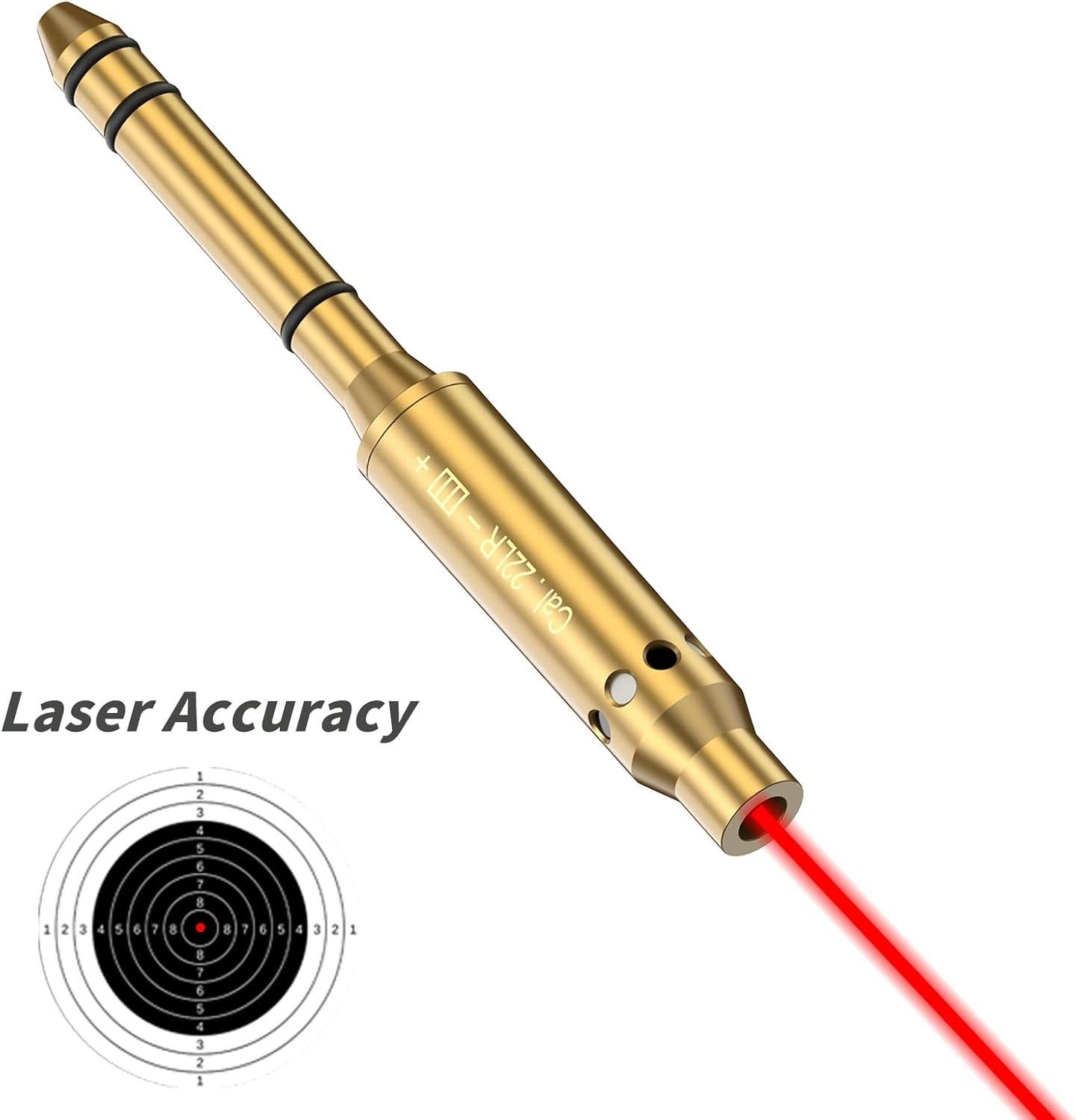
A: It projects a red laser along your bore’s axis so we can align irons, scopes, or red dots to the laser point before firing.It’s for getting “on paper” fast; final zero still happens at the range.
Q: Which calibers does this model cover?
A: Ours came as an end-of-barrel kit sized for multiple muzzles: .177, .22LR, 9mm, .375, .41, .40 S&W/10mm via interchangeable O-rings. Tipfun also sells caliber-specific inserts (like .22LR), so make sure you’re ordering the version you want.
Q: Will it fit pistols, revolvers, rifles, and air guns?
A: Yes, if you can access the muzzle. We used it on .22LR rifles and pistols, 9mm and .40 S&W pistols, and a .177 air rifle. Revolvers and shrouded air guns work too, provided the muzzle is reachable and the O-ring fit is snug.
Q: Can we use it with a suppressor, brake, or shroud installed?
A: No for suppressors-remove them. Brakes and shrouds depend on design; if the boresighter can’t seat at the true muzzle, don’t force it. Some shrouded airguns may need a slim, non-marring guide to reach the crown; if in doubt, skip it.
Q: How accurate was it in our tests?
A: Consistently “range-ready” accurate. We were within roughly 2 inches at 50 yards on .22LR and inside a few inches at 15-25 yards on handguns. Expect small variances due to barrel length,sight height,and ammo. Fine-tune with live fire.Q: Does the dot shift if we rotate the boresighter?
A: Slight movement can happen on any universal, end-of-barrel style. We check concentricity by gently rotating it-if the dot traces a tiny circle,we align to the average center and proceed. For repeatability, seat it the same way each time.
Q: Is the red laser visible outdoors?
A: Indoors and in shade, yes. In bright midday sun, red is harder to see past moderate distances. We shorten the distance, aim at a matte or high-contrast surface, or add a small reflective target sticker. A green version would be easier in daylight, but this listing is red.
Q: What zeroing distances do we use?
A: – Handguns/red dots: 10-15 yards to start
– Rimfire (.22LR): 25 yards baseline
– Centerfire rifles: 25 yards to get on paper, then confirm at your final zero (50 or 100 yards)
Remember sight-over-bore offset-your POA/POI will differ up close.
Q: Does it work with irons, scopes, and red dots?
A: Yes. We used it to rough-in all three. For magnified optics, set low power, parallax as low as possible, and stabilize the rifle during adjustments.
Q: Will it fall out of the barrel?
A: It shouldn’t.The O-rings are sized to grip the bore.We insert it straight, apply light, even pressure, and avoid wiggling.if an O-ring feels loose or tight, swap to a better-fitting one. Don’t force it into tight crowns.
Q: Any tips for protecting the muzzle crown?
A: Make sure O-rings are clean and undamaged. Insert straight in; no prying. A tiny touch of silicone-safe lube on the O-rings can ease fit on snug bores. Wipe the crown and O-rings after use.
Q: How many batteries does it use, and how’s the life?
A: Ours ran on three button cells at a time, with multiple spare sets included. Battery life depends on ambient temperature and how long you leave it on. We turn it off between adjustments and remove batteries for storage.
Q: what safety rating is the laser?
A: Class IIIA, <5mW per the product specs. Never look into the beam, never point it at people, pets, or aircraft, and follow all local laws and range rules. Remove the boresighter before any live fire.
Q: What if the dot won’t center with our sight adjustments?
A: Confirm the boresighter is seated squarely, try a different O-ring, and check your mount hardware torque. If rotation test shows a circle, use the average center. Then confirm and finish zero with your chosen ammo.
Q: What’s in the box?
A: The laser body, multiple O-rings to fit listed calibers, spare O-rings, and several sets of button-cell batteries, all in a portable case.
Q: Bottom line after testing across calibers?
A: It’s a quick, brass-bodied tool that gets us on target fast across the supported calibers. Red is best indoors or in shade, O-ring fit matters, and live-fire confirmation is still essential. For the time and ammo saved, we’re glad to have it in our kit.
Embrace a New Era
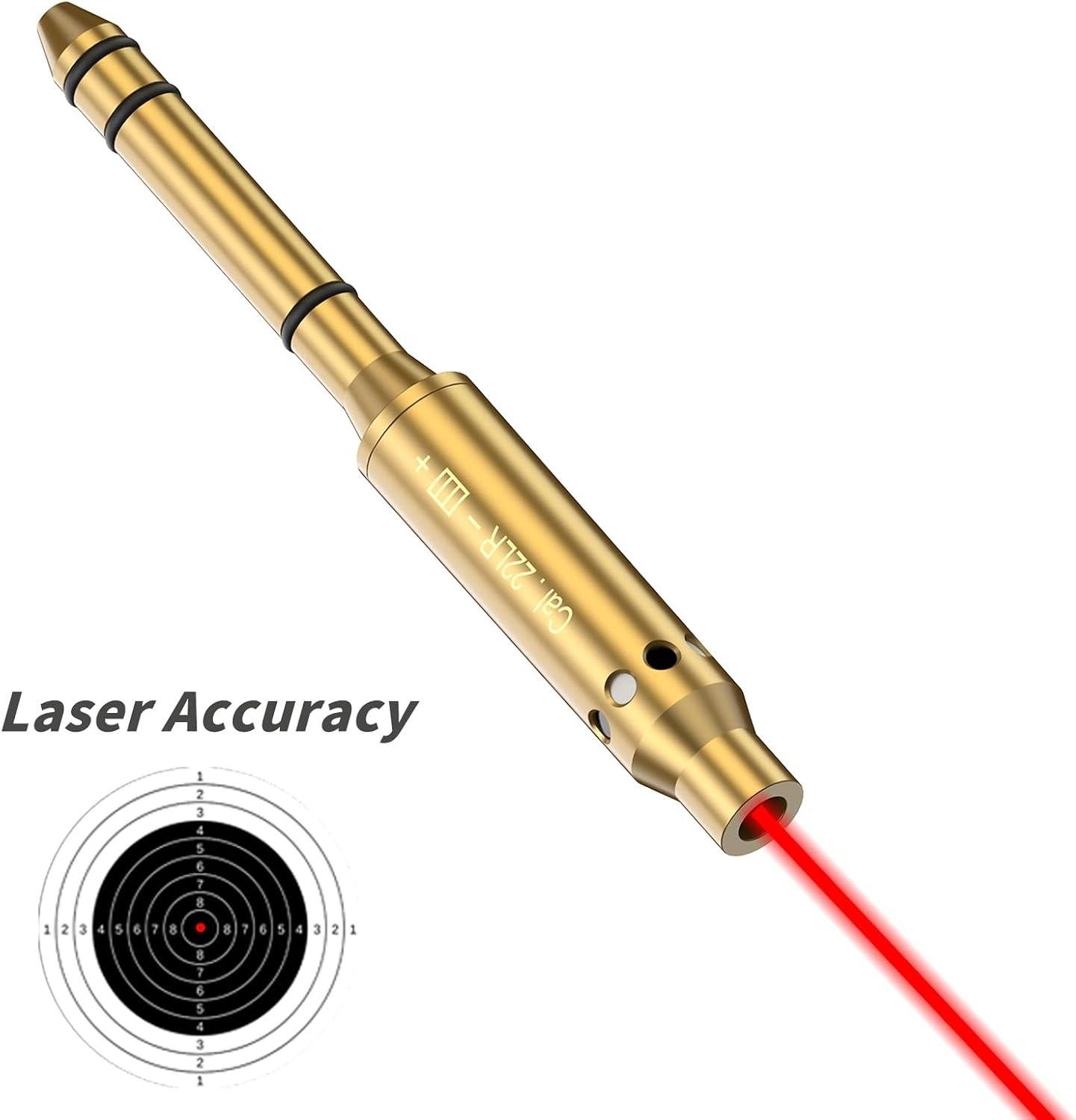
Wrapping up, Tipfun’s Red Laser Boresighter did exactly what we asked of it across the listed calibers: get us on paper fast, cut down on guesswork, and trim our ammo bill. The brass build feels durable, the fit with the included O-rings is reassuring, and the extra batteries are a practical touch. As with most red lasers,visibility is best indoors or in low light; in bright daylight it’s more of a guide than a pinpoint. And while repeatability can vary a hair as you reseat it, it consistently put us close enough for quick fine-tuning at the range.
Our take: if you want a straightforward,wallet-friendly way to speed up zeroing on pistols,rifles,and air guns,this one earns its spot in the range bag. Just remember the basics-verify with live fire, use a safe backstop, and always remove the boresighter before you send a round.
Ready to try it yourself? See the Tipfun Red Laser Boresighter and current pricing on Amazon.