
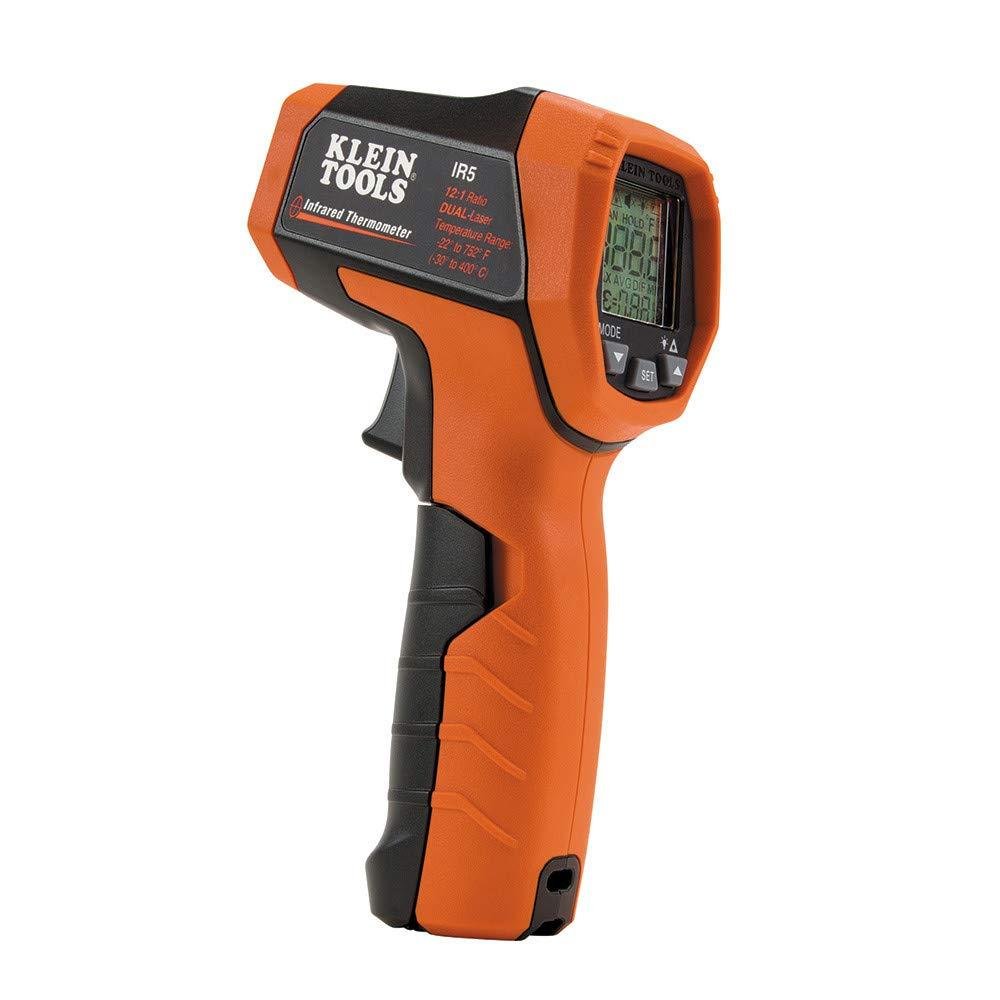
some tools feel like gadgets; others feel like they belong in our kit the moment we pick them up. The Klein tools IR5 landed squarely in the latter camp for us. It’s a dual‑laser, 12:1 infrared thermometer that promises jobsite‑ready durability and a feature set aimed squarely at working pros. Over the past few weeks, we’ve used it around the shop and at home-checking HVAC supply temps, chasing hot spots on an electrical panel, dialing in a griddle, and confirming a 3D printer bed-so we could see how those promises hold up.
Right away, the dual lasers make targeting intuitive: the two dots frame the measurement circle, so we always knew what we were actually measuring. The 12:1 distance‑to‑spot ratio let us grab readings from a safe distance, while adjustable emissivity (0.1-1.0) kept surfaces like painted metal, anodized aluminum, and matte plastics honest. The IR5’s range of -22°F to 752°F covered every task we threw at it, and the backlit display, auto scan, max/min/avg/diff logging, and user‑set high/low alarms made speedy work of comparisons without juggling a notepad. It even shrugged off a concrete oops thanks to its 2 m drop rating, and it comes ready to work with batteries and a pouch in the box.
Klein’s heritage in the trades shows in the build, but we’re here to look past the badge. In this review, we’ll dig into accuracy, ergonomics, speed, and where the IR5 shines-or falls short-compared with other IR guns we’ve used. Quick note before we dive in: this is a non‑medical device, so keep it away from foreheads and furry friends.
Our hands on overview of the Klein Tools infrared thermometer
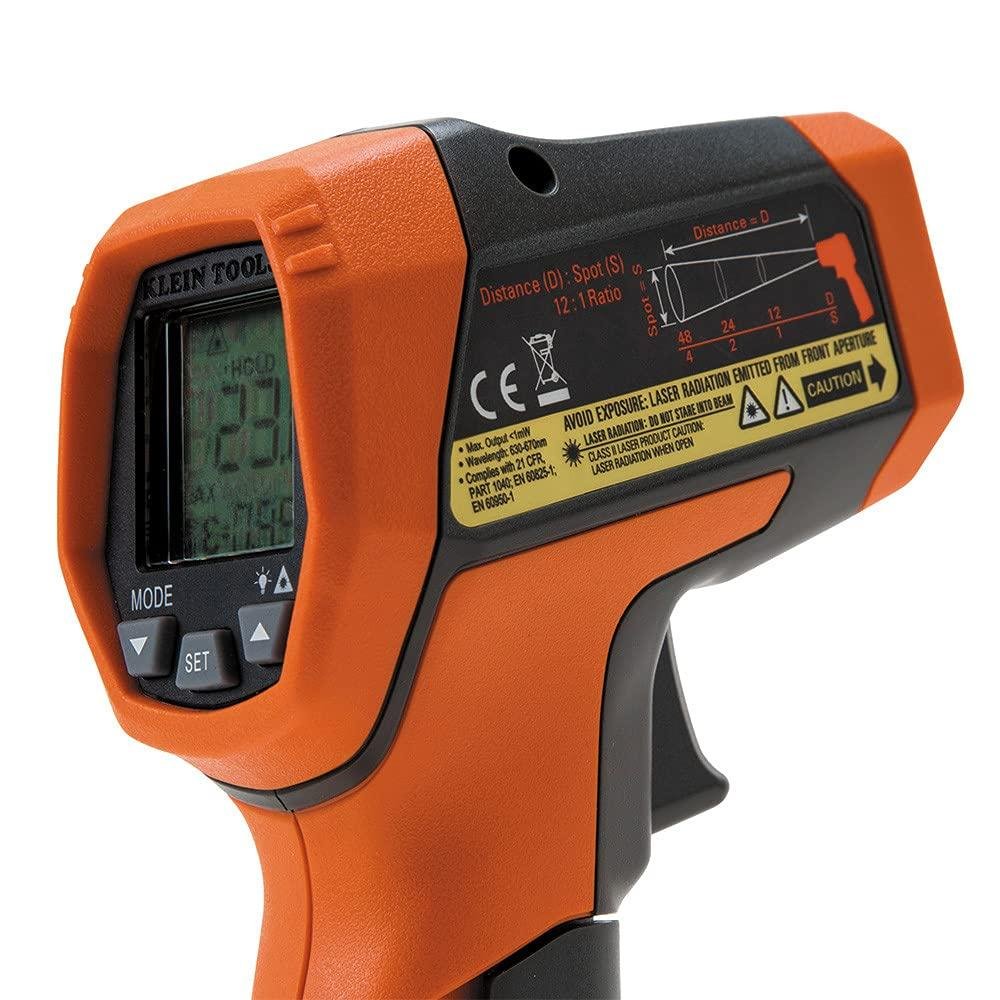
On the bench and around the jobsite, we found the dual-laser targeting genuinely useful: the distance between the two dots closely mirrors the diameter of the area being measured, so aiming is intuitive. With a 12:1 distance-to-spot ratio, we comfortably checked ductwork, breaker lugs, and HVAC registers from a safe standoff. The auto scan made it easy to sweep across panels, while max/min/avg/diff helped us log thermal extremes and spot trends. A backlit display kept readings visible in dim corners, adjustable emissivity (0.1-1.0) handled everything from glossy metals to painted surfaces, and the tool’s 6.6 ft (2 m) drop protection felt ready for daily use. It ships with a pouch and batteries, and it’s clearly labeled as a non‑medical device-not for people or animals.
In practice,it’s a nimble,professional-grade thermometer that balances simplicity with smart diagnostics. We appreciated the high/low alarms for quick pass/fail checks and the auto power‑off for conserving batteries. The build reflects the brand’s pro heritage, and the wide temperature range (-22°F to 752°F / -30°C to 400°C) covers most maintenance, HVAC, and electrical tasks we tackle.
- Target faster: Dual lasers pinpoint the spot
- Diagnose smarter: Max/Min/Avg/Diff + Auto Scan
- Adapt to materials: Emissivity adjustable 0.1-1.0
- Work anywhere: Backlit screen, rugged drop rating
- Stay compliant: Non-medical; not for human/animal use
| Mode | What it tells us |
|---|---|
| Max / Min | Peaks and lows during a scan |
| Avg / Diff | Trend and variance at a glance |
| Auto Scan | Continuous sweep for hotspots |
| High/Low Alarm | Alerts when thresholds are crossed |
| Emissivity | Optimizes accuracy by surface type |
Features that shaped our experience dual lasers backlit display and auto scan
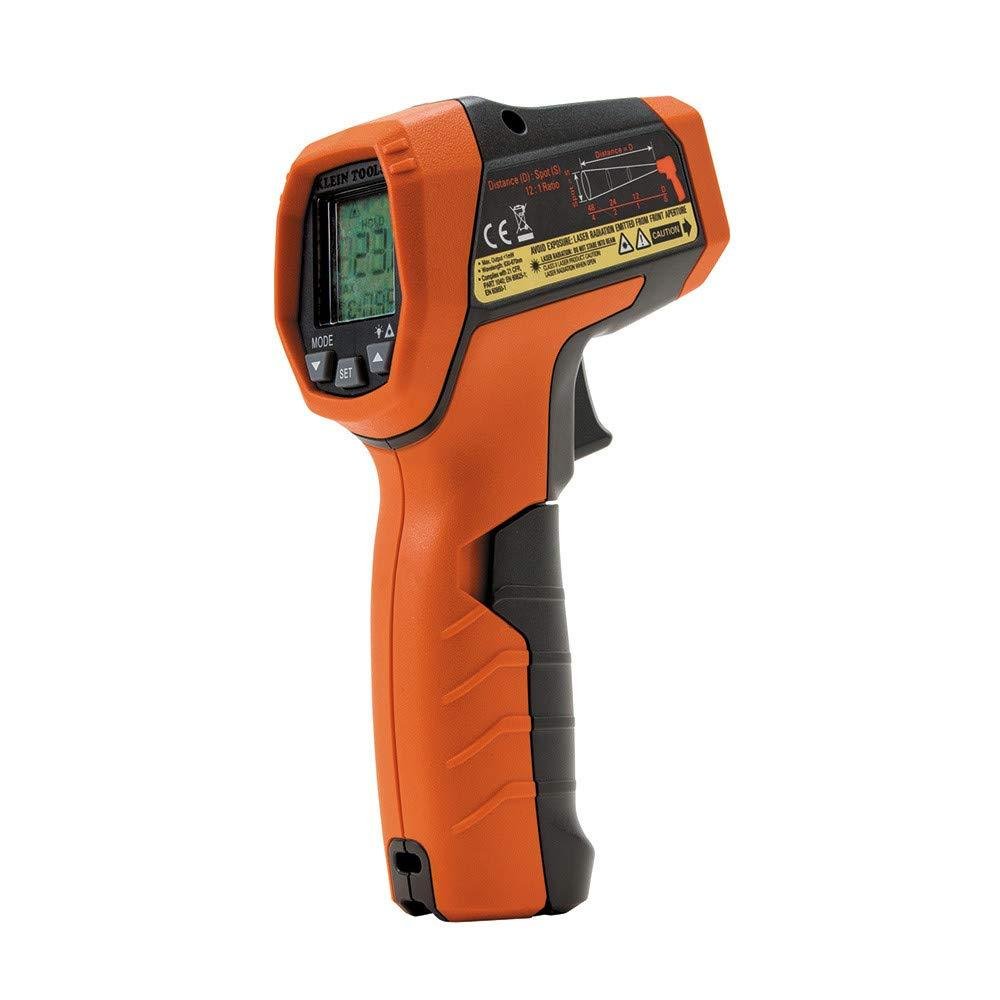
Dual lasers shaped our aiming confidence: the twin points bracketed the spot so we knew exactly what area we were sampling, and the tight 12:1 distance‑to‑spot let us stay back while still getting reliable numbers. In dim garages and attics, the crisp backlit display spared us from fumbling with flashlights. We leaned on Auto scan to sweep ducts and breaker panels, watching temperature trends update in real time, while threshold high/low alarms flagged outliers without constant screen-checking.
- Auto Scan + trend tracking exposed hot/cold spots fast
- Max/Min/Avg/Diff made it easy to document swings
- Backlight improved readability in low light
- Dual lasers clarified the actual measurement area
- 12:1 D:S balanced distance and precision
Versatility sealed it for us. An adjustable emissivity (0.1-1.0) let us move from matte paint to glossier metals without second‑guessing accuracy, and the broad -22°F to 752°F span covered everything from freezer checks to engine diagnostics. Practical perks-auto power off for battery savings, a 6.6 ft drop rating for jobsite knocks, a pouch and batteries included-meant we could get to work immediately. It’s purpose-built for surfaces and equipment, not a medical device, which kept our use case clear and compliant.
| Feature | What it meant to us |
|---|---|
| Dual lasers | Confident, precise aiming |
| 12:1 D:S | Accurate reads from a safe distance |
| Auto Scan + Alarms | Hands-off trend tracking |
| Backlit display | Clear in dark spaces |
| Emissivity 0.1-1.0 | dial-in for different surfaces |
| -22°F to 752°F | Freezers to engine bays |
| 6.6 ft drop protection | Jobsite-ready durability |
| Included pouch + batteries | Ready out of the box |
Check availability and current price
What we learned in use accuracy targeting ergonomics and build quality
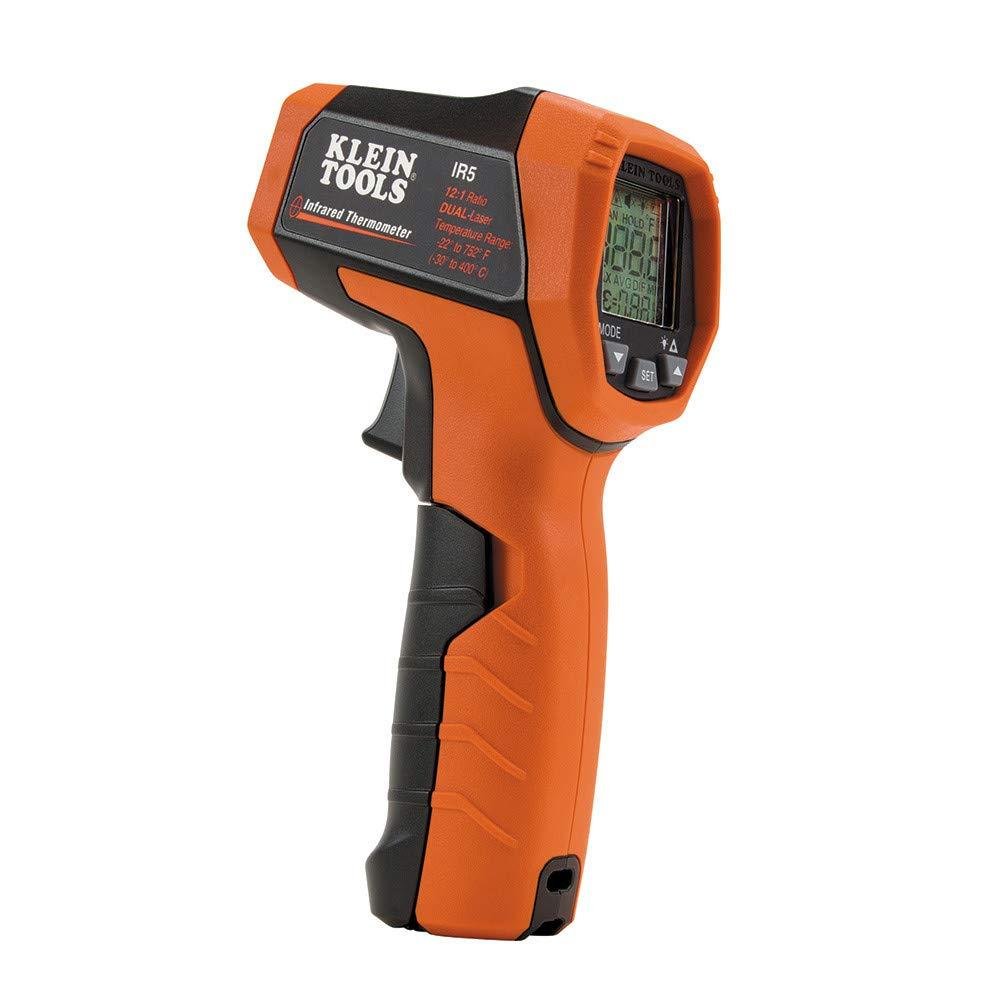
Accuracy and targeting impressed us right away.The dual lasers clearly bracket the spot so we always knew what the sensor was averaging, and the tight 12:1 distance-to-spot ratio let us stand back while still hitting small targets. Dialing in the adjustable emissivity (0.1-1.0) helped tame tricky surfaces-from shiny ducting to matte-painted housings-while Auto Scan and the Max/Min/avg/Diff readouts made it easy to sweep for hot or cold anomalies. We also appreciated the configurable high/low alarms when profiling equipment temps across its broad -22°F to 752°F range. note: it’s a non‑medical device, so we kept it away from people and pets.
- Dual lasers: Intuitive aiming; lasers approximate the measured spot’s diameter
- Emissivity control: Fine-tunes accuracy across different materials
- Auto Scan + alarms: Fast hotspot mapping, easy outlier flags
- Range: Wide coverage for HVAC, electrical, kitchen, and shop tasks
Ergonomics and build quality feel jobsite-ready.The pistol grip balances well, the trigger has a reassuring pull, and the backlit display stays legible in dim spaces. Auto power-off conserves batteries, and the included pouch and batteries mean we were up and running in minutes. With 6.6 ft (2 m) drop protection and solid housing, it shrugged off the bumps of daily use without drama.
| Aspect | our Take |
|---|---|
| Grip & balance | Secure, fatigue-light |
| Display | Clear backlight, quick to read |
| Durability | 2 m drop-rated confidence |
| Carry | Pouch included, ready to go |
| Use case | Tools/equipment, not medical |
Check price and availability →
Our buying advice ideal users setup tips and best practices for reliable readings
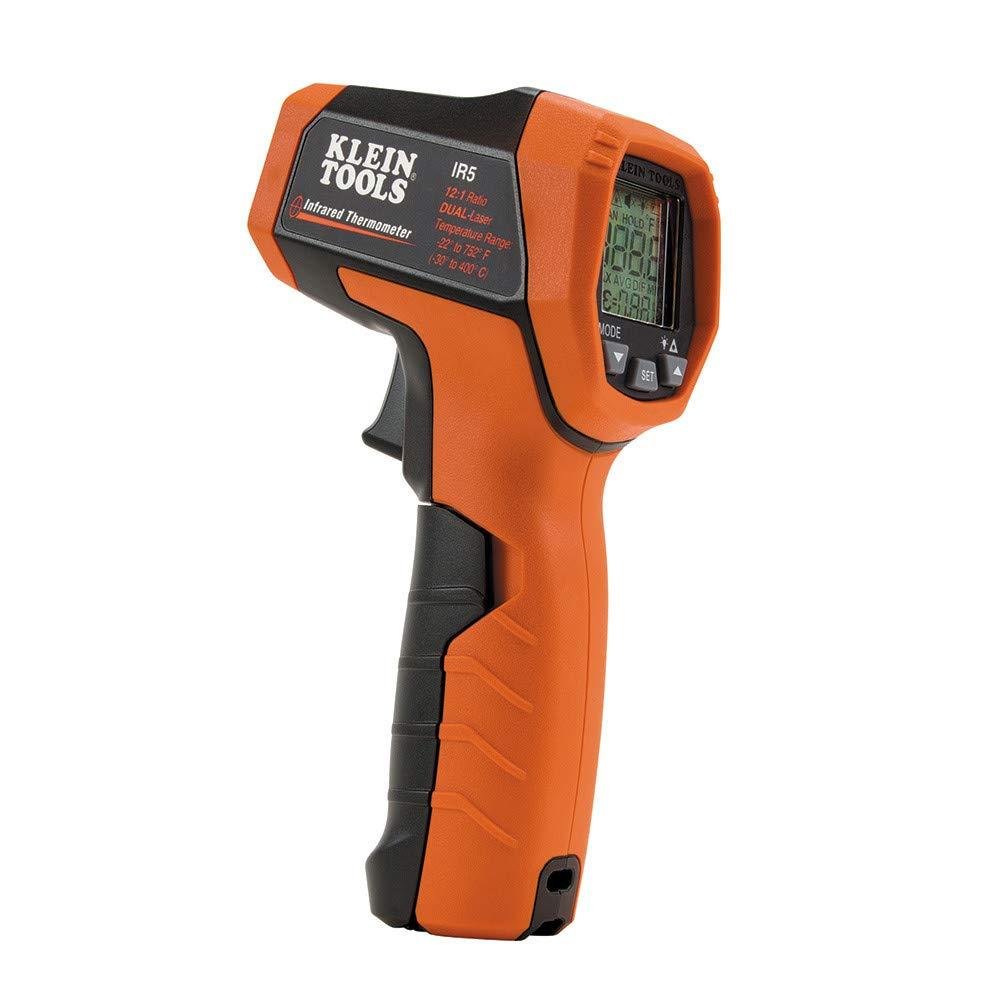
Buying advice: We see the most value here for pros and serious DIYers who need quick, non-contact spot checks across a wide span of applications. The 12:1 distance-to-spot lets us measure smaller targets from a safe distance,while the dual lasers clearly bracket the area being read-fast and confidence-inspiring on panels,ducts,bearings,and appliances. The broad -22°F to 752°F (-30°C to 400°C) range, backlit display, and drop protection to 2 m make it jobsite-ready, and the included pouch and batteries mean we’re up and running immediately. Note: this is a non-medical device-not for people or animals.
- HVAC and electrical: Duct balancing, breaker hot-spot checks, motor housings.
- Home and energy audits: Door seals, insulation cold spots, radiant floors.
- Auto and workshop: exhaust components, brakes, bearings, 3D printer beds.
- Kitchen and facilities: Griddles, freezers, and equipment maintenance.
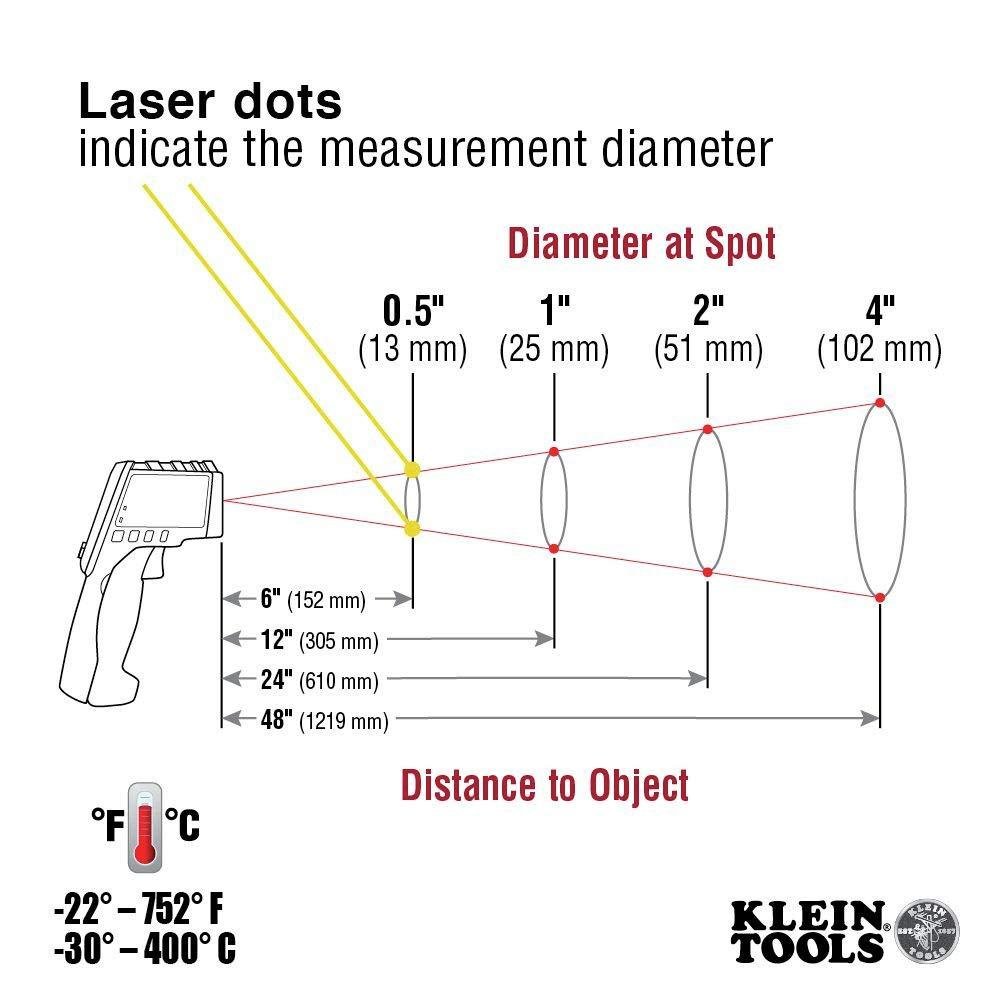
Setup tips & best practices: Let the tool acclimate to ambient temperature for a few minutes before critical measurements. Use the two laser points to frame your target-the distance between dots approximates the diameter of the measured area. Mind the 12:1 rule: at 12 inches away, the spot is about 1 inch wide; get closer for smaller targets. Tune adjustable emissivity (0.1-1.0) for surface type, leverage auto scan for smooth sweeps, and set high/low alarms to catch out-of-bounds temps without staring at the screen. For reflective metals, place a piece of matte tape on the surface and measure the tape. Avoid steam, smoke, or direct sunlight glare when possible, and store it in the pouch between jobs.
- Quick start: Insert batteries → set emissivity → aim so lasers bracket target → pull trigger.
- Accuracy check: Compare against an ice-water slurry (~32°F/0°C) or a known reference within range.
- Data modes: Use Max/Min/avg/Diff to spot trends and confirm stability.
| Surface | Emissivity Start | tip |
|---|---|---|
| Matte paint / Elec. tape | 0.95 | Great reference patch |
| Wood / Drywall | 0.85-0.95 | Adjust to match known temp |
| Concrete | 0.95 | Reliable, high emissivity |
| Shiny metal | 0.10-0.30 | Use tape or flat paint |
Customer Reviews Analysis
Customer Reviews Analysis
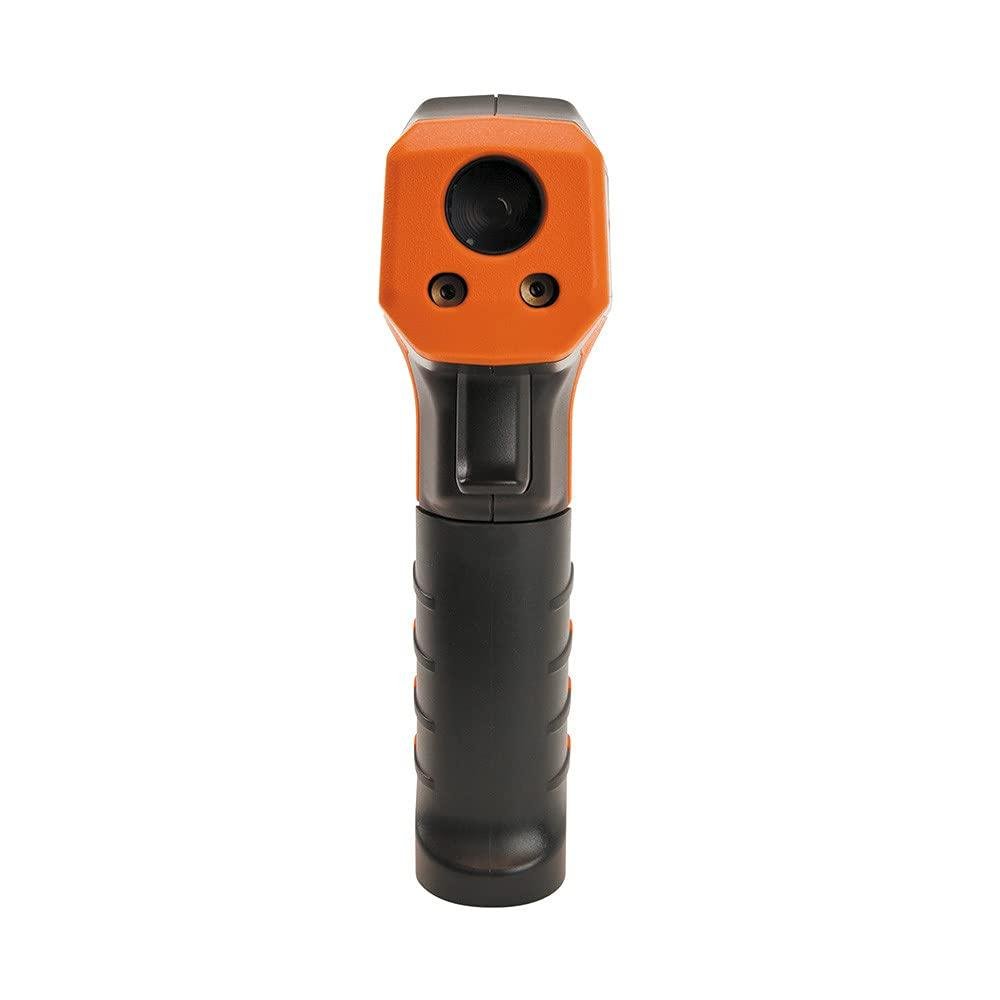
Reading through owner feedback on the Klein tools IR5,we see a consistent theme: dependable accuracy,helpful dual-laser aiming for assessing a broader spot,and solid value for field work and around-the-house tasks. Most comments are short and glowing (“Works great,” “A1 performance”), while the longer notes highlight practical wins in HVAC, grilling, energy checks, and automotive diagnostics. There are very few complaints-chiefly a wish for a better storage pouch-and a few smart tips about emissivity for tricky surfaces.
| Theme | What we read | Takeaway |
|---|---|---|
| Accuracy & consistency | HVAC tech compared it side-by-side with Milwaukee and UEI and found no drastic differences. | Trustworthy readings without premium pricing. |
| Dual-laser advantage | Helps gauge a wider spot for cooking surfaces and pet heating pads; improves thermal issue spotting at home. | Better context than single-laser for area assessments. |
| Build & value | “A1 performance,” “solidly built,” “great product at a very good price.” | Feels durable; priced fairly for pros and DIYers. |
| Versatility | Used on grills/griddles, woodstoves/chimneys, bearings, insulation checks, and automotive parts. | Wide-ranging utility across hot and warm surfaces. |
| Learning curve | Advanced note on emissivity settings for a Subaru CVT pan (0.25-0.30). | Dial in emissivity for special materials to improve realism. |
| Accessories | One reviewer wished the pouch were made of different material. | Minor gripe: storage/holster could be nicer. |
How People Are Using the IR5
| Use Case | Why IR5 Worked | Reviewer Note |
|---|---|---|
| HVAC diagnostics | Consistent readings vs. pro brands | “Klein holds up well.” |
| Grilling/Blackstone | Dual lasers help assess cooking zone temp | “Indispensable” for managing heat |
| Home insulation checks | Spot anomalies when tracing energy loss | Dual laser “greatly enhanced” process |
| Automotive | Target bearings, pans, and components | Emissivity tweak for cast aluminum pans |
| Woodstove/chimney | Quick checks on stove and flue temps | “Good for checking” conditions |
| Pet heating pads | Gauge warmth across a larger area | Less bending, more confidence |
Pros echoed by customers
- Reliable accuracy and consistency for professional and home use.
- Dual-laser targeting gives a clearer sense of the measured spot area.
- Durable feel; multiple users praise build quality.
- Strong value compared with more expensive competitors.
- Versatile across kitchens, garages, job sites, and energy audits.
Cons or wishes
- Storage pouch/holster quality could be better (mentioned once).
- Requires emissivity tweaking for certain metals to match “real-world” temps.
Tips we’d keep
- For cast aluminum transmission pans (e.g., some Subaru CVT), users reported emissivity around 0.25-0.30 producing more realistic readings on slightly oxidized, unpolished surfaces.
- Use the dual lasers to align your spot size with the target area, especially on wide surfaces like griddles.
- When precision matters, sanity-check readings on a known reference or compare across tools-several pros do this in the field.
customers describe the Klein IR5 as a practical, durable infrared thermometer that earns its keep with steady accuracy, a helpful dual-laser guide, and the flexibility to jump from grill duty to ductwork to drivetrain without fuss.
pros & Cons
Pros & Cons
Pros
- Dual‑laser targeting makes aiming intuitive-the laser spacing mirrors the measurement spot size.
- 12:1 distance‑to‑spot ratio lets us stand back safely while keeping a reasonably tight reading area.
- Wide range (-22°F to 752°F / -30°C to 400°C) covers HVAC, automotive, appliance, and building tasks.
- Adjustable emissivity (0.1-1.0) helps us dial in accurate readings across different materials.
- Helpful diagnostics: auto scan, max/min/avg/diff, plus high/low alarms for quick thresholds.
- Backlit display and auto power‑off support low‑light work and conserve battery.
- Jobsite‑ready: rated for 6.6 ft (2 m) drops; includes pouch and batteries out of the box.
Cons
- Upper limit of 752°F (400°C) may be too low for some industrial/foundry applications.
- 12:1 optics aren’t for micro‑targets at long distances; you’ll need to get closer for small spots.
- Reflective/shiny surfaces still demand emissivity tuning or tape/paint for accuracy.
- No data logging, Bluetooth, or PC export-great for spot checks, not for reporting trends.
- non‑medical design: not for people or animals.
- Ships with a soft pouch; those wanting a hard case will need an aftermarket option.
| Best For | Not Ideal For |
|---|---|
| HVAC/electrical troubleshooting | Body or animal temperature checks |
| Appliance, grill, and kitchen spot checks | Micro‑targets at long range |
| Automotive diagnostics (brakes, exhaust, radiators) | Temps above 752°F (400°C) |
| building envelope and insulation scans | Highly reflective metals without surface prep |
Q&A
Q: What stands out about the Klein IR5 in our testing?
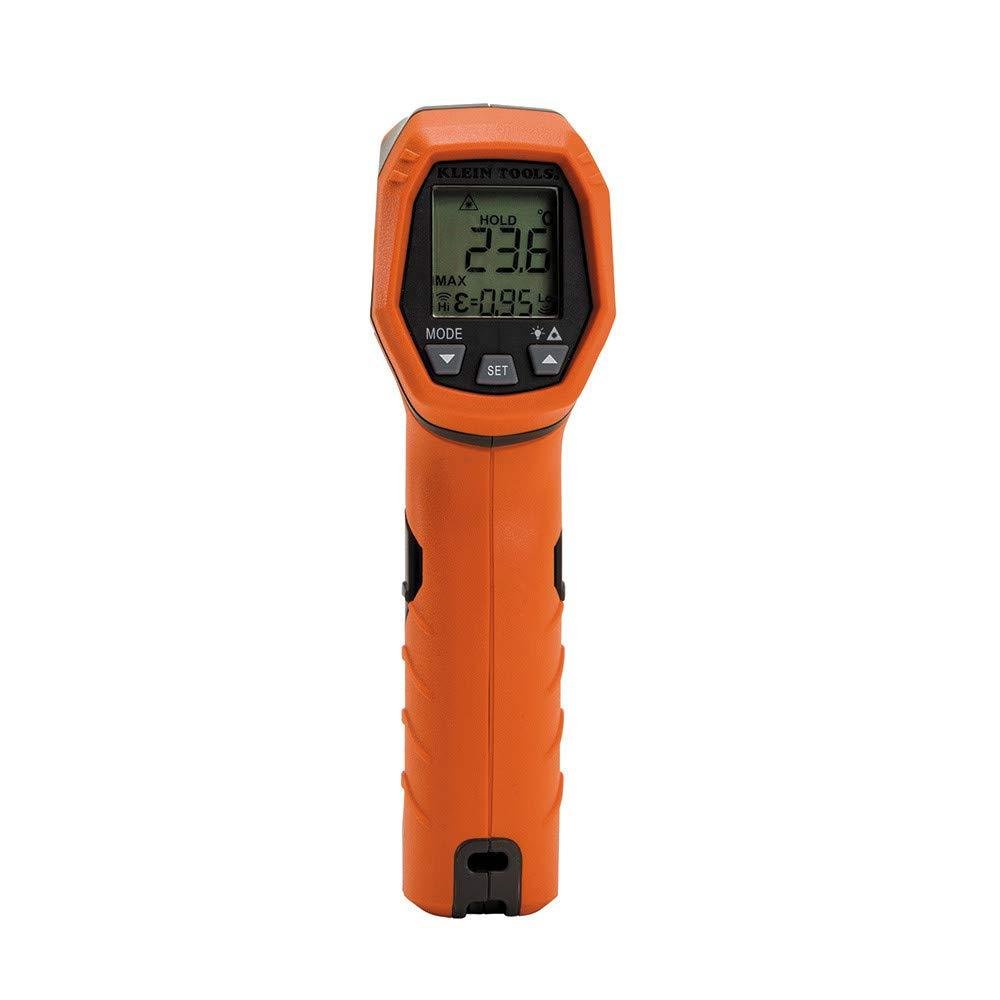
A: Dual-laser targeting and a tight 12:1 distance-to-spot ratio make aiming intuitive and precise. The wide -22°F to 752°F (-30°C to 400°C) range, plus auto scan, max/min/avg/diff, high/low alarms, adjustable emissivity, backlit display, and auto power-off round it out as a pro-ready tool.
Q: How do the dual lasers actually help?
A: The two laser dots bracket the measurement area. The distance between the dots on your target approximates the diameter of the circular area being measured, so we can see our “spot” at a glance and avoid guessing.
Q: What dose a 12:1 distance-to-spot ratio mean in real life?
A: The spot size grows by 1 unit for every 12 units of distance. Rough guide:
– 12 inches away ≈ 1-inch spot
– 24 inches away ≈ 2-inch spot
– 4 feet away ≈ 4-inch spot
if the target is smaller than the spot, back up won’t help-get closer.Q: What can we measure with it?
A: Surface temperatures only. It’s great for HVAC ducts, registers, breaker panels, motor housings, exhaust manifolds, radiators, griddles and pans, insulation, windows, and general troubleshooting. It’s not a medical device and not for people or animals.
Q: How accurate did it feel in use?
A: On matte surfaces with emissivity set correctly, our readings were consistent and stable. Like any IR thermometer,results depend heavily on surface characteristics and proper technique.
Q: Can it read shiny metal reliably?
A: Not without a little help. highly reflective surfaces can fool IR sensors. We either adjust emissivity or put a piece of matte tape or a dab of flat paint on the spot, let it come to temperature, and measure that instead.
Q: How do we use adjustable emissivity?
A: Start at 0.95 for most painted, oxidized, or non-metal surfaces.For reflective metals, lower settings may be needed-or use the tape/paint method. When precision matters, we compare to a contact probe and fine-tune emissivity until readings align.
Q: What’s the point of auto scan and the max/min/avg/diff modes?
A: Auto scan streams continuous readings while we sweep across a surface to reveal hot or cold spots. The calc modes help us capture extremes (max/min), get a stable reading (avg), and see delta (diff) when comparing two areas or before/after conditions.
Q: How do the high/low alarms help on the job?
A: We set temperature thresholds and get alerted when a surface exceeds or drops below them. It’s handy for quality checks, safety limits, or keeping an eye on HVAC and cooking surface targets without staring at the display.
Q: Can it measure through glass or liquids?
A: No. IR thermometers read the first surface they see. Glass, steam, flames, and water block or distort IR; you’ll read the surface of those, not what’s behind them.
Q: is the laser safe?
A: Treat it like any visible laser-avoid eyes and reflective surfaces. The lasers are for aiming only; they don’t affect the temperature reading.
Q: How durable is it?
A: It’s jobsite-ready with 6.6 ft (2 m) drop protection. We tossed it around the shop and had no worries.
Q: is the display readable in dim spaces?
A: Yes. The backlit display is clear in low light, and auto power-off preserves battery life.
Q: What’s in the box?
A: the IR5, a custom pouch, and batteries-so we were up and running immediately.
Q: Any limitations we should know?
A: Small,distant targets are a challenge due to spot size-move closer. Reflective surfaces need emissivity adjustments or a treated patch. It measures only surfaces, not internal/core temperatures, and it won’t read through glass or liquids.
Q: Who is this best for?
A: Pros and serious DIYers in HVAC, electrical, automotive, maintenance, and home inspection who need fast, repeatable surface temperature checks with confident aiming.
Q: Tips for best results?
A:
– Get close enough so the spot is smaller than the target.
– Shade the spot from direct sun or drafts when possible.- Use matte tape/paint on reflective targets.
- Let surfaces stabilize before measuring.- Use auto scan to find hot/cold spots and max/min to capture peaks.
– Verify critical readings against a contact probe and adjust emissivity as needed.
Discover the Power
After putting the Klein IR5 through its paces, we came away impressed by how reliably the dual lasers frame the measurement area and how the 12:1 distance-to-spot ratio holds up across real-world tasks.The adjustable emissivity (0.1-1.0) and auto-scan with max/min/avg/diff make it easy to dial in repeatable results on everything from HVAC registers and breaker panels to grill grates and engine components. The backlit display is clear, the high/low alarms are genuinely useful, and the 6.6 ft drop protection-and included pouch and batteries-round out a jobsite-friendly package.
there are a few practical notes. It’s not a medical device, so it’s not for people or pets. Highly reflective surfaces may require adjusting emissivity or using a piece of matte tape for accuracy. And like any IR thermometer, respecting the 12:1 spot ratio is key to getting the numbers you expect.
If you need a dependable, no-drama IR thermometer with precise targeting and a wide operating range, the IR5 earns a place in our kit. ready to check it out for yourself?
See the latest price and availability of the Klein Tools IR5 on Amazon.