
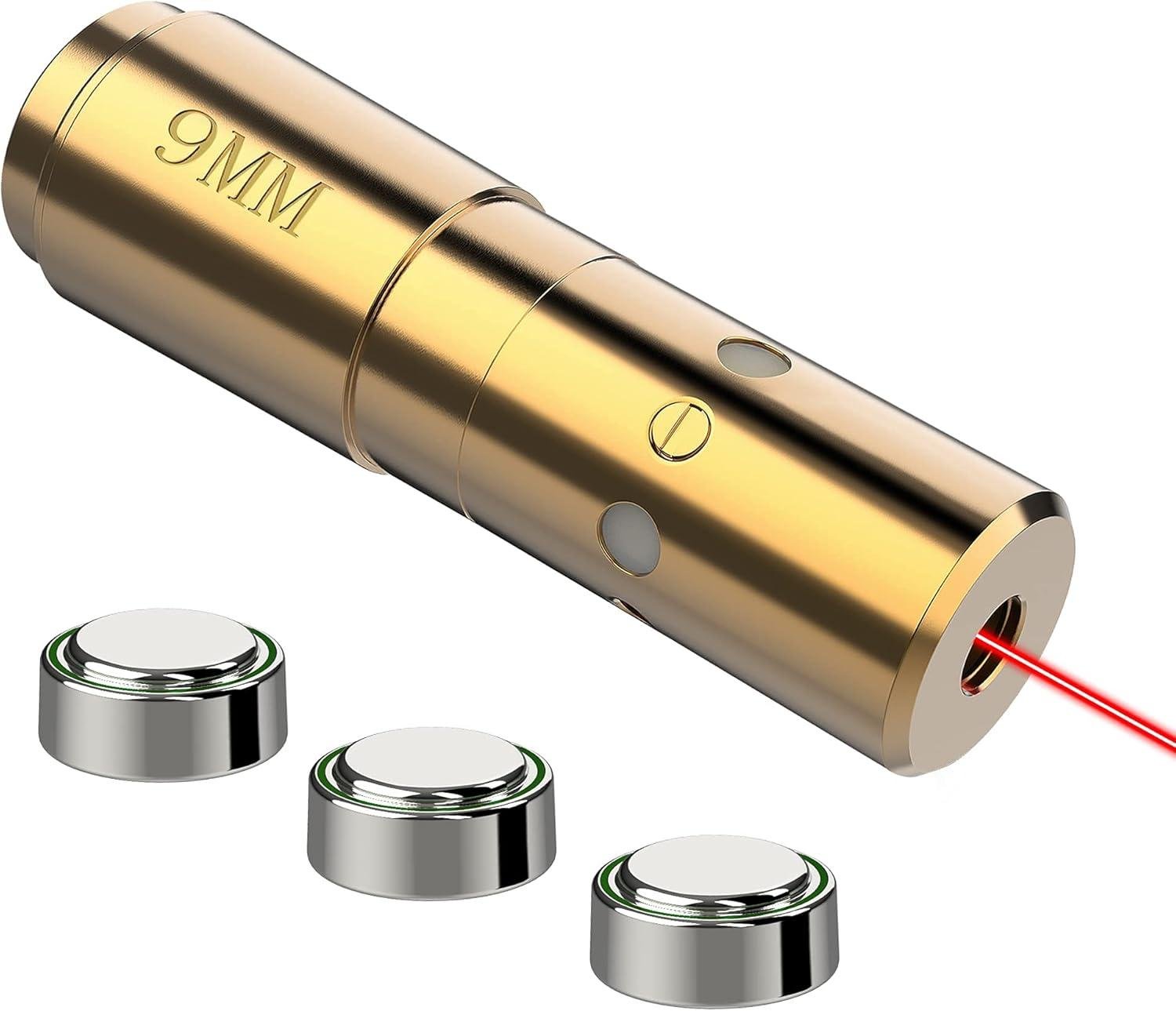
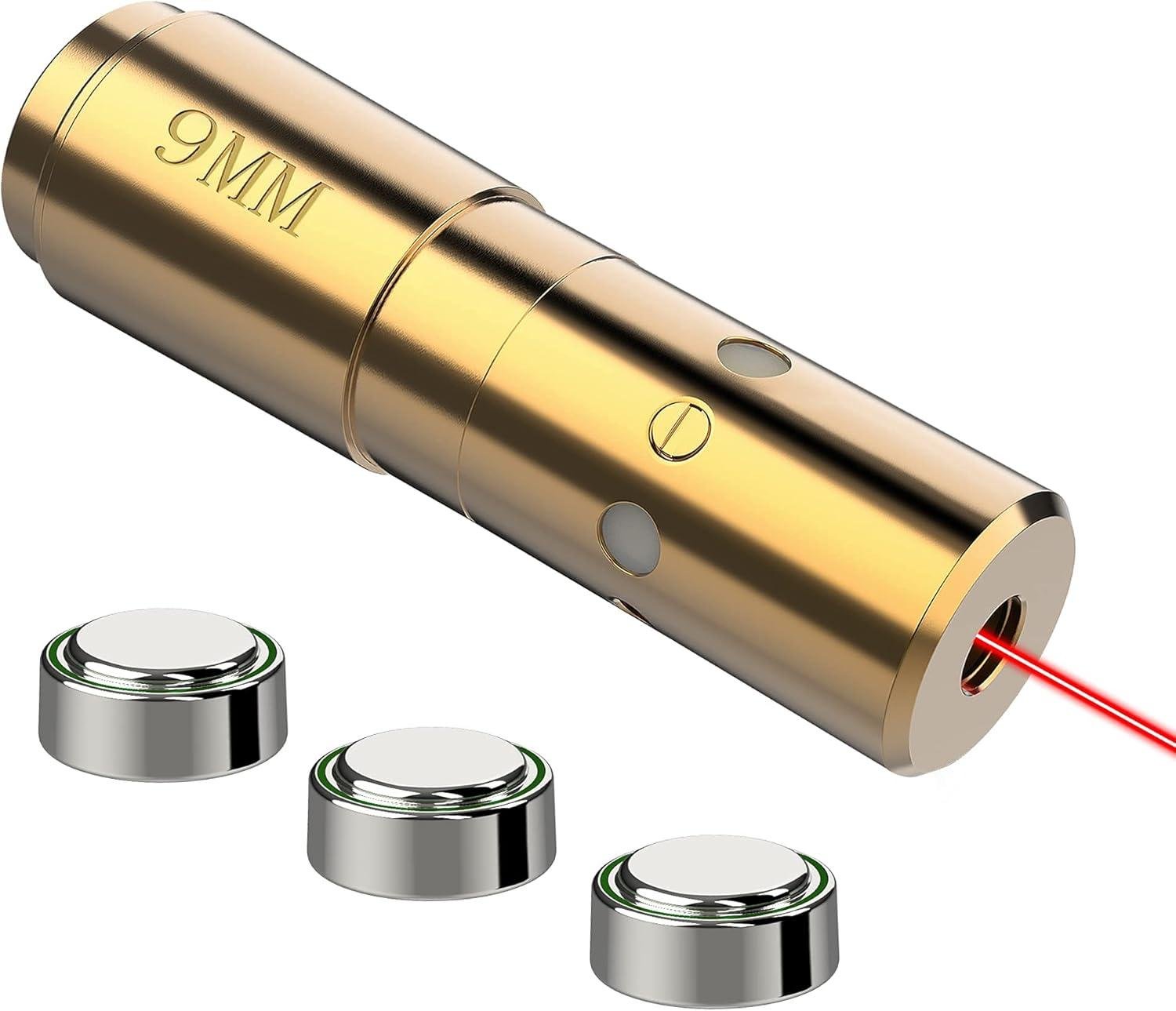
Every range day starts the same for us: fresh targets,a new optic or two,and the quiet hope that we won’t burn through a box of ammo just to get on paper. That’s exactly where the MidTen Bore Sight Laser 9mm/223 5.56mm/30-06/25-06/270 promises to help-an inexpensive, cartridge-style laser sighter that slips into the chamber and claims to shave time (and frustration) off zeroing.We’ve been using the 9mm and.223/5.56 versions from this lineup, which also includes a .30-06/.25-06/.270 variant. Each is caliber-specific, built from brass, and uses a visible red Class IIIA laser (under 5 mW, 640-660 nm). MidTen ships these with LR41 batteries rated for roughly 1.5 hours, and there’s no on/off switch-you pop the batteries in, it’s on; take them out, it’s off.The company touts factory calibration, a 15-100 yard sighting range, and better results in dimmer conditions.
In our hands, the first impressions were straightforward: a snug chamber fit, a clean red dot that was easy to pick up at typical zeroing distances, and the expected limitations of a red laser in shining daylight. We set up in a shaded lane and in a dim workshop to see how quickly we could get red dots and optics roughly aligned before confirming with live fire. In this review, we’ll walk through how accurate the MidTen was out of the box, how fast it got us on paper, its visibility across environments, battery life quirks, and whether this budget-kind brass “cartridge” earns a slot in our range bag over pricier, magnetic alternatives.
Our First Impressions and What We Found in the Box
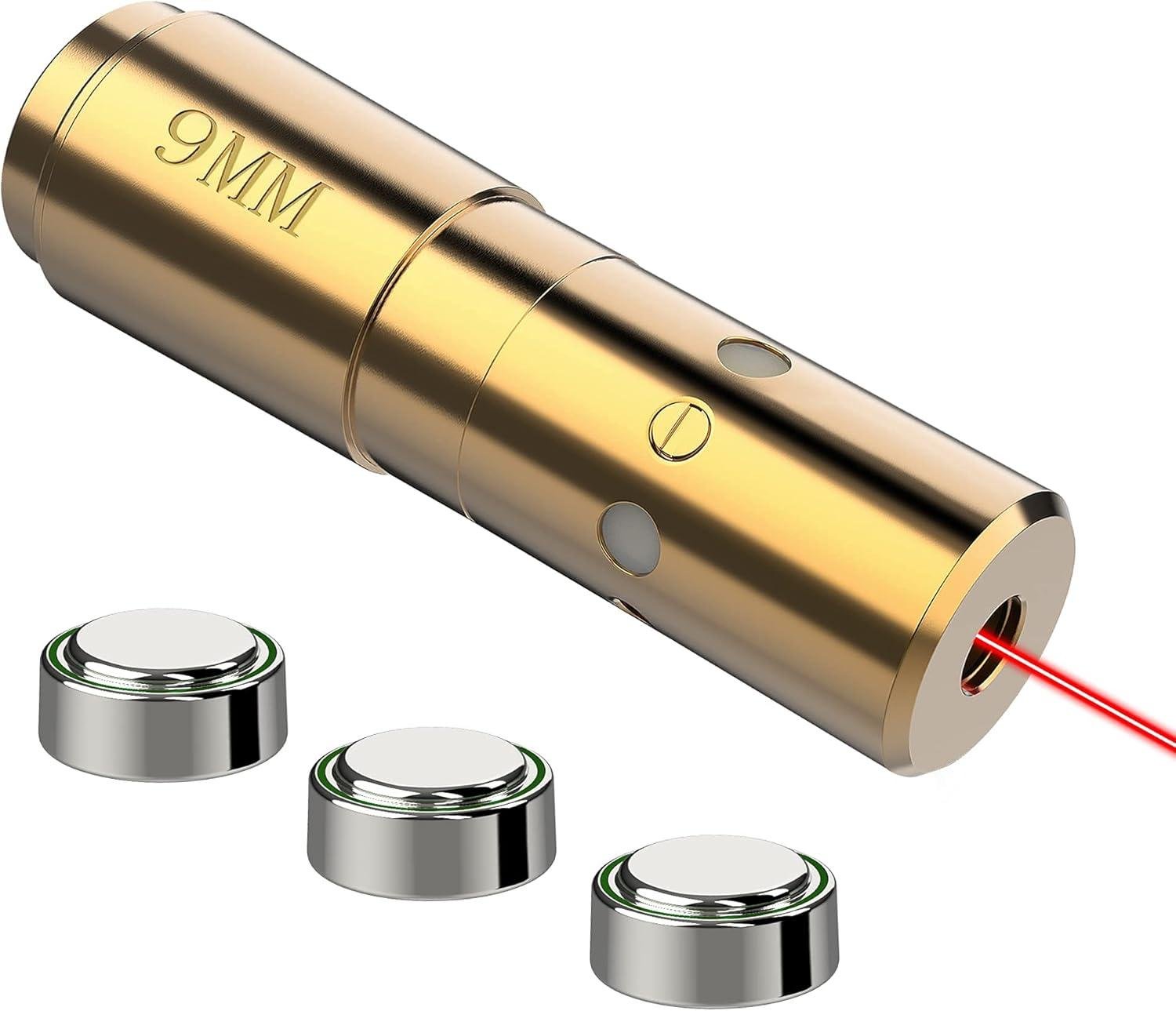
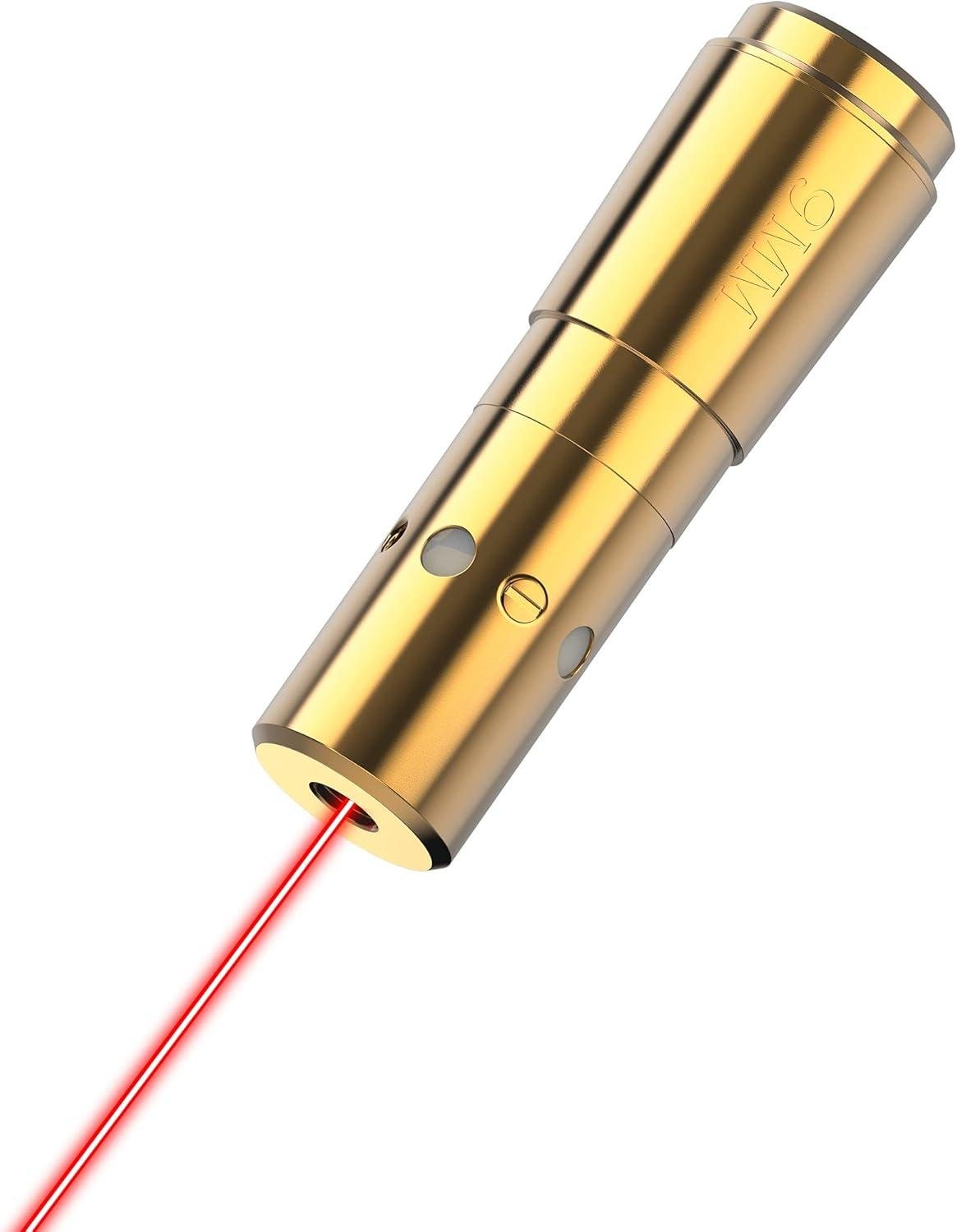
Right out of the packaging, we were struck by the compact, cartridge-style form factor and sturdy brass construction. The machining looks clean, the fit in a 9mm chamber is snug, and the visible red laser presented a crisp dot indoors. it’s factory-calibrated, which helped us speed through fast optic zeroing without fuss. Specs are reassuringly practical-Class IIIA, <5 mW, 640-660 nm, and a listed 15-100 yards sighting range. Worth noting: there’s no on/off button; onc the LR41 (AG3) cells are installed, the beam stays on until the batteries are removed. In dim conditions, the dot pops more clearly, and the stated ~1.5 hours battery life matched our expectations for short zeroing sessions.
| Laser | Red, 640-660 nm |
| Output/Class | <5 mW, Class IIIA |
| Body | Brass |
| Sighting Range | 15-100 yds |
| Battery | 3× LR41 (AG3) |
| Runtime | ~1.5 hours |
| Best Use | Dim/indoor setups |
Inside the box, the presentation is minimal and to the point-everything needed to get started is included. The caliber-specific design fits its intended chamber precisely, and the straightforward setup keeps the focus on alignment rather than fiddling. We appreciated the solid feel and the consistency of the beam, along with the practical choice of widely available button cells.
- 1× bore sight unit (brass)
- 3× LR41 (AG3) batteries
Check availability and see today’s price
Design durability Laser Brightness and Multi Caliber Compatibility
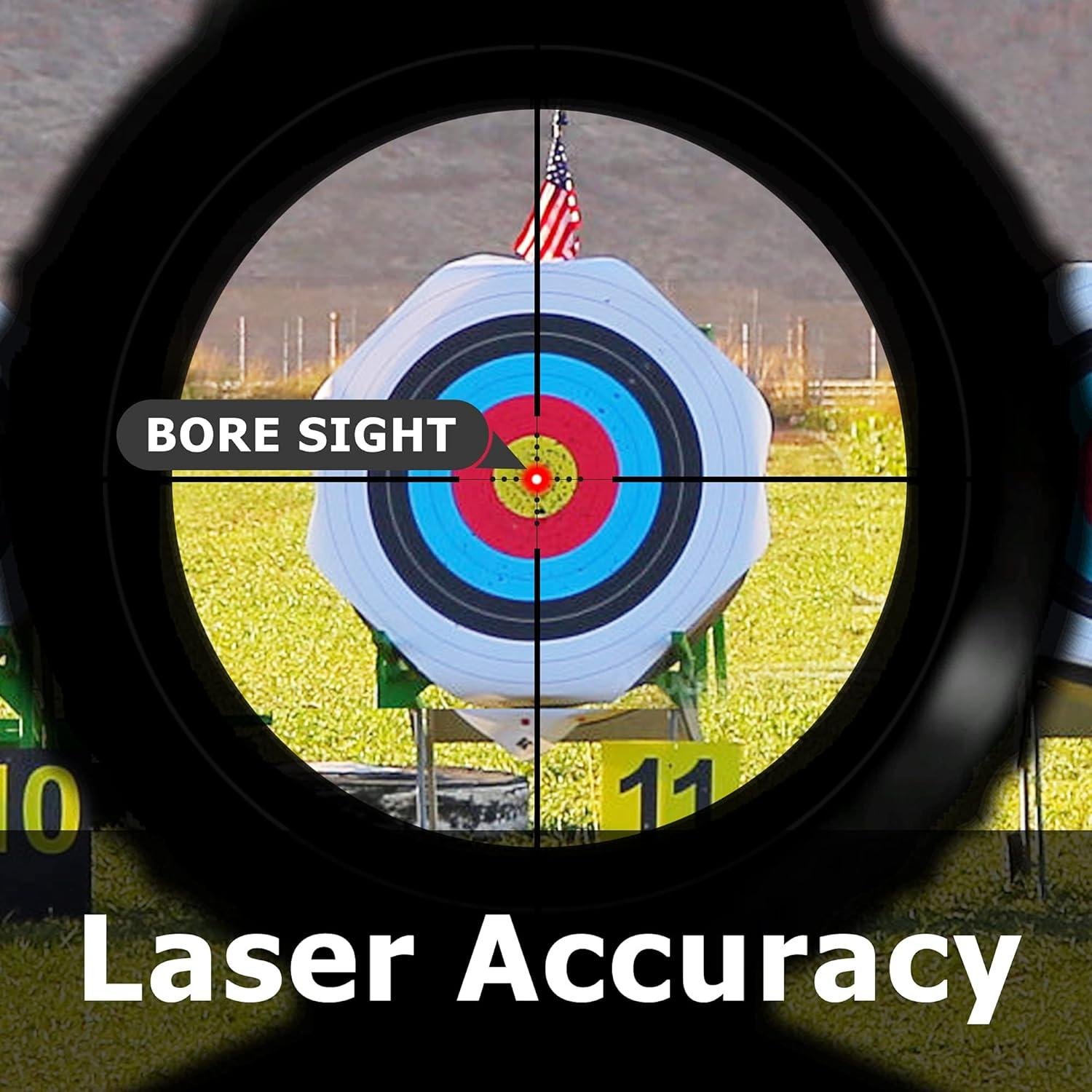
Design and durability impress right away thanks to the solid brass body that seats smoothly in the chamber and holds alignment through repeated use. Factory calibration means we’re not fiddling with adjustments, and the unit shrugs off range-day swings between -10°C and 40°C without drifting. The rear screw-cap is simple and secure, and while there’s no power switch, the straightforward battery-in/battery-out setup keeps the profile compact and reliable for fast zeroing and bore checks.
- Sturdy brass construction for long-term consistency
- Factory-calibrated accuracy out of the box
- Operating temp: -10°C to 40°C
- Fast optic zeroing to save time and ammo
- Tool-free battery cap for quick swaps
| Caliber Option | Chamber Fit | Batteries | Laser Spec |
|---|---|---|---|
| 9mm | 9mm chamber | 3 × LR41 | Red, Class IIIA, <5 mW |
| .223 / 5.56 | .223 chamber | 6 × LR41 | Red, Class IIIA, <5 mW |
| .243 / .308 | .243/.308 chamber | 3 × LR41 | Red, Class IIIA, <5 mW |
| .30-06 / .25-06 / .270 | .30-06 family | 3 × LR41 | Red, Class IIIA, <5 mW |
| 12-Gauge | 12-ga chamber | 3 × LR41 | Red, Class IIIA, <5 mW |
On laser brightness, the visible red beam (640-660 nm) is crisp from 15 to 100 yards in controlled light and shaded outdoor conditions; as with most red Class IIIA (<5 mW) units, we get the best contrast in dim settings. The included 1.5-hour runtime (3 × AG3/LR41) is adequate for a full zeroing session, and the no-switch design prevents accidental bumps from powering it off mid-adjustment-just remove the cells when done. We also appreciate the multi-caliber availability: with caliber-specific models for common rifle and handgun chambers,it’s easy to match our platform and maintain consistent zeroing routines across the lineup.
Check price and availability
At the Bench Setup Accuracy and Battery Performance
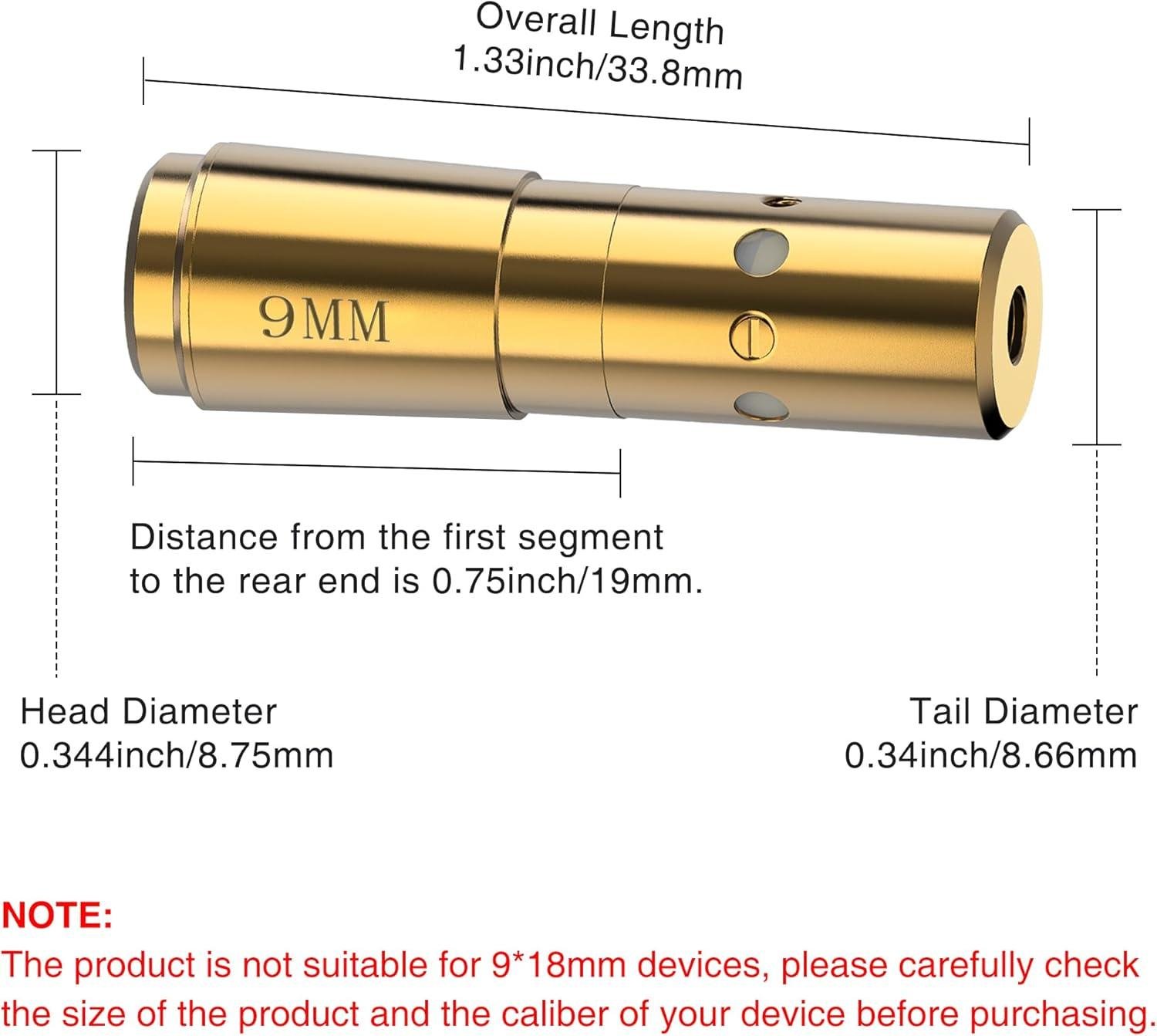
At the bench, setup proved clean and predictable. The factory‑calibrated red beam seated with a snug, concentric fit in our 9mm chamber, while the brass construction helped maintain alignment.In dim indoor light, the 640-660 nm dot stayed crisp from 15 to 100 yards, letting us rough‑zero optics quickly before live fire. Once confirmed on paper, shifts from laser point to impact were small and repeatable across the stated -10°C to 40°C range-exactly what we wont for efficient zeroing.
- Class IIIA output under 5 mW keeps the dot visible without blooming.
- Caliber-specific fit reduces wobble and wandering POA.
- Best results in dim conditions,as recommended.
Battery performance is practical for bench work. The included 3× AG3/LR41 cells delivered about 1.5 hours of continuous runtime in our tests-enough for several rifles back‑to‑back. there’s no on/off switch, so plan your sessions: pop the batteries in when you’re ready, and remove them when done to preserve charge and prevent accidental activation.
- Store cells individually in dry, low‑humidity cases.
- Avoid heat and direct sunlight.
- Keep a spare pack on hand for extended range days.
| Bench Quick Stats | Value |
|---|---|
| Laser | Red, 640-660 nm |
| Output | <5 mW (Class IIIA) |
| Sighting range | 15-100 yd |
| Runtime | ~1.5 hrs (3× AG3) |
| Temp Range | -10°C to 40°C |
| Body | Brass |
Check current price and availability
Practical Tips and Our Recommendations for Best Results
Practical tips we swear by:
- Start in dim conditions so the visible red dot is crisp; the laser shines brightest from about 15-100 yards.
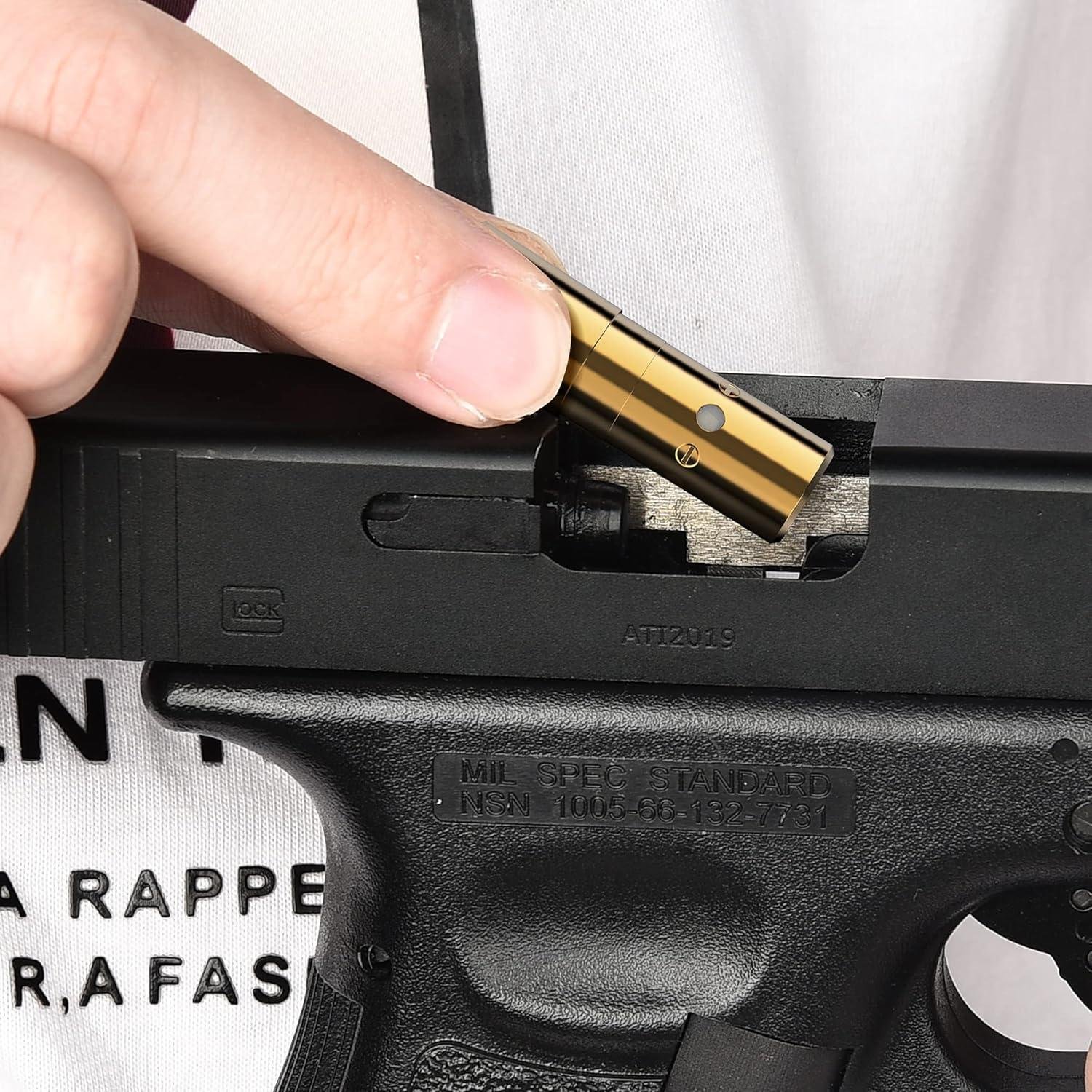
- Before chambering,double-check your firearm is unloaded and the bore is clean to protect the sturdy brass body.
- Insert the three AG3/LR41 batteries positive side up; there’s no on/off button-remove the batteries to power down.
- Close the bolt gently; to remove,open the action and tilt the barrel upward if it doesn’t auto-extract.
- Begin your rough zero at 15-25 yards, than confirm at your preferred distance; always finalize with live-fire.
- Mind the environment: it’s rated for -10°C to 40°C; store batteries in low humidity, away from heat or direct sun.
| Quick Specs | At a Glance |
|---|---|
| Laser Class / Power | Class IIIA, <5 mW |
| Wavelength | 640-660 nm (red) |
| Runtime | ~1.5 hrs (3× AG3) |
| Sighting Range | 15-100 yards |
| Build | Brass |
| Temp Range | -10°C to 40°C |
Our recommendations for best results:
- Pick the caliber-specific unit that matches your chamber (9mm, .223/5.56, .30-06/.25-06/.270) for the tightest fit and factory-calibrated accuracy.
- Keep a spare set of LR41 cells on hand and store them individually; remove batteries after use to preserve life.
- Co-witness or align your optic/red dot to the laser indoors, then fine-tune at the range; this saves time and ammo while preserving precision.
- Don’t overtighten the tailcap; snug is enough to maintain consistent contact without stressing threads.
- If you own multiple firearms, choose the format that simplifies your workflow (see our quick picker below).
| Use-Case | Best Choice |
|---|---|
| One caliber, tightest chamber fit | Caliber-specific brass unit |
| Many guns, fast swaps | Magnetic version (fits all) |
Check price and see today’s deals
Customer Reviews analysis
Customer Reviews Analysis
After combing through real-world feedback on the MidTen Laser Boresighter (9mm, .223/5.56, .30-06/25-06/.270 variants), a clear picture emerges: this pocket-priced tool reliably gets us “on paper” fast, trims ammo costs, and simplifies initial zeroing. Most users praise its ease of use and visibility, while a few recurring gripes-chiefly the lack of an on/off switch and small batteries-remind us this is a budget-friendly helper, not a pro shop replacement.
| Theme | What We read | Our Takeaway |
|---|---|---|
| Accuracy | “On paper” quickly; some report near-perfect alignment, others see 1-2″ windage and notable elevation shift. | Great for pre-zero. Expect fine-tuning at the range. |
| Ease of Use | Simple setup,clear laser,fits firmly in-chamber. | Beginner-friendly; read the battery orientation notes. |
| Power/Batteries | No on/off switch; remove a battery to power down; tiny cells included (often extra set). | Functional but fiddly-carry a small baggie for spares. |
| Visibility | Laser is strong; visible indoors and even at 100 yds at dusk. | Best results in low light or shaded conditions. |
| Fit/Ejection | Chambers firmly; may not auto-eject in some pistols. | A light “thunk,” a cleaning rod, or a touch of CLP helps removal. |
| Value | Common refrain: saves time, ammo, and range fees. | high value for occasional boresighting. |
Pros and Cons (from user feedback)
- Pros:
- Gets us on target quickly and cheaply.
- Clear, bright laser; easy to see for initial alignment.
- Simple to use; batteries typically included (often a spare set).
- Works across popular calibers; solid chamber fit.
- Cons:
- No dedicated on/off switch-requires removing a battery.
- Tiny batteries are easy to drop or lose.
- occasional ejection quirks; may need manual removal.
- Close-range boresighting can leave elevation off at distance.
Feedback Snapshot (our read of customer comments)
| Initial Zero Help | ★★★★★ |
| Ease of Use | ★★★★☆ |
| Battery/Power Experience | ★★★☆☆ |
| Fit & Extraction | ★★★☆☆ |
| Overall Value | ★★★★★ |
practical Tips We Picked Up
- Zero at a realistic distance: If you bore sight at very close range, expect larger elevation corrections at 50-100 yards.
- Rotate to verify: Turn the laser a quarter-turn in the chamber and watch for dot movement-then average your adjustments.
- Mind the batteries: Follow the engraved orientation, keep the insulating paper if provided, and store spares in a small pouch.
- Plan for removal: Some chambers won’t eject it-use a gentle tap,a rod,or a hint of CLP for easy extraction.
- Use lighting to your advantage: Low light or dusk makes the dot easier to see at longer distances.
Who It’s For (Based on Reviews)
- great for: Occasional boresighting, mounting a new red dot or scope, and anyone wanting to save ammo and time getting “on paper.”
- Maybe not for: Frequent, multi-platform boresighting where an on/off switch and broader versatility are must-haves.
Bottom line from customer voices: the MidTen Laser Boresighter punches above its price class.It’s a quick-start tool that gets us close, trims the ammo bill, and smooths the path to a proper range zero-so long as we can live with battery juggling and the occasional manual extraction.
Pros & Cons
Pros & Cons
| Pros | Cons |
|---|---|
|
|
Bottom line: We find the MidTen Laser Boresighter to be a quick, budget-friendly way to tighten initial zero and cut setup time-just plan around the red laser’s daylight visibility and the battery management quirks.
Q&A
Q: What exactly is the MidTen Laser Boresighter, and which calibers dose it cover?
A: It’s a cartridge-style, chamber-specific red laser that helps us rough-in our sights without burning ammo. MidTen offers versions for 9mm, .223/5.56, .243/.308, .30‑06/.25‑06/.270, and 12‑gauge, plus a magnetic “fits most” option. Each model matches the chamber it’s labeled for; we choose the exact one for our firearm.
Q: is it pistol- or rifle-friendly?
A: Both, as long as the chamber matches the boresighter’s caliber. The 9mm unit fits 9mm Luger (9×19) chambers, so it effectively works in most 9mm pistols and PCCs. The .223/5.56 model works in AR‑15s with that chamber, and so on. We always verify the firearm is unloaded and treat the laser like a live round for safety’s sake.
Q: How bright is the laser, and can we see it in daylight?
A: It’s a visible red Class IIIA laser (<5 mW) at 640-660 nm. Indoors or in dim light it's easy to pick up across a room or down a hallway; outdoors in bright sun, any red laser gets washed out. We boresight in subdued light and confirm at the range.Q: How accurate is it out of the box?
A: midten factory-calibrates these, and in our experience chamber-specific units consistently get us "on paper" quickly.Tolerances vary by firearm and chamber, so the laser is a starting point-not a final zero. We always confirm with live fire.
Q: Can we use it with a suppressor or a compensator installed?
A: yes. Because it sits in the chamber, muzzle devices don’t affect it.Having mentioned that, we still check that the bore is clear before live fire.
Q: Does it help with iron sights and red dots, or just scopes?
A: All of the above. We use the dot to center our irons, align red dots, or get a scope’s reticle roughly on target before we start shooting.
Q: Any quirks we should know about?
A: Two: there’s no switch (so plan your battery usage), and the red laser is harder to see in bright sun. we also keep a coin or small driver handy to crack the end cap quickly, and we store spare button cells in a dry, compartmented case.
Q: What’s the bottom line on value?
A: It’s a simple, brass “cartridge of light” that consistently saves us time and ammo. For the price, the chamber-specific MidTen models do exactly what we need-get us close fast so our live-fire zeroing is quick and confident.
Reveal the Extraordinary
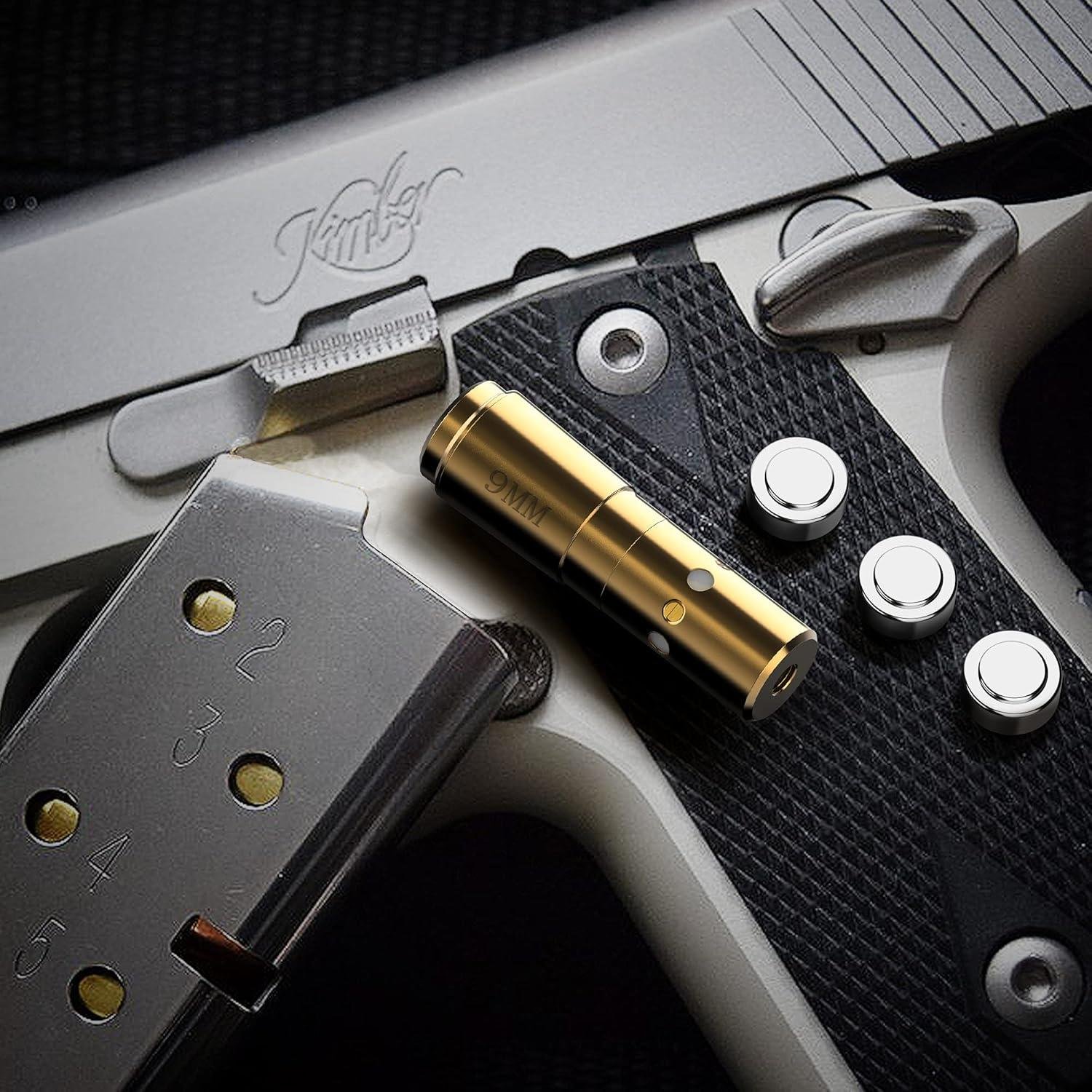
As we holster our thoughts on the MidTen Laser Boresighter,we keep coming back to its simple promise: get on paper faster,with less fuss. The brass build feels dependable, the factory calibration inspires confidence, and the caliber-specific fit across 9mm, .223/5.56, and .30-06/.25-06/.270 options makes it easy to match your setup. The red Class IIIA laser is crisp in dimmer conditions, and the included batteries will cover a typical zeroing session-just remember there’s no on/off switch, so you’ll be pulling the cells when you’re done.
For us, it’s a time-saver more than a precision instrument: ideal for initial alignment at home or the bench, with live-fire still essential for final zero. If you want quick optic setup without overcomplicating your kit, this checks the key boxes. If you need extended runtime, a dedicated switch, or high-visibility performance in bright sun, you may want to look at alternatives.We’re satisfied with how it streamlines the process, and we appreciate that it stays practical and affordable. As always, practice safe firearm and laser handling.
ready to zero in on your own setup? Check the MidTen Laser Boresighter and current pricing here.