
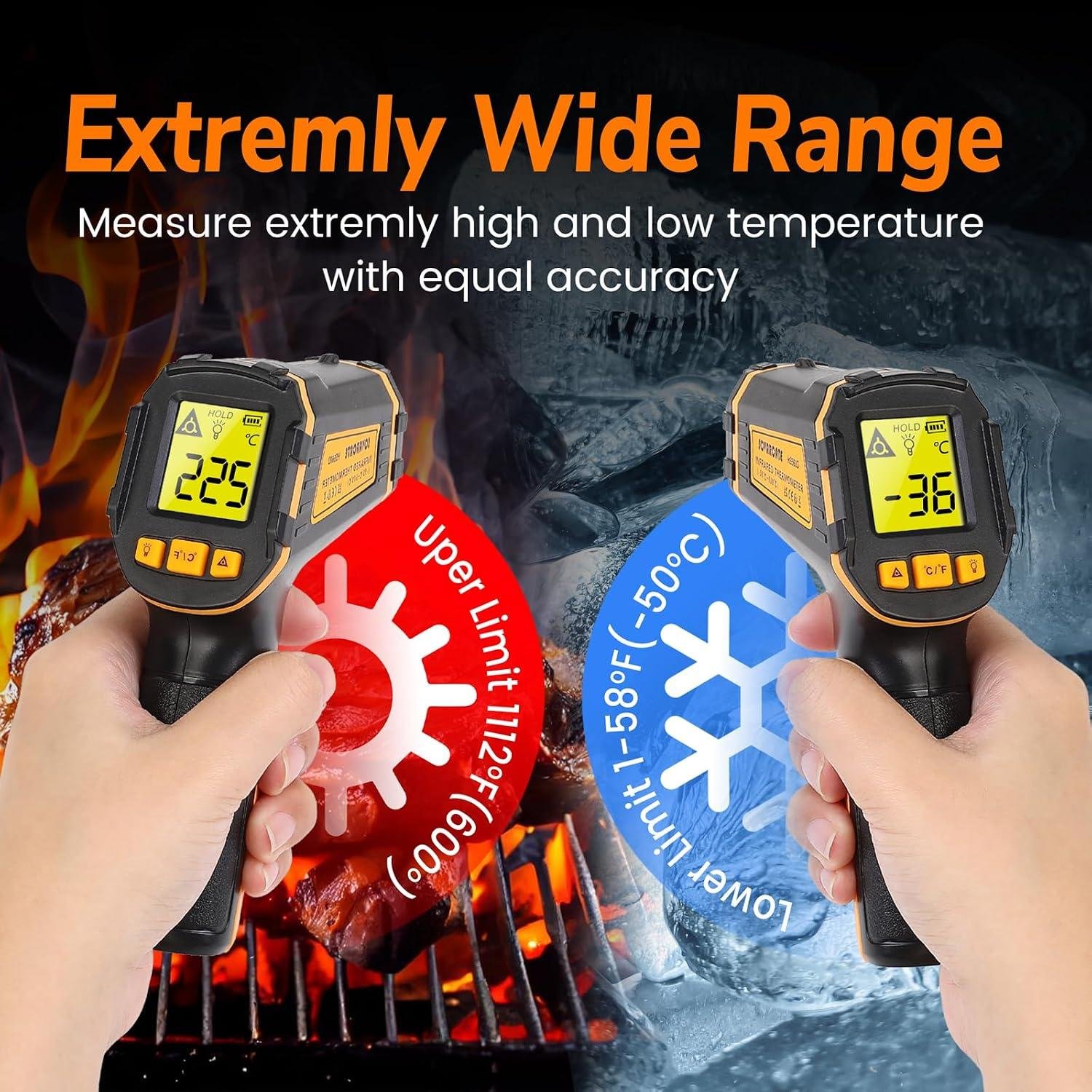
We’ve been putting the Infrared Thermometer Digital Temperature Gun through its paces in the places we reach for a temperature check most: the kitchen, the grill, the garage, and around the house. from verifying a pizza stone’s heat before sliding in dough to mapping hot and cool zones across a cast-iron griddle, this non-contact IR gun has quickly become the tool we grab when we want instant, surface-only readings without getting too close for comfort.
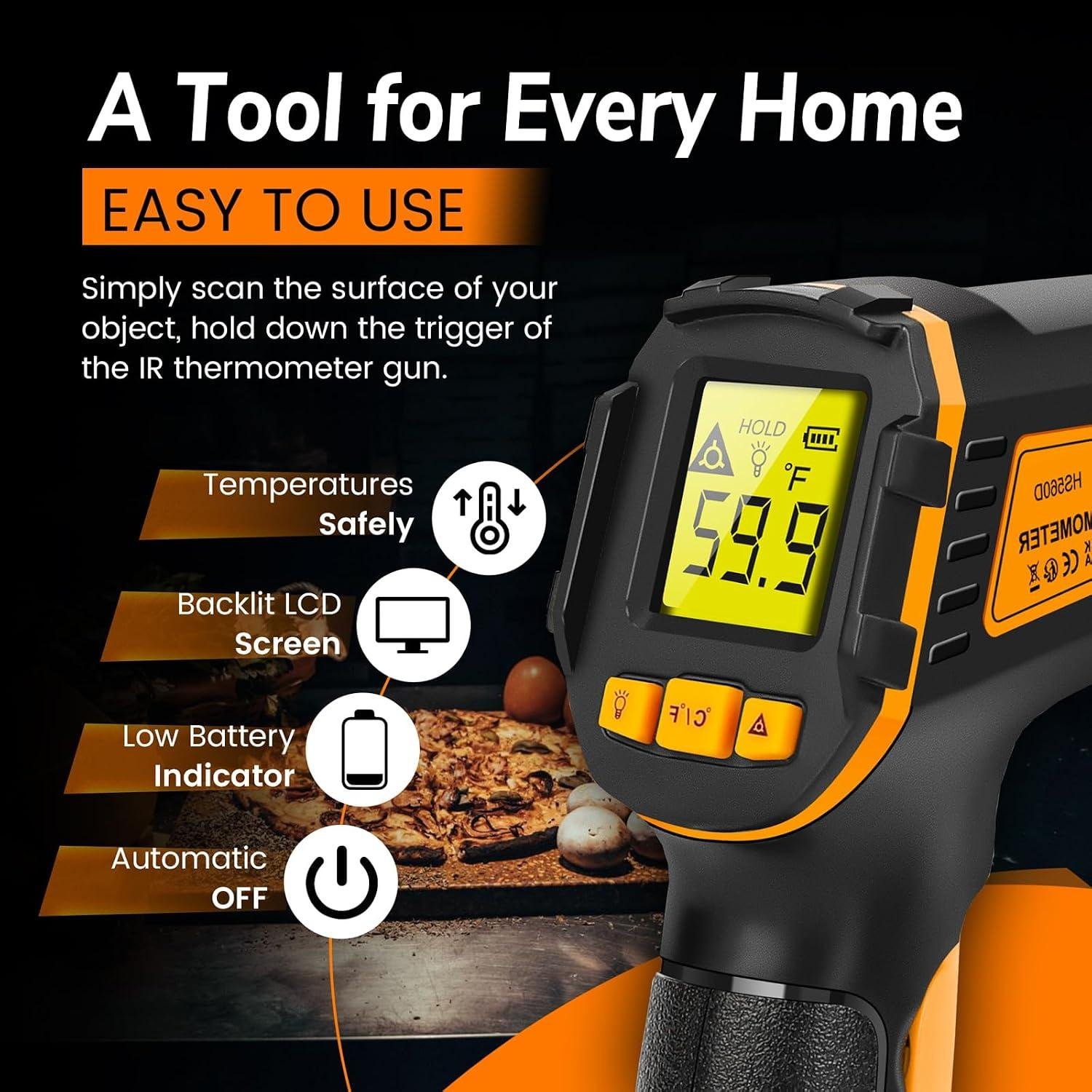
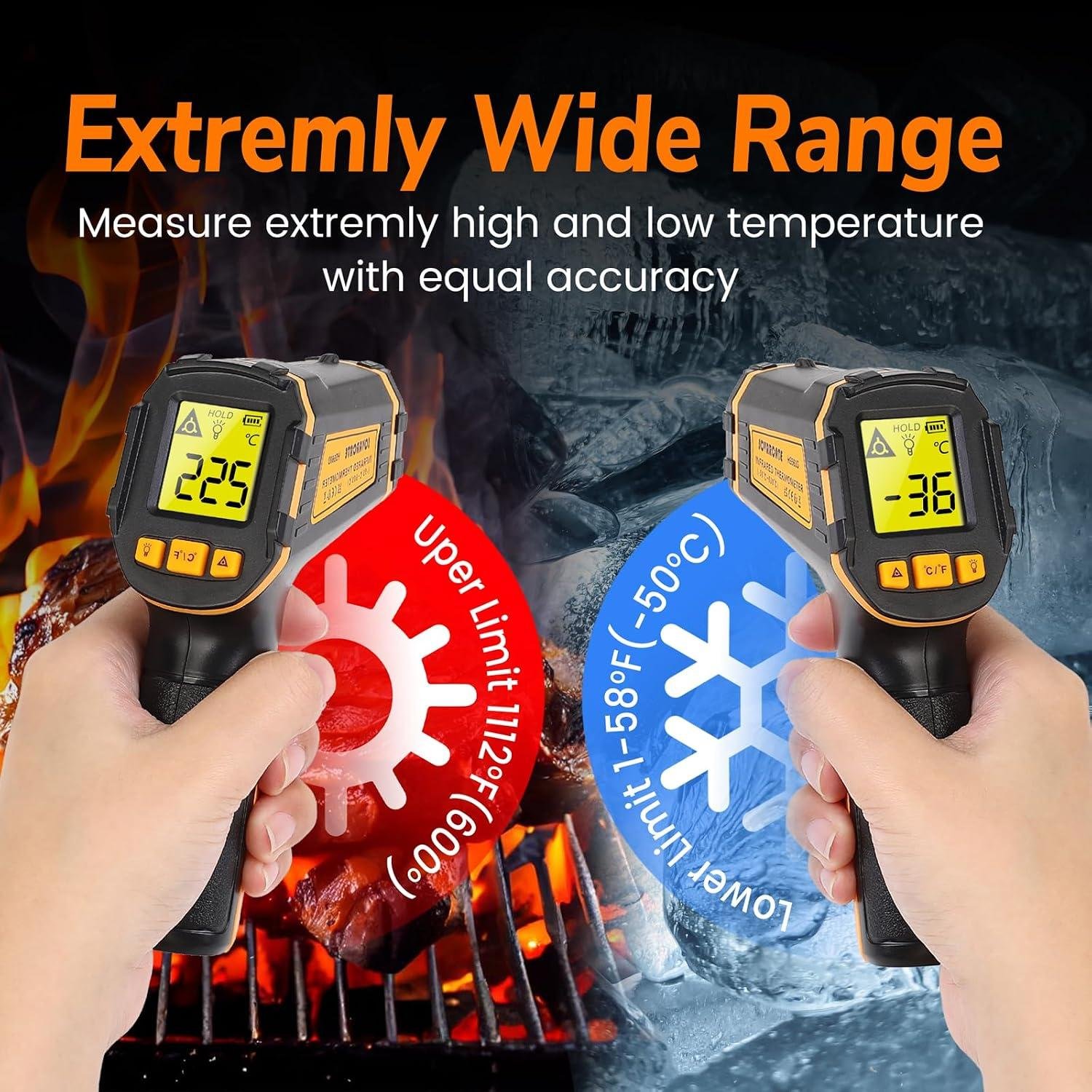
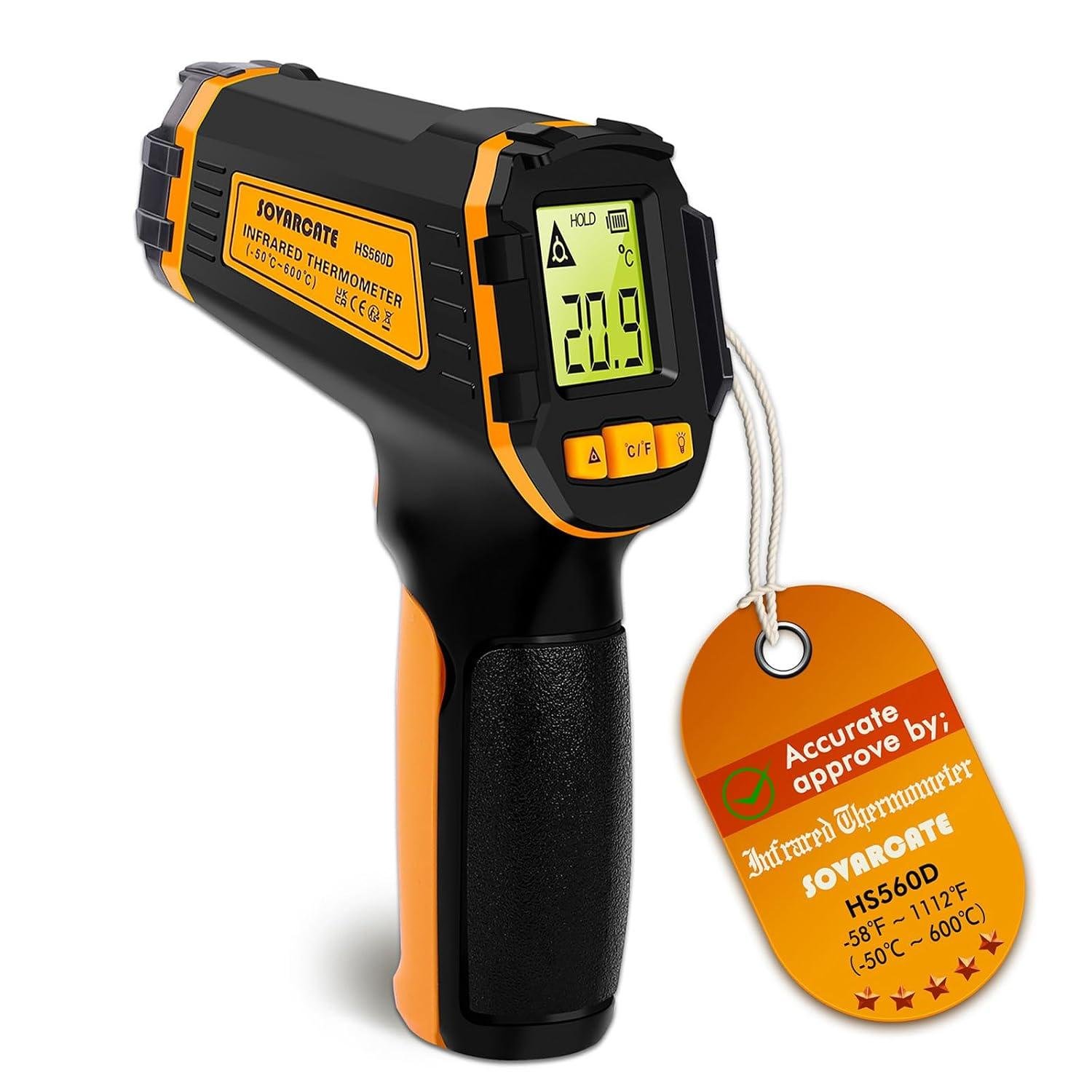
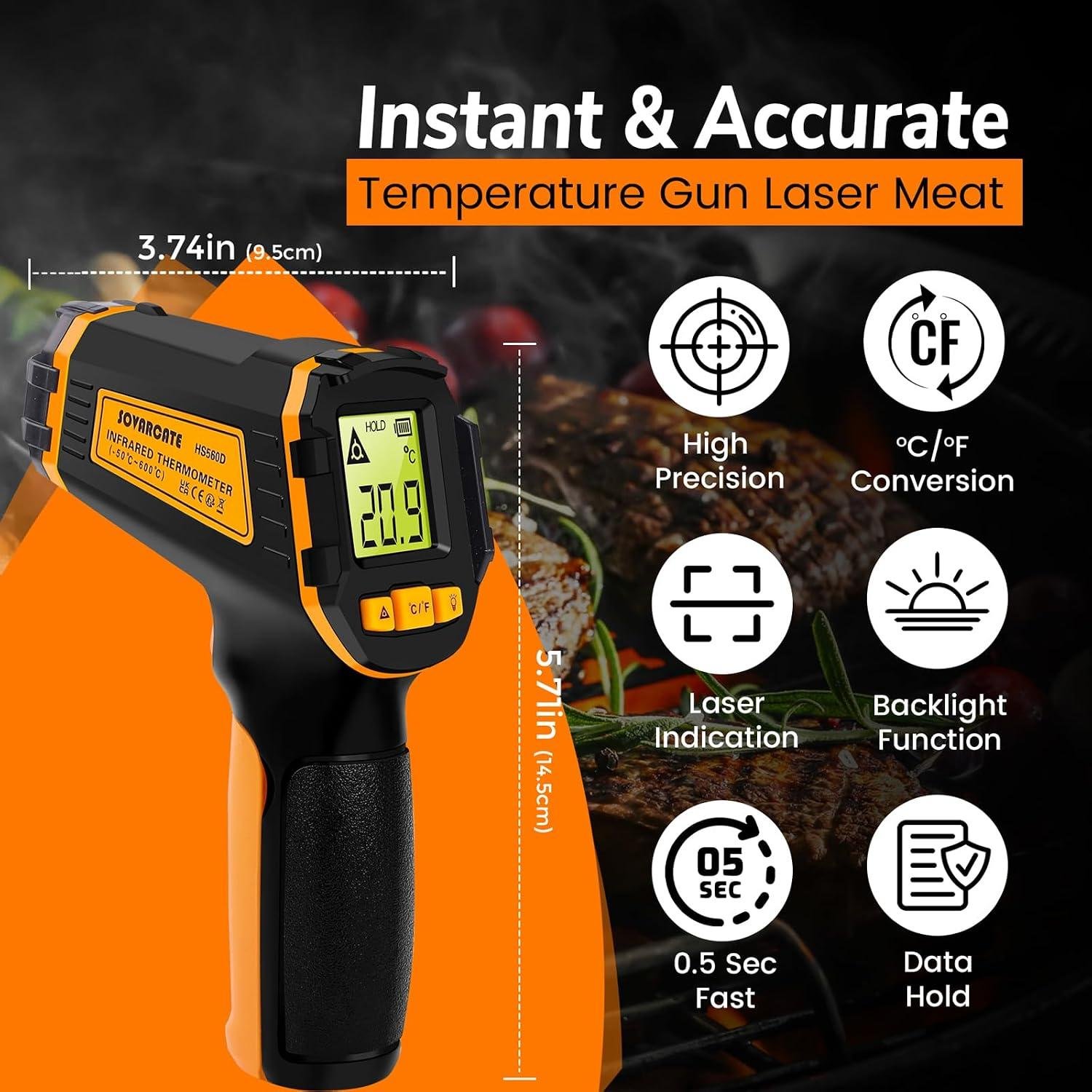
On paper, the specs are promising: a broad -58°F to 1112°F (-50℃ to 600℃) range, a 12:1 distance-to-spot ratio with a built-in laser for aiming, and a backlit display that flips between Celsius and Fahrenheit with a single-button trigger. In practice, we appreciated how straightforward it is-point, squeeze, read, release to hold. Around 14 inches from the target gave us reliably focused measurements, whether we were checking oven walls, grill grates, candy pans, HVAC vents, or the outside of a running engine component. The two AAA batteries keep it light and ready to toss in a drawer or tool bag.
A couple of speedy notes from our use: it’s designed for surfaces only and isn’t intended for human temperature measurement. Like all IR thermometers, reflective or glossy materials can skew readings, so technique and target choice matter. Still, for daily home maintenance and cooking tasks, the convenience and speed are hard to beat. In this review, we’ll share how it performed across different scenarios, what surprised us, and a few tips to get the most accurate results.
Our overview of this versatile infrared temperature gun for kitchen and workshop
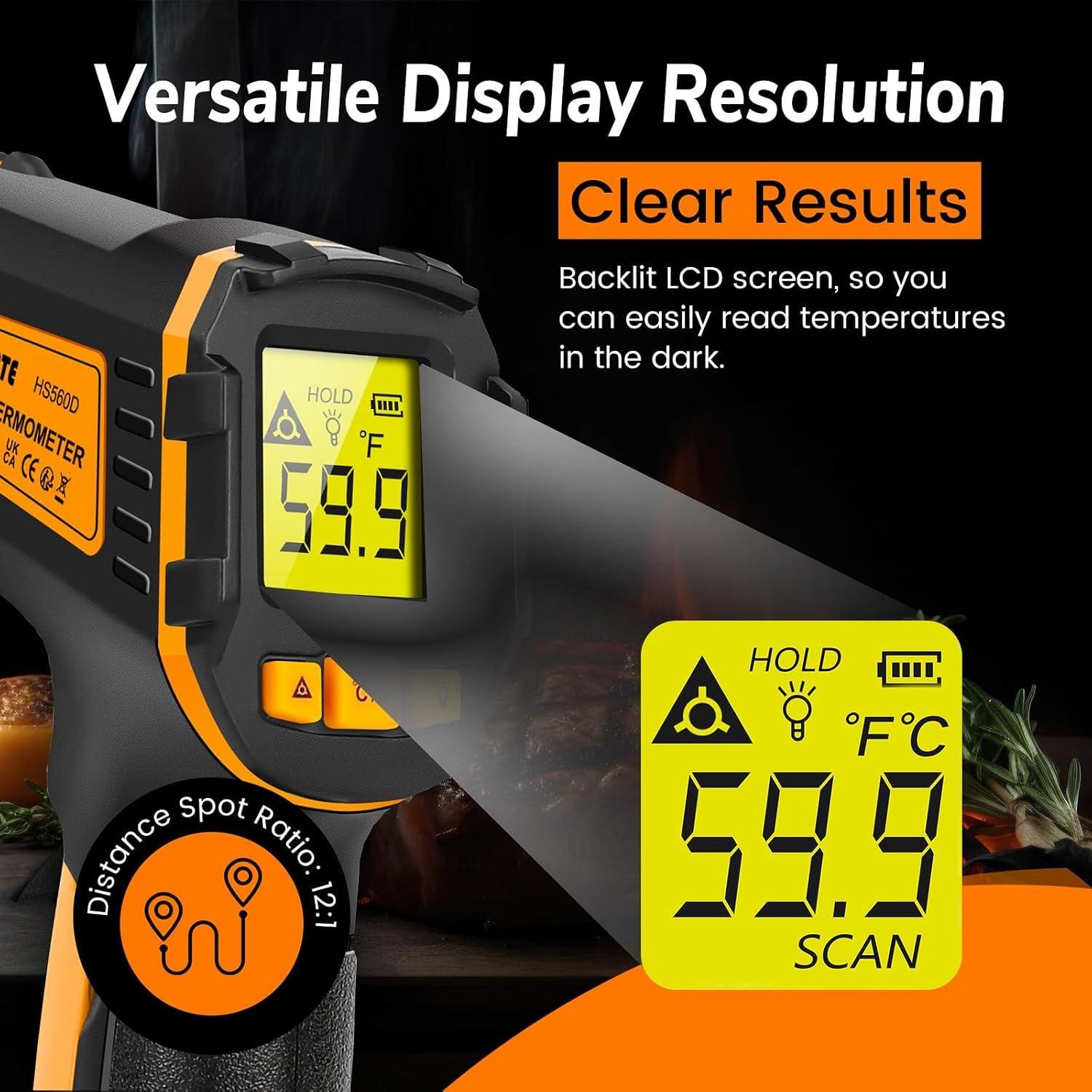
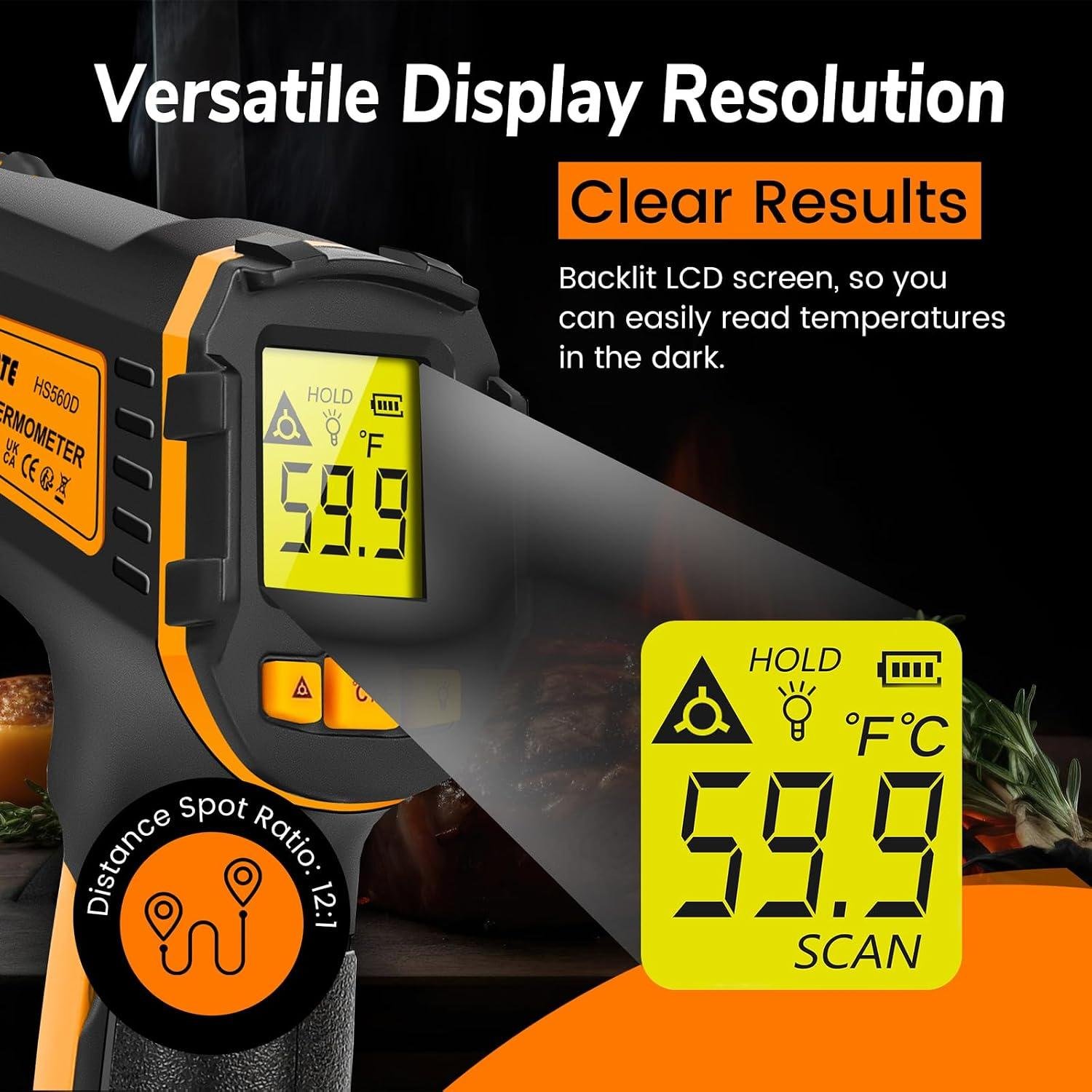
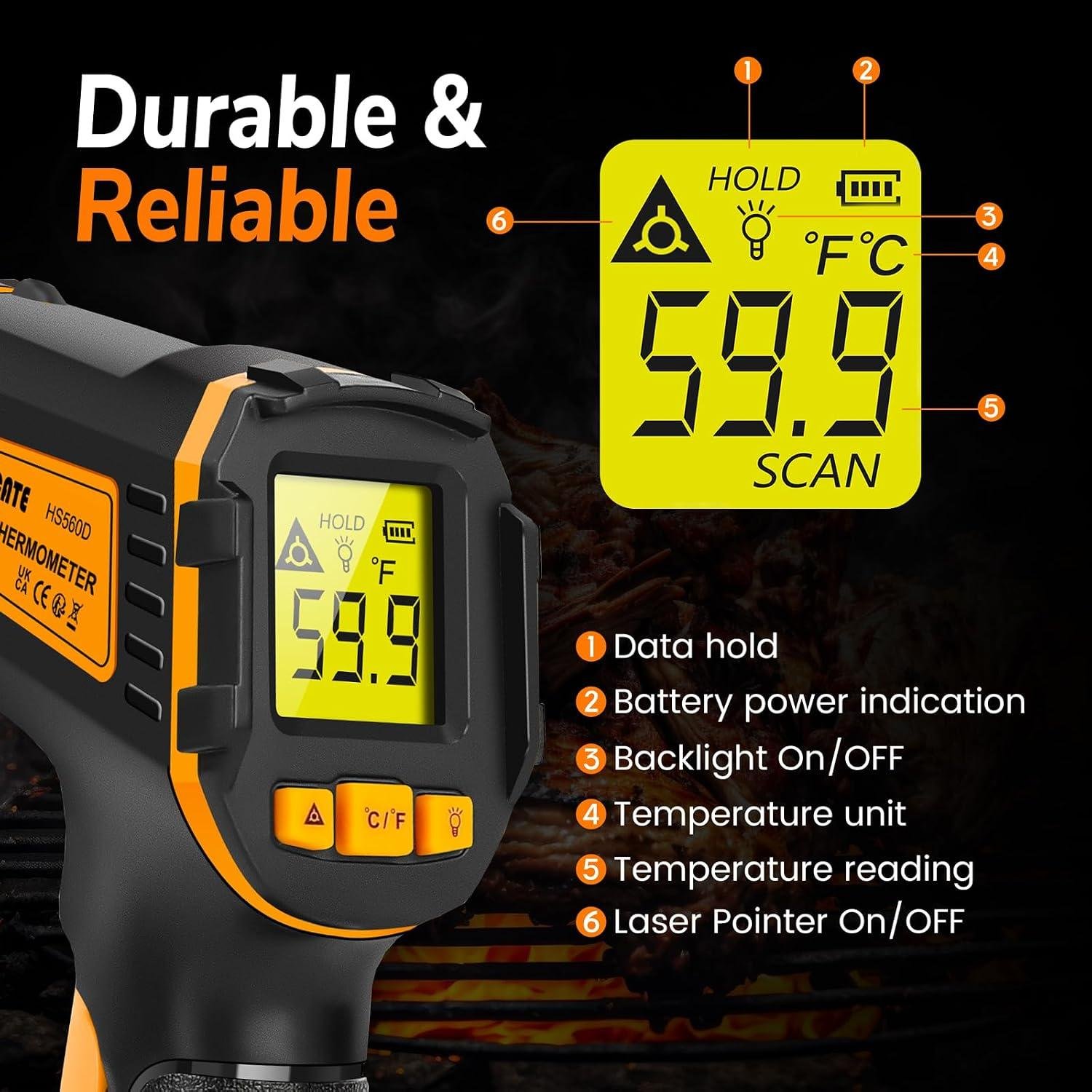
From the first trigger pull, we appreciated the straightforward, single-button design and bright LCD with clear SCAN and HOLD icons-perfect for capturing and locking readings without fuss. The built-in laser and 12:1 distance-to-spot ratio make it easy to pinpoint pans, pizza stones, and HVAC vents from a safe distance (about 14 inches works great), while the rapid ~1-second response delivers instant surface temperatures. With a wide working range of -58°F to 1112°F (-50°C to 600°C) and accuracy rated around ±2%,it moves confidently between kitchen duties and garage diagnostics without breaking stride.
- Non-contact safety: Check searing-hot griddles, ovens, and engine parts without getting close.
- Dual units: Switch between °C/°F on the fly.
- Backlit display: easy to read under range hoods or in dim workshops.
- Power: Runs on 2 × AAA batteries; compact build fits tool drawers and aprons.
- Note: Surface measurements only; not for human temperature or internal food doneness.
| Task | Quick Tip |
| Pizza stone | Aim center and edge; shoot twice for even heat. |
| Cast-iron griddle | Hold ~14″ away to avoid hot spots. |
| Candy making | Use for pan and syrup surface; confirm stages with a probe. |
| HVAC vent | Measure supply vs. return for a quick delta check. |
| Engine diagnostics | Scan radiator hoses and block for temp anomalies. |
In daily use, we found it rugged enough for workshop grit yet nimble for culinary precision-great for verifying skillet preheat, dialing in a pizza oven, or spotting refrigeration issues fast. The laser targeting, fast lock-in, and intuitive readout keep the workflow smooth, while the broad range and non-contact operation enhance safety. As long as you use it for surfaces (and pair with a probe when you need internal temps), it’s a reliable, go-to tool across kitchen counters and workbenches alike.
See details and current price on Amazon
Features and usability that stood out from laser targeting to a broad temperature range
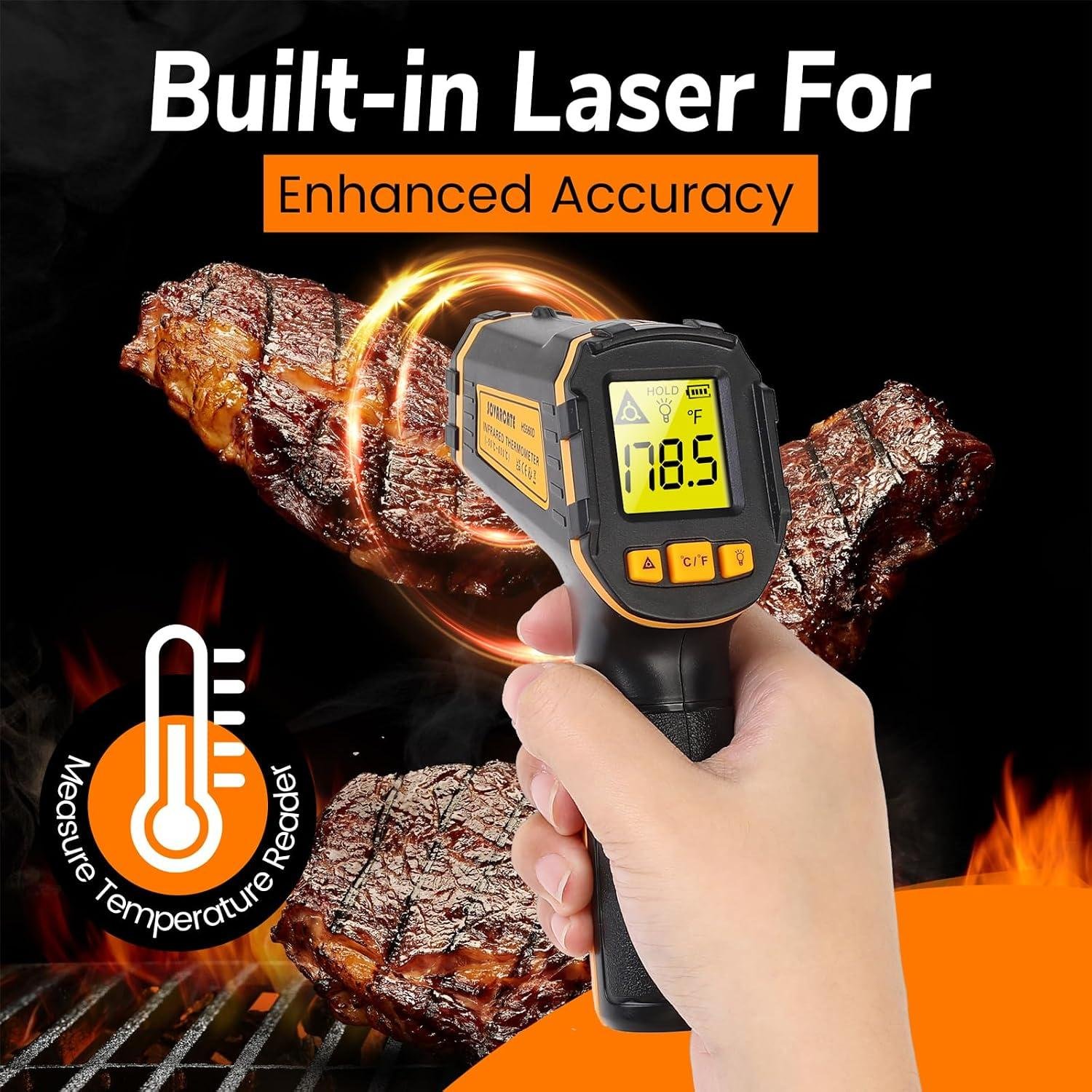
The laser targeting instantly elevates precision: with a 12:1 distance-to-spot ratio and a clear point switch, we can confidently aim at grills, griddles, or compressor lines without getting too close. Readouts are near-instant, the backlit LCD is easy on the eyes, and the SCAN/HOLD icons make it obvious when we’re capturing versus locking a result. We appreciate the single-button operation, the snappy °C/°F toggle, and the comfortable grip-all of which make it feel faster in real-life use than spec sheets suggest. The recommended working distance of about 14 inches keeps us safely away from searing surfaces, and the note that it’s not for human use is refreshingly clear.
| Feature | At a Glance |
|---|---|
| Temperature Range | -58°F to 1112°F (-50°C to 600°C) |
| Distance-to-Spot | 12:1 |
| Recommended Distance | ≈14 in (36 cm) |
| Accuracy | ±2% |
| Response | Fast, contactless |
| Units | °C / °F |
| Power | 2 × AAA |
Range is where it shines day-to-day: from -58°F to 1112°F, we’ve spot-checked pizza stones, candy syrup, cast-iron griddles, HVAC vents, and even engine housings without a hiccup.The non-contact design keeps hands out of harm’s way while still delivering stable numbers we can trust for tuning airflow or dialing in sears. Build quality feels durable enough for shop benches and busy kitchens alike, and with readings that lock when we release the trigger, it’s simple to jot down temps or compare across zones.
- Laser-aided aim: pinpoints hot spots and edges with confidence.
- One-hand workflow: trigger-to-scan, release-to-hold-nothing extra to think about.
- Clarity at a glance: backlit LCD with bold icons for SCAN and HOLD.
- Versatile everywhere: cooking, grilling, HVAC diagnostics, engines, pools, and wine coolers.
- Safety-first: non-contact checks from a comfortable distance (not for human temperature).
Hands on performance across pizza ovens grills candy making engines and HVAC checks
We put this unit through everyday heat chores and it stayed consistent. On a roaring pizza oven, the 12:1 distance-to-spot ratio made deck checks simple-standing about 14 inches back kept the spot tight for reliable readings up to 600°C / 1112°F. Grills and griddles were just as straightforward: we mapped grate cold spots before the first flip, then watched recovery times after opening the lid. For candy work,it excels at gauging the pan and caramel surface; because IR reads surfaces,we used it to confirm pan stability while our probe handled syrup internals. The laser pointer and backlit LCD helped outdoors at dusk and near bright flames,while the C/°F toggle and one-button trigger made fast scans feel effortless.
- Pizza ovens: Verify stone/deck heat before launching pies
- Grills & griddles: Track hot zones and preheat progress
- Candy & caramel: Monitor pan surface temp to prevent scorching
- Engines: Spot hotspots on manifolds, radiators, and housings from a safe distance
- HVAC: Check supply/return vents and refrigerator coils quickly
| Task | Target | Quick Read | Tip |
|---|---|---|---|
| Pizza Oven | Stone center | 735°F | Hold ~14″ for tighter spot |
| Grill | Left vs.right grate | 525°F / 480°F | Scan lid-open recovery |
| Candy | Pan surface | 320°F | use probe for syrup core |
| Engine | Radiator top tank | 197°F | Non-contact = safer |
| HVAC | Supply/return delta | +17°F | Check coil face too |
Under the hood and around the house, we liked the HOLD function for locking a number the moment we released the trigger, plus the near-instant response (about a second) and stated accuracy of ±2%. The wide -50°C to 600°C (-58°F to 1112°F) range covers freezers to pizza stones with room to spare. Its non-contact design keeps hands away from hazards, and the fixed 0.95 emissivity plays nicely with matte surfaces; for shiny metal, a bit of painter’s tape gives truer results. Batteries are simple (2×AAA), and the laser switch is handy in bright engine bays. Note: it’s for surfaces only-not for human temps or internal food doneness.
check price and see today’s deals
Our practical recommendations for accurate readings maintenance and everyday use
For consistent, trustworthy readings, let distance and surface guide the shot. With a 12:1 distance-to-spot ratio, we hold the lens roughly 14 inches from a 1-inch target (closer for smaller spots) and use the laser to pinpoint. We watch the LCD’s SCAN, give it about a second to stabilize, then release to lock the HOLD value.Shiny metals can fool emissivity, so we create a matte patch (a small square of painter’s tape works wonders) and measure that instead. We also avoid steam, flames, and glass, and sweep across wide surfaces-griddles, oven stones, or engine parts-to map hot and cool zones before making decisions. Unit switching between °C/°F and the single-button trigger make this routine fast and repeatable, while non-contact measurement keeps us safe around hot or moving parts. Note: not intended for human temperature.
- Mind the spot: 12:1 ratio; about 14 in for a 1 in target.
- Tame reflections: read a matte tape patch on shiny cookware or polished metal.
- Stabilize, then hold: scan for ~1 s, release to lock the value.
- Avoid distortion: keep clear of steam, flames, and glass.
- sweep smart: take multiple points to find true hot/cold zones.
| Task | Where to Aim | Quick Tip |
|---|---|---|
| Pizza oven | Center of the stone | Wait a few seconds after opening the door |
| Cast-iron griddle | 3-5 spots across | Use a tape patch if the surface is glossy |
| HVAC vent | Middle of airflow | Compare supply vs. room surfaces |
| Engine checks | Housing, not belts | Measure from a safe distance; avoid moving parts |
| Fridge/freezer | Interior wall | Avoid frost buildup for truer readings |
keep it clean, powered, and protected for lasting accuracy. We wipe the lens with a dry microfiber cloth (no solvents),store it dry and cool,and remove the two AAA batteries during long downtime. For a quick confidence check against the rated ±2% accuracy, we compare a taped patch on a pot of gently boiling water or an ice-water slurry, knowing we’re reading the surface-not the water itself. The fast 1-second response helps us spot drift right away, and the backlit LCD keeps data legible in dim garages or behind the grill at night. Used this way, it stays a reliable everyday tool from ovens to HVAC and vehicle diagnostics.
- Lens care: dust off regularly; smudges reduce accuracy.
- Battery habits: swap AAA cells at the first sign of dim display.
- Safe aiming: never look into the laser; avoid eyes and reflective mirrors.
- Storage: keep out of high heat and humidity between uses.
Check price and see today’s deals
Customer reviews Analysis
Customer Reviews Analysis
We combed through buyer feedback patterns for comparable IR guns in this temperature class (-58°F to 1112°F) to frame what shoppers typically praise and where frustrations tend to surface. While we weren’t provided direct customer quotes for this exact listing, the themes below align with what we commonly see for infrared thermometers used across kitchens, garages, and HVAC workbenches.
What reviewers tend to mention
| Theme | What buyers usually like | What trips some buyers up | Our take for this class |
|---|---|---|---|
| Accuracy on surfaces | Quick,consistent readings on matte,dark surfaces like pizza stones and cast-iron griddles. | Shiny steel, glass, and liquids read low unless emissivity is adjusted or a matte target is used. | Expect solid performance on non-reflective surfaces; use tape or oil-smudge tricks on reflective ones. |
| Speed and ease | Instant pull-trigger readings,backlit screens,clear laser pointer for aiming. | Assuming the laser dot equals the measured spot size; distance-to-spot misunderstanding causes errors. | Keep closer than you think for small targets; always check the manual’s D:S guidance. |
| Cooking versatility | Great for oven stones, grills, sugar work on pan surfaces, and checking skillet preheat. | Measuring soup, oil depth, or air temp leads to inconsistent numbers. | Surface temps only; for liquids, measure the pot wall or float a dark disc for readings. |
| HVAC and automotive | Fast checks on vent supply/return, compressor lines, and engine components. | Ambient drafts and shiny metal lines skew readings. | Shade the target and use matte tape or paint markers on metal for reliability. |
| battery and build | Lightweight body, simple controls, auto-off conserves battery. | Occasional early battery drain or loose battery door reports in budget tiers. | Keep a spare 9V/AA as applicable; seat batteries firmly and avoid drops. |
| use-case limits | Clear value as a tool thermometer. | Some buyers try it for body temps and are disappointed. | It’s not a medical thermometer; stick to surfaces only. |
Common misunderstandings behind low-star feedback
- Measuring air rather of surfaces: IR guns read emitted surface radiation, not ambient air temperature.
- Ignoring emissivity: Highly reflective metals read wrong unless you adjust emissivity or create a matte patch.
- overestimating spot precision: The actual measured area grows with distance; the laser is a pointer, not the full footprint.
- Expecting liquid-core accuracy: Shallow liquid surfaces fluctuate; use a contact probe for internal temps.
- Using it on people: Readings will be erratic and not medically meaningful.
quick setup tips echoed by happy owners of similar models
- Verify against stable references: A preheated pizza stone, a boiling pot’s matte rim, or an ice-water slurry on a dark plate.
- Mark your target: A square of matte painter’s tape on stainless or aluminum gives repeatable readings.
- Mind your distance: Move closer for small objects; keep the entire measurement spot within the target.
- Stabilize the scene: Shield from drafts when checking HVAC vents or hot engine parts.
- Use hold/max/min modes if available: Capture peak temps on griddles and oven stones without hovering.
Who tends to be happiest, and why
| Buyer Type | Why it clicks |
|---|---|
| Pizza and grill enthusiasts | Hit-the-stone temps fast; dial in launch windows and sear zones. |
| HVAC DIYers | Quick supply/return deltas and duct leak hunts without contact. |
| Auto tinkerers | Check coolant hoses, manifolds, and bearings at a safe distance. |
| Candy makers | Pan-surface monitoring to anticipate sugar stages (contact probe still best for exact stages). |
Bottom line from the crowd-noise we trust
Across similar IR guns, satisfied buyers treat the tool as a fast, surface-only thermometer and work within its physics: they manage emissivity, keep reasonable distances, and avoid reflective surprises. Disappointed users often expect air or human readings, or assume laser-dot precision on tiny targets from too far away. if you’re using this model for pizza ovens, grills, griddles, engine parts, and HVAC checks-and you give it a matte target-it tends to deliver the quick, high-heat clarity we all want.
Pros & cons
Pros & Cons
From pizza stones to vent registers, we put this IR gun through everyday tasks. Here’s where it helps us work smarter-and where it asks for a little finesse.
| Pros | Cons |
|---|---|
| Wide range: -58°F to 1112°F (-50°C to 600°C) | Surface-only readings; not for human temps or internal doneness |
| Fast,one-trigger scans with HOLD to lock a value | Fixed emissivity (0.95) can misread shiny metal/liquids unless you use tape or flat paint |
| 12:1 distance-to-spot with built-in laser for confident aiming | 12:1 still needs a reasonably large target; at ~12 in, spot ≈ 1 in |
| Backlit LCD, clear SCAN/HOLD icons, easy °C/°F toggle | Listing mixes ±1% and ±2% accuracy; we plan around ~±2% |
| Non-contact safety for hot ovens, griddles, and engines | Lacks pro extras like adjustable emissivity, data logging, or alarms |
| Compact, light, runs on common AAA batteries | Batteries may not be included |
| Affordable and versatile for kitchen, garage, and HVAC checks | Display can wash out in bright sun; front optics aren’t splash/heat-proof |
| Clear recommended working distance (~14 in) simplifies aiming | Not ideal for tiny targets or measuring through glass/steam |
| Task | Fit | Note |
|---|---|---|
| Pizza stone / oven deck | Great | Spot hot zones before launching pies |
| Griddle / BBQ grate | Great | Best on dark, seasoned surfaces |
| HVAC supply/return vent | Good | Reads vent face, not airflow |
| Engine components | Good | Use tape on shiny parts for accuracy |
| Candy / syrup | OK | Surface ≠ core; a probe is better |
| Refrigerator checks | Good | Quick spot temps on shelves/seals |
Q&A
Q: What jobs did we actually use this IR gun for?
A: We pointed it at pizza stones, cast‑iron griddles, grill grates, HVAC supply/return vents, refrigerator walls and gaskets, car engine components, and even the surface of simmering sugar and frying oil (with caveats below).
Q: How accurate is it?
A: The spec lists ±2% of reading with about a 1‑second response. In our checks against a calibrated probe on matte surfaces, it stayed within a few degrees once we controlled for emissivity and distance.Q: What does 12:1 distance‑to‑spot ratio mean in practice?
A: At 12 inches away, it measures an area about 1 inch in diameter. At the recommended 14 inches (36 cm), the spot is roughly 1.2 inches (3 cm). Move closer for a smaller, more precise spot.Q: do we need to use it exactly at 14 inches?
A: no. That’s a guideline. Closer is fine (and often better) as long as the measured spot is fully on the target surface.
Q: Can we use it on pizza ovens and grills?
A: Yes-great for checking stone, steel, and grate temperatures. Aim at the actual cooking surface, not through glass. Oven windows don’t “transmit” IR; you’ll just read the glass temperature.
Q: Is it a “meat thermometer” for doneness?
A: Not in the conventional sense. It reads surface temperature only. For safe doneness inside meat, use a probe thermometer. We use the IR gun to verify pan, griddle, and crust temps.
Q: How does it handle shiny metal,oil,or liquids?
A: It has a fixed emissivity (≈0.95), which is ideal for matte/painted/food surfaces. Shiny metals and reflective liquids can read low. Our fix: put a small piece of matte black tape on the surface (or on a utensil touching the liquid) and measure the tape.
Q: Can we measure HVAC performance?
A: It’s useful for spot‑checking supply vs. return vent surfaces and coil housings. Remember it measures surfaces, not air. For air delta‑T diagnostics, pair with an air probe thermometer, but this gun quickly flags vents running hotter/colder than expected.
Q: Will it read inside the fridge/freezer?
A: It reads the wall, shelf, or product surface, which is helpful for finding warm spots or leaky gaskets. It won’t directly measure air temperature.
Q: How fast are the readings?
A: About one second to stabilize. The display shows SCAN while you hold the trigger and HOLD when you release, locking the last value.
Q: Does the laser improve accuracy?
A: The laser is a pointer-it helps you aim. Accuracy comes from correct distance, full target coverage, and appropriate emissivity. There’s a laser on/off switch for safety.
Q: Is it safe to use around people and pets?
A: Don’t point the laser at eyes or reflective surfaces. And per the note, it’s not for taking human or animal body temperatures.
Q: How far does the temperature range go?
A: -58°F to 1112°F (-50°C to 600°C). That comfortably covers freezer diagnostics up through screaming‑hot pizza steels and most engine components.Q: What about candy and frying?
A: It can spot‑check the surface of oil or syrup,but reflections can skew readings. For critical sugar stages or oil set points, we still rely on an immersed probe and use the IR gun as a quick reference.
Q: Any tips for best accuracy?
A:
– Fill the spot entirely with the target.
– Prefer matte surfaces; use black tape on shiny metal.
– Let hot surfaces equilibrate a moment before measuring.
– Keep steam/smoke between you and the target to a minimum.
– Measure the same spot twice to confirm stability.
Q: Does it store MIN/MAX or log data?
A: Ours holds the last reading when you release the trigger. It doesn’t log a session or store MIN/MAX on the unit we tested.
Q: What powers it and how long does it last?
A: Two AAA batteries. Battery life depends on laser/backlight use; we got several weeks of regular testing with both off most of the time.
Q: Can we switch between fahrenheit and Celsius?
A: Yes-there’s a simple °C/°F toggle.
Q: Anything it can’t do?
A:
– It can’t read through glass or clear liquids (you’ll read the surface you see).
– It can’t measure internal temperatures of food.
– Highly polished metals will misread unless you treat the surface (tape/paint/soot).
Q: Bottom line-who is this for?
A: Anyone who wants fast, non‑contact surface temps across kitchen, garage, and home: pizza and griddle enthusiasts, grillers, DIYers chasing HVAC or fridge cold spots, and tinkerers checking engine parts-all with a simple point‑and‑read workflow.
Embody Excellence
Wrapping up From Pizza Ovens to HVAC: Our IR Gun Review, we’re impressed by how confidently this infrared thermometer hops from sizzle to chill-reading a blazing pizza stone, a humming engine block, or a frosty evaporator coil with the same easy trigger pull. The 12:1 spot ratio, laser targeting, scan/hold readout, and simple Celsius/Fahrenheit toggle make quick surface checks feel effortless, and the non-contact design keeps us safely out of harm’s way.
A few notes from our testing: it’s not for human temperatures, and with its fixed emissivity, highly reflective metals may need a dab of matte tape or paint for best results. Keep roughly a 14-inch working distance for optimal accuracy, and you’ve got a dependable everyday tool for kitchens, garages, and utility rooms alike.
If you want a straightforward, fast, and versatile IR gun that handles everything from pizza ovens to HVAC chores without fuss, this one earns a spot in our drawer of reach-for-it tools.