
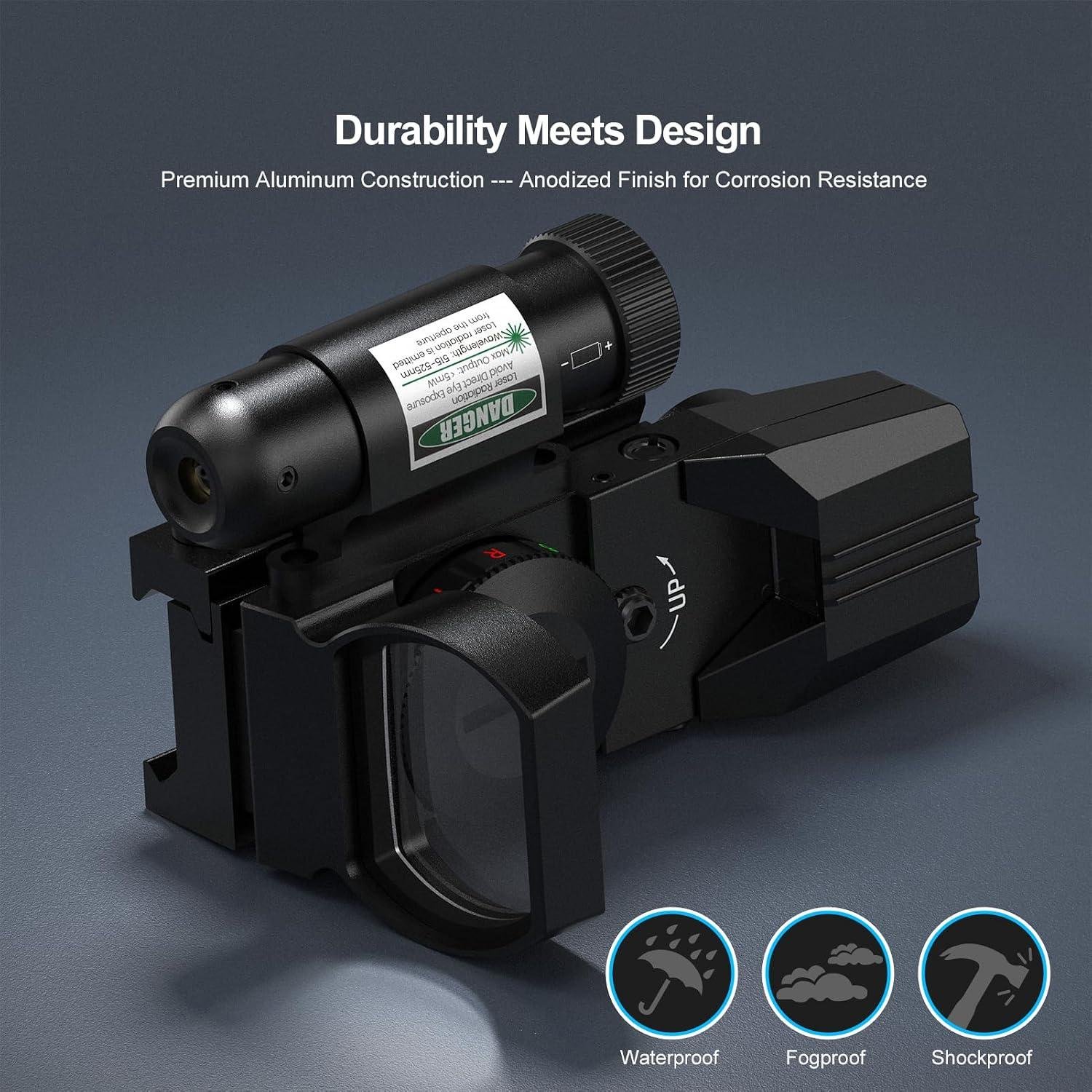
Some optics promise speed; others whisper precision. When we unboxed the Feyachi Reflex Sight for Rifle, 4 Reticles Red & Green Dot Sight with Laser (also referred to as the RSL-88), we were curious to see where it would land. On paper,it checks a lot of boxes for a budget-friendly reflex: four selectable reticle patterns,red/green illumination with five brightness levels,and an integrated Class IIIA green laser meant to boost visibility when seconds count.
We mounted it on our rifle and headed to the range with a simple plan-zero the sight, explore each reticle in both colors, and see how the setup handled everything from shaded berms to full midday sun. We paid close attention to control placement, reticle clarity, and how quickly we could transition from close targets to smaller steel at distance. The built-in laser added another layer to test: how practical it felt for rapid indexing and whether it held alignment through a session.
This review isn’t about hype; it’s about whether the Feyachi reflex sight can pull double duty as a versatile, everyday range optic and a quick-acquisition tool when lighting gets tricky. As always, we used the laser responsibly-avoid direct eye exposure and follow local regulations. With that out of the way, here’s how our time behind the glass went.
Our First Impressions and Setup Experience
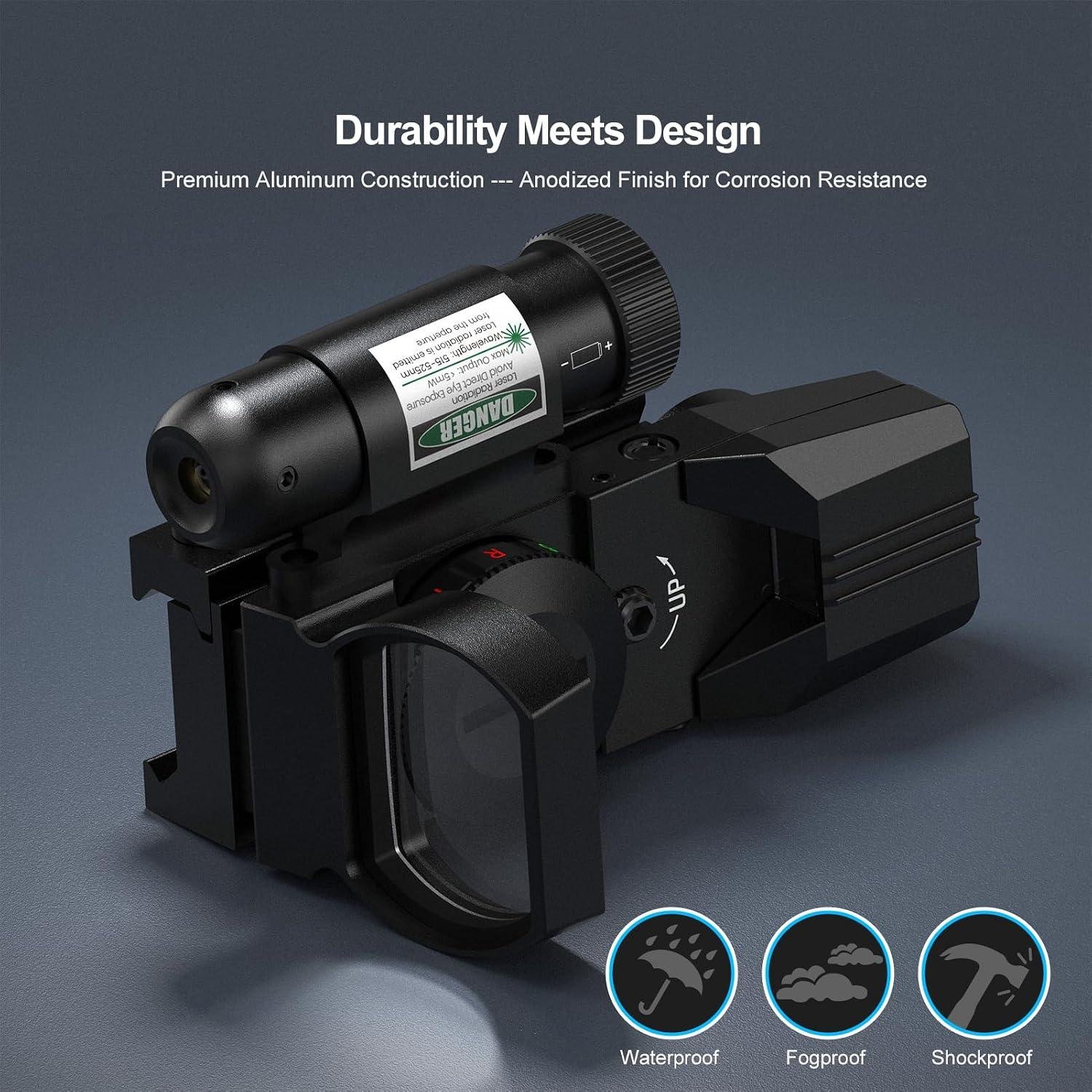
Our first look left us optimistic: a compact chassis, clean glass, and an efficient Class IIIA green laser that snapped on with a luminous, tight point. Cycling the 4 reticle modes and choosing between red/green with 5 brightness levels felt natural, giving us quick flexibility for dim indoor bays and brighter outdoor backstops. The controls have positive clicks, markings are easy to read, and the sight sat square on our rail with no wiggle.
- Quick toggle between red and green illumination
- Four reticle patterns for different shooting contexts
- Five-step brightness that adapts to changing light
- Green laser that’s instantly visible in transitional light
| Scenario | Reticle & Color | Brightness | Laser |
|---|---|---|---|
| Indoor lane | Minimal dot, Red | Level 2 | Off |
| Sunny berm | Ringed option, Green | Level 5 | On for quick index |
| Dusk steel | Cross-style, Green | Level 3 | On |
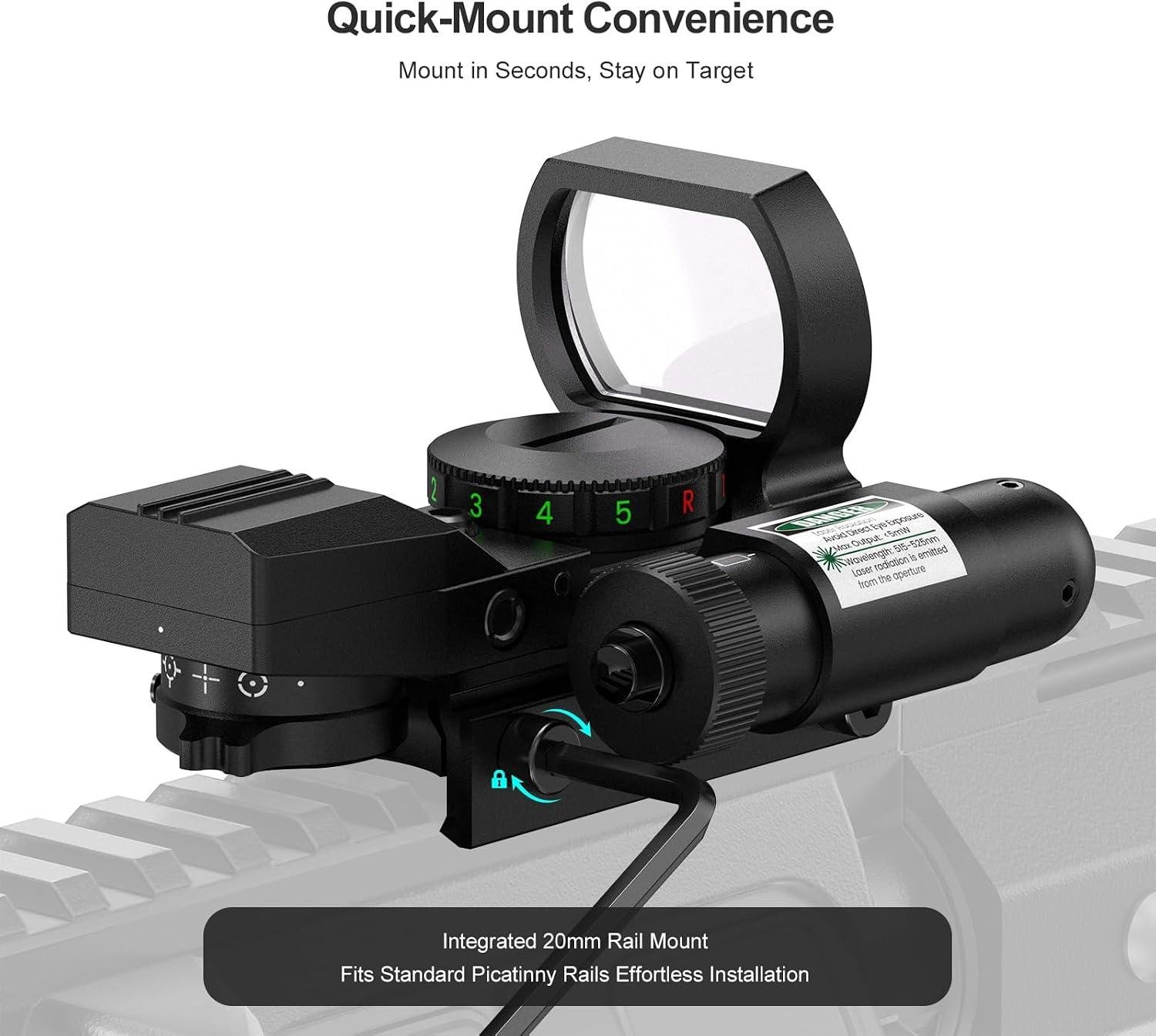
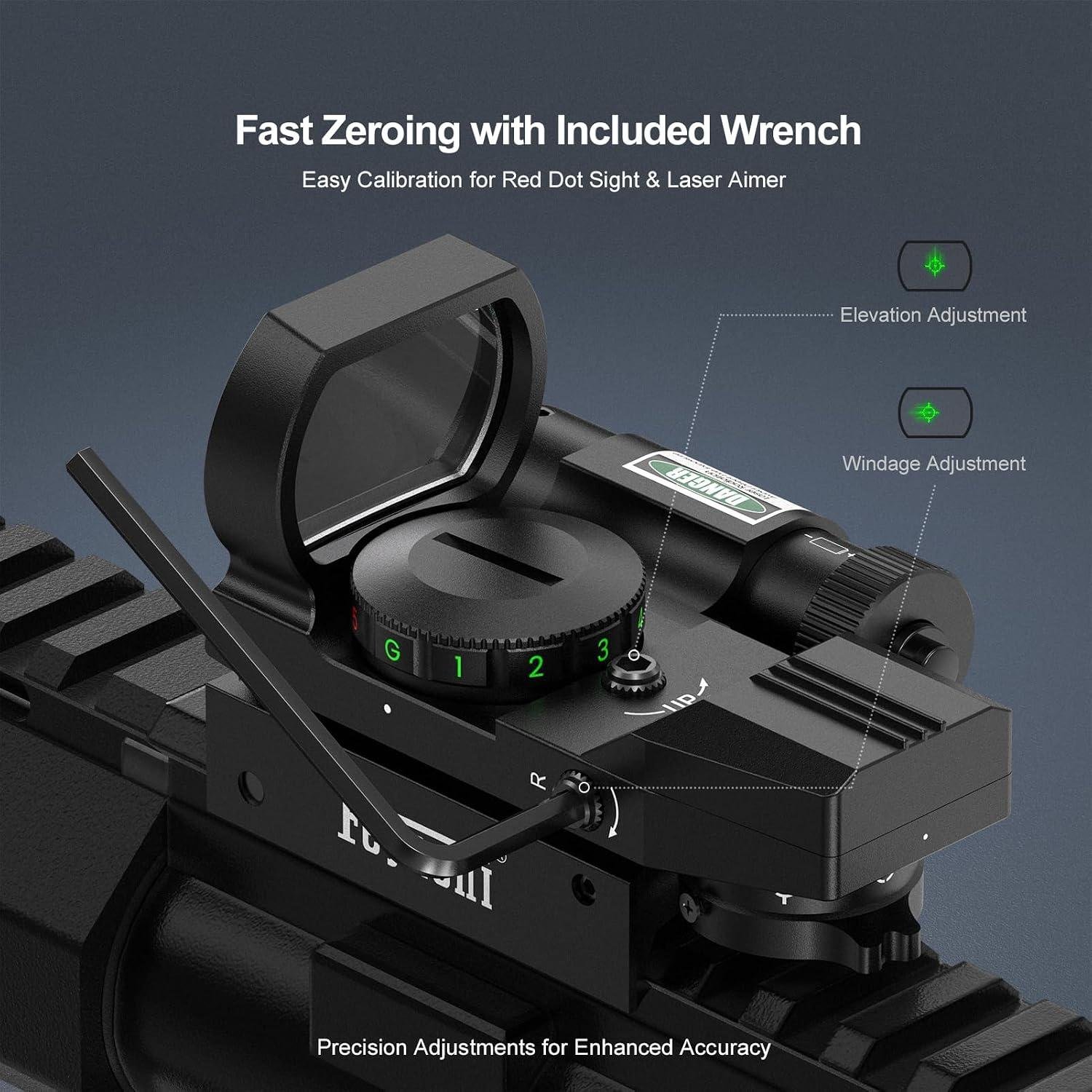
Setup was straightforward. We clamped it to the rail, selected a preferred reticle, toggled to red or green, and walked through the five brightness steps until the aiming point balanced with ambient light. from there, aligning the green laser to our point of aim at a short zeroing distance took just a couple of tweaks on the adjusters, and everything held firm through handling and dry-fire reps. Ready to try this configuration and check the latest price? Tap below.
Check price and see today’s deals
Reticle Choices Brightness Controls and Laser Performance
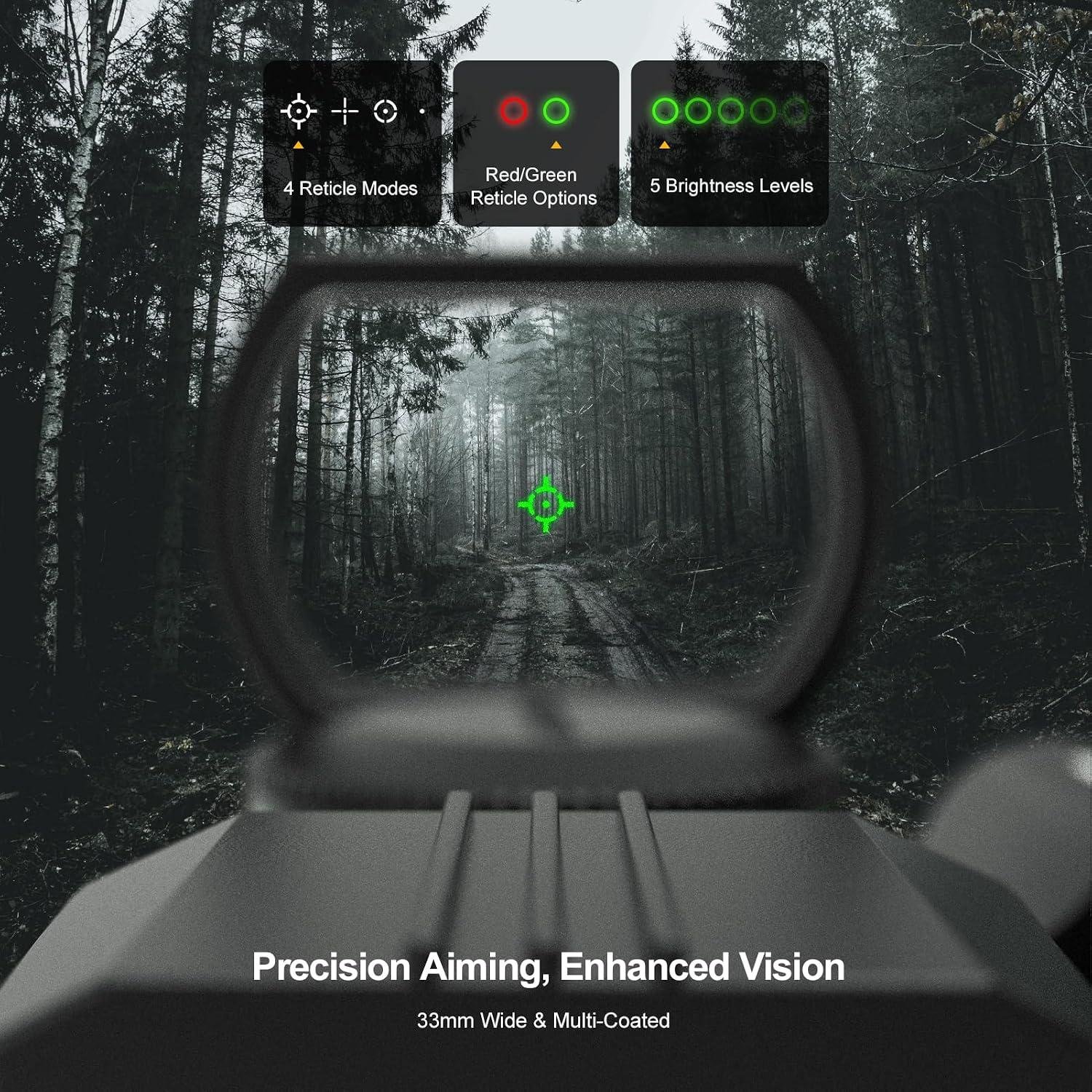
Reticle flexibility is the star here: we get 4 reticle modes with red/green options,each offering 5 brightness levels to tame glare or boost contrast as light changes. Swapping colors and patterns lets us tailor the sight picture to background and target size, reducing bloom in bright sun and preserving definition indoors. The stepped illumination keeps the dot sharp rather than flaring, so transitions from noon-day steel to a dim bay feel controlled and consistent.
- Circle-dot for fast acquisition on close plates
- Crosshair when we want finer holds
- Green for high-noon visibility
- Red for low-light contrast
- Five-level brightness smooths every switch
| Lighting | Color | Brightness |
|---|---|---|
| Bright sun | Green | 4-5 |
| Overcast | Either | 3 |
| Indoor range | Red | 1-2 |
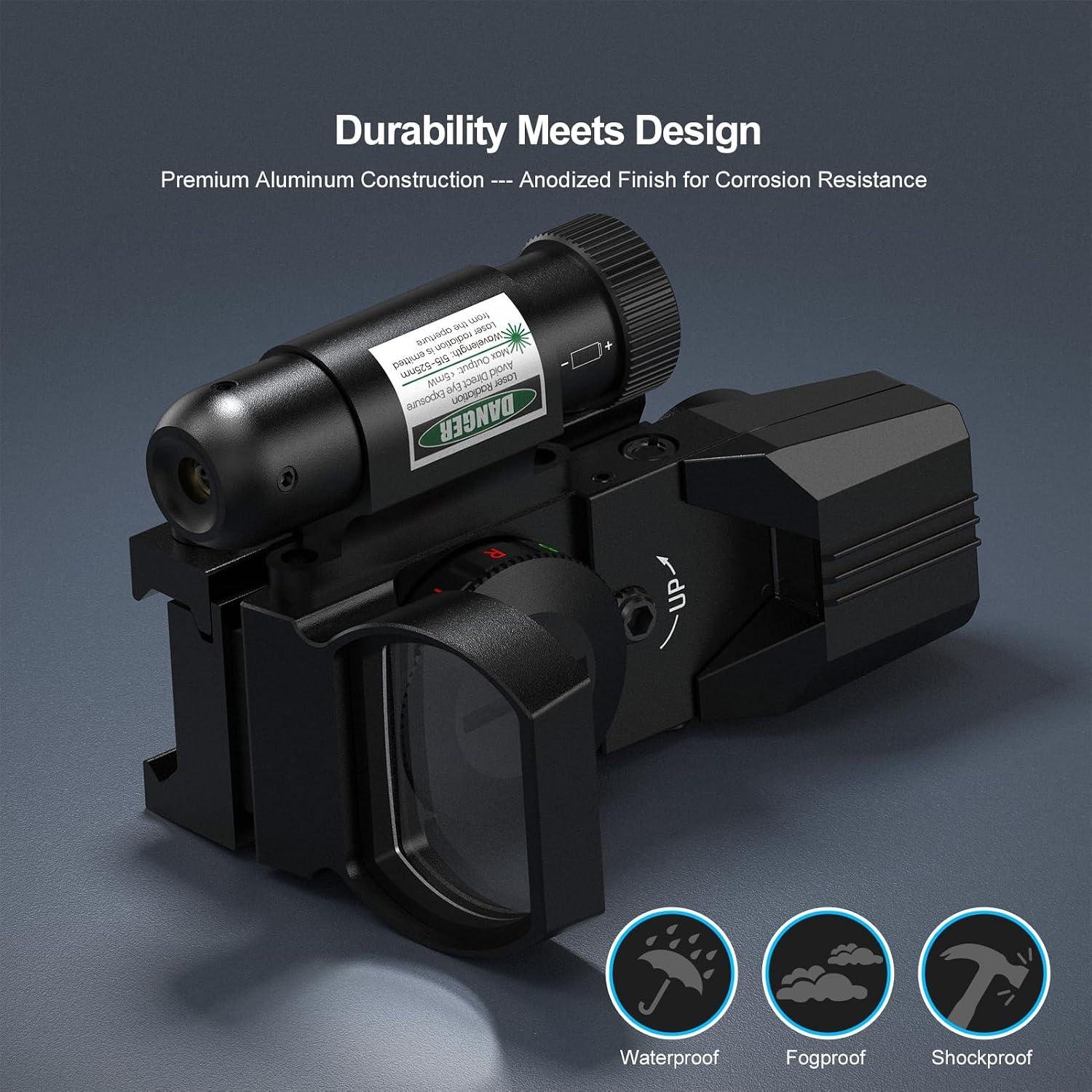
The integrated Class IIIA green laser adds an efficient, highly visible reference that complements the reticle rather than competing with it. In mixed lighting we keep the reticle at a modest setting and let the laser cue the eye for close work, then dial brightness as conditions demand-simple, quick, and effective. Together with the reticle choices and granular illumination, the laser rounds out a versatile aiming system that stays readable across varied backdrops and times of day.
Check availability and current price
Glass Clarity Zero retention and Real World Handling
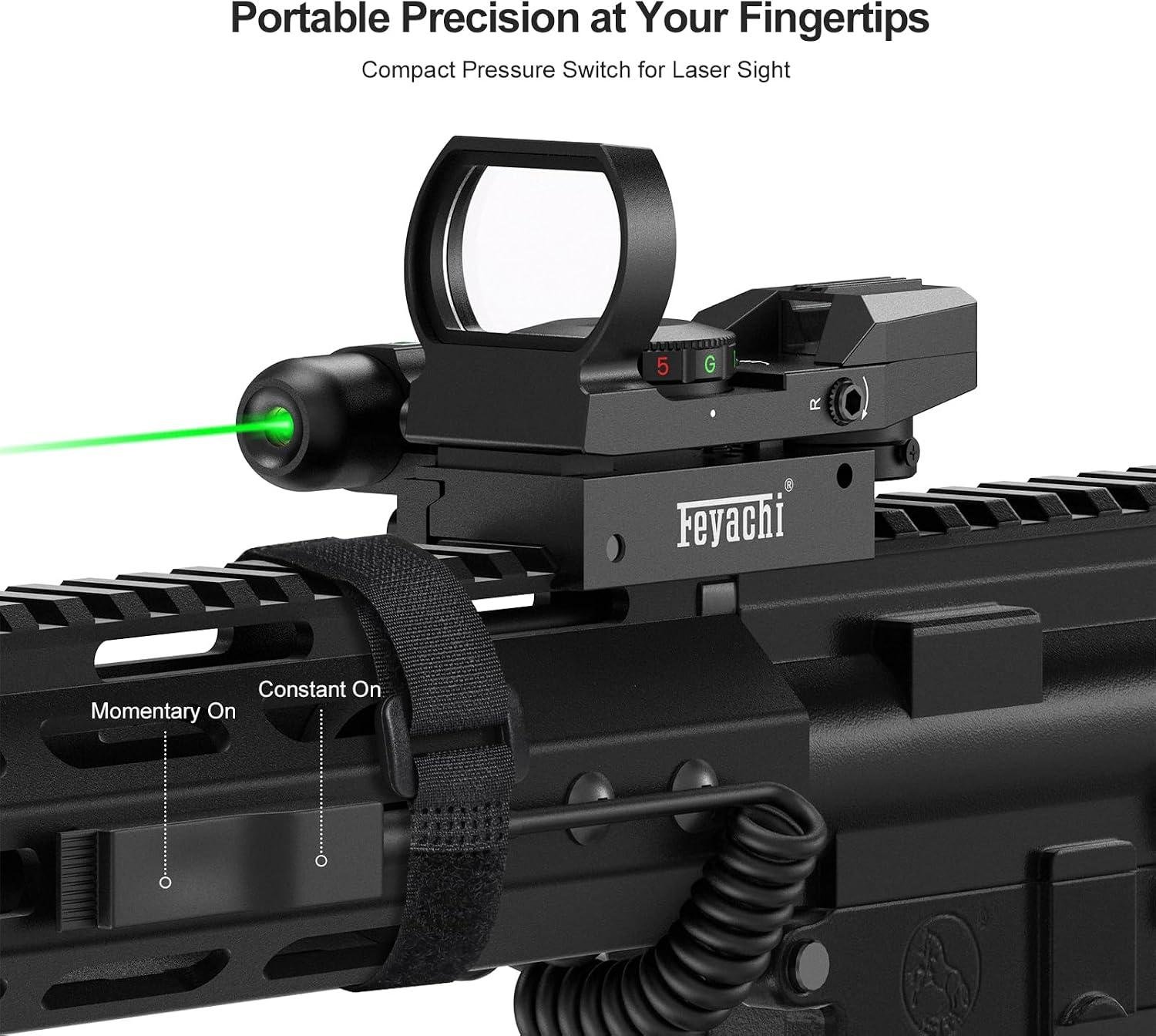
Glass clarity here feels enhanced by smart illumination rather than just pane polish: toggling between red/green and stepping through 5 brightness levels keeps the reticle crisp against dim rooms and bright midday glare. the integrated Class IIIA green laser adds a fast close-range index without washing out the window, helping us settle on target quickly while maintaining a clean, distraction-free sight picture as lighting shifts.
For zero checks and real-world handling, our priority was consistency. With 4 reticle modes to match target size and background, we could verify point of aim quickly after routine handling. Simple controls and flexible illumination make it easy to avoid bloom or washout-practical advantages when moving from bench work to informal drills or navigating mixed light on the fly.
- 4 reticle modes adapt to target and backdrop
- Red/green with 5 brightness levels for changing light
- Class IIIA green laser for fast visual indexing
- Intuitive controls for quick adjustments
| Lighting | 5 levels per color |
| Reticles | 4 shapes |
| Laser | Class IIIA green |
| Handling | Quick target index |
See price and details on Amazon
Our Practical Recommendations for Mounting Use and Value
For mounting, we prioritize stability, a clean sight picture, and quick verification. This compact reflex optic pairs its Class IIIA green laser with four reticle modes and red/green illumination (five brightness steps), so placement should support rapid switches without breaking our cheek weld. We keep it forward enough to open peripheral vision yet far enough back to avoid parallax exaggeration, then confirm the laser aligns with our chosen reticle at our baseline distance.
- Set brightness by habitat: mid-high in bright sun; low indoors to prevent bloom.
- Choose color thoughtfully: green for daytime pop; red for low-light comfort.
- Pick a reticle for purpose: simple dot for precision; ringed patterns for fast snaps.
- Re-check zero: confirm alignment after any rail changes or bumps.
- Safety first: follow all handling rules and local regulations at every step.
On value, we see the appeal in the feature density: dual-color illumination with five levels maintains visibility across conditions, while the efficient green laser speeds indexing without extra bulk. That flexibility means one optic can cover range sessions, training drills, and casual plinking, reducing accessory swaps and helping us get more from a single purchase.
- Versatility dividend: four reticles + two colors = fewer compromises across scenarios.
- Time saved: the green laser accelerates initial alignment and reacquisition.
- Battery mindfulness: run only as bright as needed to stretch life.
| Use Case | Color | Brightness | Reticle Pick |
|---|---|---|---|
| Daylight Range | Green | 4-5 | Dot |
| Dusk/Dawn | Red | 2-3 | Dot + Ring |
| Indoor | Red | 1-2 | Dot |
Check price, colors, and reticles in stock now
Customer Reviews Analysis
Customer Reviews Analysis
At the moment, we’re not seeing a meaningful batch of verified customer reviews specifically for the Feyachi Reflex Sight with Green Laser. That means there’s no clear crowd consensus yet. We’ll update this section once real-world feedback stacks up. Until then, here’s how we plan to read those reviews when they arrive-and what signals we’ll be scanning for.
| Aspect | Positive signals to look for | Red flags to watch |
|---|---|---|
| Zero retention | Holds zero after 100-200 rounds; no shift post-cleaning | POI drift after one session; frequent re-zeroing |
| daylight visibility | Reticle stays crisp and bright at noon | washed out on max brightness outdoors |
| Laser alignment | Easy windage/elevation set; holds alignment | Adjusters walk; can’t co-align with bore |
| Mount & hardware | Rigid clamp; no wiggle; hardware stays tight | Screws loosening; soft metal or stripped heads |
| battery performance | Weeks of casual use; predictable drain | Rapid drain; intermittent shutoffs |
| Glass & parallax | Low tint; minimal parallax shift at typical ranges | Heavy blue/green tint; dot “wanders” off-axis |
| Controls | Distinct clicks; easy to switch red/green and reticles | Mushy knobs; mode changes under recoil |
| Durability | Handles repeated recoil without issues | Flicker, cracked lens, or loose laser module |
As this model combines a 4-reticle red/green sight with an integrated laser, we expect reviewers to comment on the balance between speed (reticle + laser) and practical reliability (mount, zero, battery life). Platform matters, too-feedback from a .22 LR trainer won’t map perfectly to a 12-gauge or a 7.62 rifle.
Use-Case Clues We’ll Prioritize
| Use case | What satisfied owners usually note | What critical owners usually note |
|---|---|---|
| Range & plinking | Quick target acquisition; fun factor; value | minor zero drift; brightness in full sun |
| Home readiness | Holds zero; reliable on/off; intuitive controls | Battery anxiety; accidental mode changes |
| Hunting | All-day visibility; stable mount in field | Reticle washout at dawn/dusk; laser shift |
How We’ll Read the first Wave of Feedback
- Scan photo/video reviews for mount fit, tool marks, and whether threadlocker was used.
- Note the firearm platform and round count-.223/5.56 recoil tells a different story than light rimfire.
- Separate reticle clarity complaints tied to astigmatism (starbursting) from true emitter or glass defects.
- Weigh time-owned: week-one enthusiasm vs. month-three reliability reports.
- Look for patterns: multiple mentions of the same failure point usually matter more than one-off dings.
Bottom line for now: it’s too early to call the crowd verdict on this exact unit. If early reviews mirror broader budget reflex-sight trends, we expect praise for speed and value, with occasional notes on QC variability and hardware loosening. If reliability is mission-critical for you, we’d wait for a critical mass of owner reports-or plan on testing with threadlocker, fresh batteries, and a focused zero routine.
Pros & Cons
Pros & Cons – Our Take on Feyachi’s Reflex Sight & Green Laser
Pros
- Versatile aiming: 4 selectable reticle modes in either red or green let us tailor the sight to speed or precision.
- Day-to-night flexibility: 5 brightness levels per color help us maintain a clean sight picture in changing light.
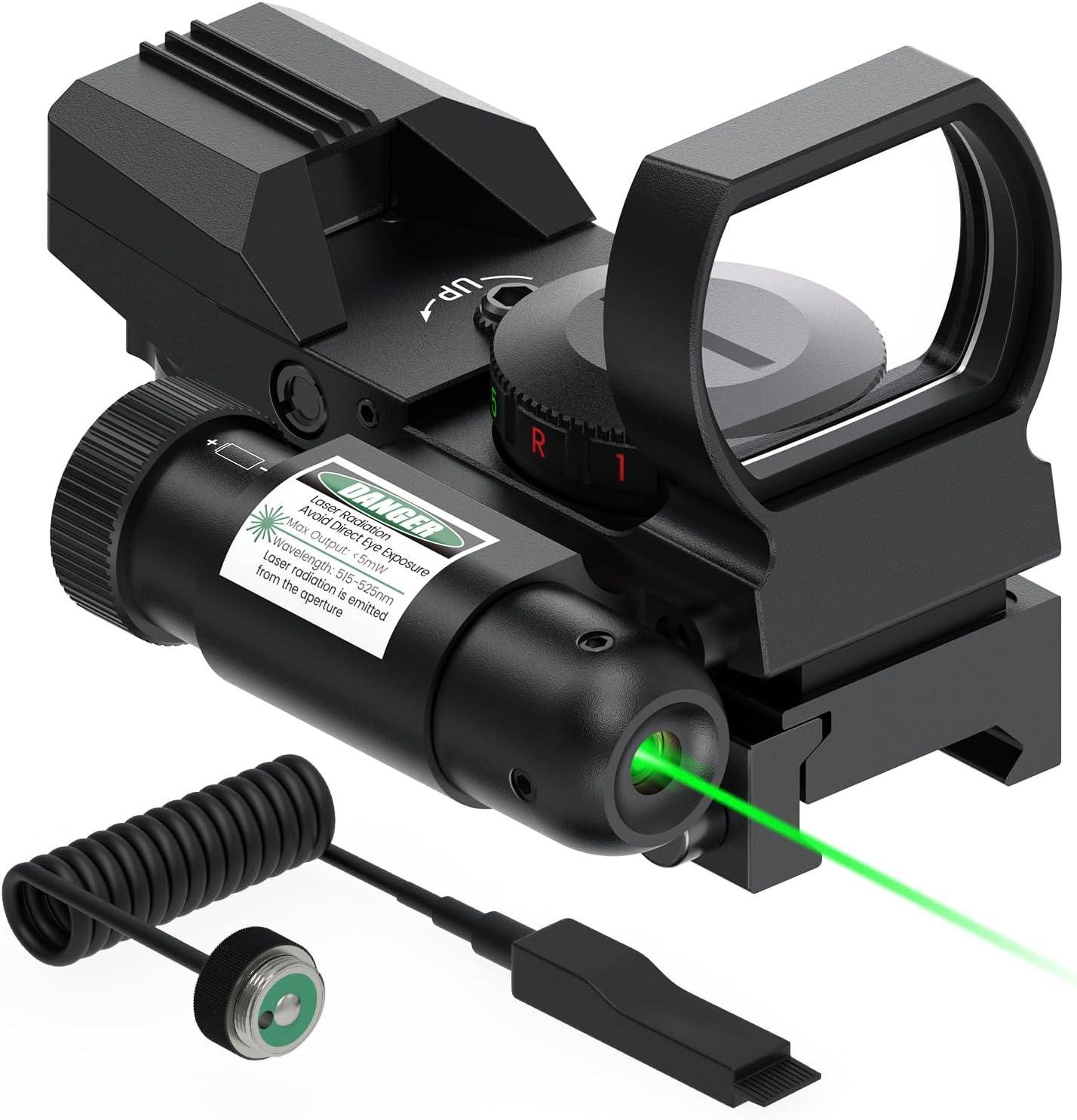
- built-in Class IIIA green laser: quick visual index for close targets without needing a second device.
- Rail economy: a combo unit saves us space compared with mounting a separate reflex sight and laser.
- Fast acquisition: the open reflex window keeps our peripheral vision clear for rapid transitions.
- Value-forward package: feature set punches above its price class for an entry/refresher build.
Cons
- Laser limitations: like most visible lasers, the beam can wash out under bright midday sun and on reflective surfaces.
- UI complexity: multiple reticles, colors, and brightness steps add speed but also more to manage under pressure.
- Battery trade-offs: running higher brightness-or the laser-shortens runtime; expect more frequent swaps.
- zeroing nuance: aligning sight and laser at one distance means they’ll diverge before/after that range.
- Size/weight vs. micro-dots: the integrated laser and controls add a bit of bulk compared with ultra-compact optics.
- Periodic check-ins: budget-friendly reflex units may benefit from occasional re-zeroing after rough handling.
| Feature | What It Gives Us | Best Use |
|---|---|---|
| 4 Reticles + 2 Colors | Adapts to our preference for speed or precision | Indoor ranges, low light, and mixed conditions |
| 5 Brightness Levels | Fine-tunes visibility without blooming | From dim rooms to overcast daylight |
| Class IIIA Green Laser | Fast, intuitive target index at close range | Quick snapshots, unconventional shooting positions |
| Single Housing | Saves rail space vs. separate laser + optic | Compact builds and accessory-heavy rails |
| Open Reflex Design | wide view and quicker target transitions | Dynamic drills and multiple-target arrays |
Note: This unit includes a Class IIIA green laser. We avoid direct eye exposure, follow local laws, and use proper range etiquette at all times.
Q&A
Q: What exactly are we reviewing here?
A: Feyachi’s RSL-88 reflex sight with an integrated Class IIIA green laser. It gives us four selectable reticle shapes, two color options (red/green), and five brightness levels per color for visibility across different lighting conditions.
Q: Why choose this over a basic red dot?
A: Versatility. We get multiple reticles, red or green illumination, and a built-in green laser for fast indexing at close range or for training/boresighting-all in one budget-friendly package.
Q: How visible are the reticles in bright daylight?
A: With five brightness levels, we can push the reticle high enough to stay usable under sun. Green frequently enough stands out better against foliage; red can pop on neutral backgrounds.If we crank brightness too high, some bloom is possible.
Q: How effective is the green laser?
A: It’s a Class IIIA laser designed for quick reference.Indoors or at dusk it’s crisp and fast; under noon sun it fades quickly and is best treated as a short-range aid rather than a primary aiming solution.
Q: Is the laser safe?
A: It’s Class IIIA (<5 mW). We never direct it toward eyes or aircraft, and we check local rules on laser use for hunting or public land. Common-sense laser safety always applies.
Q: Will it fit our rifle?
A: If we have a standard 20 mm Picatinny/Weaver rail, we’re good. That covers most ARs, PCCs, and many shotguns and rimfires.
Q: Can we co-witness AR-15 iron sights?
A: Typically, it sits too low for an AR co-witness out of the box.A riser mount usually gets us to an absolute or lower 1/3 co-witness, depending on height.
Q: How’s the zeroing process?
A: The reflex sight and the laser zero independently via their own windage/elevation screws. We like to boresight first (often with the laser), then fine-tune the reticle at our chosen distance. A dab of medium thread locker on the mount screws helps long-term stability.
Q: Does it hold zero under recoil?
A: On light to moderate recoil platforms (think 5.56, 9 mm carbines, .22 LR), hold is generally acceptable if the mount is properly torqued. With heavier recoil (12-gauge, .308), we re-check zero periodically, especially on the laser.
Q: What about parallax and eye relief?
A: Eye relief is effectively unlimited.Parallax is reduced but not eliminated; at very close distances we can see some reticle shift with head movement. Past typical carbine distances, it’s minor.
Q: Are the reticles crisp if we have astigmatism?
A: Like most projected dots,some users may see starbursting. Green at a lower brightness often looks cleaner than a bright red setting for eyes with astigmatism.
Q: How usable is it at night or indoors?
A: very. The dimmer settings prevent bloom on white walls or targets, and the green laser shines (literally) in low light for quick indexing.
Q: How are the controls and brightness steps?
A: We get five steps per color. The adjustments are straightforward, though with gloves any small control can feel fiddly-worth setting up before we’re on the clock.
Q: What should we expect for battery behavior?
A: The sight and the laser typically draw power separately in combos like this. Green illumination and green lasers tend to consume more power than red. Our rule: use the lowest workable brightness and switch everything off when not in use. Keep spare batteries in the range bag.Q: Is it durable or weatherproof?
A: The housing feels range-ready, and it shrugs off normal knocks. We’d avoid submersion or prolonged heavy rain and keep the lens clean to prevent glare and ghosting.Q: Any drawbacks we noticed?
A: The integrated laser adds bulk and a second zero to manage.Window size is serviceable, not panoramic; cranking brightness can bloom; and without a riser the height isn’t ideal for AR co-witness.
Q: Who is this best for?
A: Plinkers, PCC shooters, rimfire trainers, and anyone wanting a versatile, budget-friendly optic/laser combo for range work or home practice. For hard-use duty or precision roles, we’d step up to a more rugged, single-purpose optic.
Q: Any setup tips from us?
A: - Pick one reticle and stick with it to build consistency.
- Boresight with the laser,then confirm on paper with the reticle.
- Use a torque wrench and a touch of medium thread locker on the rail clamp.
- Start with lower brightness-if we can see it, it’s bright enough.
- Reconfirm zero after transport or a long session.
Q: What about warranty or returns?
A: Policies can vary by seller and region.We check the listing and Feyachi’s support page before buying, and we keep our proof of purchase handy.
Unleash Your True Potential
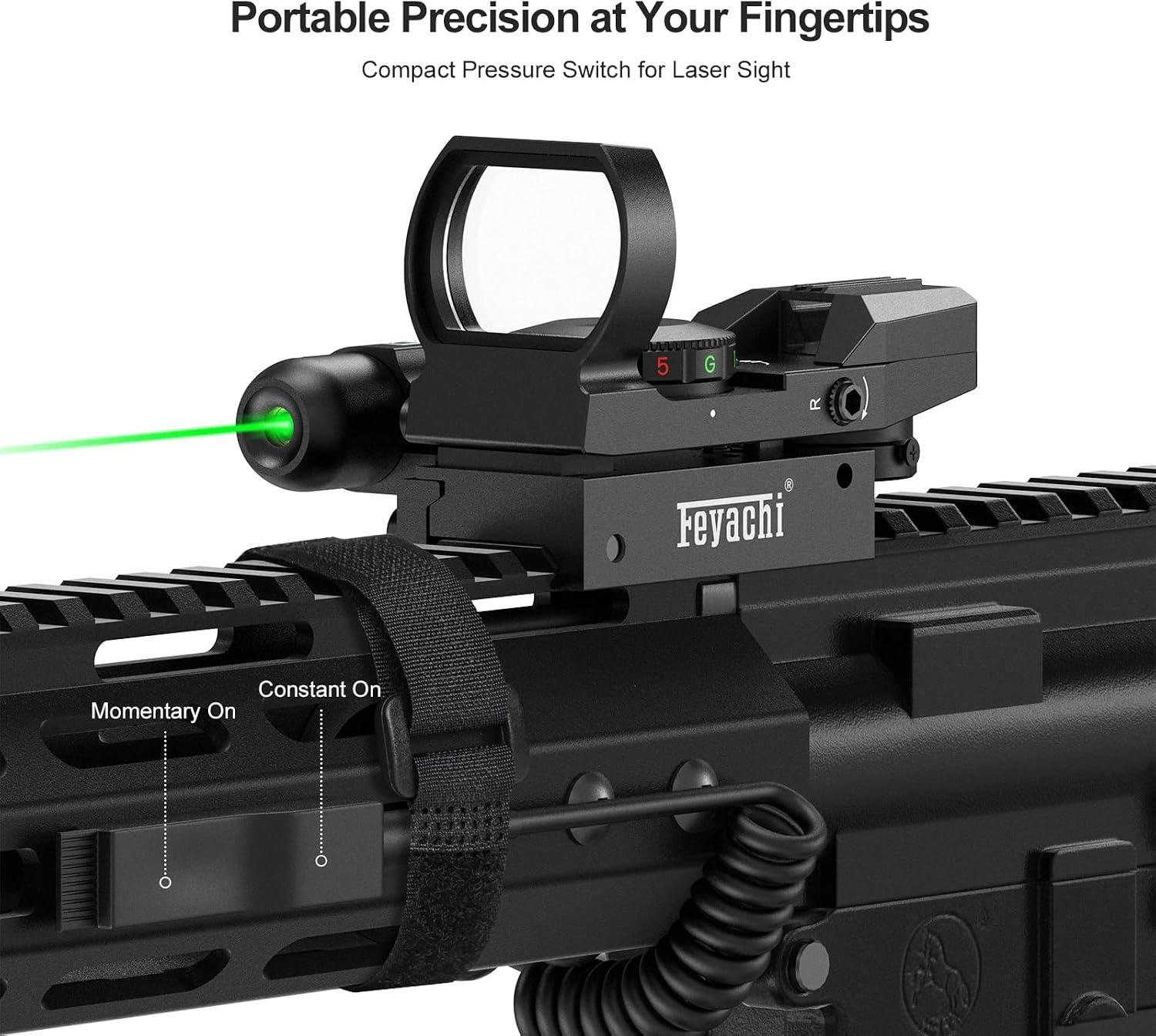
Wrapping up Our Take on Feyachi’s Reflex Sight & Green Laser, we found the RSL-88 to be a flexible, no-fuss companion for a wide range of setups. The four reticle modes and two color options (red/green), each with five brightness levels, gave us the control we wanted across changing light. Pair that with the included class IIIA green laser for quick indexing, and you’ve got a package that balances speed with clarity without locking us into a single aiming style.
It won’t redefine what a reflex sight can be, but it does deliver practical versatility at a sensible price point. If your checklist includes simple controls,adaptable reticles,and a green laser in one footprint,this could be a fit for your rail.
Curious to see if it suits your rig? Check the latest price and full specs on Amazon.