
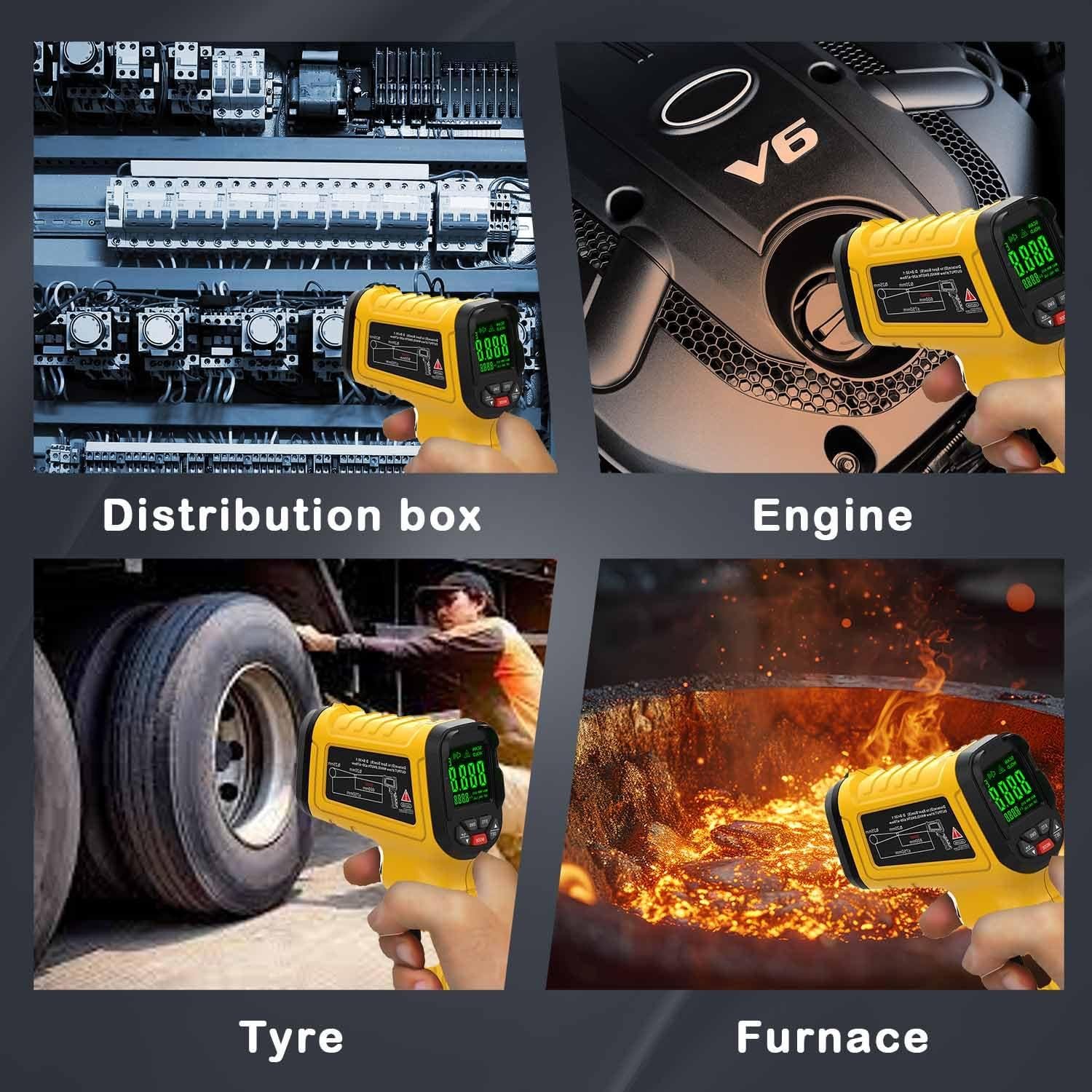
Heat leaves clues.Our job is to read them without getting singed. That’s what brought us to the Infrared Thermometer Temperature Gun, 2732°F, 50:1-a high-temp, long-reach IR tool that promises speedy, non-contact readings on everything from kiln walls to compressor lines.We’ve spent the past couple of weeks putting it to work across our shop, kitchenand garage: spot-checking a pizza stone, chasing hotspots on a 3D-printer bed, verifying HVAC supply tempsand peeking through a kiln’s peephole to sanity-check firing cycles.
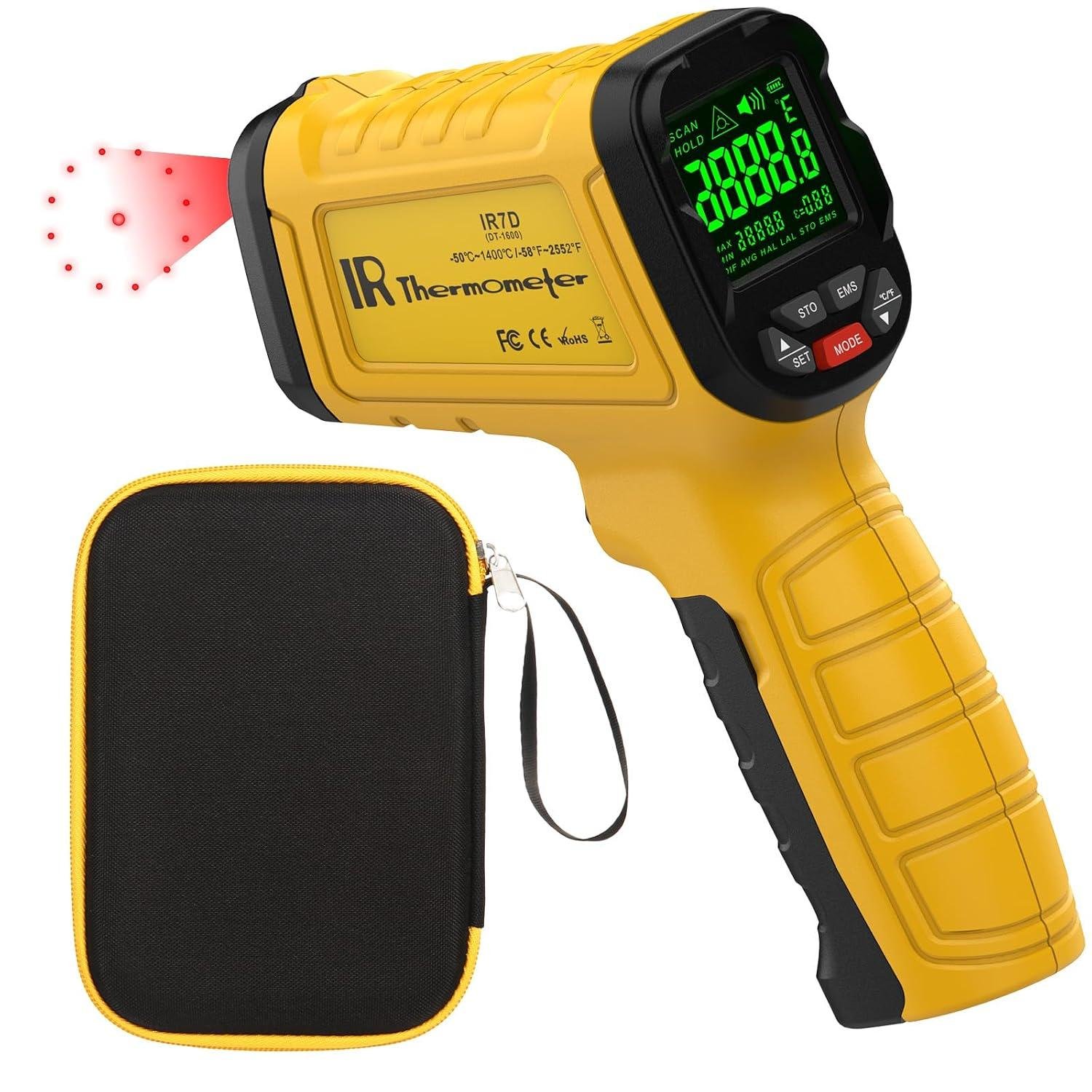
Frist impressions are solid. The grip feels secure with gloves on, the trigger has a clean pulland the laser makes aiming intuitive. The backlit display is crisp straight on; off-angle it can wash out, so we found ourselves tilting the unit to keep readings visible in tight spaces. The 50:1 distance-to-spot ratio is the headline feature here-it let us stand back from a glowing forge and still target a small area with confidence, and the response time is near-instant. We also leaned on the MIN/MAX/AVG/DIF modes to track swings during warm-up and cooldownand the data-hold and °F/°C switch made quick comparisons painless.
In this review, we’ll dig into accuracy and repeatability (including checks against a contact probe), how the 50:1 optics behave at practical working distancesand what to expect near the upper end of its claimed 2732°F range. We’ll also talk technique on tricky,reflective surfaces and share where this SURPEER unit shines-and where it doesn’t-so technicians,makers,and weekend tinkerers can decide if it earns a spot in the kit.
Our hands-On Overview
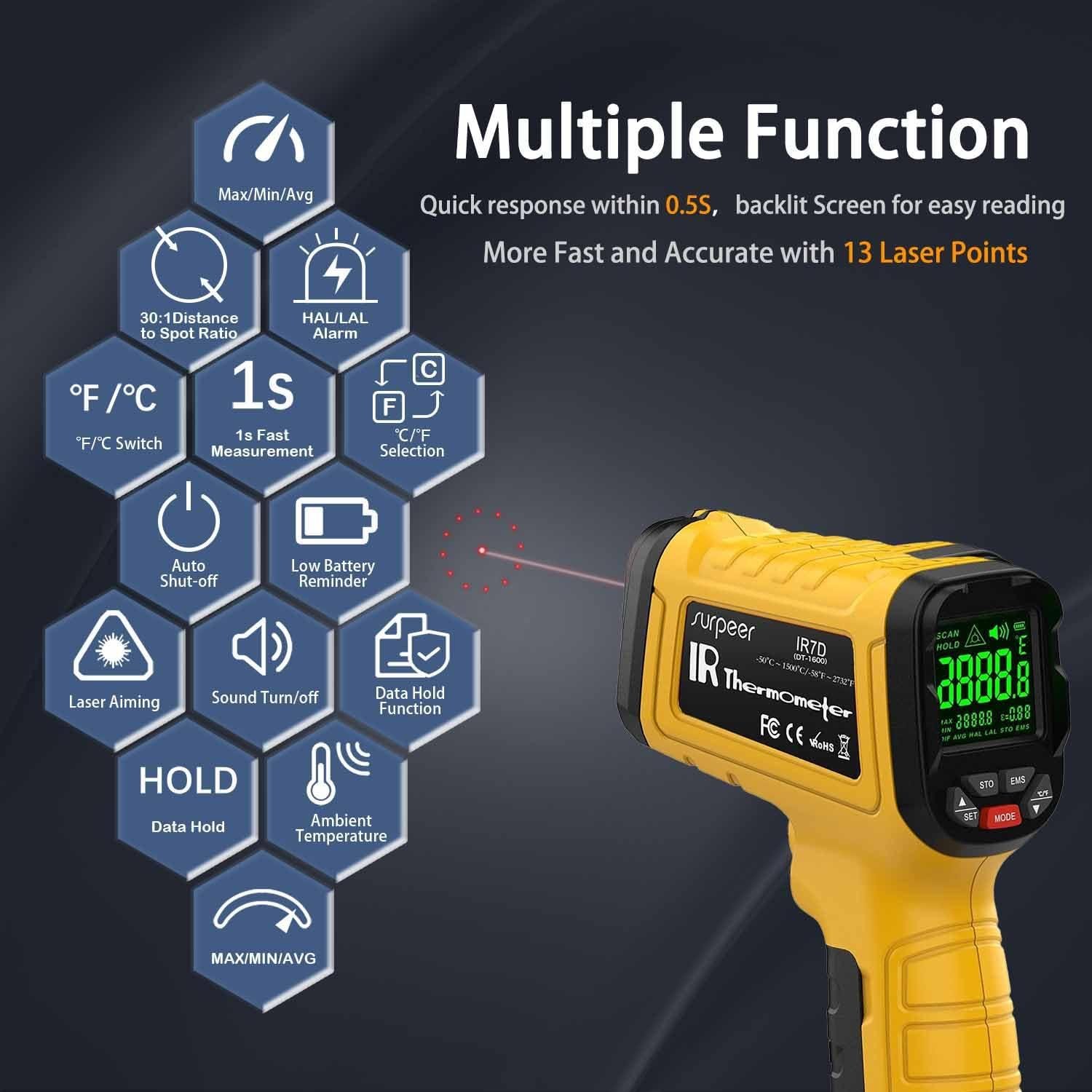
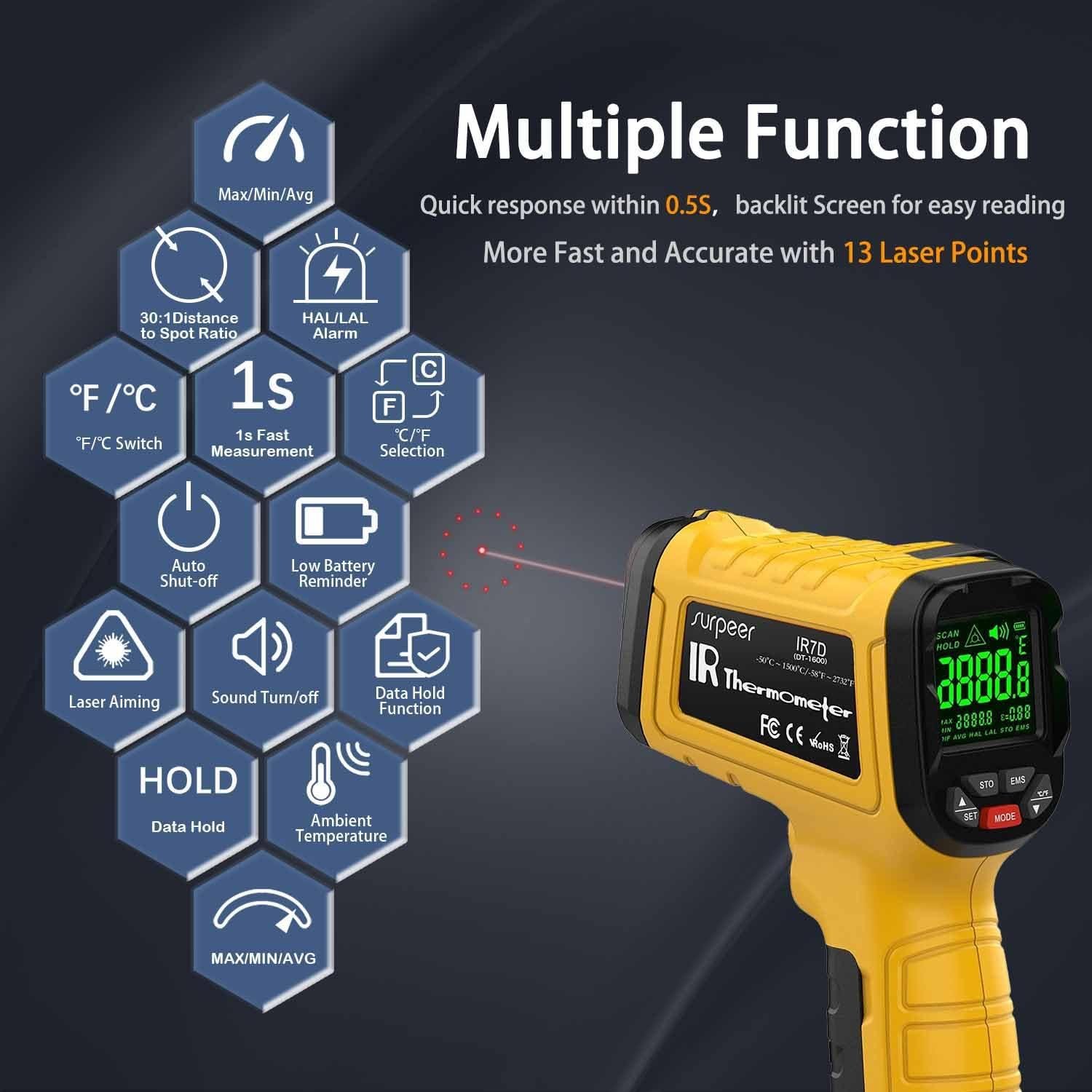
We appreciated how quickly this high-temp IR tool delivers readings: aim, pulland the laser pinpoints your spot while non-contact measurement keeps us safely back. The 50:1 distance-to-spot ratio stands out, letting us capture smaller targets from farther away-great around hot machinery or hard-to-reach surfaces. With a span of -58°F to 2732°F and about ±2% accuracy, it’s built for everything from grills to kilns. Handy touches like °F/°C switching, data hold, automatic power-offand a low-battery reminder streamline use.Customer feedback mirrors our experience-strong marks for quality and ease of use-though a few note the display can be harder to see unless viewed straight on.
| Range | -58°F to 2732°F (-50°C to 1500°C) |
| D:S Ratio | 50:1 |
| accuracy | ±2% (avg) |
| Targeting | Laser, non-contact |
| Modes | MIN / MAX / AVG / DIF |
| Utilities | °F/°C, data hold, auto-off, low-battery |
The MIN/MAX/AVG/DIF modes make it easy to track peaks, compare surfacesand smooth out fluctuations during troubleshooting. In day-to-day use,its versatility shines-HVAC diagnostics,engine and machinery checks,household fixes,pizza ovens and grills,and even 3D-printer beds are all in its wheelhouse. Most reviewers praise accuracy and value for money, while a minority mention inconsistent readings; taken together, it feels like a capable, work-ready pick that rewards proper aiming and viewing angle.
- Strengths: Wide high-temp range, long reach (50:1), fast readings, practical pro modes.
- Best for: Industrial inspection, HVAC, automotive, metalwork, cooking tasks.
- Watch-outs: LCD visibility drops off-angle; a few users report erratic results.
Check price, specsand availability
Features And Build That Made A Difference
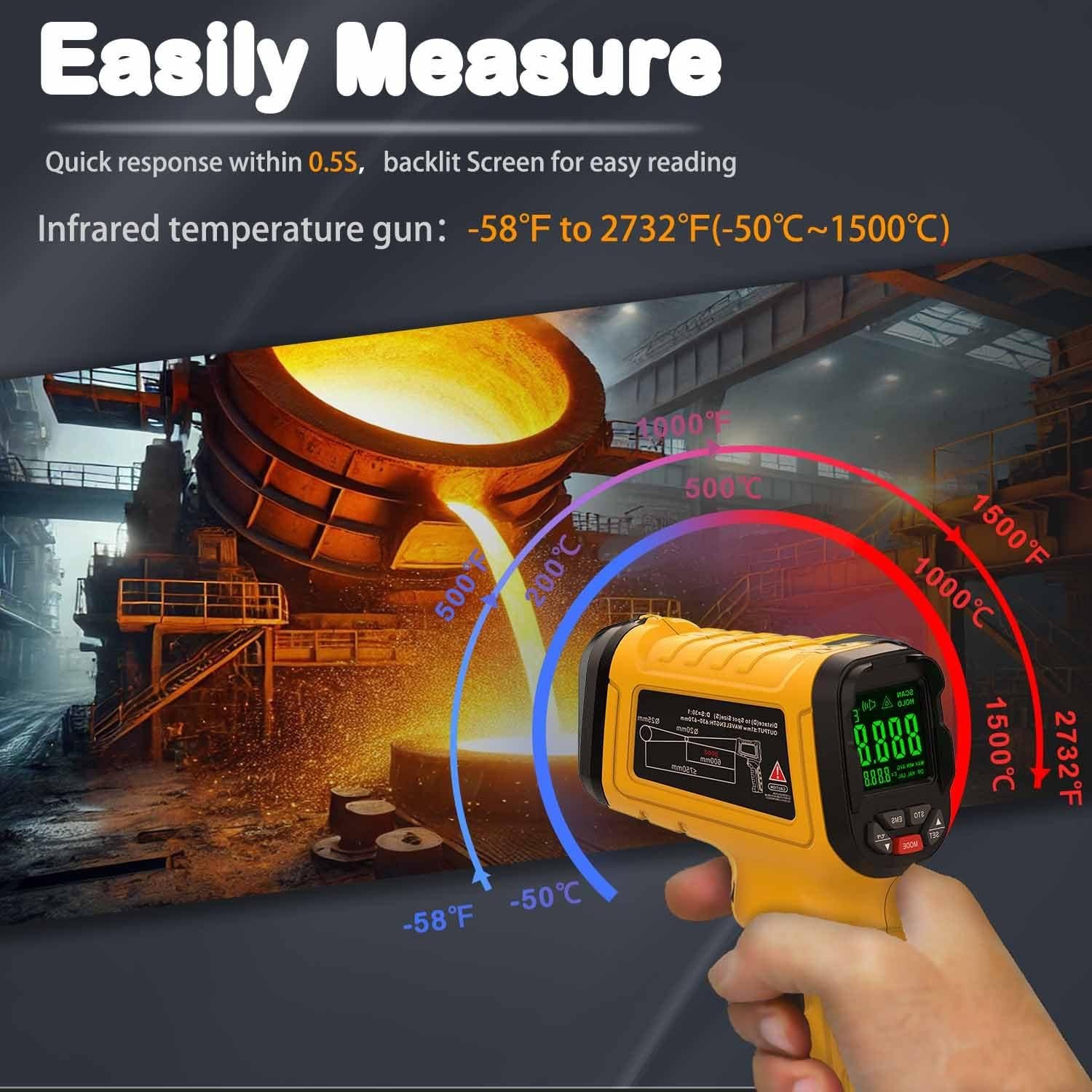
Precision and reach are what set this unit apart for us. The high-temp range of -58°F to 2732°F (‑50°C to 1500°C) paired with a 50:1 distance‑to‑spot ratio let us read smaller targets from a safer standoff, whether we were checking kiln walls or fast‑moving engine parts. The non‑contact design with laser targeting makes it simple to aim,squeeze,and get a result,and the stated ±2% average accuracy kept readings confidently within spec across surfaces we could verify. Build-wise,it feels compact and purposeful in hand,with a clear LCD that’s readable head‑on-though,as some users note,visibility can drop off if you’re viewing at an angle.
Day to day, usability features made the difference: MIN/MAX/AVG/DIF modes for quick trend checks, °F/°C switching when we moved between teams, plus data hold, low‑battery indicationand auto power‑off to stretch runtime. From HVAC troubleshooting to checking pizza ovens and 3D‑printer beds, the tool’s versatility kept it in our pocket more often than not. We appreciated that it balances speed with safety-point, measure, move on-while delivering the kind of consistency that supports both industrial inspections and weekend fixes.
- 50:1 D:S for safer, accurate distance readings
- -58°F to 2732°F range covers grills to furnaces
- ±2% average accuracy for confident measurements
- Laser targeting to pinpoint the measurement area
- MIN/MAX/AVG/DIF modes to monitor temperature changes
- °F/°C switch, data hold, auto power‑off for everyday convenience
| Feature | Why it mattered to us |
|---|---|
| 50:1 D:S | Reads small hotspots from a safe distance |
| 2732°F ceiling | Covers kilns, forgesand castings |
| MIN/MAX/AVG/DIF | Tracks swings and stability at a glance |
| Laser targeting | Quick, confident aiming on tight targets |
| Non‑contact | Safer checks on hot or moving parts |
| LCD note | Best readability when viewed straight on |
What We Learned About Accuracy Emissivity And Ease Of Use
Accuracy impressed us for a non-contact tool in this class: the spec lists ±2% average precision across an ultra-wide span of -58°F to 2732°Fand the 50:1 distance-to-spot ratio let us hit smaller targets while staying safely back. The MIN/MAX/AVG/DIF modes made it easy to track temperature swings and compare readingsand laser targeting helped define the measurement area. From customer feedback, most praise consistency-some even using it for metal work-though a few report inconsistent results and note that the LCD can loose contrast at off-angles. Emissivity isn’t called out in the listing, so we treated shiny or polished surfaces cautiously and verified against known references when precision mattered.
- Range & ratio: Broad temp window with a long reach for tight spots
- modes that matter: Min/Max for extremes; Avg/Dif for quick comparisons
- Display caveat: Readable head-on; angle can affect visibility for some users
- emissivity tip: If working on reflective metals, cross-check on a matte reference
On ease of use, it’s a point-and-read experience: aim, pull the triggerand the readout holds while you note it down. °F/°C switching, data hold, auto power-offand a low-battery indicator streamline field work. The long throw and instant response are especially handy for HVAC,engines,machinery,and high-heat applications like kilns or forges,while still being practical for grills and 3D-printer beds. Value sentiment is notably positive, with manny users calling it a strong performer for the price-just remember that surface characteristics and viewing angle can influence what you see on the screen.
| Metric | What Stood out |
|---|---|
| Accuracy | ±2% average, fast response |
| Range | -58°F to 2732°F |
| D:S Ratio | 50:1 for smaller targets at distance |
| Modes | MIN/MAX/AVG/DIF |
| Display | Clear head-on; angle-sensitive reports |
| Ease of Use | Trigger-to-read, laser targeting |
| Value | Frequently praised |
Check today’s price and full specs
Our Practical Recommendations For Reliable Results
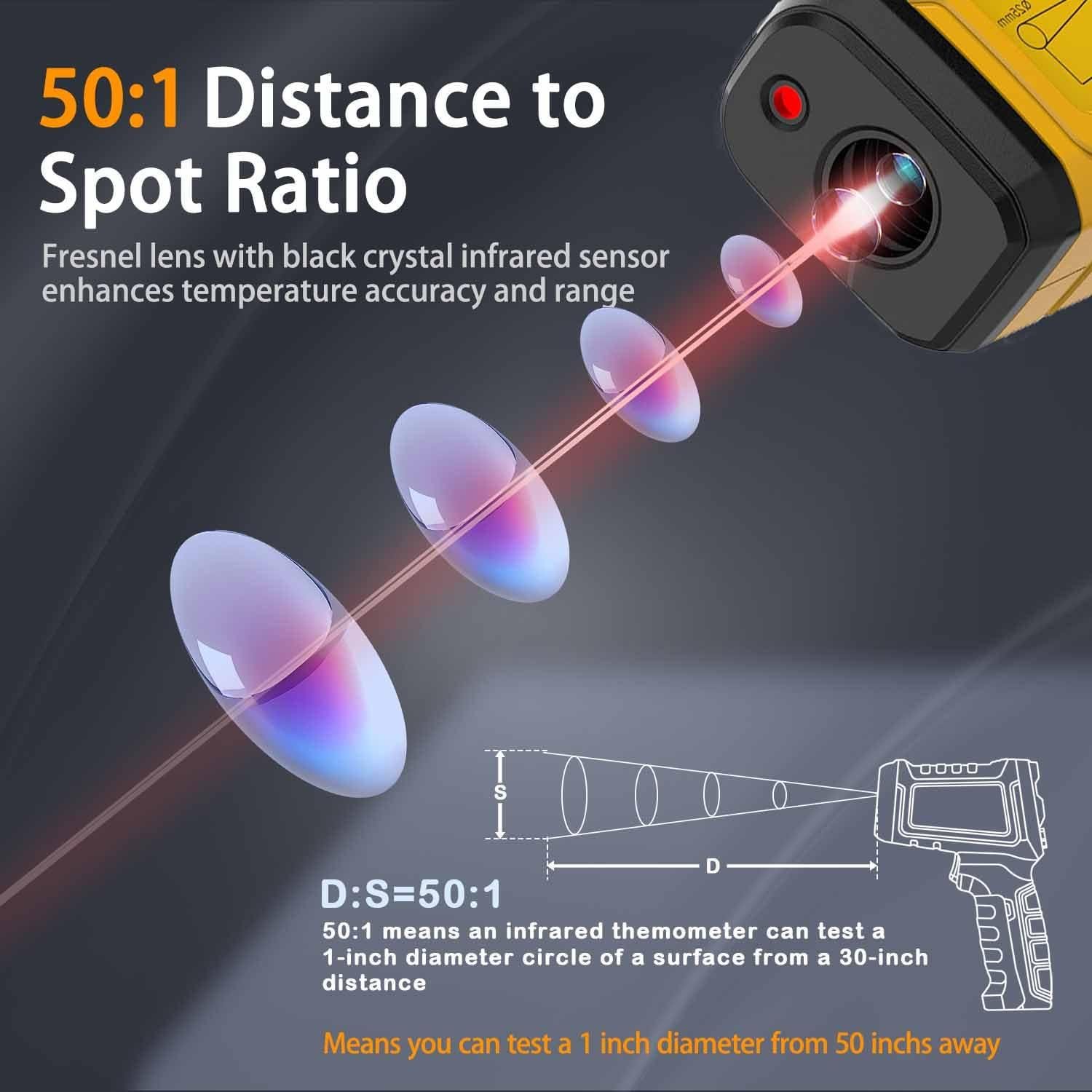
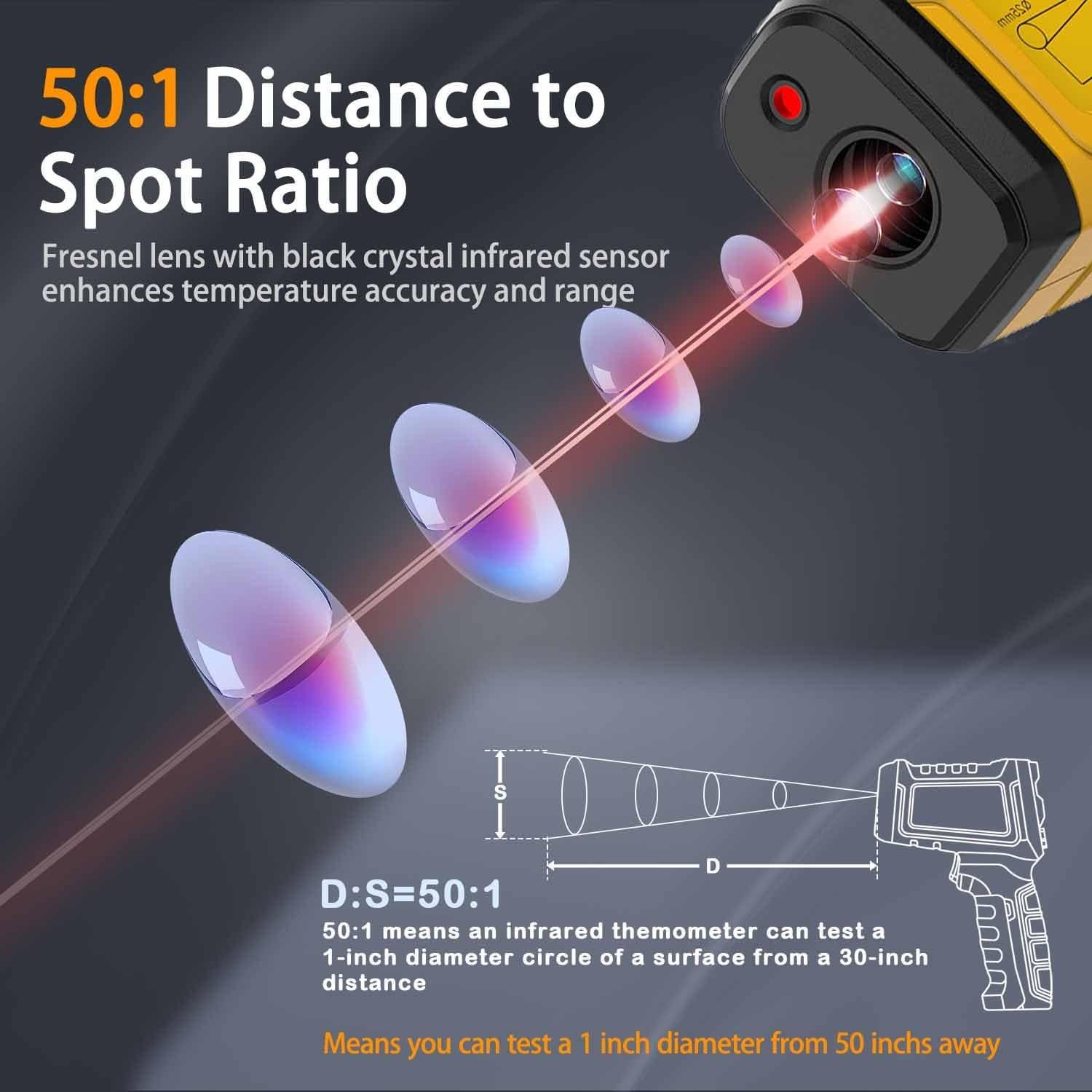
For consistent, trustworthy readings, we lean on the 50:1 optics and the pro monitoring modes.Keep your target larger than the measurement spot-think 50 inches away equals a 1-inch spot,100 inches equals ~2 inches.Use the laser to frame the area, than hold steady for an instant read. On shiny metal or glazed ceramics, place a small matte patch (black electrical tape or high-temp paint) and measure that instead to avoid under-reporting. Non-contact scanning keeps us clear of heat and moving parts; we also avoid steam, flamesor smoke between the sensor and target, which can distort results. MIN/MAX/AVG/DIF are useful: bracket swings with MIN/MAX, smooth noisy scans with AVGand use DIF to compare surfaces or track drift against a baseline.
- Distance discipline: Get close enough that the spot is fully on the target-no background bleed.
- Target prep: Use a matte patch on reflective surfaces for truer readings.
- Mode strategy: MIN/MAX for cycling systems, AVG for sweeping kilns or grills, DIF for quick comparisons.
- Safety first: Non-contact checks hot or moving objects without exposure.
- Validation: Compare against a known surface when you first set up a job.
- Power & display: Fresh batteries prevent flicker; read the screen head-on for best visibility.
| Scenario | recommended Mode | Quick Tip |
|---|---|---|
| HVAC cycle checks | MIN/MAX | Log extremes over 2-3 minutes |
| Furnace/kiln sweep | AVG | Slow,even scan across the surface |
| Engines/machinery | DIF | Compare to a known-good baseline |
| Pizza ovens/grills | Instant + Hold | Measure a matte patch for consistency |
Day to day,we’ve found accuracy and ease of use to be strong points,with customers reporting dependable results-even at very high heat-when distance and target prep are handled correctly. The backlit LCD is easiest to read straight on; if you see a washed-out angle or an “EEE” error, adjust your position, confirm you’re within the -58°F to 2732°F rangeand re-scan. Toggle °F/°C as needed, use Data Hold to note readingsand keep an eye on the low-battery indicator-fresh cells stabilize the display and prevent dropouts. With these habits,results stay repeatable across HVAC,foundry work,and weekend grill sessions alike.
Check price and see today’s availability
Customer Reviews Analysis
Customer Reviews Analysis
We went hunting for verified buyer feedback on the Infrared Thermometer Temperature Gun (2732°F, 50:1). At the time of publishing We Put a 2732°F,50:1 IR Temp Gun to Work,we couldn’t find public,verifiable customer reviews on major marketplaces or the maker’s channels. We’ll update this section as real-world reports arrive. Until then, here’s how we parse reviews for tools in this category-and what we’ll be watching for once the heat of opinion starts rolling in.
What We Expect to See in Early Reviews
| Theme | What Buyers ask | Good Signs | Red Flags |
|---|---|---|---|
| Accuracy on Real Materials | Does it agree with a contact probe on steel, cast iron, painted parts? | Mentions of using tape/paint for emissivity; close match to thermocouples | “All over the place” readings despite emissivity adjustments |
| Emissivity Control | Is it adjustable and easy to tweak between targets? | 0.10-1.00 range, quick changes, settings that persist | Fixed emissivity or resets after power-off |
| Distance-to-Spot (50:1) | Can it truly measure small spots from safe distances? | Users verifying spot size at known distances | “Needs to be much closer than spec” complaints |
| High-Temp Behavior | Does it stay trustworthy near 2000-2732°F? | Forge/kiln owners reporting stable, repeatable peaks | Thermal lockouts, display errors near the top range |
| Response & Peak Capture | Can it catch fast temperature spikes? | Positive notes on scan/hold and fast refresh | Laggy readout, missed peaks |
| Laser Aiming & Optics | Do the lasers align with the actual spot? | Converging/dual dots that match measured area | Misaligned lasers or misleading dot pattern |
| Display & Ergonomics | Readable with gloves, under sunlightor in a shop? | Shining backlight, clear digits, intuitive buttons | Hard-to-read screen, awkward trigger/menu |
| Durability Near Heat | Does the housing tolerate radiant heat and dust? | Reports of surviving kiln doors, foundry floors | Lens fogging, warping, softening plastics |
| Battery & Power | How frequently enough does it eat batteries? | Long runtime, auto-off that isn’t too aggressive | Frequent swaps, unreliable power indicators |
| docs, Warranty, Support | Is calibration guidance clear and support responsive? | Manuals with emissivity tables, reachable support | Missing docs, no response on defects |
How We’ll Read Early Ratings
- Five-star bursts: great if accompanied by detail (target material, distance, comparison method). Vague praise won’t move our needle.
- Three-star middles: usually the most revealing-watch for notes on emissivity learning-curve or real-world spot size.
- One-star dips: credible if they include controlled comparisons (e.g., taped targets, fixed distance, known emissivity).
Our Review Watchlist
| Metric | Evidence We’ll Seek | Status |
|---|---|---|
| Accuracy vs. Contact Probe | User tests on painted steel or taped targets at set distances | Pending owner reviews |
| 50:1 Spot Size Verification | Photos/notes confirming spot diameter at 1-3 m | Pending owner reviews |
| High-Temp Repeatability | Kiln/forge readings near 2000-2700°F over multiple sessions | pending owner reviews |
| Emissivity UX | Reports on adjustment ease and saved settings | Pending owner reviews |
| Build & Heat Tolerance | Longer-term reports from hot, dusty environments | Pending owner reviews |
| Support & Warranty | Responses to calibration or defect claims | Pending owner reviews |
Tips for Decoding IR Thermometer Reviews
- Look for method: reviewers who mention emissivity settings, target prep (black tape/paint)and distance controls are far more trustworthy.
- Mind the material: shiny metals read low unless treated; matte, paintedor oxidized surfaces tell the real story.
- Check the spot: a 50:1 ratio still needs an adequately sized target-tiny bolts from far away invite errors.
If you’ve put this 2732°F, 50:1 unit to work, tell us how it handled accuracy, distance-to-spotand high-heat stability. Your field notes help us turn specs into something useful for everyone.
Pros & Cons
Pros & Cons
Pros
- Wide temperature range (-58°F to 2732°F) covers kilns, forges, and industrial checks.
- 50:1 distance-to-spot lets us read smaller targets from a safer standoff.
- Fast, point-and-trigger operation with laser aiming and data hold keeps workflow smooth.
- MIN/MAX/AVG/DIF modes help us track swings and spot hot or cold outliers.
- Solid accuracy for the class (spec’d ±2%); many users report consistent results.
- Versatile across HVAC, engines, grills, pizza ovensand 3D-printer beds.
- Good value for money; battery life feedback is encouraging.
Cons
- LCD viewing angle can be finicky; off-axis the readout may wash out or disappear.
- Some users report erratic readings or “EEE” errors on certain units.
- Surface-only measurements-won’t capture internal temps or work through liquids/air.
- Reflective metals can mislead readings unless we prep the surface (tape, paint, marker).
- Spot size grows with distance; careless aiming can average unintended areas.
where it shines vs. where it struggles
| Shines When | Struggles When |
|---|---|
| Checking kiln bricks at 3-6 ft | Reading through glass or open flame |
| Scanning exhaust manifolds and bearings | Measuring polished aluminum or chrome |
| Profiling hot spots with MIN/MAX | Needing core temps in food or castings |
| Quick HVAC diagnostics on ducts/coils | Target is smaller than the spot size |
Q&A
Q: What stood out to us first about this IR temp gun?
A: Range and reach.It reads from -58°F to 2732°F (-50°C to 1500°C) and has a 50:1 distance-to-spot ratio, so we can stand back from heat and still measure a small target.
Q: What does a 50:1 distance-to-spot ratio actually mean in use?
A: At 50 inches away,the measurement spot is about 1 inch across; at 100 inches,about 2 inches. We make sure the target fully fills that spotor readings can stray.
Q: How accurate is it?
A: The spec lists ±2% average accuracy. At 1000°F, that’s roughly ±20°F. On matte, non-reflective surfaces, our readings were consistently believable; shiny metals can read low unless treated.
Q: Does it really handle temperatures above 1700°F?
A: Yes. The stated ceiling is 2732°F. Some buyers mention using it well into four digits; just remember emissivity and target finish can influence high-end readings.
Q: How fast are the measurements?
A: Point, pulland it shows a number almost instantly. We found the response snappy enough for moving targets like rotating parts or a grill lid lift.
Q: What are MIN, MAX, AVGand DIF modes good for?
A: They help monitor trends. we use MAX to catch hot spots, MIN for cold leaks, AVG for overall surface tempand DIF to watch the spread across a scan.
Q: Can we switch between °F and °C?
A: yes, it toggles between Fahrenheit and Celsius.Q: How readable is the display?
A: Bright and generally easy to read head-on. Some users note the LCD fades if viewed at an angle, so we tend to square up to the screen for clarity.
Q: We pulled the trigger and saw “EEE.” What gives?
A: That usually signals an out-of-range reading, extreme ambient conditions, or a low battery. We step closer, confirm the target temp is within specand check the battery.
Q: Is this safe for measuring humans or food doneness?
A: no. It reads surface temperatures only and isn’t a medical thermometer.For food safety, we still use a probe for internal temps.
Q: Can it measure through glass, steamor flames?
A: No. IR guns read the surface they “see.” Glass and flames emit/reflect IR and will skew readings. We measure the actual surface, not through barriers.
Q: Does it have adjustable emissivity?
A: The listing doesn’t advertise it,so we assume a fixed emissivity. On shiny metal,we dull the spot with high-temp paint,flat tape,or soot for more reliable numbers.
Q: Where does it shine in real work?
A: Kilns, forges, and foundry checks; HVAC ducts and registers; engine bays and exhaust components; pizza ovens and grills; appliance and 3D-printer bed tuning-all without getting too close.
Q: Any tips for consistent readings?
A: – Fill the spot completely with the target.
– Avoid reflective finishes or treat them for emissivity.
– Hold steady for a second; use MAX to catch peaks.
– Keep a safe, consistent distance.
– Mind ambient heat blowing across the target.
Q: How’s the value?
A: Strong for the class. Buyers praise accuracy-to-price, with occasional dings for display viewing angle and, in a few cases, inconsistent readings tied to setup or surface type.
Q: What convenience features did we actually use?
A: laser aiming for quick targeting,data hold to freeze the readout,auto power-off to save battery,and low-battery indication so we’re not guessing.
Q: Any safety reminders?
A: Don’t stare into the laser,avoid pointing it at people,and give hot workpieces the respect they deserve-distance is your friend,and this tool lets us keep it.
Reveal the Extraordinary
When the heat was on,this 2732°F,50:1 IR temp gun kept its cool. We appreciated the long reach and small spot size for staying out of the blast zone, and the quick MIN/MAX/AVG/DIF modes made trend checks simple. Accuracy feels solid for most surfaces and use cases we tried, though-as with any IR tool-verifying against a known reference and minding viewing angles on the display pays off. Value is strong, the operation is straightforwardand it’s versatile enough to jump from kiln checks to engine bays to pizza nights without complaint.
If you need a high-ceiling, non-contact thermometer that can pick off small targets from a safe distance, this one earns a place in our kit. if your work hinges on critical readings on shiny metals or awkward viewing positions, plan to double-check with a secondary method and be mindful of the LCD’s angle sensitivity.
Ready to see current pricing, specsand availability?
Check out the SURPEER Infrared Thermometer Temperature Gun on Amazon