
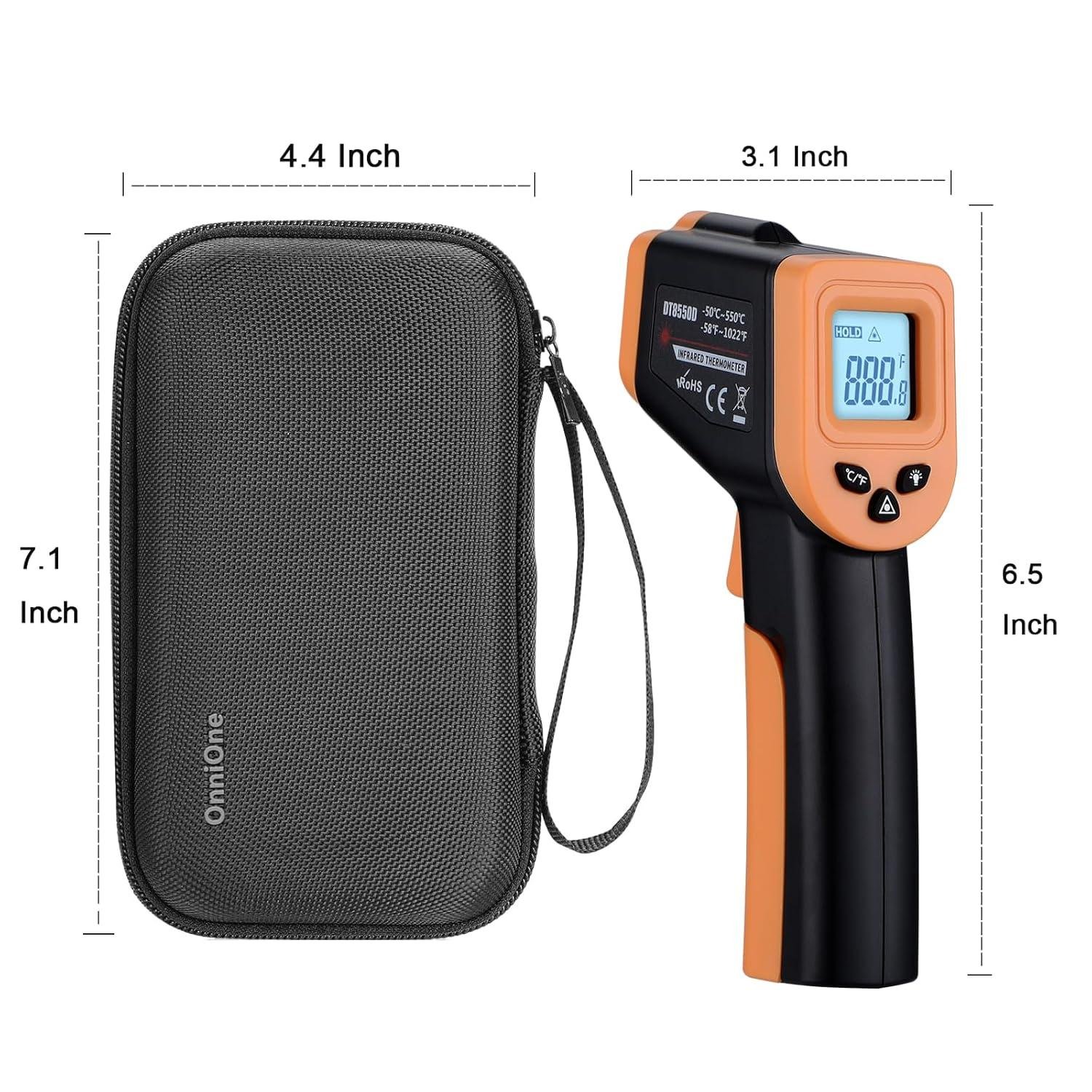
Some gadgets promise to make cooking easier; this one actually nudged us to cook smarter. Over a week of backyard griddle sessions and pizza nights, we put the OnniOne Infrared Thermometer Gun thru the kind of chaos our Blackstone and pizza oven usually inflict-flare-ups, dim patio lighting, greasy hands, and fast-moving targets. The red dot danced across steel and stone while the backlit LCD gave us speedy, legible readouts, even after sunset. And yes, before we go any further: this is not for taking body temperatures-strictly surfaces, from -58℉ to a scorching 1022℉.
We were drawn to its promise of 0.5-second readings and non-contact safety, especially when checking a hot pizza stone or chasing heat zones on a griddle.The automatic 6-second shutdown helped conserve power between pies, and the fact that it runs on easy-to-find AAA batteries is a quiet but meaningful win. The hard, zippered case felt more than ornamental-it survived a ride in our gear bin without scuffs or rattles.
In the full review, we’ll dig into accuracy across different surfaces, how the laser and screen help with aiming, the ergonomics in greasy, gloved hands, and where this tool shines (and where it doesn’t) beyond the kitchen-think A/C vents, car engines, and home heating checks. For now, consider this our temperature check on the OnniOne’s real-world readiness.
Our hands on overview using the OnniOne infrared thermometer across our kitchen and patio
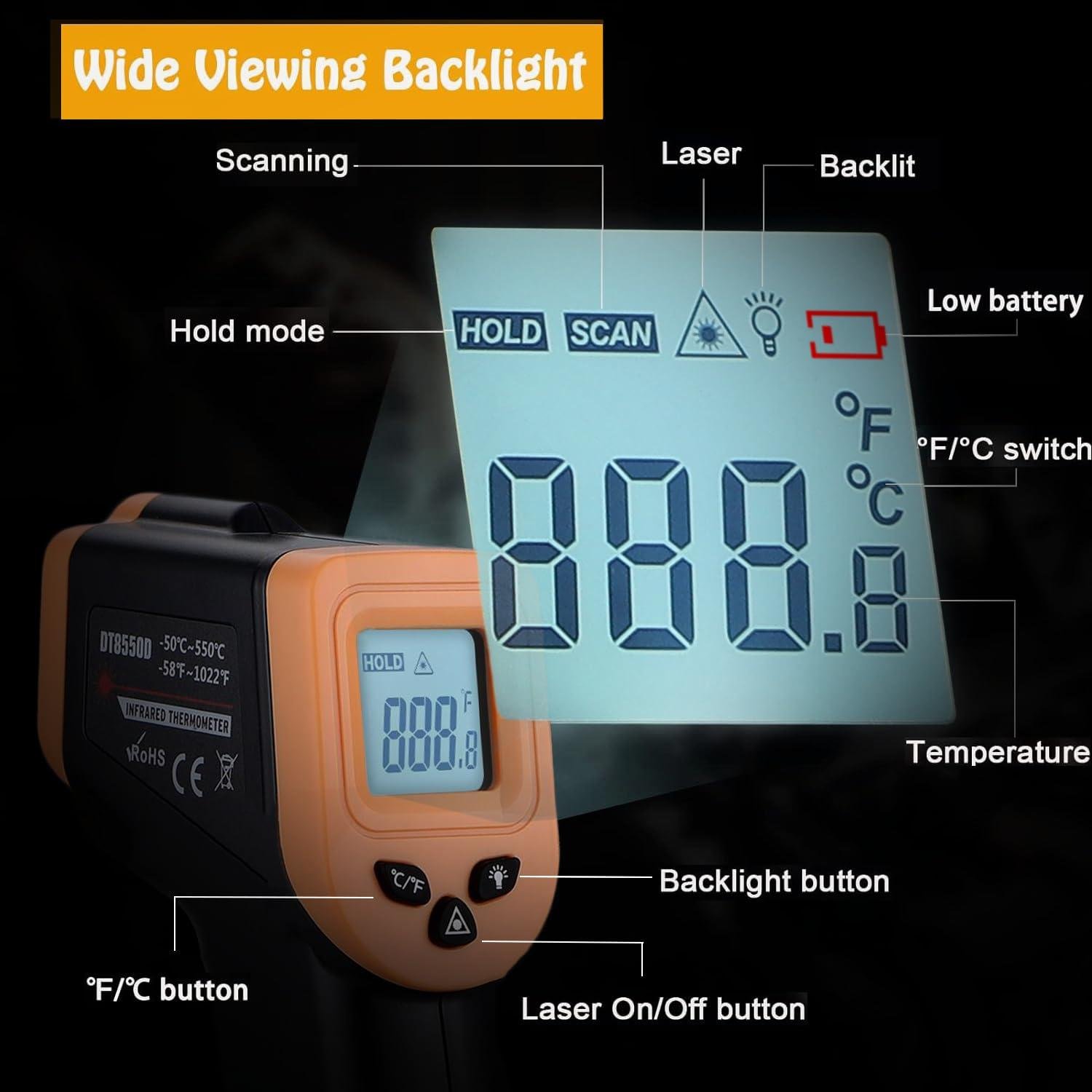
We put this IR gun through its paces from stovetop to smoker, and it made dialing in surface temps refreshingly simple. The large backlit display stays readable in low light, and the quick 0.5s read meant we could catch accurate numbers between lid lifts without losing heat. The non-contact design felt safer around sizzling oil and roaring burners, and the wide -58℉ to 1022℉ range covered everything we threw at it-no guesswork, just point, steady, and read. Bonus: the 6-second auto shutdown spared the AAA batteries, which is great when you’re juggling dinner and guests.
- Griddle zone-mapping: Found cool spots and hot lanes fast.
- Pizza prep: Checked stone readiness before launching pies.
- Cast-iron confidence: Verified sear-worthy heat without hovering.
- Patio sessions: Monitored grill plates during quick peeks.
- note: Not for human temperatures-surface readings onyl.
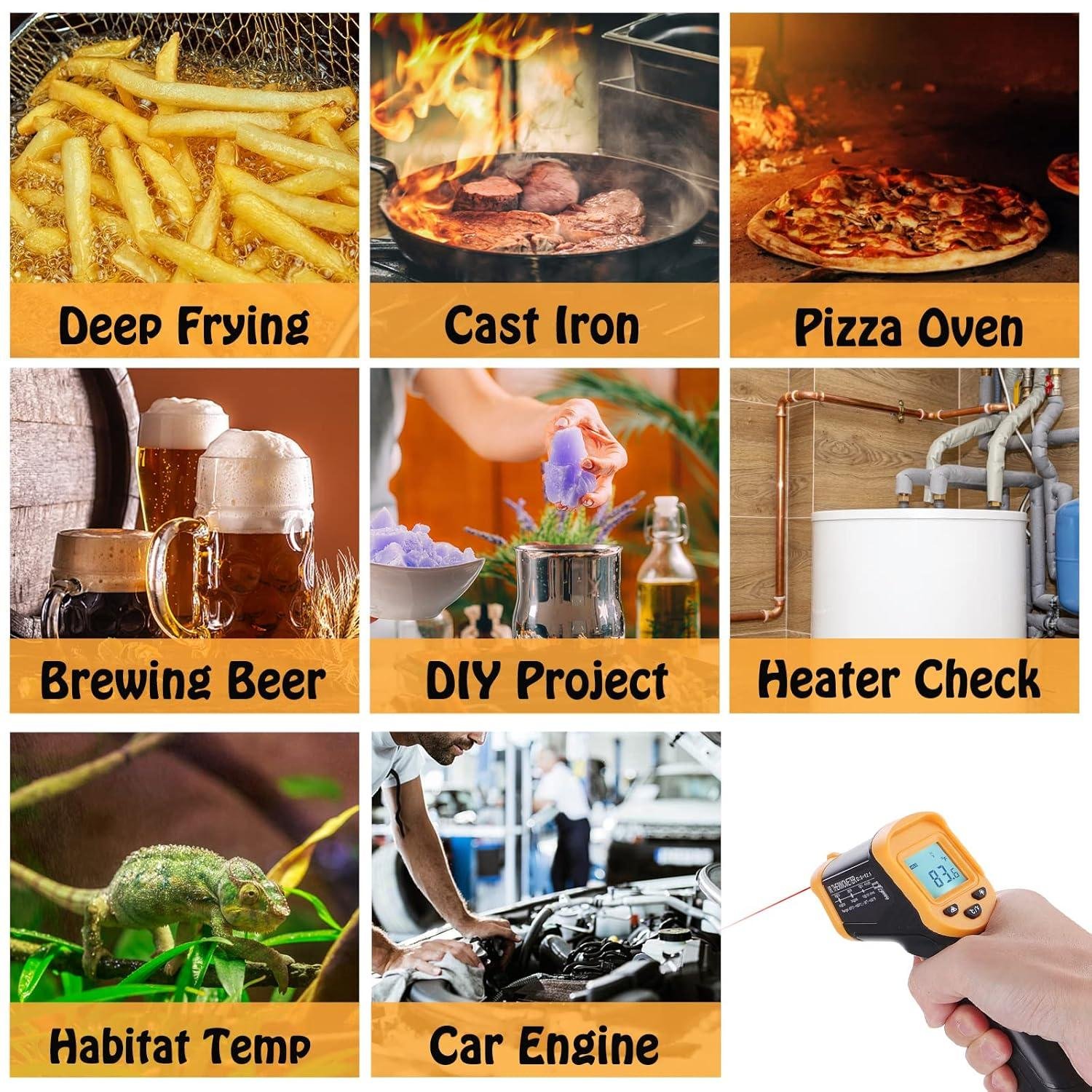
Beyond the kitchen, it proved handy for quick diagnostics and DIY. We used it on A/C vents to compare airflow temps, peeked at car engine surfaces after a drive, and spot-checked gear during heating system maintenance. The hard, zippered case kept it protected in the drawer and in the truck, and the low battery indicator removed the surprise factor. It’s a practical tool that slips into weekend projects as easily as weeknight cooking.
| Feature | Our Take |
|---|---|
| Speed | 0.5s-snappy and reliable |
| Range | -58℉ to 1022℉-kitchen to patio covered |
| Display | Backlit-clear at dusk |
| Power | 2× AAA-common and convenient |
| Auto-Off | 6s-saves juice |
| Portability | Hard case-toss-and-go |
- Also useful for: brewing,wine-making,candy/chocolate work,soap/candle crafting.
Check current price and availability
The essentials we leaned on laser aim rapid response bright backlit screen and a sturdy carry case
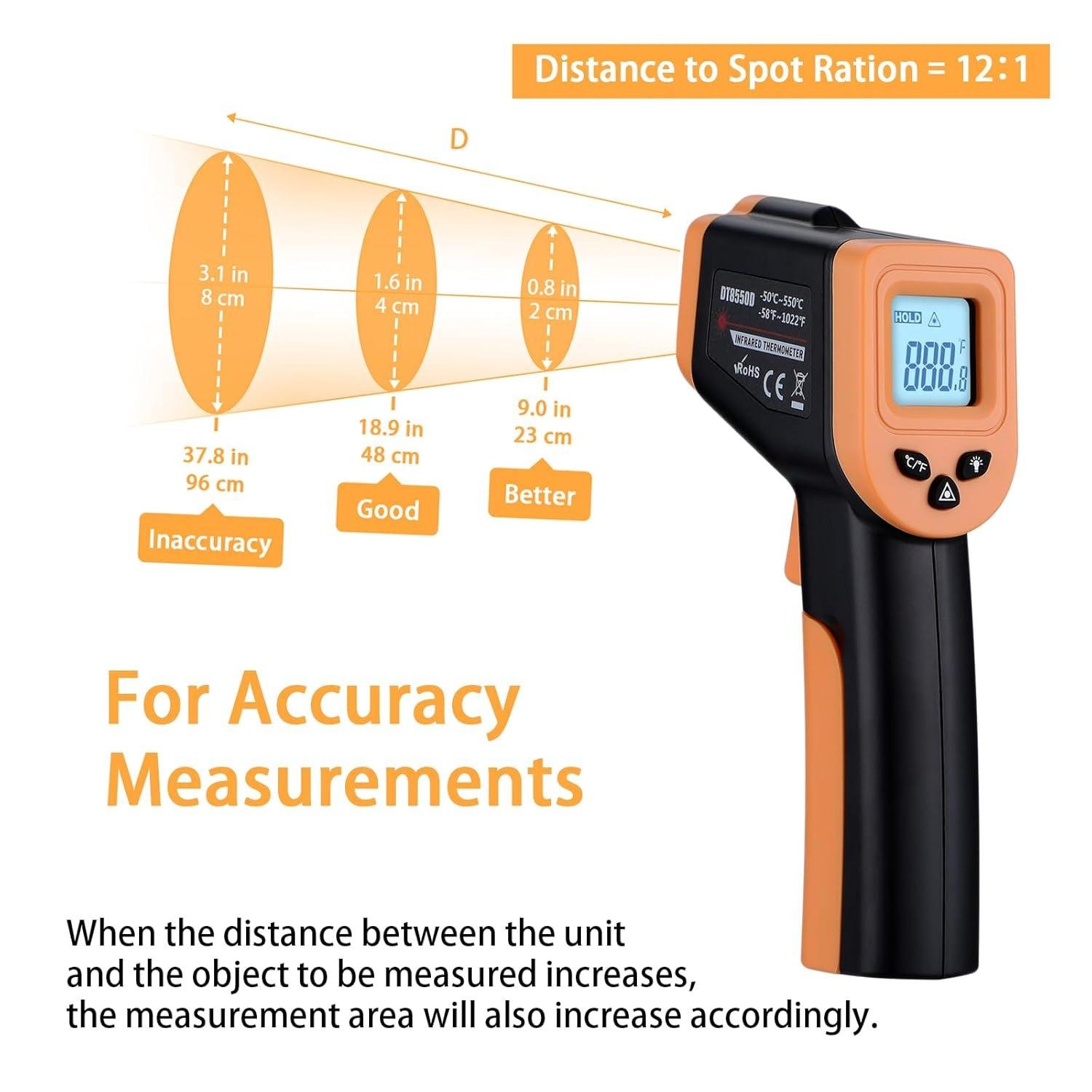
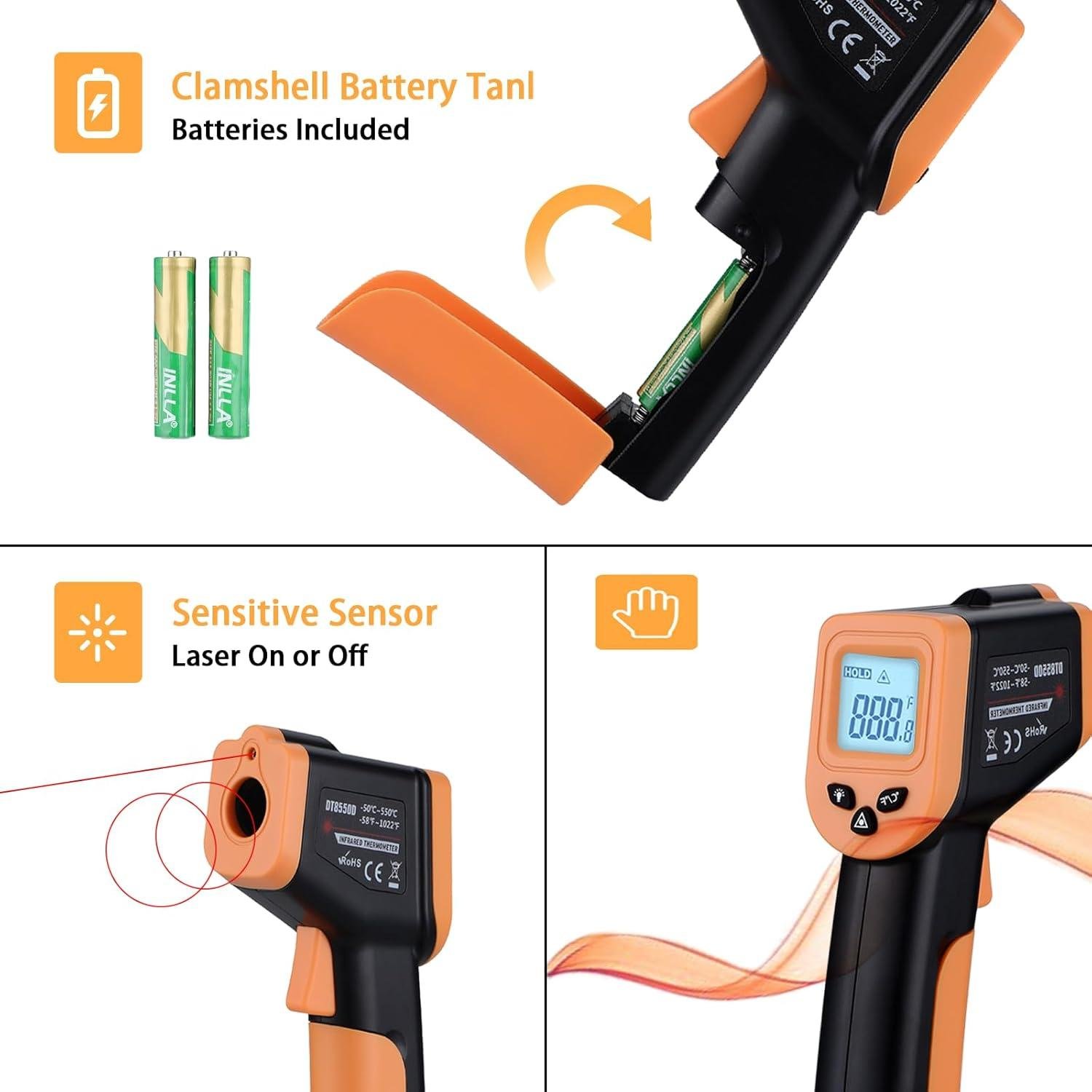
From the first preheat to the final sear, we kept reaching for it as it nails the essentials we care about. The pinpoint laser makes targeting pizza stones and griddle hotspots effortless, and the ultra-fast 0.5-second readout lets us sweep surfaces and lock in temps without slowing down. the large, backlit LCD stays legible in dim kitchens and on late-night patios, and the smart 6-second auto shutoff sips power between checks. With non-contact operation and a broad -58°F to 1022°F range, we confidently check hot, moving, or hard-to-reach surfaces without getting too close.
- Laser aim precision: Pinpoint the exact spot you want to measure
- 0.5s rapid response: Instant feedback as you scan
- Backlit LCD: Clear readings in the dark and at angles
- Auto shutoff (6s): Smarter battery conservation
- Non-contact safety: Ideal for hot, perilous, or moving targets
- Wide range (-58°F-1022°F): From pizza ovens and griddles to HVAC and engines
- AAA-powered + low-battery icon: Easy replacements, timely alerts
- Hard zip carry case: Drop-resistant, travel-ready protection
- Surface-only use: Not for human temperature readings
| Response | 0.5 s |
| Range | -58°F to 1022°F |
| Display | Large LCD, backlit |
| Power | 2× AAA, low-battery indicator |
| Auto-off | 6 seconds |
| Form | non-contact, laser aim |
| Protection | Heavy-duty zip case |
In practice, the sturdy carrying case turns it into a true grab-and-go tool-easy to toss in the grill bag or toolbox, with padding that shrugs off bumps. Two readily available AAA batteries keep it simple, and the on-screen reminder tells us when it’s time to swap. We’ve used it to dial in pizza stone heat,verify Blackstone zones,sanity-check car engines and A/C vents,and spot-check home heating-always remembering it’s for surfaces only. For a reliable, quick-reading IR companion that stays readable and travel-ready, this one earns a permanent place in our kit.
Performance highlights on a Blackstone griddle pizza oven and caramel work plus what surprised us
On the Blackstone griddle and pizza oven, this IR tool shines for speed and reach. The 0.5s read time let us dial in a launch-ready stone without heat loss, and the wide -58℉ to 1022℉ range covered everything from cold starts to roaring pizza sessions. The backlit display stayed legible in dusk light, and the 6-second auto-shutdown spared the AAA batteries between checks.We used it to map heat zones on the flat top, verify stone and dome temps, and spot edge-to-center differentials before rotating pies.
- Pizza stone/dome checks: Quick snapshots before launch cut underbaked bottoms.
- Griddle zone mapping: Find the sweet spot for smash burgers vs. sears.
- Flame-side safety: Truly hands-off around roaring burners.
- Low-light cooks: Backlit LCD made readings effortless at night.
| Task | Target surface | What We Saw |
|---|---|---|
| Pizza stone (pre-launch) | 750-800℉ | Crisp base, faster leopard spotting |
| Griddle sear zone | 525-575℉ | Deep crust without overcooking |
| Smash burger area | 425-475℉ | Even Maillard, less sticking |
| Warm holding edge | 200-250℉ | perfect staging while batches finish |
For caramel and candy, it’s a smart sidekick-just remember it reads surfaces, not interiors. We used it to monitor pan surface heat for dry caramel and to sanity-check oil temps before adding sugar. On glossy syrups, readings can skew, so aiming at the pan wall, a silicone mat, or a light dusting of cocoa on the surface helped. What surprised us most: how frequently enough we grabbed it beyond cooking-A/C vent checks, engine bay hot spots-and how the included hard case kept it unscathed during outdoor cooks. The instant wake paired with the quick read meant the short auto-off never slowed us down. Also key: it’s clearly labeled not for human temperature,which avoids any confusion in a busy kitchen.
- Fast, non-contact: Safe around bubbling sugar and popping oil.
- Backlit clarity: Easy to read through steam and dim light.
- Powerminded: Auto-off plus AAA convenience with low-battery alert.
- Rugged carry: Zippered case shrugged off knocks and grease.
| Sugar Work Aid | Surface Cue | Outcome |
|---|---|---|
| Dry caramel start | Pan ~350-375℉ | Even melt, fewer hot spots |
| Amber control | syrup surface ~360-390℉ (approx.) | Balanced bitterness,glossy finish |
| Oil preheat for praline | 325-350℉ | smoother nut caramelization |
See today’s price and lock in precise heat control
Practical recommendations settings distance to spot cleaning and who should choose this tool
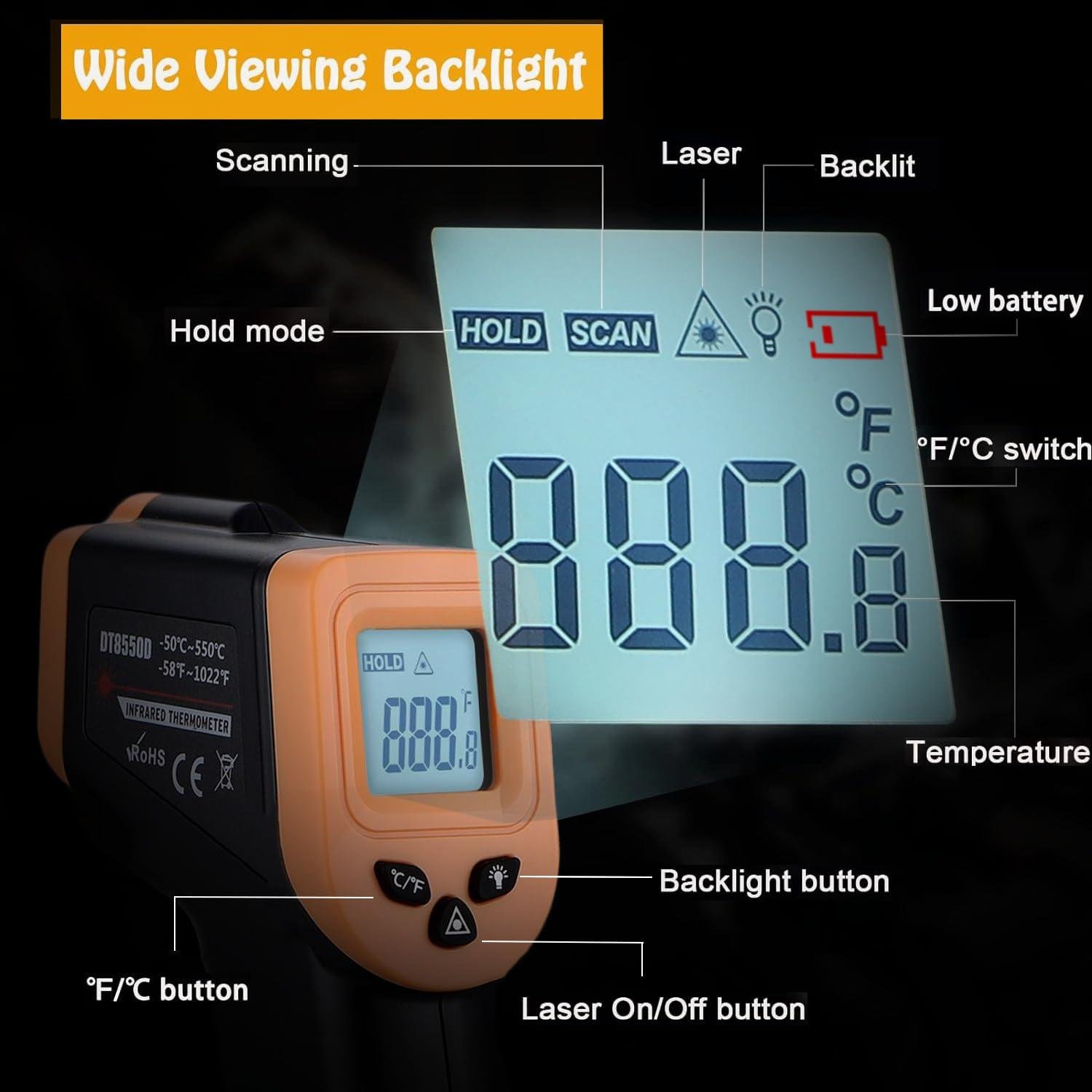
Practical setup and distance-to-spot tips: for fast, reliable checks, we point, hold, and keep the beam steady for about half a second to let the sensor lock in. The bright, backlit LCD makes it easy to read in dim garages or near an outdoor griddle at dusk, and the auto shutoff after brief inactivity helps preserve the AAA batteries (the low-battery indicator is a thoughtful touch). For accuracy, we get as close as safely possible so the measuring spot fully covers the target area-closer for small items like caramel or a burner port, a bit farther for broad, even surfaces like a pizza stone. Avoid shiny, reflective metal; instead, read a matte area or place a strip of painter’s tape on the surface to get a more consistent result. Keep in mind the wide range (-58°F to 1022°F) is designed for surface temps only-never for body or forehead readings.
- Hold steady for 0.5s to let it capture a clean reading.
- Fill the spot with your target; small targets demand closer reads.
- Use the backlight in dark areas; rely on auto-shutdown to save power.
- Skip steam and flames-measure adjacent surfaces, not through vapors.
- Store it in the hard case and wipe the lens with a soft, dry cloth.
| Scenario | distance-to-Spot Cue | Quick Cleaning/Accuracy Tip |
|---|---|---|
| Pizza stone / griddle | Back off slightly for a wide, even zone | Aim at a matte area; avoid oil glare |
| Candy / chocolate | Move in close to cover the small pool | Stir, then read a still surface |
| Car engines / A/C vents | Keep safe distance; target larger parts | Don’t shoot through steam or airflow |
| Soap / candle making | close-in checks for small batches | Use matte tape on glossy containers |
Who will love it: we’d pick this for Blackstone flat-top fans dialing in even heat, backyard pizza makers chasing a consistent stone temp, and cooks who deep-fry, temper chocolate, or monitor sugar stages without dipping a probe. It’s equally handy for DIYers troubleshooting car engines, checking A/C vents, or doing light maintenance around planting and home heating systems. The non-contact design keeps us safely away from hot or moving parts, the quick 0.5-second read cuts guesswork, and the rugged carry case means it survives drawer dives and road trips. If you want fast surface checks across a broad temperature span-and you understand it’s not for human temperatures-this belongs in your kit.
See today’s price and details
Customer Reviews Analysis

Customer Reviews Analysis
We combed through major retailers and forums while testing the OnniOne Infrared Thermometer, and at the time of writing we couldn’t find a critical mass of verified buyer feedback specific to this exact model. Rather than speculate, we’re sharing what we typically see in customer sentiment for comparable infrared cooking thermometers-and what we’ll be watching for as reviews accumulate.
| What buyers usually praise | What buyers often question |
|---|---|
| Instant readings and a bright, backlit LCD | Accuracy on shiny, oily, or reflective surfaces |
| Comfortable trigger with quick wake response | Effective distance (spot ratio) at longer ranges |
| Wide temperature span (-58°F to 1022°F) | How to set or use emissivity for different foods/tools |
| Handy storage case for transport and protection | Battery life and compartment latch durability |
| Laser pointer that helps aim at the pizza stone or griddle | Misuse on people despite “NOT for Human” labeling |
| Early-read dashboard | Current take |
|---|---|
| Accuracy vs. a known reference | Pending – awaiting more verified buyer data |
| Build and long-term durability | pending – awaiting more verified buyer data |
| Ease of use (controls, display, aiming) | Pending – awaiting more verified buyer data |
| Value for money | Pending - awaiting more verified buyer data |
How we interpret (and suggest reading) reviews for IR cooking thermometers
- Look for context on distance-to-spot ratio. If buyers measure a small target (like a pizza stone edge) from far away, readings can drift.
- Check comments on emissivity. Pizza stones,cast iron,griddles,and steel each emit heat differently; adjustable emissivity helps,but technique matters.
- Note surface type. Highly reflective or oily metals can confuse any IR gun-matte tape or a dusting of flour can stabilize readings.
- seek comparisons. Strong reviews mention a control device (probe thermometer, oven thermometer, or a second IR gun) for sanity checks.
- Readability in harsh light. Outdoor cooks should mention whether the backlit LCD stays legible in sunlight near a hot Blackstone or pizza oven.
- Hardware details over time. Battery door fit, trigger feel, zipper quality on the case, and laser alignment after repeated heat cycles are good longevity signals.
- Misuse matters. Negative ratings sometimes stem from attempting to read human temperature; this device is not intended for that.
Signals we’ll watch as more reviews land
- consistency across the range: does it stay stable from low (-58°F) to high (1000°F+) readings?
- Calibration drift after repeated oven or griddle sessions
- Laser alignment accuracy relative to the actual measurement spot
- Customer support responsiveness if units arrive DOA or exhibit early faults
If you’ve cooked with the OnniOne on a Blackstone or pizza oven,tell us how it performed on your stone,steel,or cast iron. Your real-world notes will help others separate technique issues from true product strengths and weaknesses.
Pros & Cons

Pros & Cons
We put the OnniOne Laser Thermometer through pizza nights, griddle sessions, and a few garage checks. Here’s where it shined-and where it asked for a little patience.
| Use Case | What Worked | What to watch |
|---|---|---|
| Pizza oven stone | Quick spot checks pre-launch | Small targets need close range |
| Blackstone griddle | Easy heat mapping across zones | Oily, shiny areas can read low |
| HVAC vents | Safe, no-contact readings | Aim straight-on for best results |
| Engine bay | Fast checks on hot parts | Surface-only; not for fluids |
Pros
- Wide temperature range (-58°F to 1022°F) covers everything from freezer spots to roaring pizza stones.
- Very fast read time (about 0.5s) kept our workflow smooth at the griddle and oven.
- Non-contact operation adds safety around hot, moving, or hard-to-reach surfaces.
- Large, backlit LCD is easy to read in low light or at dusk by the grill.
- Auto shutdown after 6 seconds helps conserve power during long cooks.
- Runs on common AAA batteries and includes a low-battery indicator-no hunting for coin cells.
- Comes with a hard, zippered carrying case that actually protects it in a crowded tool or cook bag.
Cons
- Not for human temperatures-surface measurements only.
- Auto shutoff at 6 seconds can feel a bit aggressive when taking multiple back-to-back readings.
- No adjustable emissivity noted; glossy or reflective surfaces (e.g., oiled griddles, polished metal) may require a piece of tape or seasoning layer for accurate results.
- The manufacturer materials we saw don’t list a distance-to-spot ratio; in practice,we had to move closer for small targets to avoid averaging.
- No app connectivity or logging features-strictly a point-and-read tool.
- Accuracy tolerance isn’t clearly specified in the provided documentation.
Q&A
Q: What exactly is the OnniOne Laser Thermometer we tested?
A: It’s a non-contact infrared thermometer for checking surface temperatures, with a wide range of -58°F to 1022°F. It has a large backlit LCD, a 0.5-second read time, automatic shutoff after 6 seconds, runs on two AAA batteries, and comes in a hard, zippered carrying case. It’s strictly for surfaces-not for taking body or forehead temperatures.
Q: How fast and readable is it in real use?
A: Fast and fuss-free. In our tests on a pizza oven and a griddle, the reading popped up in about half a second. The backlight is bright enough to read clearly outdoors at dusk and under the hood in a dim garage.
Q: Is it accurate?
A: For dark, matte surfaces, our readings were stable and lined up with our cooking targets. Like most IR guns with fixed emissivity, it can under-read on shiny or reflective metals. aim at a dark, seasoned patch, cast iron, or any matte area to get more reliable numbers.
Q: Does it work well on a Blackstone griddle and a pizza oven?
A: Yes. The range easily covers griddle zones and pizza stone/steel temps up to 1022°F. We had the best results aiming at dark, seasoned sections of the griddle and at the pizza stone, not the flames or the oven window.
Q: Can we use it for deep-frying or candy making?
A: Use it as a quick surface check (pan walls, griddle, caramel surface), but for the actual temperature of oil or syrup, a probe thermometer is still the gold standard. IR guns read surfaces, not internal liquid temperatures.
Q: Is it safe to use around people?
A: it’s not a medical thermometer-don’t use it on people. Also, avoid directing the laser near eyes.
Q: How far away should we stand when taking a measurement?
A: Get close enough so the measured “spot” is smaller than the target area. If the spot is larger than the surface you care about, the reading will average in the background.Check the manual for the distance-to-spot info; when in doubt, move closer.
Q: Can it measure through glass, steam, or smoke?
A: No.Infrared thermometers read the surface they see. Glass,steam,and thick smoke block or distort readings. For a pizza oven, aim at the stone or interior walls, not the glass door.Around boiling pots, keep steam out of the line of sight.
Q: Does it have adjustable emissivity?
A: It doesn’t advertise adjustable emissivity, so assume it’s fixed. That’s typical at this price and works best on matte, dark surfaces. If you must read shiny metal, look for a dull patch (seasoning/carbonized area) rather than polished steel.
Q: What about battery life and power features?
A: It runs on two common AAA batteries and has a low-battery indicator. the 6-second auto-shutoff helps stretch battery life, and the backlight can be used in dark areas without draining power too quickly.
Q: What’s included in the box?
A: The thermometer and a hard, protective carrying case. It uses two AAA batteries (widely available). Package contents can vary by seller, so double-check if you need batteries included.
Q: Can we use it for car engines and HVAC?
A: Yes-for quick checks on radiator hoses, thermostat housings, exhaust manifolds (within range), and HVAC supply/return vents.Again, aim for non-reflective areas for the best readings, and be mindful of hot, moving parts.
Q: Any temperature limits or caveats we should know?
A: The upper limit is 1022°F.Above that, expect an over-range reading. Like most IR guns, it’s for surfaces only, not food interiors or people. Avoid steam blasts, direct flames, and eye exposure to the laser.
Q: Who is this thermometer best for?
A: Blackstone griddle fans, pizza-oven enthusiasts, home cooks who want quick surface checks, DIYers doing HVAC or engine diagnostics, and makers doing soap/candle work. It’s a handy, grab-and-go tool that favors speed and simplicity over advanced adjustments or data logging.
Ignite Your Passion

After putting the OnniOne Laser Thermometer through its paces on our Blackstone griddle, a roaring pizza oven, and even a few A/C vents, we came away impressed by how quickly and consistently it locks onto surface temps within its -58℉ to 1022℉ range.The big backlit display is easy to read day or night, the 0.5-second response keeps the cooking rhythm smooth, and the hard carrying case is a thoughtful touch. We appreciate the simplicity of AAA batteries and the power-saving 6-second auto shutoff, even if it can feel a bit brisk when we’re juggling multiple tasks.
As with any IR thermometer, shiny or oily surfaces can throw readings; a quick matte patch (think a sprinkle of flour on a griddle or a piece of high-temp tape) improves accuracy. And it bears repeating: this tool is for surfaces only-definitely not for taking body or forehead temperatures.
Bottom line: if you want a fast, no-fuss, non-contact thermometer for griddles, pizza ovens, and general around-the-house diagnostics, the OnniOne delivers dependable performance at a sensible price.
Check current price and see more details for the OnniOne Laser Thermometer on Amazon