
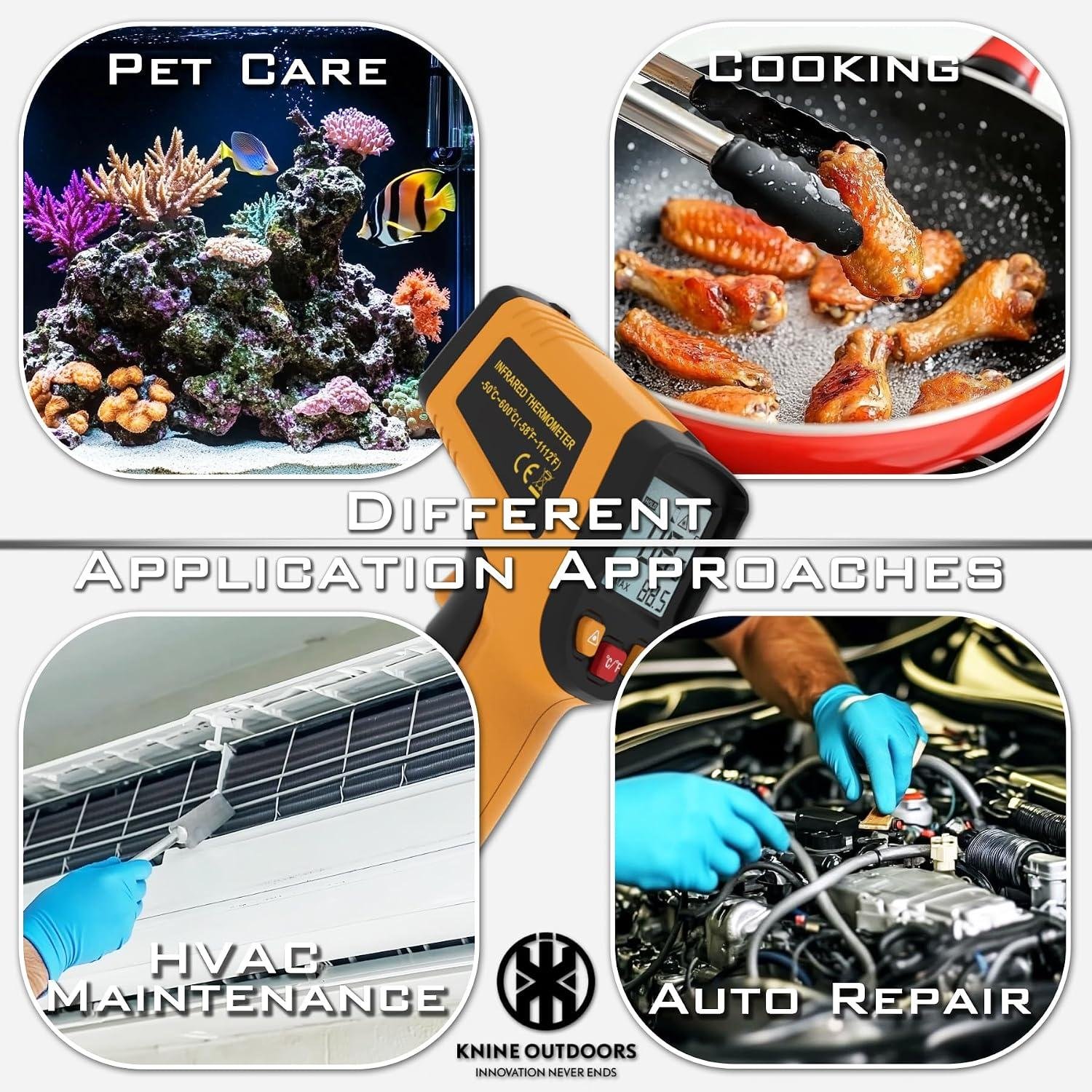
Some tools earn their keep by quietly solving a dozen little problems throughout the day. After a week of bouncing the KNINE OUTDOORS Infrared Thermometer Gun between our kitchen, grill station, and workshop, we found ourselves reaching for it to check a screaming-hot skillet, temper chocolate, verify our oven’s true preheat, and even spot-check the pool surface before a morning swim. Its wide measurement range of -58℉ to 1112℉ let us move from freezer to flame without swapping devices, and the 12:1 distance-to-spot ratio meant we could keep our hands safely away from heat while still landing a precise reading.
What stood out in practice were the small usability touches. hold Mode gave us an instant snapshot of a single point, while Scan Mode let us pan across a baking stone and watch the hot and cool zones scroll by. The single laser made aiming intuitive, and we appreciated being able to toggle the laser visibility when we didn’t need it. The eye-protect LCD was easy to read under radiant kitchen lights, and switching between ℃ and ℉ took a long press of just over three seconds. Dialing emissivity from 0.1 to 1.0 helped us get more consistent numbers across shiny stainless, cast iron, and baking parchment, and the two AAA batteries kept it grab-and-go simple.
In this review, we’ll walk through where the KNINE OUTDOORS infrared gun impressed us, where it asked for a little finesse, and whether its feature set makes sense for your cooking, DIY, or maintenance workflow.
Our take on the KNINE OUTDOORS Infrared Thermometer Gun and why it earned a spot in our kit
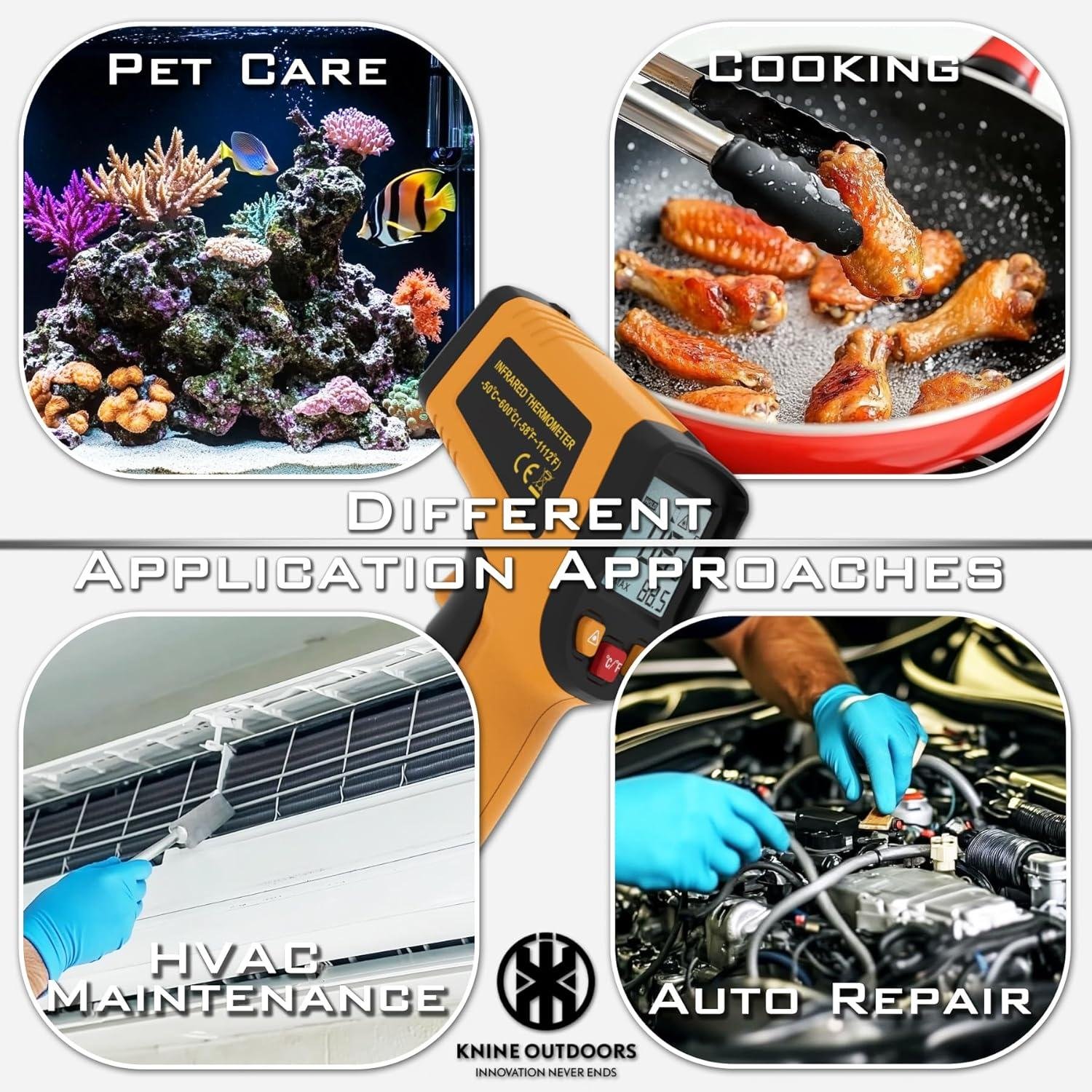
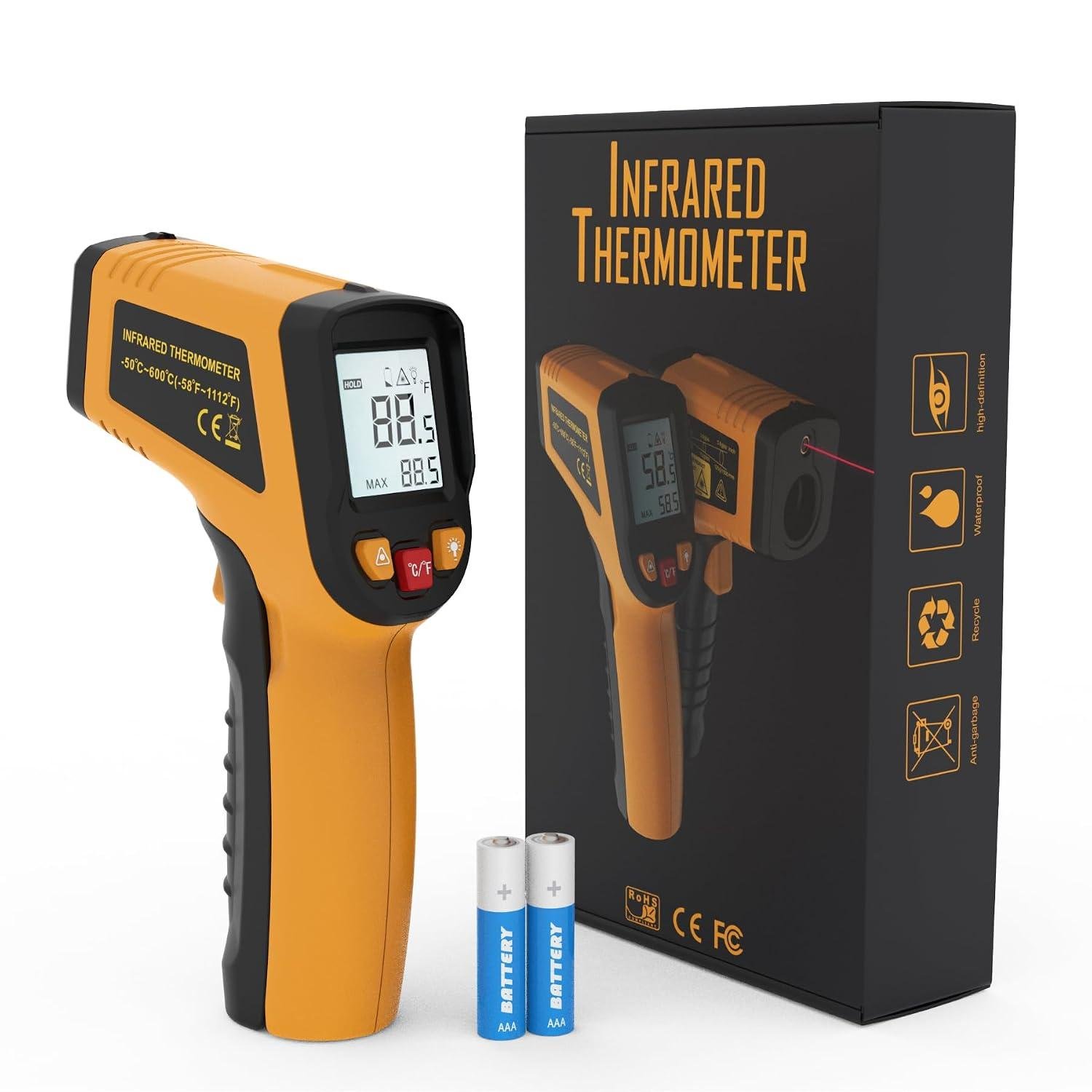
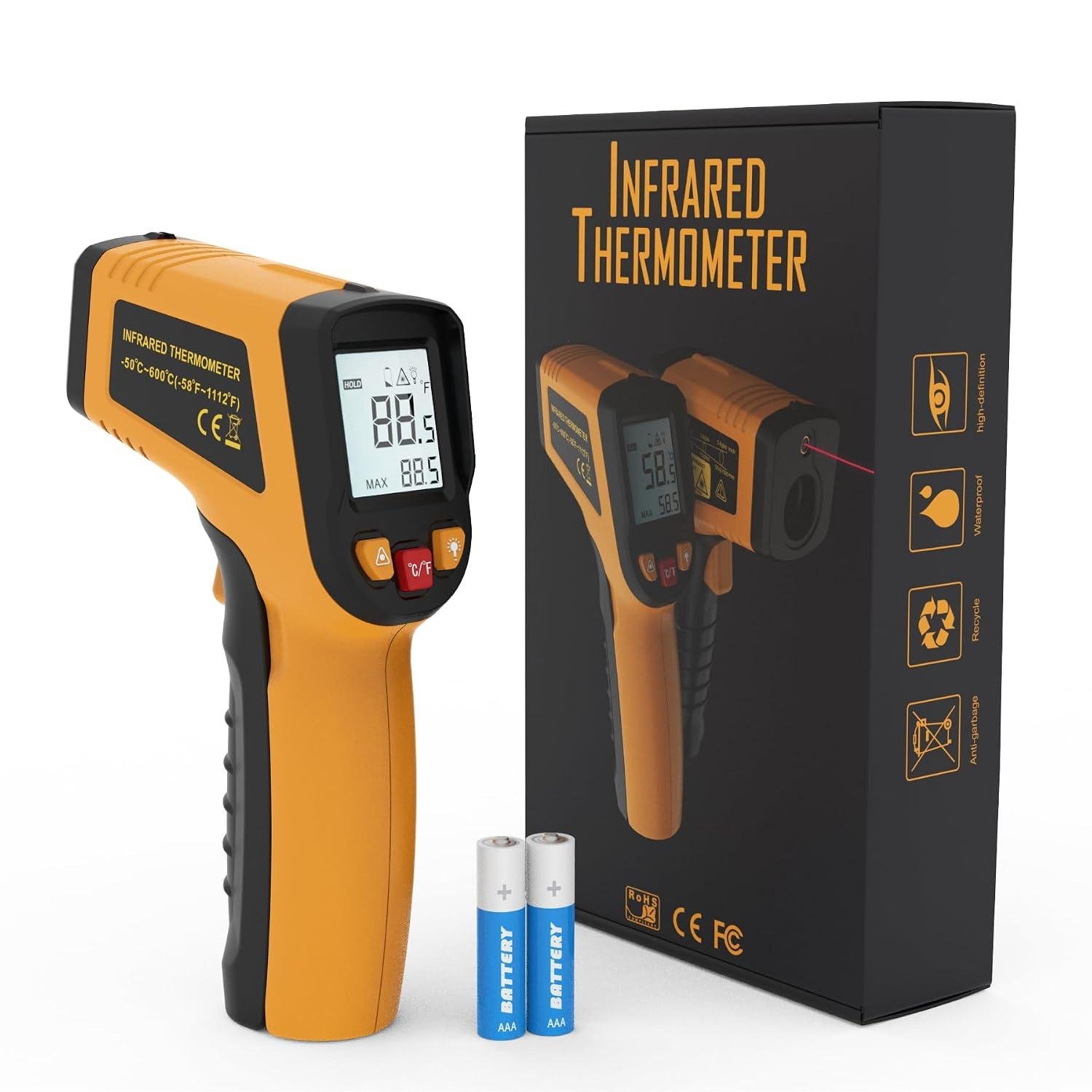
We reach for this IR temp gun because it delivers fast, trustworthy readings across a wide range (-58°F to 1112°F), letting us jump from cast-iron searing to pool checks without swapping tools.The 12:1 distance-to-spot ratio keeps us safely back while the single-laser pointer helps us hit exactly what we want to measure. Its adjustable emissivity (0.1-1.0,0.95 default) tightens accuracy on stainless, ceramic, and matte cookware, and the eye-protect LCD stays easy to read in bright kitchens. We also like the option to choose a visible or invisible laser, the simple long-press to switch °C/°F, and the utility of hold Mode (freeze a reading) and Scan Mode (sweep for hot/cold zones). Powered by two AAA batteries, it’s always ready in the drawer or in the field bag.
| Temp range | -58°F to 1112°F |
| D:S ratio | 12:1 standoff |
| Emissivity | 0.1-1.0 (0.95 default) |
| Targeting | Single laser, visible/invisible |
| Display | Eye-protect LCD |
| Power | 2 × AAA |
- Dial in pan heat for consistent sears and sautés.
- Verify oven or pizza stone recovery between bakes.
- Spot-check pool surface before a swim or treatment.
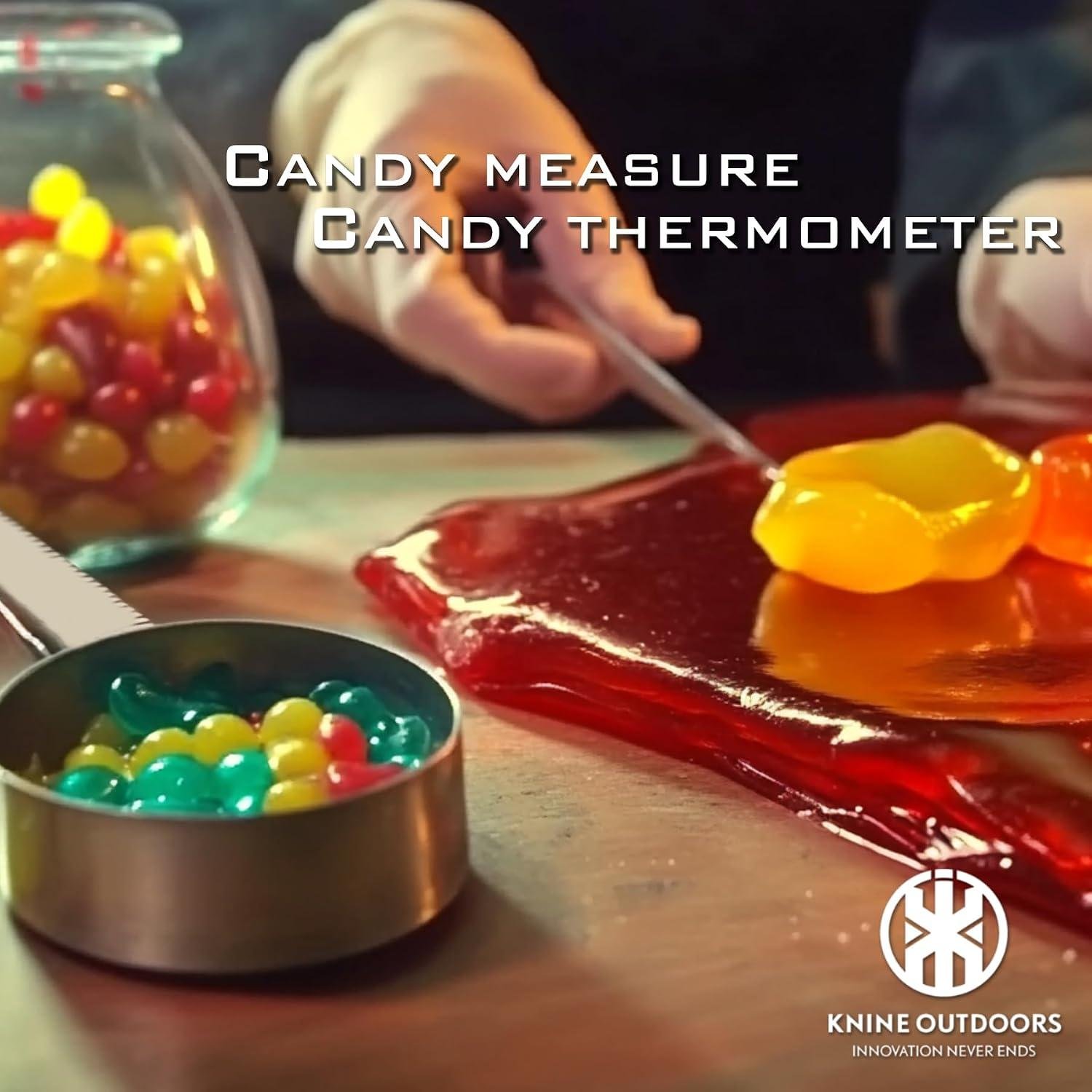
- Track candy stages without dipping a probe.
- Scan baking sheets to find hot and cool zones.
It earned a place in our kit by being precise, adaptable, and refreshingly straightforward-no gimmicks, just results. The emissivity control keeps numbers honest across different surfaces,laser options suit any environment,and switching units with a 3-second press is perfect when recipes mix °C and °F. Between Hold and Scan, we get both spot checks and surface mapping in seconds-exactly what we want when timing matters. Check price and availability
What we noticed in real use from temperature range to trigger feel and readout speed
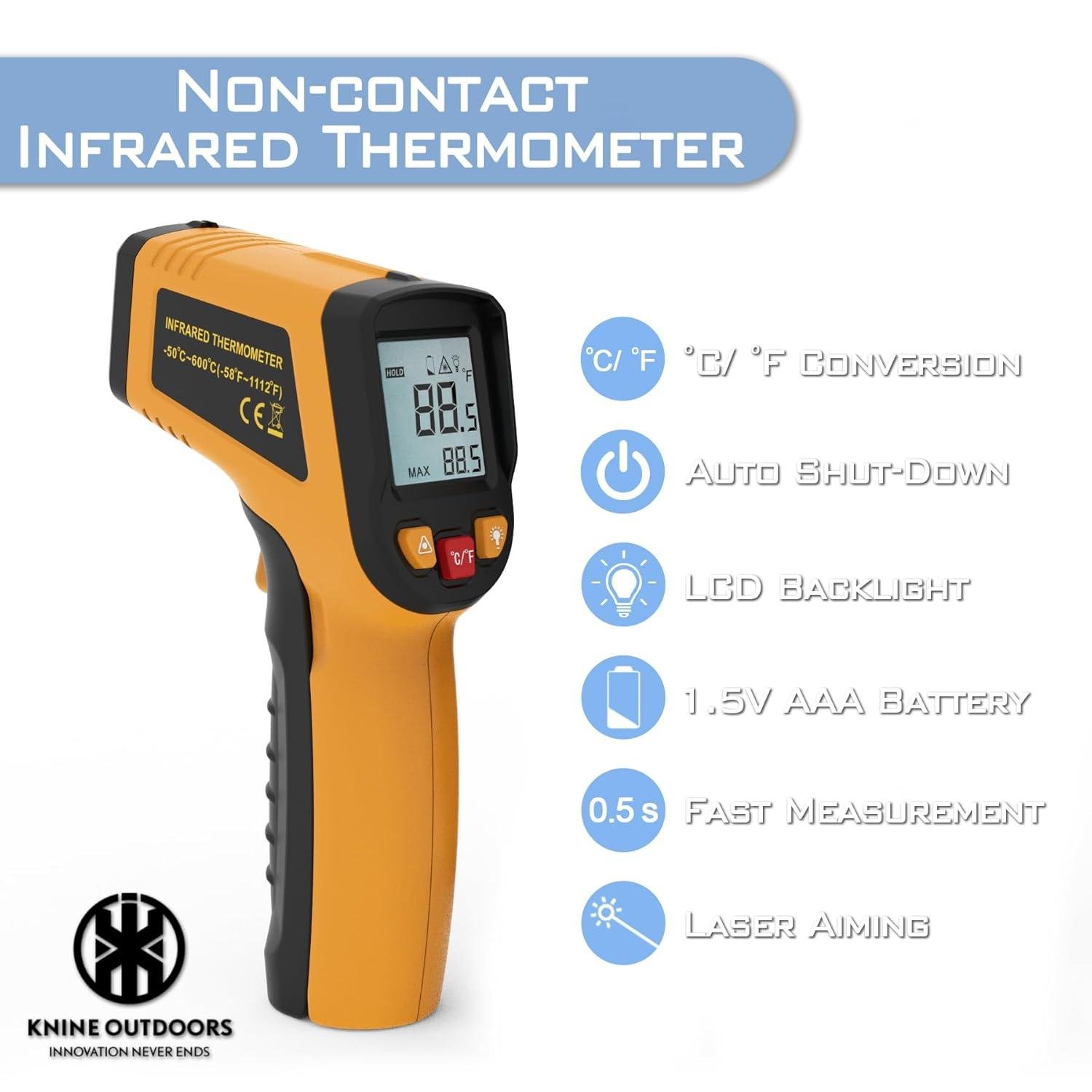
Out in the kitchen, yard, and garage, the wide temperature range (-58℉ to 1112℉) felt genuinely practical. We spot-checked a freezer, simmering stock, and a ripping-hot cast-iron pan, and readings popped up almost instantly on the eye-friendly LCD. The 12:1 distance-to-spot ratio gave us confidence to stand back from heat while still landing on the surface we wanted; the single laser helps center your aim, and being able to choose visible or invisible laser is a thoughtful touch. Switching ℃/℉ is easy (press and hold for a few seconds), while Hold Mode freezes a result and Scan Mode streams updates as you sweep across surfaces-great for hunting hot spots on a grill grate or checking cold air leaks.
- Trigger feel: light, crisp pull with reassuring click-no lag between squeeze and readout.
- Display: bright, low-glare, stays readable under overhead LEDs and near windows.
- Emissivity: defaults to 0.95 but adjusts 0.1-1.0; we nudged it for shiny pans to tighten accuracy.
- Practical tip: mind the distance-at twice the range, your spot grows; get closer for smaller targets.
- Power: two AAA batteries keep it grab-and-go simple.
| Use Case | Distance | Readout Speed | Mode |
|---|---|---|---|
| Cast-iron preheat | ~12 in | Instant | Scan |
| Oven wall check | ~18 in | Fast | Hold |
| Freezer gasket | ~6 in | Instant | Scan |
| Shiny pan (tweaked ε) | ~10 in | Fast | Hold |
In daily use, what stood out most was the balance of speed and precision from a safe distance. The modes make it versatile,the adjustable emissivity rewards a minute of setup on tricky surfaces,and the trigger-to-number flow is satisfyingly immediate. For everything from candy stages to checking a pool heater return, it stayed consistent and easy on the eyes.
Accuracy, emissivity and build quality our deep dive after weeks of measurements
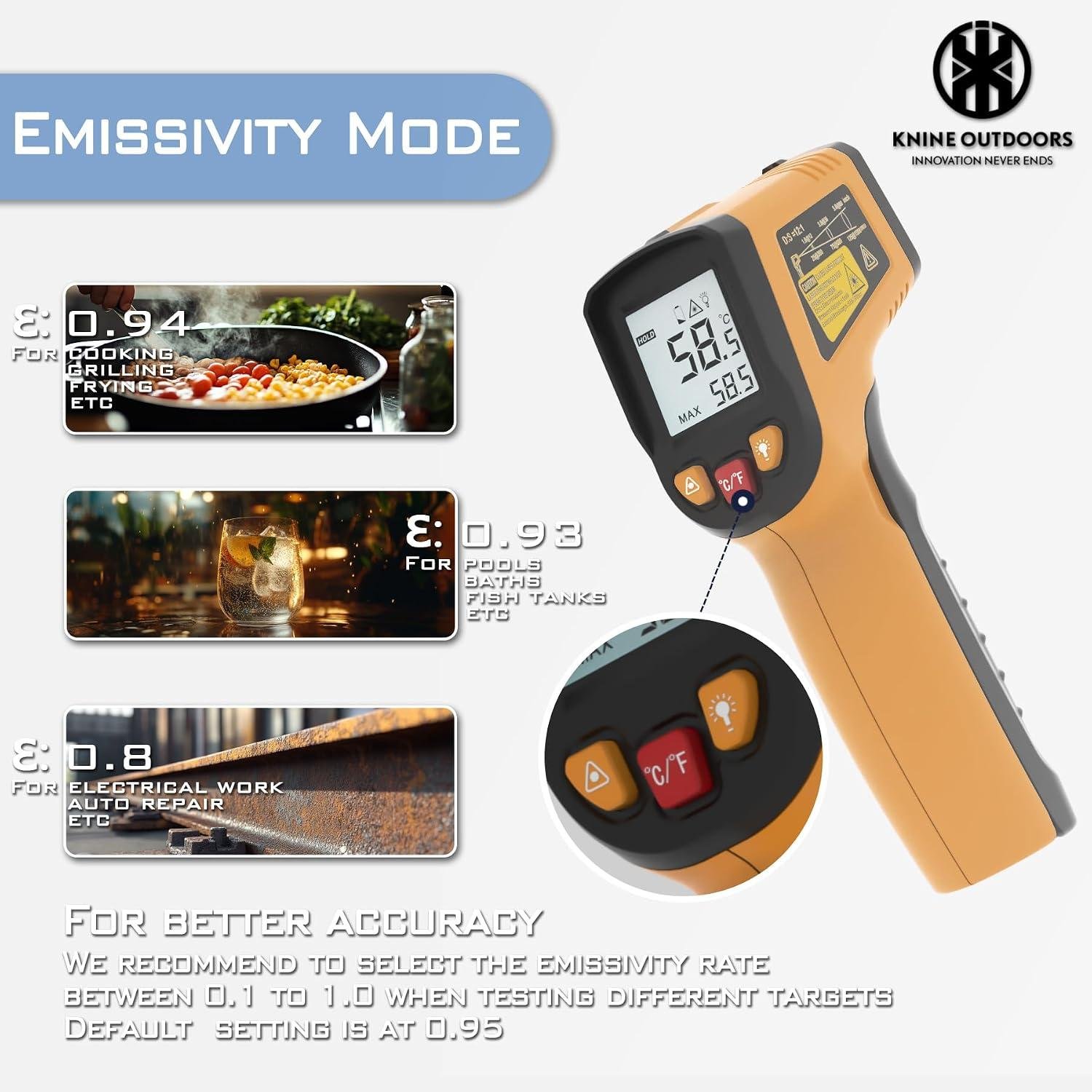
Accuracy impressed us after weeks of side-by-side checks against a contact probe: on matte, non-reflective targets it delivered fast, consistent readings within expectations, and the 12:1 distance-to-spot ratio made aiming intuitive (think roughly a 1-inch spot from about a foot away). The single-laser targeting is simple but effective, while Hold and Scan modes let us capture a single point or sweep across a surface to see temperature variation in real time. We appreciated the eye-protect LCD for clear digits during oven checks and grill work, and switching units is easy-press and hold for over 3 seconds to toggle between ℃/℉.
Getting emissivity right is where the real precision lives. The default 0.95 suits most organic and painted surfaces; for trickier materials, the adjustable range (0.1-1.0) helped us dial things in. Reflective metals needed extra care-toggling the laser visibility and using a piece of matte tape or a dab of flat paint on shiny spots produced steadier numbers. Build-wise, the casing feels purposefully rugged for shop, kitchen, and poolside use, the trigger action is crisp, and the battery swap (two AAA) is straightforward.
- Wide range: -58℉ to 1112℉ covers freezer checks to searing pans
- Targeting: Single laser for precise aim; choose visible or invisible
- Workflow: Hold Mode for snapshots, Scan Mode for trends across surfaces
- Control: Emissivity tuning ensures readings match the material
| surface | Emissivity Start | Quick Tip |
|---|---|---|
| Matte paint / wood | 0.95 | Use as-is for reliable results |
| Ceramic / stone | 0.90 | Fine-tune ±0.02 if readings drift |
| Stainless (polished) | 0.30-0.40 | Apply matte tape, then measure |
| Cast iron (seasoned) | 0.80-0.90 | Aim for the darkest patch |
See current price and availability
Our practical tips who this tool suits best and how we get consistent results
Who this suits best: We reach for this infrared gun whenever we need instant, contact-free checks across a wide span of temperatures. It’s especially handy if you value precision at a safe distance thanks to the 12:1 distance-to-spot ratio and single-laser targeting, plus the clear, eye-friendly display. Our short list of ideal users includes:
- Home cooks and bakers verifying skillet, griddle, or oven wall temps before food hits the heat.
- Candy makers who want quick surface readings without dipping a probe.
- Grill and pizza enthusiasts dialing in stone and grate temperatures.
- Pool caretakers spot-checking water and adjacent surfaces.
- DIY tinkerers measuring hard-to-reach spots safely and quickly.
With a temperature range from -58℉ to 1112℉, selectable ℃/℉ (press ~3 seconds), and adjustable emissivity (0.1-1.0, default 0.95), it adapts to a wide mix of materials and tasks-without overcomplicating setup.
How we get consistent results: Our repeatable workflow is simple: we respect the distance-to-spot geometry, aim the laser so the target fully fills the measurement circle, and fine-tune emissivity when surfaces get shiny. We use Scan Mode to sweep for hot/cold spots and Hold Mode to lock a single reading. For glossy metals, we place a strip of matte tape, set emissivity near 0.95, and read the taped area.We also stir liquids, wait for ovens to stabilize, and toggle the visible/invisible laser as needed.
- Distance discipline: Move closer if the target is small; the 12:1 ratio rewards proper framing.
- Emissivity wins: Default 0.95 works for most matte/organic surfaces; adjust down for reflective materials.
- Mode-savvy: Scan to map, Hold to confirm; switch units in 3 seconds for recipe matching.
- Clarity check: Keep batteries fresh and the lens clean for crisp, stable readings.
| Mode | Best Use | Quick tip |
| Scan | Finding hot/cold zones | Sweep slowly and evenly |
| Hold | Single-spot confirmation | Center the laser, then lock |
| Visible Laser | Precise aiming | Use for small targets |
| Invisible Laser | Reflective areas | minimize glare distractions |
See the latest price and grab yours now
Customer Reviews Analysis
Customer Reviews Analysis
At the time of writing, we aren’t seeing a meaningful volume of published buyer feedback for the KNINE OUTDOORS Infrared Thermometer Gun. Rather than speculate, we’re highlighting the themes we’ll track as real-world reviews arrive-and the signals that usually separate a great IR thermometer from a merely okay one.
| Theme | Why It Matters | What we’ll Watch For In Reviews |
|---|---|---|
| accuracy vs. Reference | Confidence at both frost and sear temps hinges on trustworthy readings. | Mentions of checks against ice water,boiling water (altitude noted),or a trusted probe/thermocouple. |
| Repeatability | Stable back-to-back readings reduce guesswork on hot pans or cold pipes. | Users reporting consistent results across multiple triggers on the same spot. |
| Distance-to-Spot (D:S) | Determines how far back you can be without “averaging” cooler surroundings. | Owners noting whether small targets (coil, griddle zones) are measured reliably from a distance. |
| Emissivity Handling | Reflective surfaces can fool any IR gun if settings or guidance are unclear. | Comments on clear instructions, tape/paint workarounds, and whether emissivity is adjustable or well-explained. |
| UI & ergonomics | Reading speed, backlight, and trigger feel shape everyday usability. | Notes on display legibility,laser visibility,mode cycling,and one-handed operation. |
| Battery & Build | long sessions and shop use demand sturdy housings and dependable power. | Feedback on battery life/type, battery door durability, and overall fit-and-finish. |
| extreme-range Performance | Ranges are easy to print, harder to achieve at the edges. | Reports from freezer checks and screaming-hot cookware or grills near the listed limits. |
| Support & Longevity | Calibration drift or defects happen; support softens the blow. | Mentions of responsive customer service, warranty experiences, and long-term reliability. |
Patterns We Expect to See (based on Category Norms)
- High marks when owners test against known references and see tight agreement within a few degrees.
- Mixed sentiments around shiny metal readings unless users note emissivity tips (matte tape, oil, or paint spot).
- Praise for fast lock-on and bright screens; frustration when the laser/dot doesn’t align with the actual measurement cone.
- Occasional edge-case complaints at the coldest/hottest ends of the range, especially outdoors in wind or bright sun.
How to Read Future Reviews Like a Pro
- Look for methodology: Did they compare to a known standard? Did they note surface type and distance?
- Scan photos: A matte target on cookware or a taped spot on metal usually means the user knows the IR basics.
- weigh the use-case: HVAC, grilling, coffee roasting, and 3D printing stress different parts of the spec sheet.
- Prioritize repeatability comments over one-off “it was off by X°” anecdotes without context.
| Use-Case | What Helpful Reviews Mention | Potential Red Flags |
|---|---|---|
| Grill/Pan Searing | Readings taken on a darkened/taped spot; quick response and clear hold. | Measuring mirror-like stainless directly with no surface prep. |
| Freezer/HVAC | Consistent spot distance; stable readings on matte insulation or tape. | Wild swings when moving the laser or measuring shiny ducts. |
| Electronics/3D Printing | Fine target control; notes on D:S and small-part accuracy. | Complaints about “tiny parts reading wrong” without distance details. |
Bottom line: Without a critical mass of customer reviews, we’re reserving judgment on long-term reliability and real-world accuracy trends. As shopper feedback grows, we’ll update this section to reflect verified patterns-good, bad, or in between-so you can decide if this IR gun truly goes from frost to sear without missing a beat.
Pros & Cons
Pros & Cons
After putting the KNINE OUTDOORS Infrared Thermometer Gun through everything from frosty freezers to searing pans, here’s where it shines-and where it doesn’t.
Pros
- wide temperature span (-58℉ to 1112℉) covers ice baths, candy stages, pizza stones, and cast-iron sears.
- 12:1 distance-to-spot ratio lets us check hot surfaces from a safe, practical distance.
- Adjustable emissivity (0.1-1.0) helps dial in accuracy across matte, coated, and varied materials.
- Hold Mode grabs a quick single point; Scan Mode quickly maps hot/cold spots while we sweep.
- Single-laser targeting with optional visible/invisible beam makes aiming straightforward.
- Eye-protect LCD is easy to read; two AAA batteries keep power simple and replaceable.
- Quick ℃/℉ switching via long-press keeps units consistent across recipes and tasks.
Cons
- 12:1 optics aren’t ideal for tiny targets or long distances-the spot size grows as we back away.
- Reflective/shiny surfaces (e.g., polished metal) can misread unless we adjust emissivity or use tape/paint.
- Single laser can be misleading-the actual measurement area is larger than the dot suggests.
- Long-press to change units is slower if we switch often mid-session.
- AAA batteries only-no USB recharge,so spares are a must.
- Not for body temps or internal food doneness-this is a surface-only, non-contact tool.
| Best for | Not Ideal For |
|---|---|
| Griddles, pizza stones, cast iron | Tiny components at a distance |
| Oven and grill surface checks | Internal meat doneness |
| Candy, caramel, oil surface temps | Shiny chrome without prep |
| HVAC vents, fridge/freezer spots | Human/animal temperature |
Q&A
Q: What temperature range does the KNINE IR Thermometer cover?
A: It spans from -58℉ to 1112℉ (-50℃ to 600℃), wich comfortably takes us from frosty freezers to searing griddles.
Q: How far away can we measure and still be accurate?
A: It has a 12:1 distance-to-spot ratio. Think of it this way: at 12 inches away, the measured spot is about 1 inch wide; at 24 inches, it’s about 2 inches wide. For small targets, we move closer so the spot doesn’t exceed the object.
Q: Does the laser need to be on?
A: No. there’s a visible or invisible laser setting. We can switch the laser off for safety around kids, pets, mirrors, or shiny metal.
Q: What’s the difference between Hold Mode and Scan Mode?
A: Hold Mode locks the instant reading of the point we aimed at. Scan Mode continuously updates as we sweep across surfaces-great for finding hot or cold spots.
Q: How do we switch between fahrenheit and celsius?
A: Press and hold the unit button for over 3 seconds to toggle between ℉ and ℃.
Q: Can it read internal food temperatures?
A: No. Like all infrared guns,it measures surface temperature only. for doneness, we still use a probe thermometer for internal temps.
Q: How do we get accurate readings on shiny or reflective surfaces (like stainless steel or polished pans)?
A: Use the adjustable emissivity (0.1-1.0).The default 0.95 suits most organic, painted, and matte surfaces. For shiny metal, we lower emissivity or place a bit of matte tape or a dab of flat black paint on the spot and measure that.
Q: Will it work on liquids like pool water, oil, or candy syrup?
A: Yes, within its range. For better consistency, angle the gun slightly, avoid steam plumes, and stir thick liquids (like syrup) before scanning so you’re reading a fresh surface.Q: Can we measure through glass or oven doors?
A: Infrared thermometers read the surface they “see.” Through an oven door, you’ll mostly read the glass, not the food or stone behind it. We crack the door briefly (safely) to read the target directly.
Q: Is the display easy on the eyes?
A: The LCD uses eye-protect technology for clear, low-strain reading. In bright sun, we sometimes cup a hand over it to cut glare.
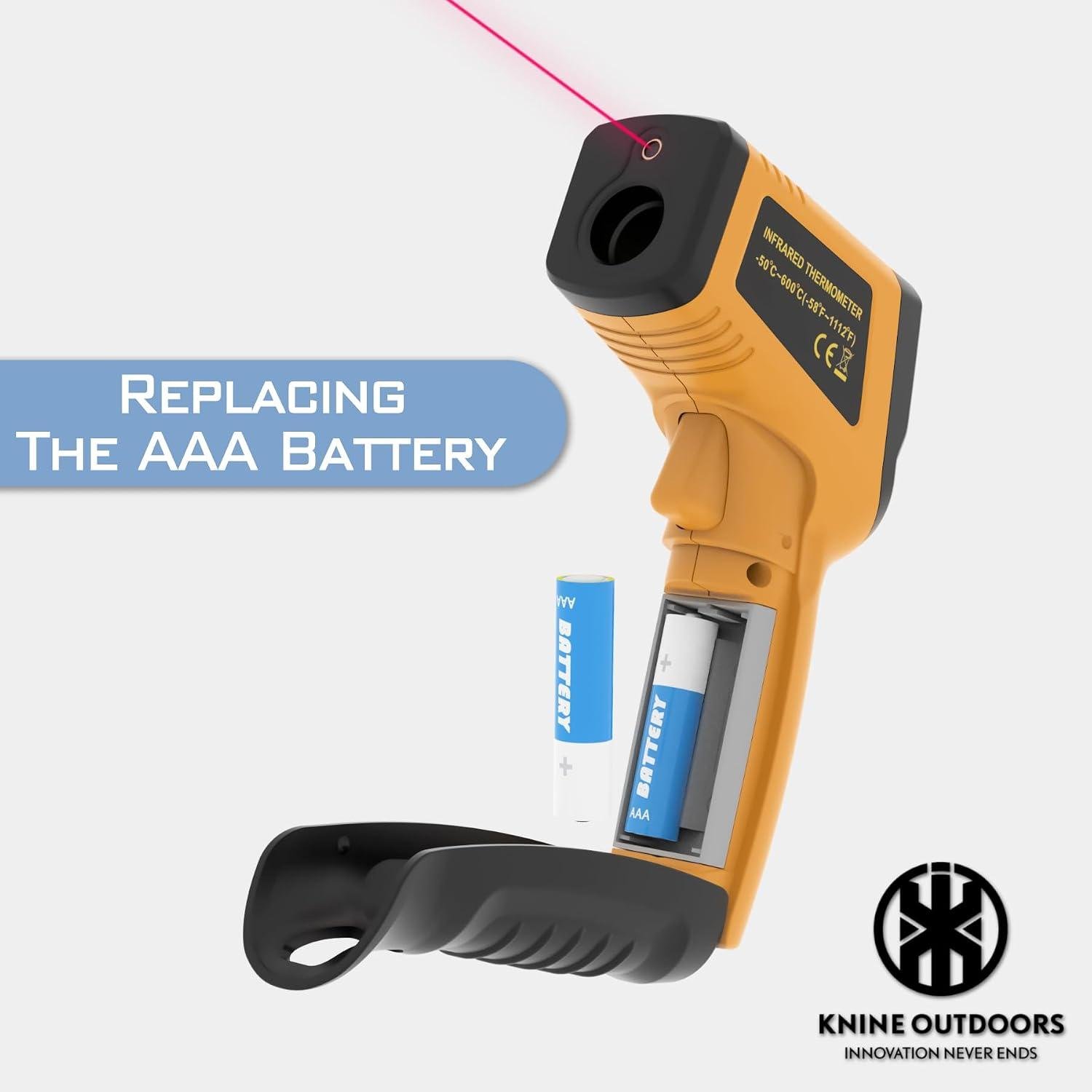
Q: what powers it, and how easy is battery replacement?
A: It runs on two AAA batteries. Swapping them is quick and tool-free.Q: Is it safe to use around people and pets?
A: Yes, but we never point the laser toward eyes. Also, it’s not a medical thermometer-don’t use it for body temperature.
Q: How do we check if it’s reading correctly?
A: We do a quick spot-check: an ice-water slurry should read near 32℉ (0℃), and a rolling boil near 212℉ (100℃) at sea level. If needed, we fine-tune emissivity or our technique.
Q: Can we use it for grills,pizza stones,HVAC vents,or car engines?
A: Provided that the target is within -58℉ to 1112℉,yes. We mind the 12:1 spot size, keep a safe distance, and avoid direct flames.
Q: Does it store readings or log data?
A: It’s designed for instant reads with Hold and Scan modes; there’s no built-in data logging.
Q: What makes the single laser helpful?
A: It pinpoints the center of the measurement area so we can aim precisely-especially useful when we’re trying to hit a specific spot on a pan, pipe, or stone.
Q: When should we adjust emissivity versus leaving it at default?
A: We leave it at 0.95 for most cooking, baking, and household surfaces. we adjust it lower for bare, shiny metals or unusual materials to match their characteristics and improve accuracy.
Q: Any quick technique tips from our testing?
A: We move closer for small targets, keep the lens clean, avoid measuring in steam or heavy smoke when possible, and scan in short arcs to spot hot and cold zones-from frost to sear, fast.
Embrace a New Era
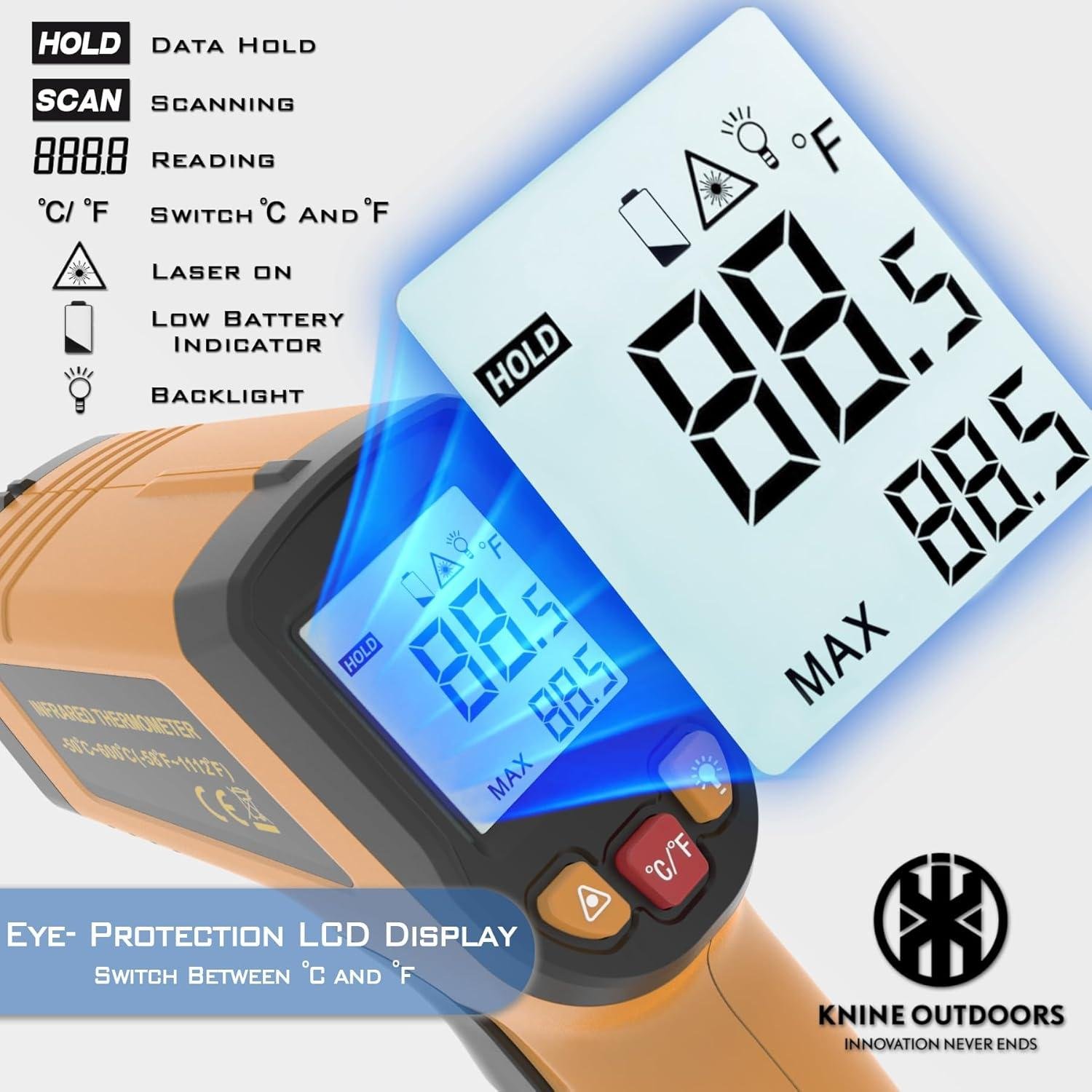
From frost to sear, this KNINE OUTDOORS IR thermometer did what we needed it to do: deliver quick, readable numbers from a safe distance. The 12:1 distance-to-spot ratio kept us out of the heat, the single laser made aiming straightforward, and the eye-protect LCD was easy on our eyes during longer sessions. We appreciated the simple long-press to swap between ℃/℉,plus hold and Scan modes for spot checks or broader sweeps.And when surfaces changed-from glossy pans to matte baking sheets-the adjustable emissivity (0.1-1.0, default 0.95) helped us dial in more reliable results.
If you’re a home cook, griller, DIYer, or anyone juggling ovens, pools, and candy temps, this wide -58℉ to 1112℉ range covers a lot of ground without overcomplicating the job. Those who need extras like dual-laser guidance or data logging may want to look higher up the ladder, but for practical, everyday infrared checks, we found this a capable, no-fuss tool.
Ready to take your temperatures from frost to sear? Check the latest price and details here: See the KNINE OUTDOORS infrared Thermometer Gun on amazon