

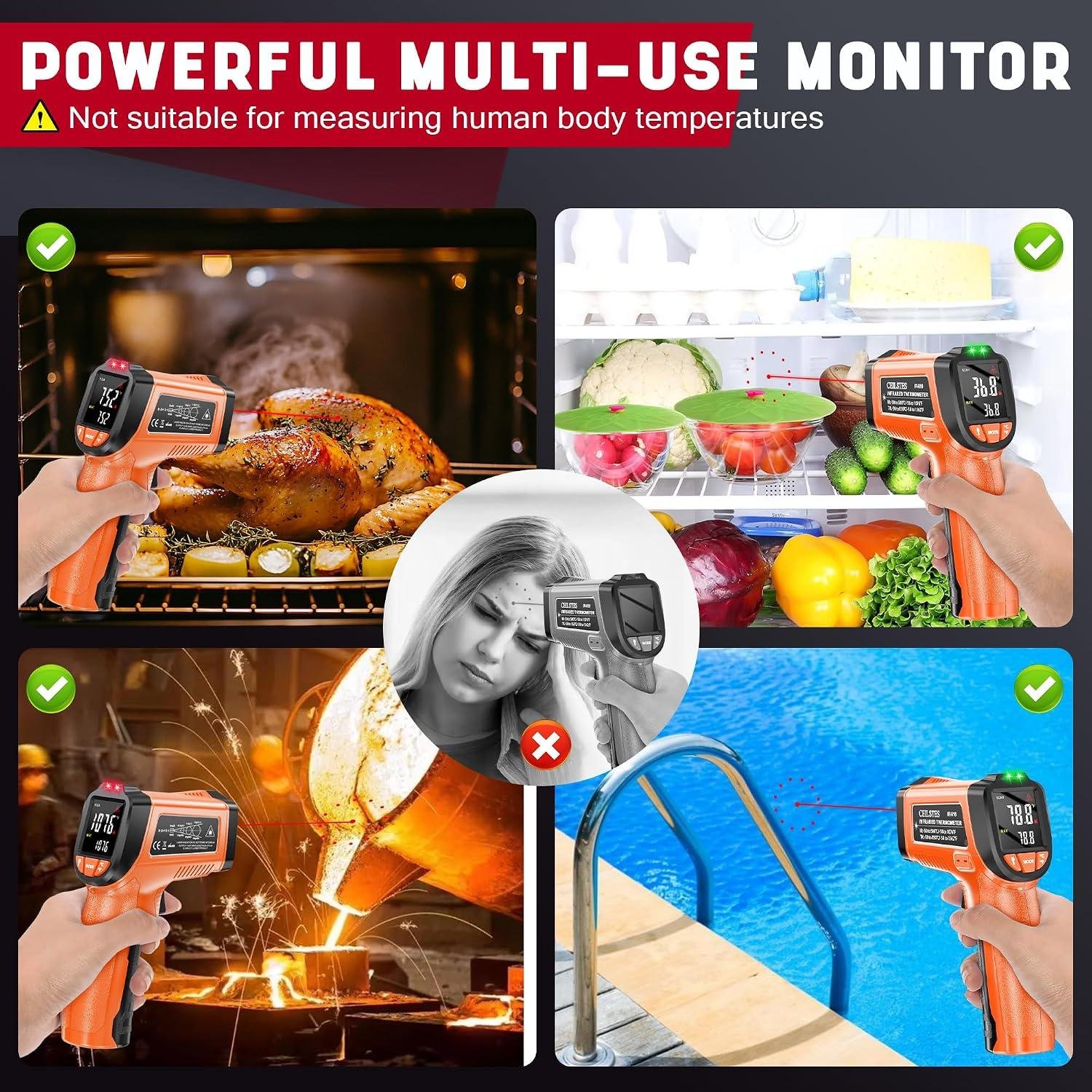
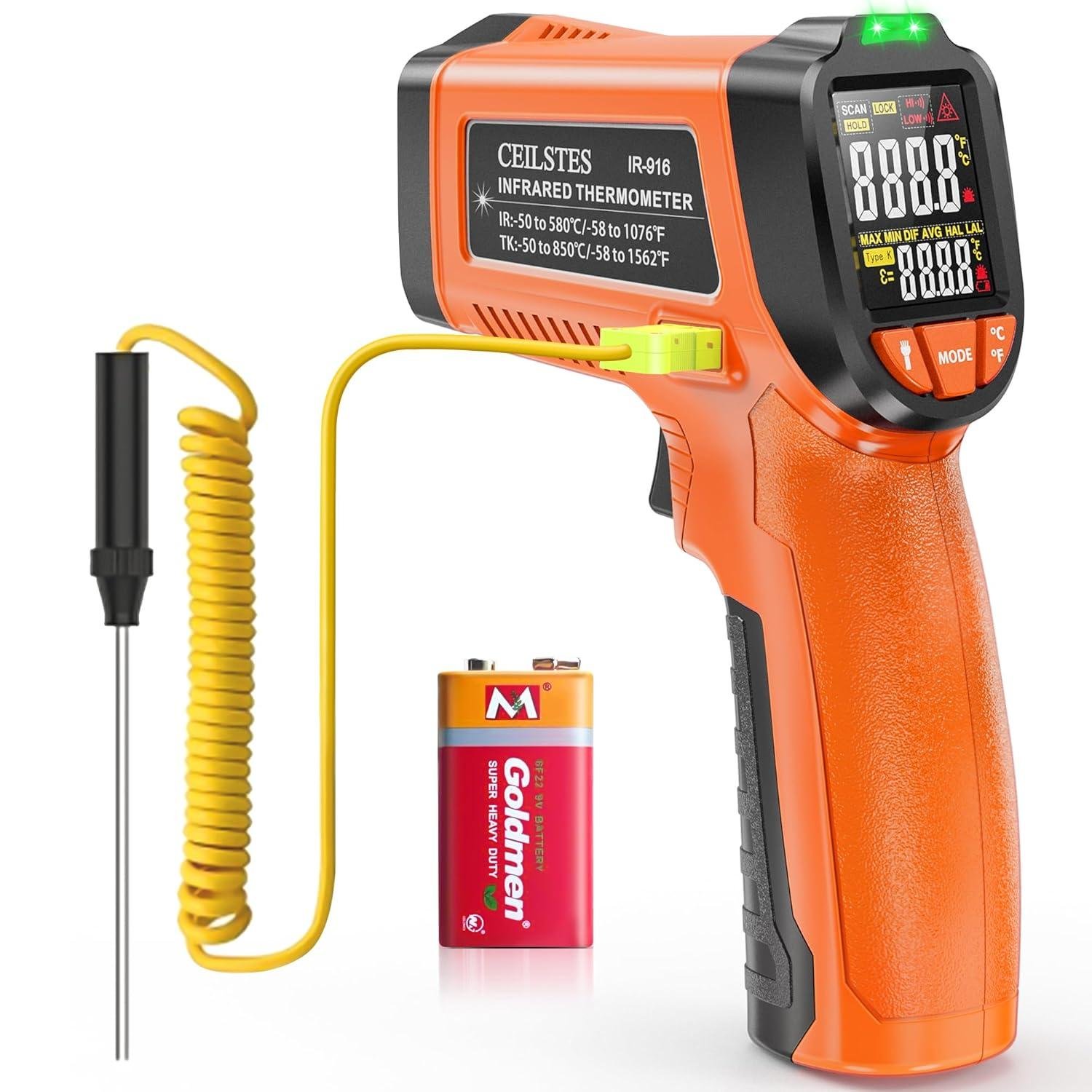
From sizzling cast-iron skillets to humming condenser coils, there are moments when we just want to point, squeeze the trigger, and know exactly how hot things really are. That’s what led us to the CEILSTES Infrared Thermometer Gun-a non-contact, laser-aiming temperature tool rated from -58°F to 1076°F, with adjustable emissivity and Max/Min capture. It’s clearly labeled not for human use, which suits our needs just fine; we’re here for surfaces, machines, and cooking gear, not foreheads.
We brought it into the kitchen first, mapping hot spots on a griddle, confirming oil temps for deep frying, and checking a pizza steel before launch. The backlit display was easy to read under luminous lights, and the laser made aiming intuitive. Then we walked it into the garage to chase down heat variations on an engine manifold and sanity-check HVAC supply and return temps. The adjustable emissivity paid off on tricky, reflective surfaces, and the Max/Min function helped us sweep larger areas without missing the peak.
What surprised us most was the included K-type probe. Being able to scan surface temperatures with infrared and then pivot to a probe for internal readings-like the center of a loaf or a thick cut on the grill-made this feel like two tools in one. Early impressions are promising: responsive readings, straightforward controls, and a sensible feature set for the price.
In this review, we’ll dig into accuracy, speed, ease of use, and where adjustable emissivity and Max/Min tracking make a real difference-along with a few caveats we noticed in day-to-day use.
Our First Impressions and How This infrared Thermometer Fits Into Our Work
Our first take: solid build, comfortable grip, and a trigger that wakes the unit fast-readings pop up in under a second. The backlit display is crisp and easy to read (down to a tenth), and the adjustable emissivity plus Max/Min capture make it simple to dial in across different surfaces. spec-wise, the IR range spans -58°F to 1076°F (±2.0% per spec), while the included K-type probe extends contact measurements to 1562°F (±1.5%). In quick checks-boiling water, a preheated skillet, and a reference probe-our results stayed within about a degree, which is more than adequate for the shop and the kitchen.
- Fast reads: snappy response for moving targets and hot zones
- Easy screen: bright,legible display in sunlit or smoky kitchens
- Laser guidance: confident aiming on small or awkward spots
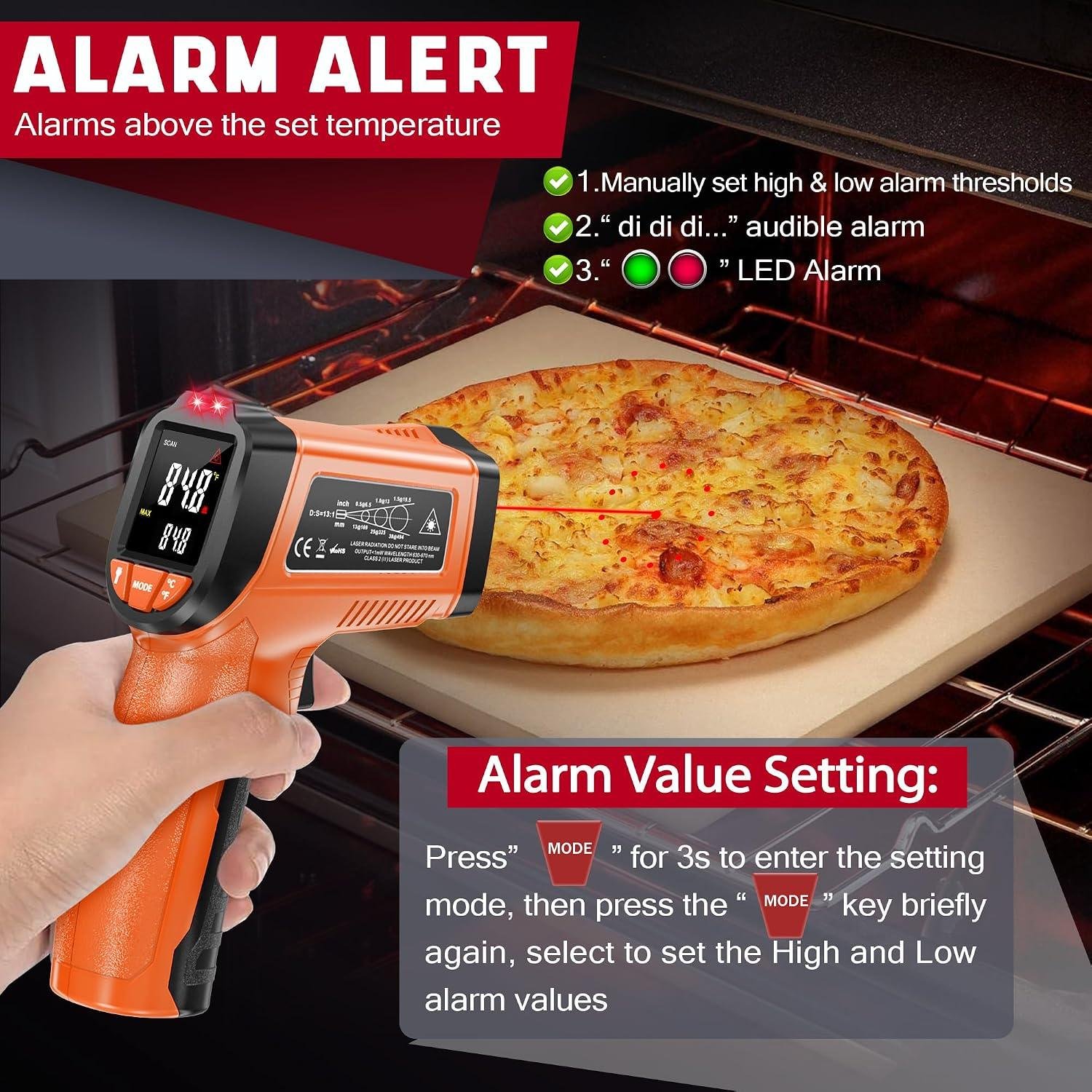
- Max/Min tracking: catch peaks and lows without babysitting
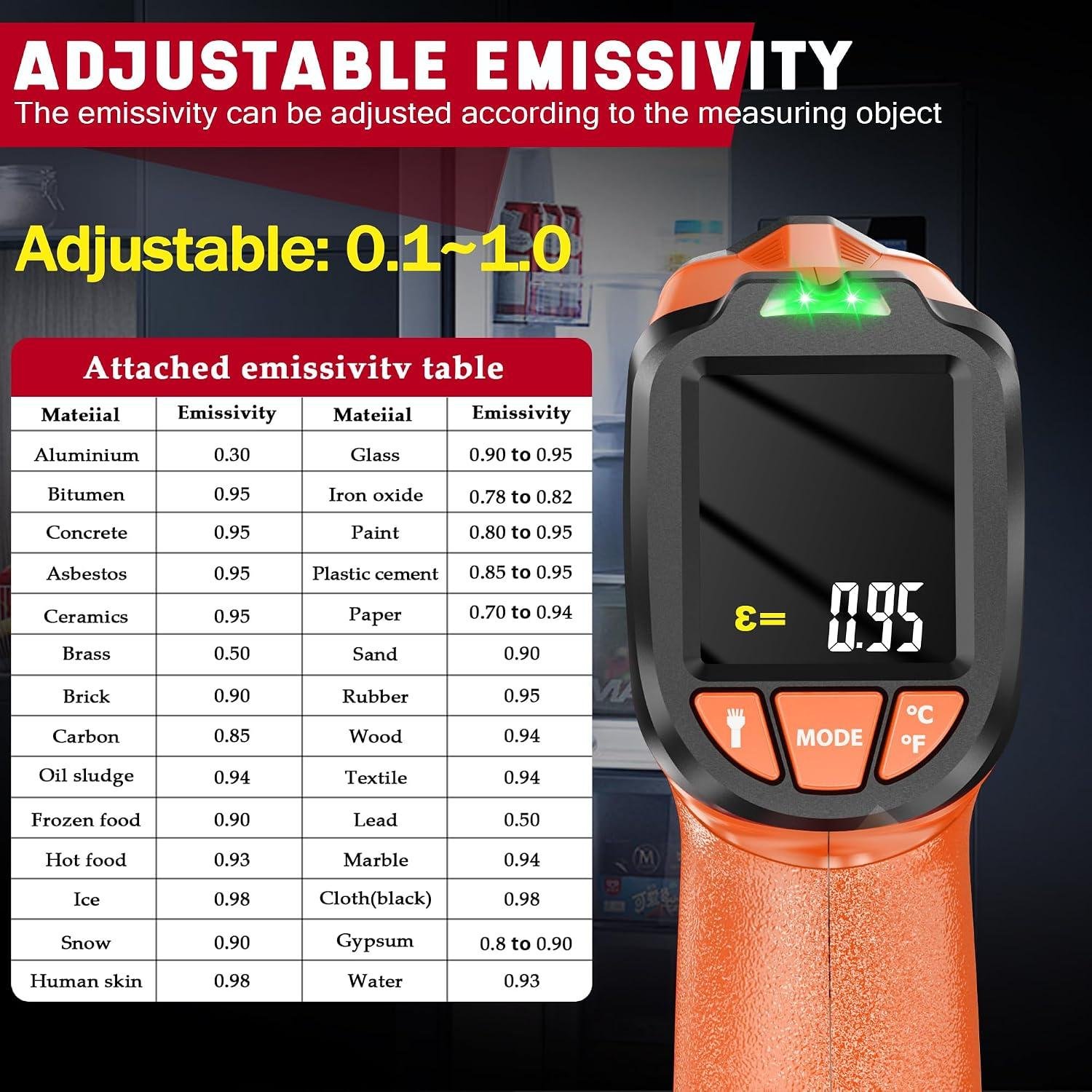
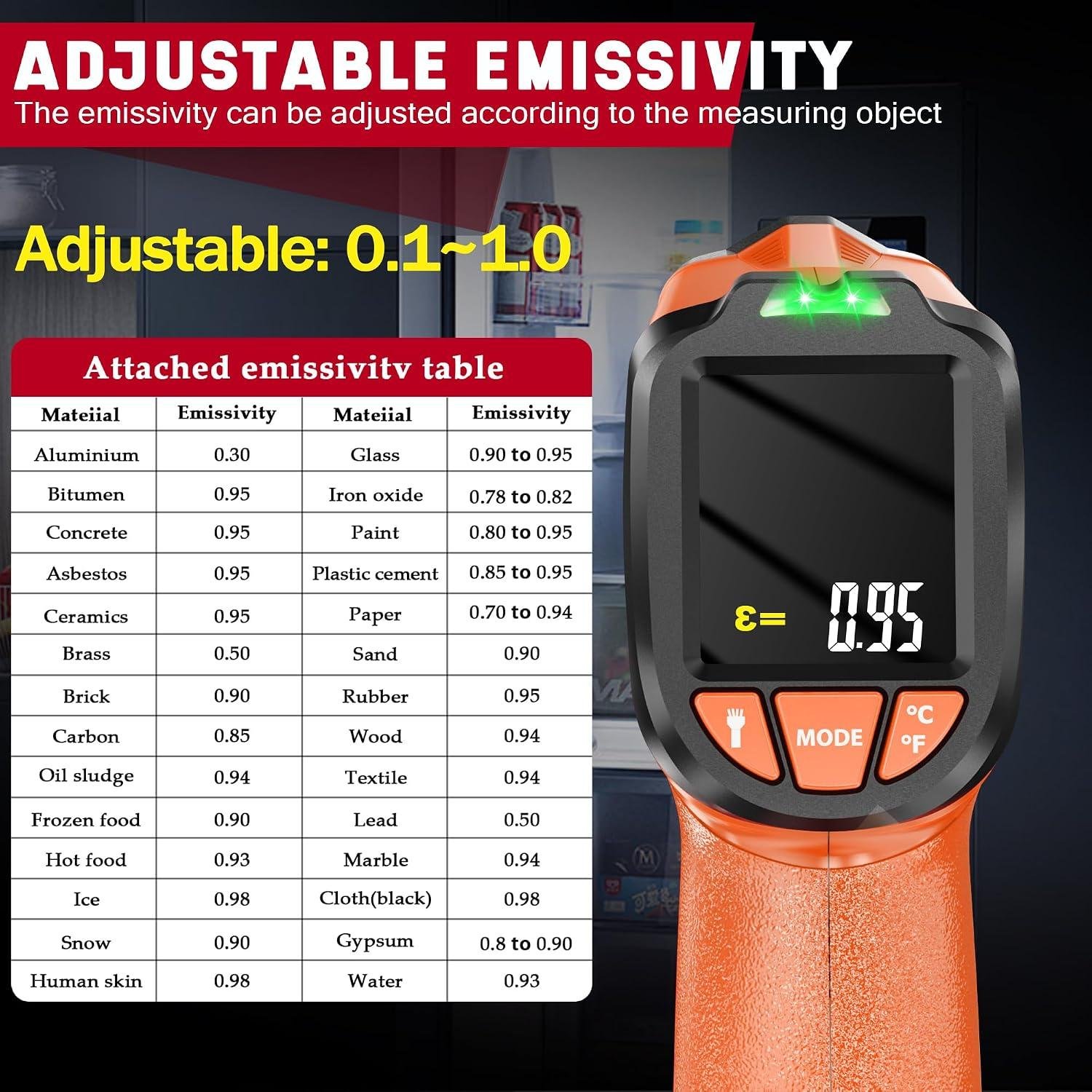
- Adjustable emissivity: trustworthy numbers on shiny pans and matte ducts
- K-type probe included: quick switch from surface scans to internal temps
Where it fits in for us: this tool bridges our culinary,garage,and field work without fuss. In the kitchen, we stage a griddle, confirm oil temps for fries, then swap to the probe for bread and meats. On HVAC calls and in the engine bay,we spot-check hotspots-vents,compressor lines,rotors-from a safe distance,and use the probe for contact validation when needed. The laser makes targeting intuitive, and emissivity control keeps numbers honest across mixed materials. Just remember: it’s for surfaces and systems-not for people.
| Workflow | IR Snapshot | Probe Follow‑up | Setting |
|---|---|---|---|
| Griddle prep | Map 450°F zones | Steak rest temp | Kitchen |
| Deep fry | Hold 350-375°F | Batter core check | Kitchen |
| HVAC | Supply/return delta‑T | Suction line superheat | Field |
| Automotive | Rotor/manifold hotspots | Thermostat housing | Garage |
| Pizza oven | Stone at 700-800°F | – | Backyard |
Check availability and today’s price
Key Features We Rely On Adjustable Emissivity Laser Targeting Max Min Capture and a Wide Temperature Range
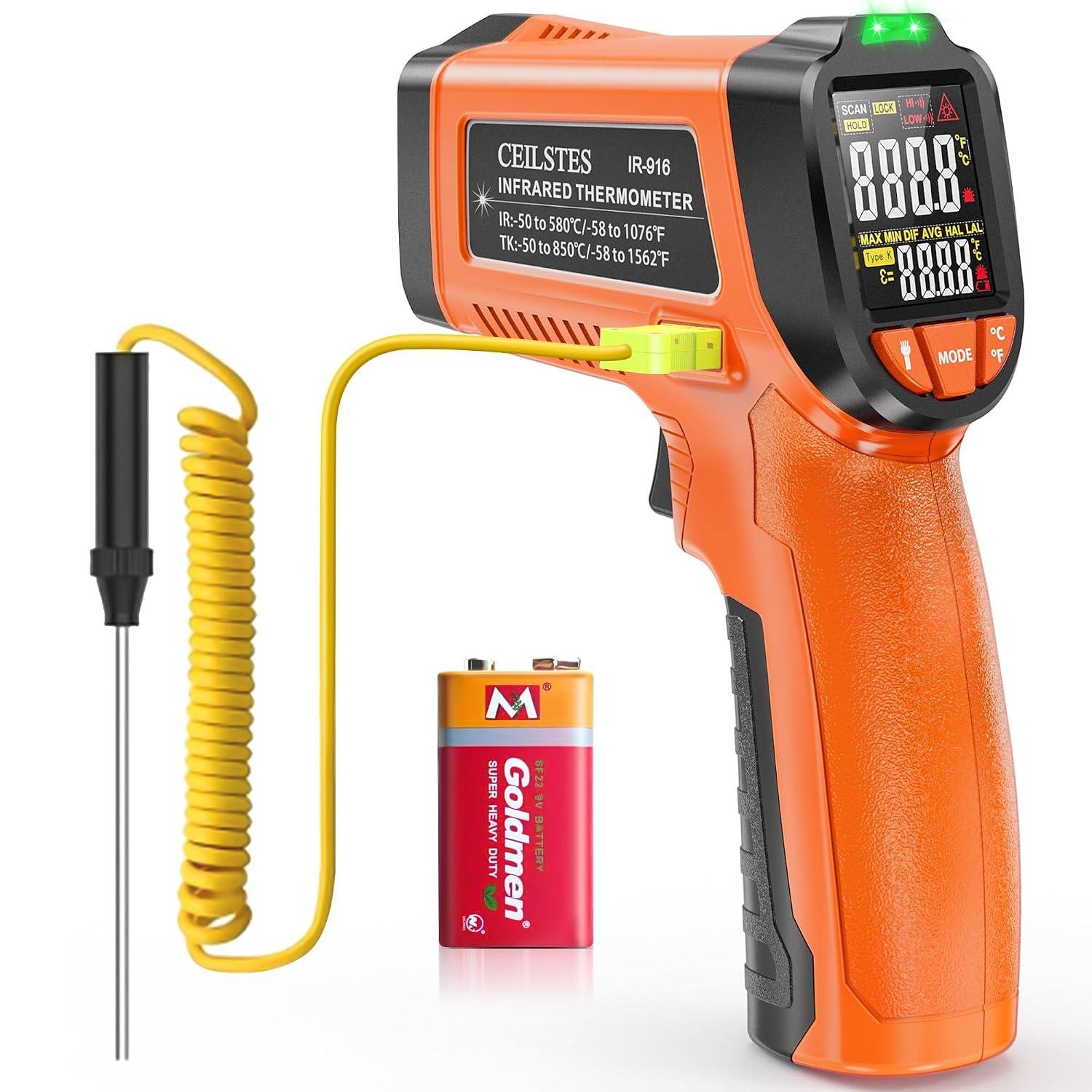
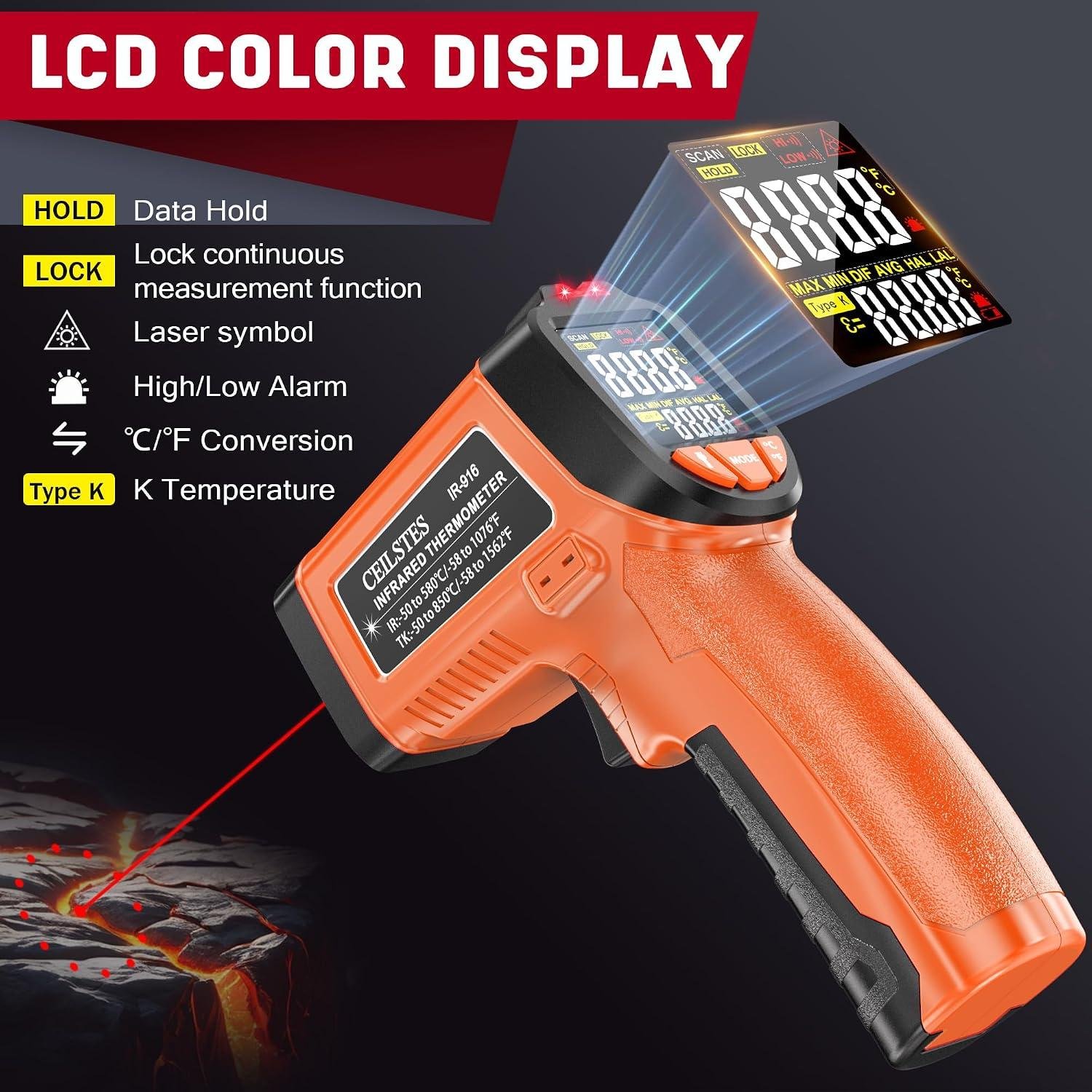
Adjustable emissivity makes all the difference when we’re bouncing between shiny griddles, matte cast iron,and painted engine parts-tune it for the surface and the readings stay consistent. Pair that with laser targeting and we can pinpoint hot spots fast, whether we’re dialing in a pizza stone or tracing an HVAC duct. We lean on Max/Min capture during scan sweeps to spot peak sear temps or cold leaks at a glance,and the easy-to-read display (down to a tenth of a degree) keeps the numbers crystal clear,even in a bright kitchen. for internal checks, the included K-type probe is a convenient backup to confirm what the IR scan suggests. quick response and solid accuracy reported by users round out a tool that’s practical across cooking, automotive, and shop tasks-just remember it’s not for human temperature measurement.
- Wide IR range: -58°F to 1076°F for everything from deep-fry oil to engine bay checks
- Probe extension: -58°F to 1562°F for high-heat applications
- Data at a glance: Max/Min values help track swings while you work
- Fast readings: quick to temp with a bright, legible screen
- Value-forward: Feature set praised by users for the price
| Feature | IR Mode | K-Probe Mode | Use Case |
| Temp Range | -58° to 1076°F | -58° to 1562°F | Oven, griddle, engine |
| Accuracy | ±2.0% | ±1.5% | Confidence checks |
| Targeting | Laser spot | Direct contact | Pinpoint vs. verify |
| data | Max/Min capture | Max/Min capture | Trend swings |
| Display | Backlit, 0.1° | Backlit, 0.1° | Bright spaces |
See today’s price and grab yours
In The Field Results From Searing Griddles To Troubleshooting Engines and HVAC
On scorching hot griddles and busy cook lines, this IR gun proved itself. We dialed in searing zones fast, sweeping a cast‑iron plate from edge to center and watching temps stabilize around burger‑worthy heat. Adjustable emissivity helped tame tricky stainless and chrome, and when oil hit shimmering stage, the detachable K‑probe confirmed deep‑fry targets without lifting the basket. The backlit display is crisp-even under a bright hood-and readings pop up quickly, letting us move from steak to sourdough without pause. What we liked in the kitchen:
- Range: IR spans -58°F to 1076°F; K‑probe extends to 1562°F for high-heat checks
- Accuracy: IR ±2.0%; K‑probe ±1.5% kept us within tight targets
- Speed: Quick, stable surface reads; Max/Min capture highlights hot spots
- readability: Clear screen showing to a tenth of a degree for precise calls
- Value: Feature set that punches above its price, per multiple user reports
| Task | Mode | Temp | Field Note |
|---|---|---|---|
| Smash-burger griddle | IR | 525-560°F | Emissivity 0.95 on cast iron |
| Deep-fry oil | Probe | 350°F | Fast confirm before drop |
| Pizza stone | IR | 650°F | use Max hold for peak zone |
| Radiator upper hose | IR | 195-205°F | Consistent thermostat check |
| Exhaust manifold | IR | 750-900°F | Spot a cool misfiring cylinder |
| HVAC supply vent | IR | 53-57°F | Delta‑T verified at a glance |
Out in the garage and on rooftop units, it’s just as dependable. We used it to sweep manifolds and radiator hoses without risking knuckles, then moved to HVAC where supply/return deltas, compressor lines, and blower housings told the whole story in minutes. The Max/Min function flagged drift on a stubborn zone, and emissivity tweaks kept readings honest across painted steel, rubber, and polished aluminum. Pro tips from the field:
- Shiny surfaces: Put a strip of matte tape on chrome/stainless, set emissivity, then measure
- Data capture: Use Max/Min to compare cylinders or vents for instant outliers
- Probe vs. IR: Probe for internal checks; IR for fast, safe surface scans
- Reality check: Startup is a touch slower than premium guns; one user noted a finicky probe-recalibrate if needed
- Safety: For objects and surfaces only-not for people
See today’s price and details
Our recommendations For Best Accuracy Ideal Use cases and Why It Is Not For Human Readings
For the best accuracy, we lean on the adjustable emissivity and the included K‑type probe. The infrared side covers -58°F to 1076°F with ±2.0% accuracy, while the K‑probe extends to 1562°F at ±1.5%-a great one‑two punch for surfaces and internals. In use, we’ve seen quick, repeatable readings, and customers echo that it’s fast and reliably close at the boiling point. A few note probe variance, so we recommend a quick ice (32°F) and boil (212°F) check to verify. To tighten consistency, we do the following:
- Match emissivity to the surface: default near 0.95 for matte/painted items; lower it for shiny metals-or cover the spot with matte black tape (ε≈0.95).
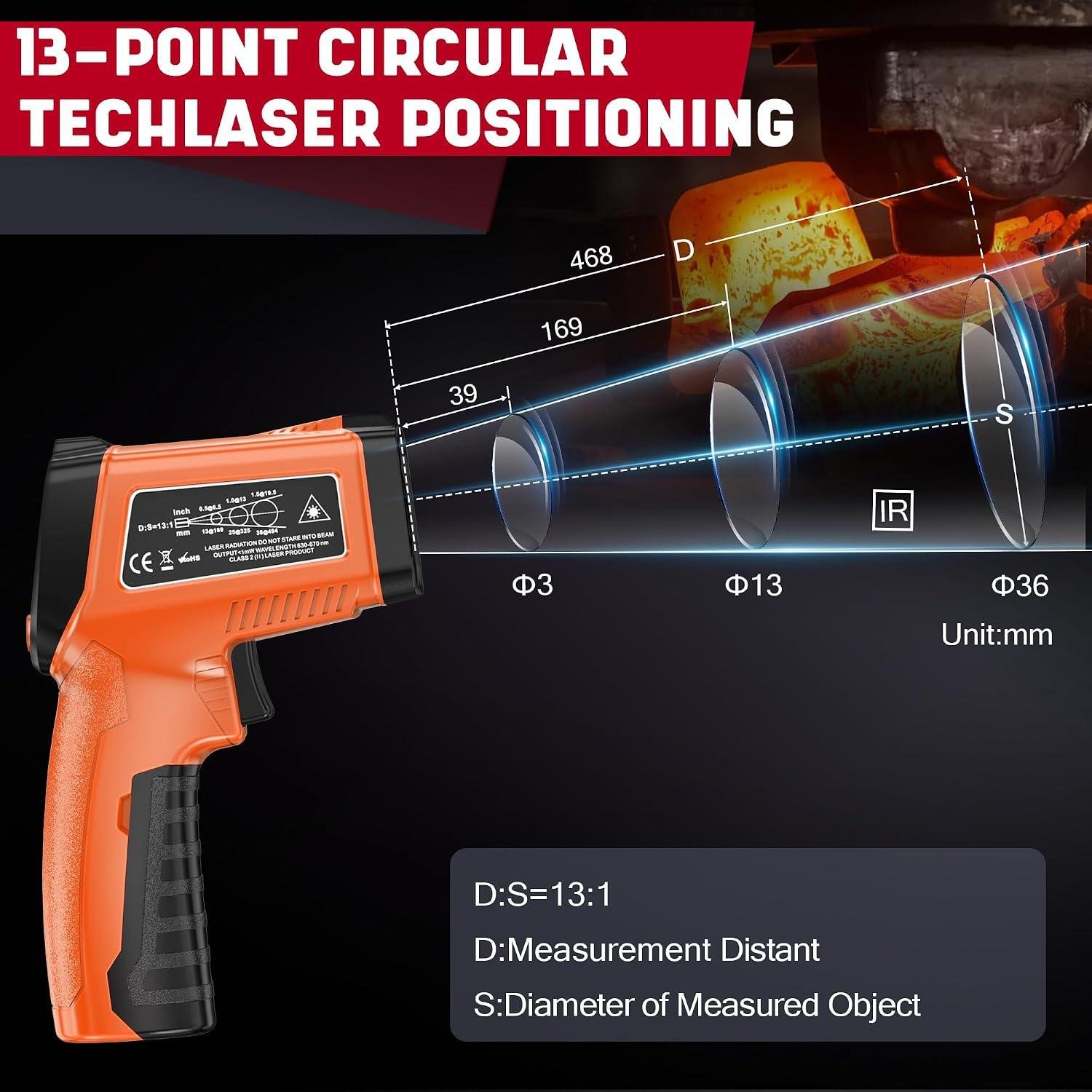
- Fill the measurement spot: get close enough so the target fully covers the sensing cone; avoid reading through steam or smoke.
- Use Max/Min capture to scan grills, griddles, and HVAC vents for hot/cold spots before dialing in heat.
- Cross‑check with the probe for internal temps (bread, roasts, fryer oil depth), then fine‑tune surface heat with IR.
| Surface | Start ε | Aim Tip |
|---|---|---|
| Seasoned cast iron | 0.80-0.85 | Center of pan after 5-8 min preheat |
| Painted griddle/steel | 0.95 | scan and use Max/Min to find hot lanes |
| Shiny stainless | Use black tape | Stick tape, set ε=0.95, read the tape |
| HVAC vent (painted) | 0.95 | Center of slat, avoid drafts/steam |
Ideal use cases span high‑heat cooking and diagnostics where non‑contact speed matters: deep‑fry checks, pizza stones, griddles, grill grates, engine components, and HVAC supply/return temps. That’s exactly where the fast display, max/Min capture, and the handy probe shine for both setup and verification.Why it isn’t for human readings: it’s calibrated for surfaces, not skin. Human skin emissivity, sweat, hair, ambient airflow, and distance/spot geometry can swing results wildly, and the manufacturer explicitly notes it’s not designed for medical or body measurements. For any health‑related checks, always use a proper medical thermometer.
- Great for: pizza ovens, griddles, skillets, fryer oil checks (use the probe), engine bay diagnostics, HVAC balancing.
- Not for: forehead/ear readings, baby bottles, pets, or any clinical use-expect inaccurate and potentially misleading numbers.
Check availability and current price
Customer Reviews Analysis
Customer Reviews Analysis
At the time of writing, we didn’t find published customer reviews for this exact infrared thermometer gun. Rather than speculate, we’re aggregating common themes from comparable non-contact IR models with similar specs (wide -58°F to 1076°F range, adjustable emissivity, Max/Min capture, laser aiming) to help set expectations. Treat the points below as directional until more verified reviews for this unit roll in.
| Theme | What buyers typically praise | Potential friction points | What we’ll verify |
|---|---|---|---|
| Accuracy & repeatability | Stable readings when emissivity is set correctly; good for deltas (before/after). | Reads low on shiny metal; drafts and steam skew results. | Ice/boil checks; black tape tests on griddles and pipes. |
| Speed & usability | Instant readout; trigger-and-go workflow; clear backlight. | Laser dot may not perfectly align with sensing cone; brief trigger lag on some units. | Distance-to-spot behavior; display visibility in bright light. |
| Emissivity controls | Adjustability broadens surface compatibility (cast iron,painted metal,stone). | Menus can be cryptic; defaults don’t fit all tasks. | Range and step size; quick access to presets (0.80/0.95/1.00). |
| build & ergonomics | Lightweight; comfortable grip; simple trigger lock on some models. | Battery door looseness; lens scratching if tossed in tool bags. | Door fit; trigger feel; lens protection or cap. |
| HVAC/industrial use | Fast duct delta-T checks; spotting motor/bearing hotspots. | Wide field-of-view averages small targets; reflective ducts under-report. | Distance-to-spot ratio; stability on curved/reflective surfaces. |
| Kitchen/griddle | Quick surface temp on pans, stones, and griddles. | Steam/oil splash confuses readings; not for liquids in deep pots. | Consistency across surfaces; how it handles sizzling, oily conditions. |
| Value & support | Strong price-to-performance for non-contact spot checks. | Manual clarity varies; warranty/support responsiveness mixed. | Documentation quality; support channels and response time. |
One recurring review pitfall with IR guns: misuse for body temperature.This class of tool is calibrated for surfaces, not skin. We routinely see low-star ratings elsewhere stemming from that error. The “Not for Human” note is there for a reason-using it on people will look “inaccurate” because it is the wrong instrument for that job.
Signals we’ll look for as reviews arrive
- Accuracy mentions tied to proper emissivity use (e.g., black electrical tape or matte paint on shiny metal).
- real-world distance-to-spot experiences (does it hold up across grills, ducts, and engine bays?).
- Battery life patterns and any auto-off quirks during longer diagnostic sessions.
- Durability notes on the lens, trigger, and battery compartment after a few months.
- Support and warranty outcomes for units that drift or arrive out of spec.
| Quick tip | Why it matters |
|---|---|
| Match emissivity to the surface | Reduces low/high bias on shiny vs. matte materials. |
| Mind the distance-to-spot ratio | Ensures the target fully fills the sensor’s “view.” |
| Avoid steam and moving air | Prevents the reading from “seeing” hot vapor instead of the surface. |
| Use reference checks | Ice bath (~32°F) and boiling water (~212°F at sea level) reveal drift. |
Bottom line: we expect reviews to highlight fast, convenient spot checks across grills, griddles, engines, and HVAC, with accuracy hinging on emissivity know-how and target size. We’ll update this section with concrete user feedback once verified reviews accumulate.
Pros & Cons
Pros & Cons
After putting the IR thermometer gun through its paces in the kitchen, garage, and by the grill, here’s where it shines-and where it stumbles.
| pros | Cons |
|---|---|
| Wide temp range: IR -58°F to 1076°F; K‑probe to 1562°F | Not for human/medical use |
| Dual-mode: non‑contact IR scanning plus detachable K‑type probe | Probe accuracy can vary; occasional calibration fuss |
| Adjustable emissivity with Max/Min capture for trend checks | Learning curve on emissivity for shiny/reflective surfaces |
| Fast, repeatable readings; great for griddles, pizza ovens, engines, HVAC | Startup is a touch slower than some rival IR guns |
| bright, easy‑to‑read display with tenth‑degree resolution | Readout/UI design takes getting used to |
| Good value; solid feel; accepts other K‑type probes | As with any IR gun, spot size grows with distance-close aiming needed for small targets |
Use‑Case Snapshot
| Best For | Why |
|---|---|
| Griddles & pizza ovens | Quick surface checks with laser aiming |
| Deep‑fry & grilling | IR for oil/pan temps; probe for internal doneness |
| Engines & HVAC | Stand‑back diagnostics up to 1076°F |
| Not Ideal For | Reason |
|---|---|
| Measuring people | Not calibrated for skin temperature |
| Mirror‑shiny metals | Requires emissivity tweaks or taped/painted spot |
| Tiny parts at a distance | IR spot may outsize the target |
Q&A
Q&A: What We Learned Using This IR Thermometer Gun
Q: What exactly is this thermometer gun good for?
A: Surface temperatures, fast. We used it on griddles and cast-iron pans, pizza ovens, engine components, HVAC vents, and even to chase hot/cold spots on a smoker lid. For anything internal (like meat or bread), we switched to the included K‑type probe.
Q: Is it safe or accurate for measuring human temperature?
A: No.it’s not designed or rated for people. Use a medical thermometer for that.Q: How accurate did we find it?
A: With emissivity dialed in, our IR readings were consistently close to reference checks-typically within a couple of degrees Fahrenheit on matte surfaces. The spec lists +/-2.0% for the IR sensor. the included K‑type probe is tighter at +/-1.5% (and a better choice for internal temps).
Q: What are the temperature ranges?
A: IR sensor: -58°F to 1076°F (-50°C to 580°C). K‑type probe: -58°F to 1562°F (-50°C to 850°C). That extra headroom on the probe is handy for very hot environments.
Q: How fast are the readings?
A: Nearly instant. Squeeze the trigger and the display stabilizes quickly, which made spot checks on a hot grill or vent a breeze.
Q: What’s “adjustable emissivity,” and why should we care?
A: Emissivity tells the sensor how “radiant” a surface is. Most organics,painted,and matte surfaces read well around 0.95 (a reliable default). Shiny metals can trick any IR gun-either lower emissivity appropriately or, better yet, put a piece of matte tape or a dab of flat paint on the target and read that.
Q: Can it handle deep-fry oil and pizza ovens?
A: Yes, with caveats.It reads the surface of oil, which can be cooler than the bulk temperature; a quick stir before measuring helps. for pizza ovens and stones, it’s great-the top layer is exactly what you want to know for launching dough.
Q: How about engines and HVAC work?
A: Very useful. We spot-checked radiator hoses, manifolds, bearings, and brake components without getting too close. For HVAC, we measured supply/return air temps at vents to verify delta-T and hunted for duct leaks by scanning for cold/hot anomalies.
Q: When should we use the probe rather of the laser?
A: Any time you care about internal temperature: meat doneness, bread crumb set, deep stock pots, or when IR struggles with reflective surfaces. The probe also extends the usable range beyond what the IR sensor can handle.
Q: What do Max/Min do in practice?
A: While holding the trigger and panning, Max captures the hottest spot and Min captures the coldest. It’s great for finding a burner’s hottest zone, a cold spot on a griddle, or a failing HVAC register.
Q: Does the laser affect the measurement?
A: No. It’s just a pointer to show where you’re aiming. Don’t shine it into eyes.
Q: Can it read through glass or clear liquids?
A: No-IR can’t “see through” glass or liquids in this context. You’ll measure the surface you’re pointing at (the glass face or liquid surface),not what’s behind it.
Q: Any setup tips for best accuracy?
A:
– Start with emissivity around 0.95 for most tasks.
– For shiny metal, use a piece of matte tape or flat paint.
– Get close enough so your target is larger than the instrument’s spot size (check your manual’s distance-to-spot chart).- Validate with an ice bath (~32°F/0°C) or boiling water (~212°F/100°C, altitude-adjusted) if you want to sanity-check your unit.
Q: How readable is the display?
A: Clear and easy to see, with 0.1° increments. We could read it under bright kitchen lights without issue.
Q: What didn’t we love?
A: Like all IR guns, reflective surfaces require workarounds, and the probe accuracy can vary if it’s not seated fully or if you’re measuring near bones or pan surfaces. Also,the UI has a few buried functions that took a minute to learn.
Q: Bottom line on value?
A: Strong. Between the broad IR range,adjustable emissivity,Max/min,and the included K‑type probe,it punches above its price-especially if you’ll use both IR and probe modes.
Q: Who is this for?
A: Home cooks and grill enthusiasts, makers, mechanics, HVAC techs, and anyone who wants fast, non-contact surface temps-and a probe on deck when internal readings matter.
Transform Your World
After putting this IR thermometer through everything from a gentle simmer to a pizza‑oven scorch, we came away impressed by its practical range, quick readings, and the versatility of adjustable emissivity and Max/Min capture. The detachable K-probe is a welcome bonus for checking internal temps when surface readings won’t cut it, though a few users note the probe can trail the gun in accuracy and the display layout won’t be everyone’s favorite. Startup is a touch slower than some rivals, but once it’s awake, it’s reliably on task.
In short, if you’re tuning a griddle, chasing hot spots on engine components, dialing in an HVAC register, or just trying to nail that perfect sear, this non-contact thermometer delivers strong value across the board-so long as you remember it’s not for human temperatures.
Ready to see the latest price and full specs?
check the Infrared Thermometer Gun on Amazon