
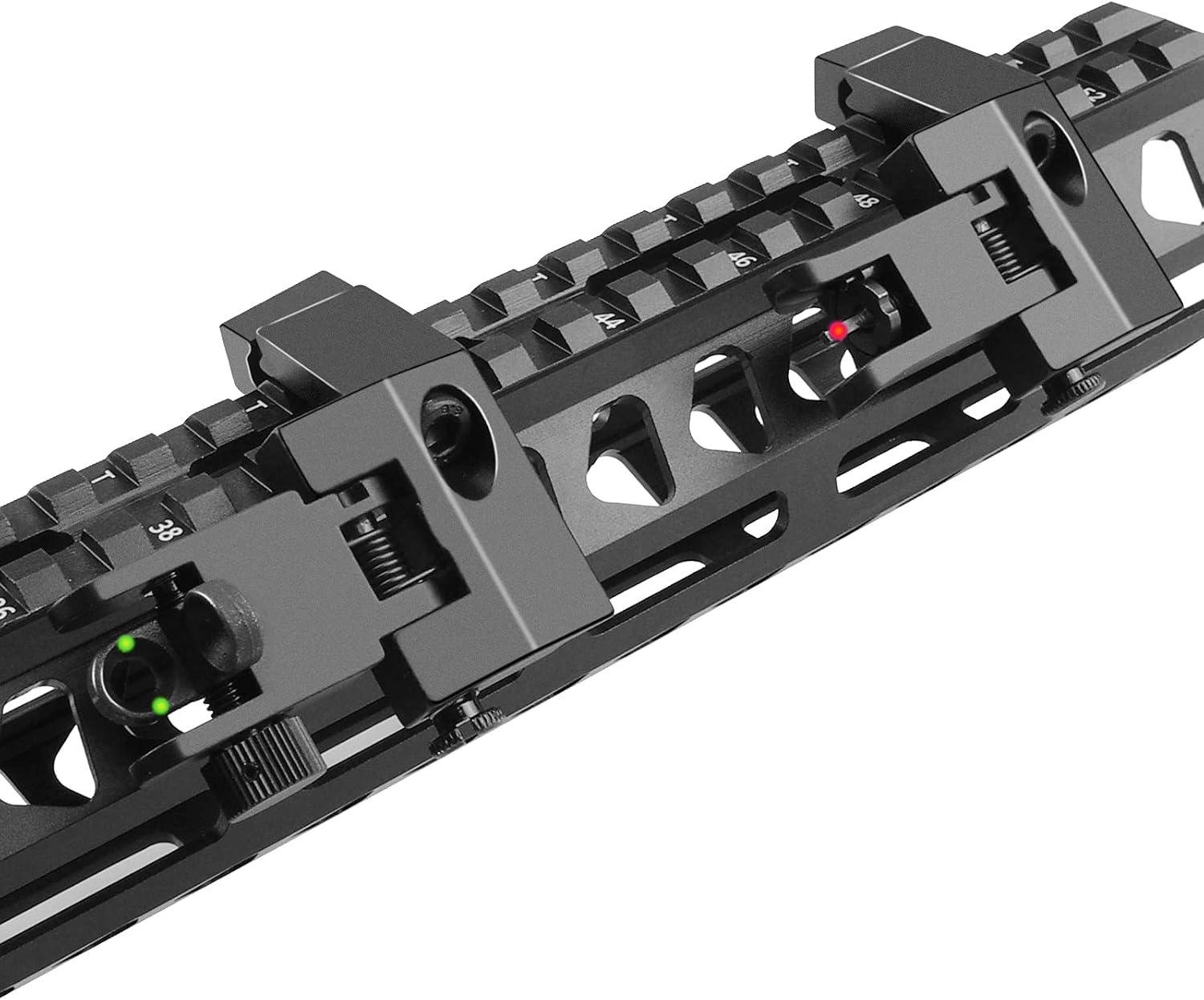
If your primary optic ever decides to take a coffee break mid-string, 45-degree backups are the insurance policy you’re glad you paid for. That’s what drew us to MAGORUI’s Fiber Optics Iron Sights-low-profile, all-metal, canted at 45 degrees, with two apertures and bright red/green fiber dots meant to pop when the light starts to fade.On paper, they promise a lot for a budget set; in hand, they feel denser and more refined than we expected at this price.
We installed the sights on a flat-top AR with a 1-6x LPVO and a PEQ-style device to see if the low profile would truly stay out of the way. Mounting took just a few minutes with the included Allen wrenchand clearance around our primary glass was better than we anticipated. First impressions at the bench were encouraging: the fibers are easy to pick up in daylight and especially at duskand the dual-aperture rear gives a familiar sight picture.
Of course, backup sights live or die by three things: how solidly they lock up, how repeatable they are after flippingand whether they can hold zero under recoil. We were also curious about the small stuff-fit on different picatinny and Weaver rails, fine adjustment with the included tooland whether the all-metal build translates to real durability rather than just heft. in the sections that follow, we’ll walk through our setup, zeroing process, range notes in bright and low light, and where these sights impressed us-and where they didn’t. If you’re shopping the budget bracket for offset irons, our goal is to help you decide if these are the right kind of insurance for your rifle.
our First Look at These Low profile 45 degree Fiber Optic Backup Sights
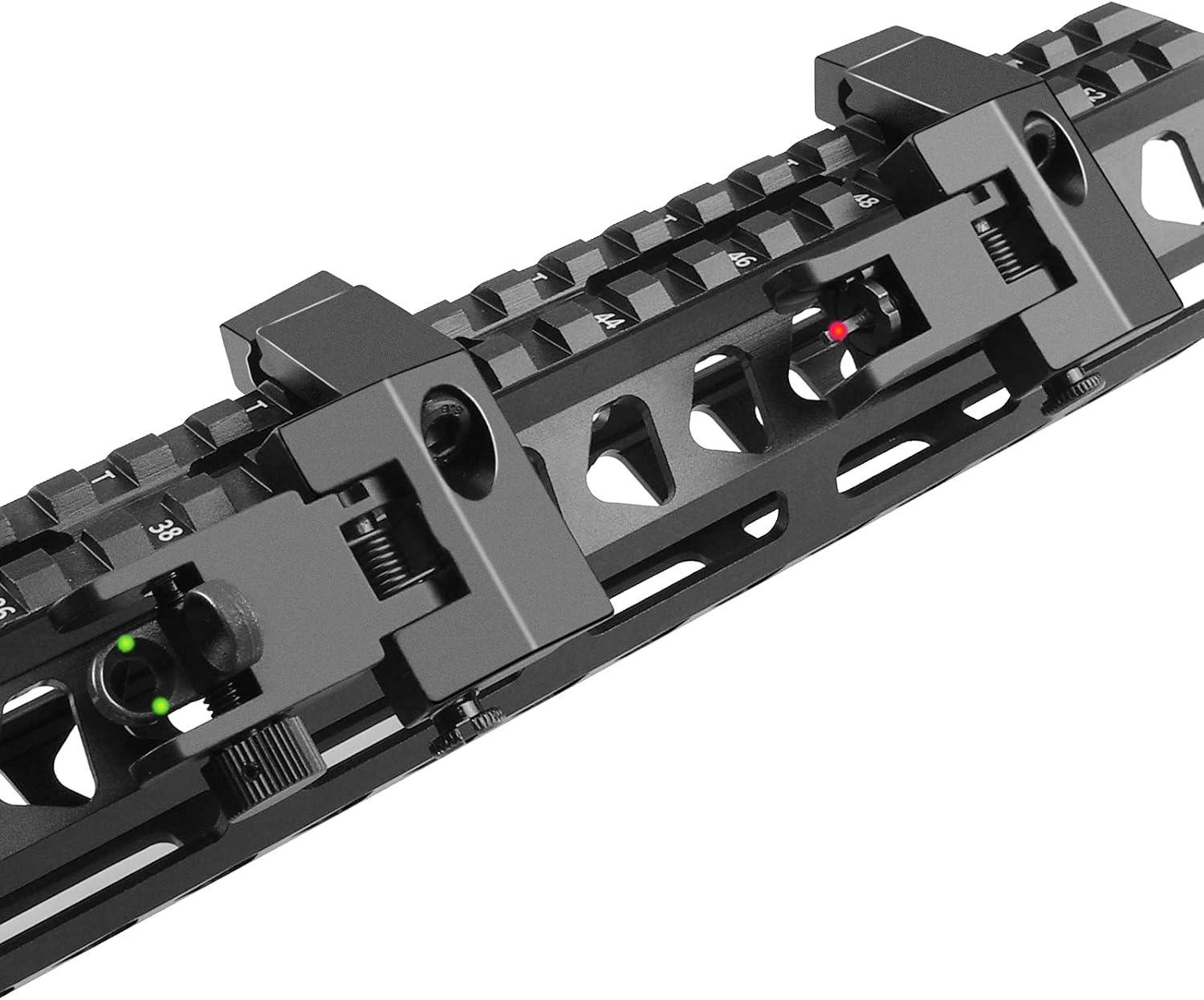
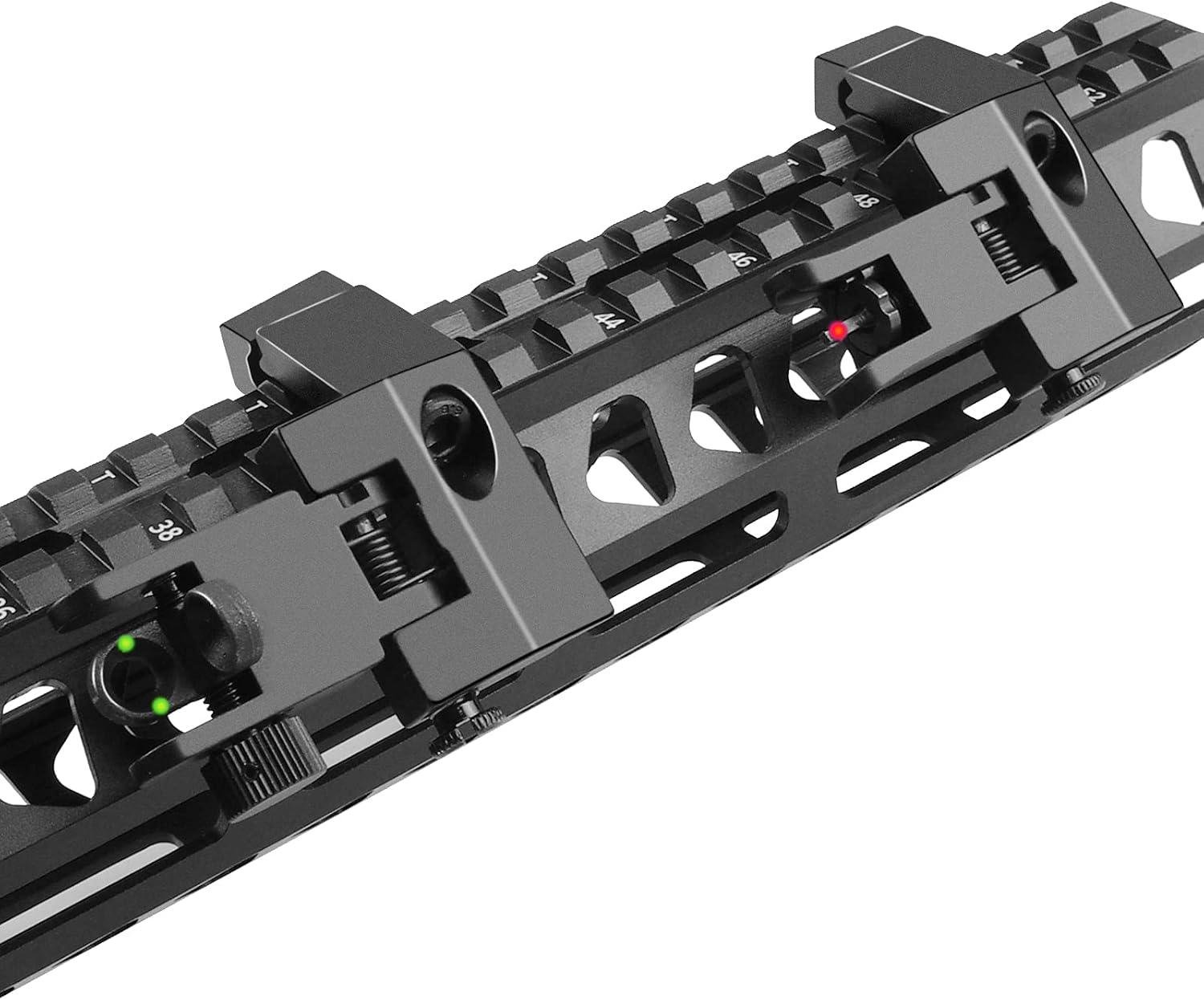
Right away, the low-slung 45° cant and bright fiber rods stand out-those green/red dots draw the eye fast in dim conditions, while the all‑metal, non‑reflective finish feels purpose-built. Mounting is straightforward with the included Allen wrenchand the offset height-about 2 inches above the rail-keeps them clear of LPVOs, lasers, and illuminators.The two-aperture rear promises adaptability from close-in speed to more deliberate shots, and the front sight adjustment tool is a welcome add. On compatibility, we had no trouble aligning with Picatinny and Weaver rails, though we’re mindful that some buyers report tight or stubborn fits on certain handguards.
| Profile & Angle | Low, 45°; clears primary optics |
| Aiming Reference | Bright red/green fiber rods |
| Build | Steel, anti-corrosion finish |
| Install | Allen wrench included |
| Adjustment | dual aperture; front tool |
| Support | 30‑day warranty |
- What clicks for us: snappy sight picture in low light, easy setupand strong value for a true backup role; several users even found them pre‑set close to 50 yards and holding zero on heavier calibers.
- What gives us pause: reports of retention not fully locking, a rear semicircle cutout that can block the tool during adjustment, and durability concerns (a few units arriving broken or loosening under recoil).
- Best fit: budget‑minded shooters seeking offset BUIS that stay out of the optic’s view yet remain ready for quick transitions.
early impressions point to a practical, budget‑friendly offset pair that excels as backup sights, with bright fibers and simple installation carrying the day-tempered by mixed notes on retention, accuracy fine‑tuningand long‑term toughness. The inclusion of an adjustment tool and a 30‑day warranty helps the case, but we’d reserve these for casual range days or as a just‑in‑case option alongside a primary optic. Check price and see more buyer reviews
Features We Noticed All Metal Build Dual Apertures and red Green Fiber Dots
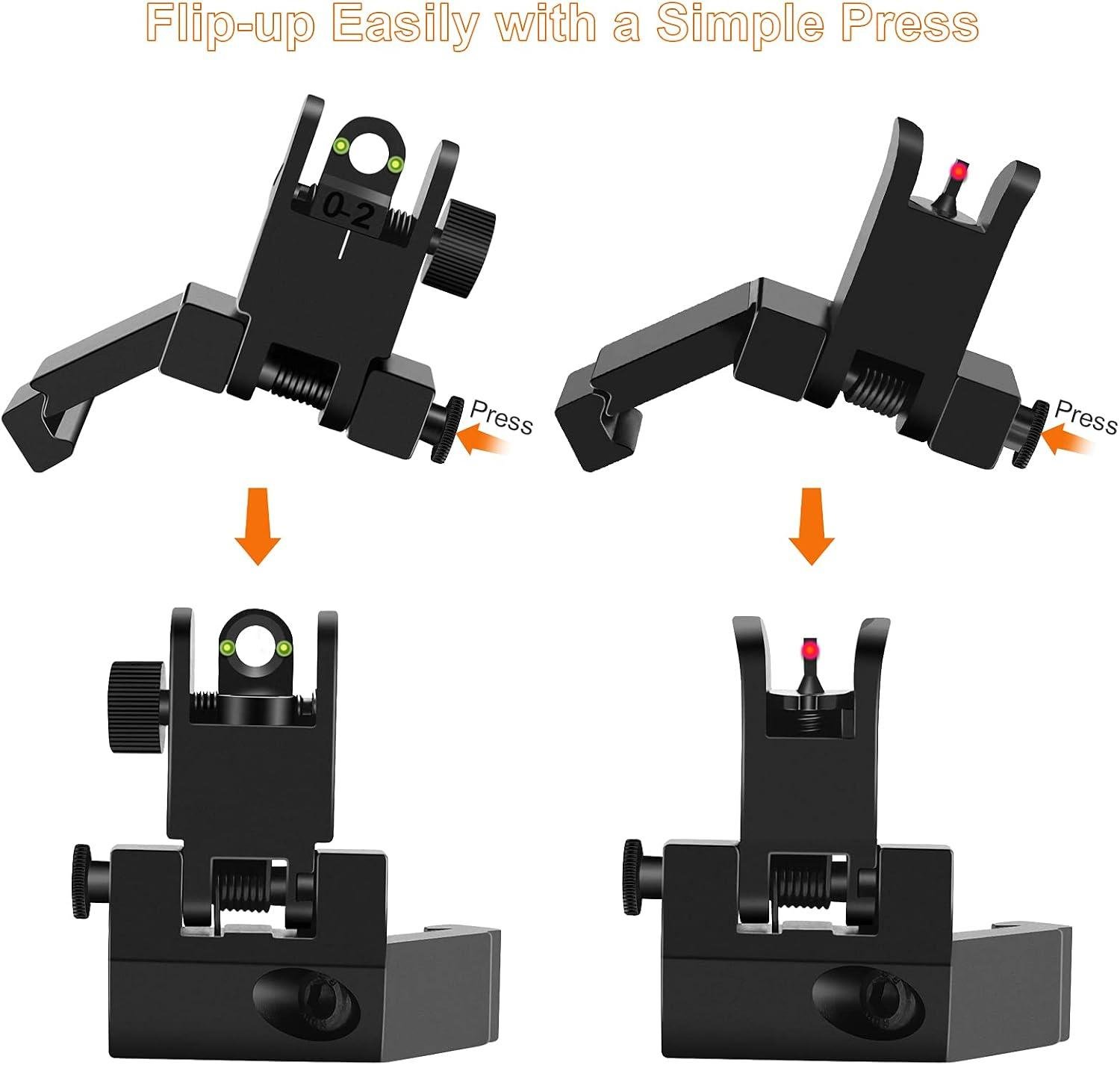
All-metal construction is the first thing we noticed-high-quality steel with a non-reflective finish that feels purpose-built and resists corrosion, rustand fading.The low-profile 45° offset keeps these out of the optic’s sightline, rising only about 2 inches above the top railand we had clean clearance alongside lasers/IR units. The dual apertures swap quickly for speed or precision,and installation is straightforward with the included Allen key. Several buyers also call out the included front sight adjustment tool, which makes dialing in elevation a breeze.
| Build | All-metal,non-reflective steel |
| Offset | 45° low profile |
| Apertures | Two (speed/precision) |
| Fiber Colors | Red (front) / Green (rear) |
| Height Above Rail | ~2 inches |
| Rails | Picatinny & Weaver |
| Warranty | 30 days |
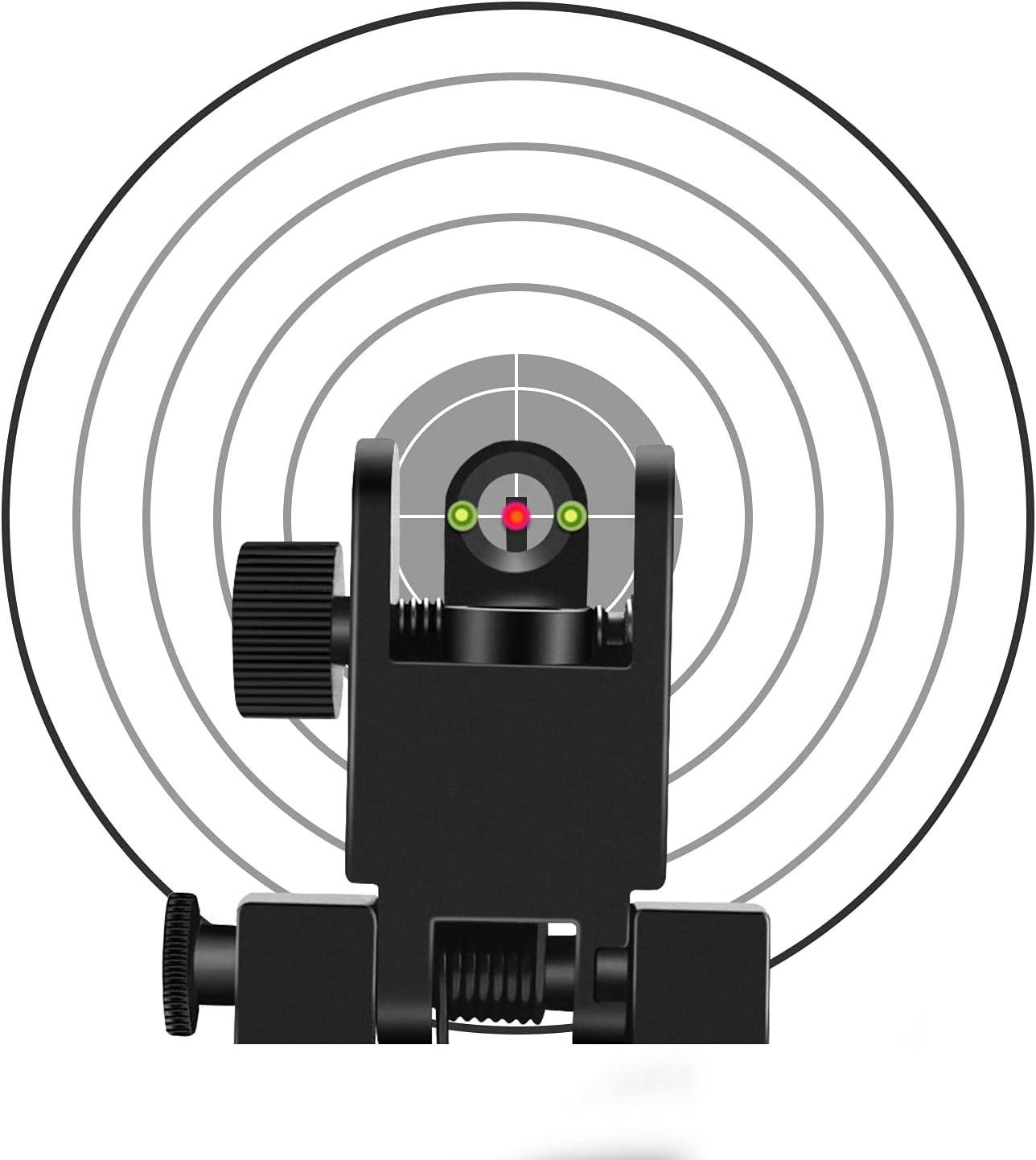
The red/green fiber dots pop in daylight and stay visible in dim conditions,helping us pick up a quick sight picture without hunting for the post-echoing customer notes that they “really pick up available light.” Value and fit get frequent praiseand we’ve seen reports of units arriving close to zero.That said, feedback on retention and durability is mixed: some users mention locking issues (especially around the rear semicircular cutout) and occasional breakage out of the box, while others report solid zero-holding past a few hundred rounds.
- What worked for us: sturdy steel build, fast 45° transitions, clear fiber dots, simple install
- Nice touches: front sight adjustment tool, positive fit on most rails
- Keep in mind: occasional lock-up quirks and durability variance reported by buyers
See today’s price and availability
In Use Our Insights on Mounting Visibility Zero Retention and Offset Ergonomics
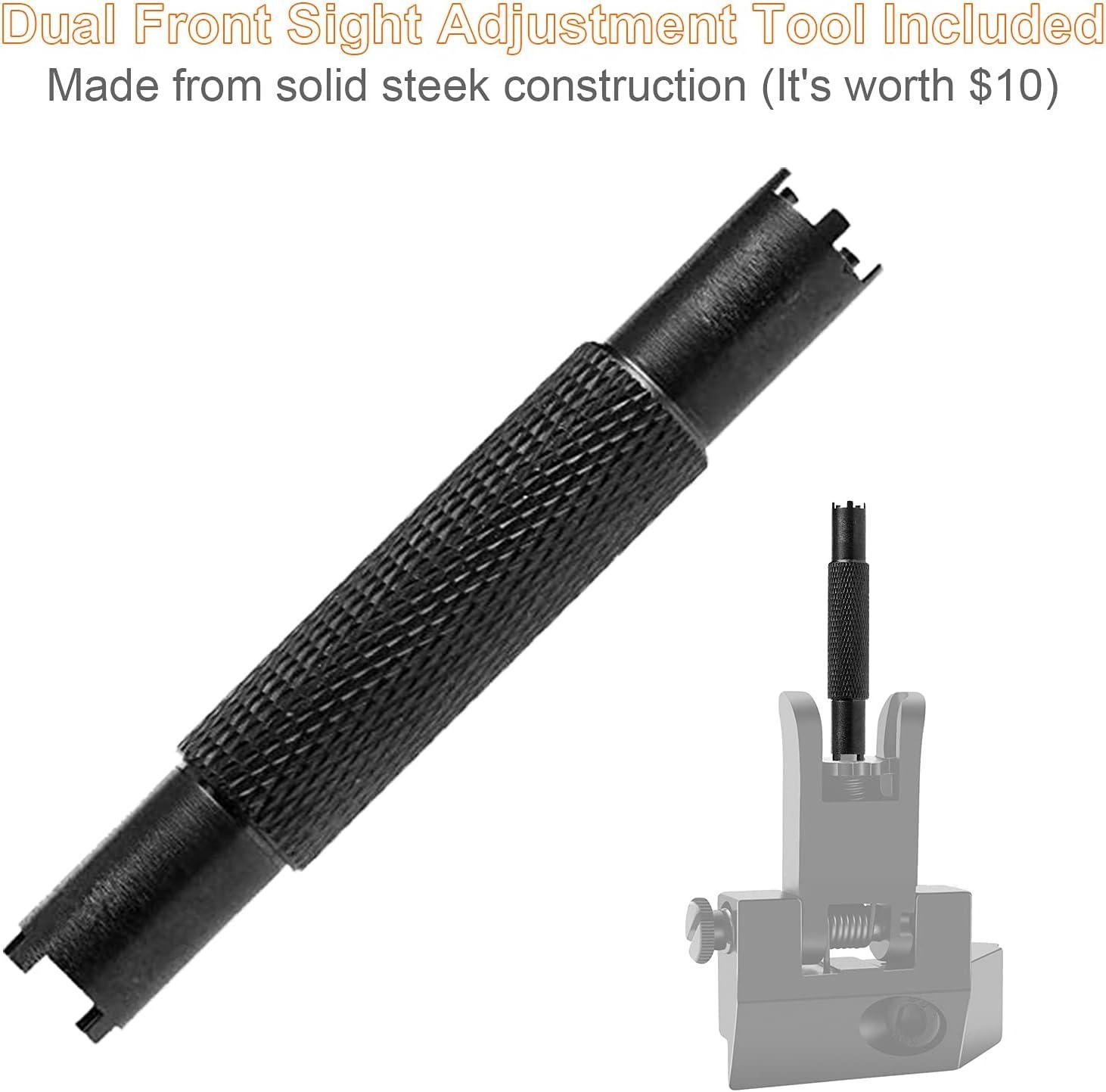
Mounting was refreshingly straightforward with the included Allen wrench; on spec Picatinny and weaver rails, the clamp bit positively and rode roughly 2 inches above the top rail, leaving our primary optic and laser uncluttered. The supplied front sight tool speeds elevation tweaks,though we did encounter the commonly reported quirk: the rear aperture’s semicircular cutout can limit tool clearance.Some units ship stiff; a light clean-and-lube eased the flip action. Fit reports vary-most users get a snug install, but a handful cite rails that wouldn’t accept the base, hinting at tolerance spread. For visibility, the red/green fiber rods draw the eye in dim bays and overcast light; under high noon, they behave like standard posts without distracting flare.
- Easy install with the included wrench; no special skills needed
- Wide compatibility with Picatinny/Weaver; watch out for out-of-spec rails
- Fiber optics pop in low light; neutral in bright sun
- Low profile keeps clear of LPVOs, prismsand IR devices
On zero retention and offset ergonomics, the 45-degree cant made transitions swift-just a wrist roll-and our cheek weld remained consistent. User feedback is split: some report a steady zero through 300-500 rounds (including .308),while others flag detent/retention that doesn’t fully lock,allowing the front to creep open under recoil or refuse to stay folded. Our sample locked adequately, but spring tension feels lighter than duty-grade.The steel build presents as non-reflective and corrosion-resistant; still, durability notes are mixed, with a few breakages on arrival and one rear failure under 100 rounds. As a budget backup, accuracy is serviceable; just know the tight rear cutout can make elevation adjustments fussy. For range and training rigs,the value lands well-if you’re going hard-use,verify lockup before relying on it.
| Aspect | What we liked | What to check |
|---|---|---|
| Mounting | Tool-included, quick clamp | rail tolerances; initial stiffness |
| Visibility | Bright fibers in low light | Standard post feel in harsh sun |
| Zero/retention | Holds on many setups | Mixed detent lock feedback |
| Offset Ergonomics | Fast 45° transitions | Tool clearance at rear aperture |
| Durability | All-metal, non-reflective | Isolated breakages reported |
See live pricing and recent buyer feedback
Our Recommendations on Compatibility Training Scenarios and Overall Value
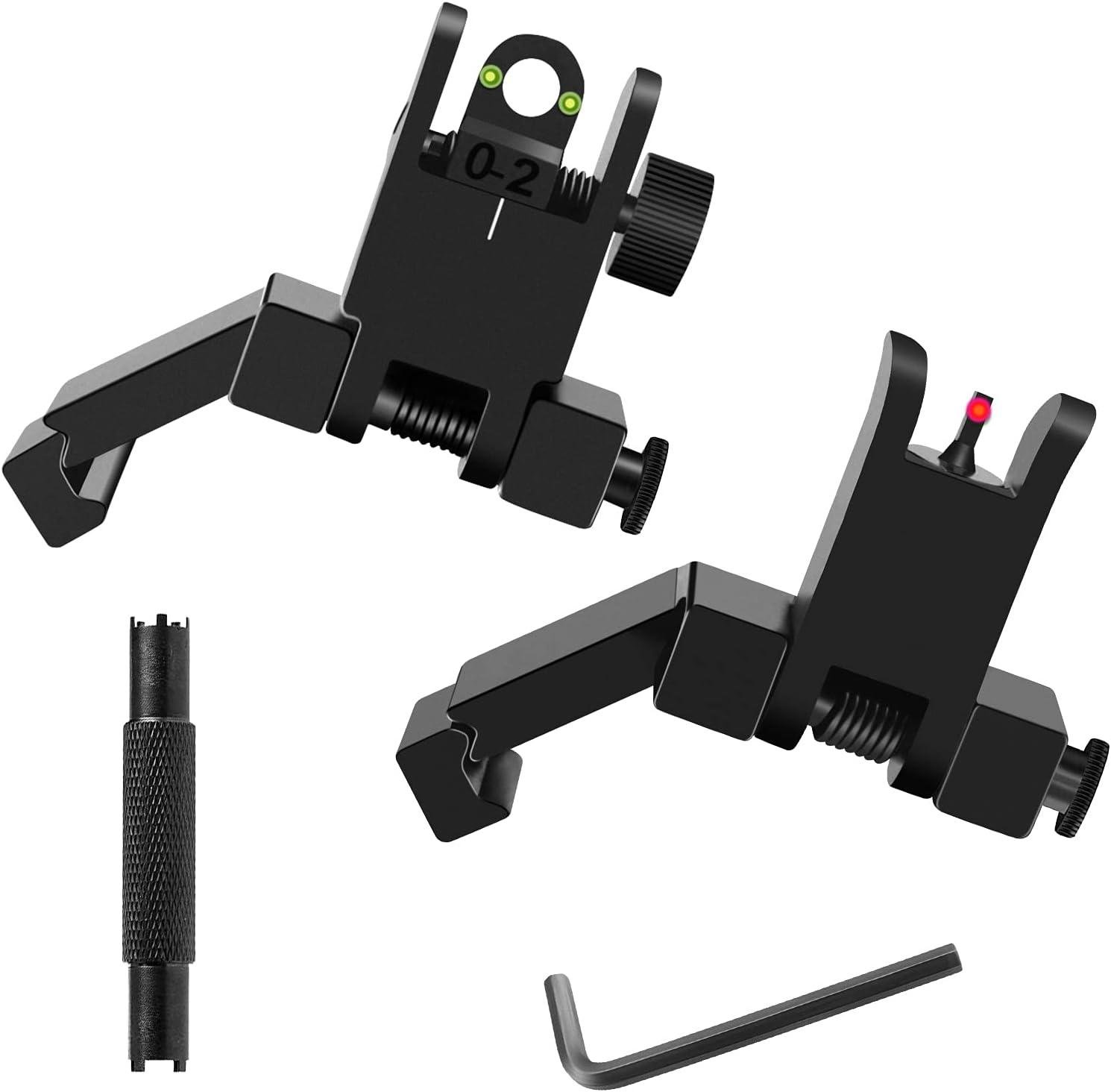
Compatibility feels broad and forgiving here: the low-profile, 45° canted design mounts cleanly to most Picatinny and Weaver rails with the included Allen wrench, sitting roughly 2 inches above the top rail so it stays clear of lpvos, red dotsand typical IR/laser accessories.The steel, non-reflective build and fiber-optic red/green dots help in daylight and dim light, though they’re not night-sight replacements. Customer feedback highlights mixed retention (some units not fully locking), a rear aperture clearance quirkand a few out-of-box defects-so our training scenarios lean toward range practice and optic-to-iron transitions rather than hard-duty use.
- Best paired with: LPVO or red-dot primaries as a true backup
- Rails: Most picatinny/Weaver setups; check tolerances on tight/weary rails
- Lighting: Daylight to low-light; fiber optics pop, but not for full-dark shooting
- Recoil: Some users report solid zero on .308; verify retention under heavier calibers
- users: Budget builds, classesand learning 45° indexing transitions
- Not ideal for: Harsh duty cycles or frequent folding if your unit’s detents feel weak
| Setup | Compatibility | value Note |
|---|---|---|
| Picatinny + LPVO | Clears optic; sits low | Strong budget backup |
| Weaver carbine | Generally fits; may need snugging | Great if tolerances match |
| Red-dot primary | Fast 45° access | Fiber optics shine in daylight |
| Heavier recoil | Retention varies | Test and lean on 30‑day warranty |
Overall value skews favorable for the price: many users praise the positive fit, included front-sight tooland easy installation-some even found them close to zero from the start. Accuracy and durability are mixed, with reports ranging from “held for 500 rounds” to early breakage and inconsistent rear-aperture clearance. our suggestion: they’re a smart, low-cost insurance policy for training and backup roles, especially where budget matters; just perform a careful function check on the retention, confirm zeroand keep expectations measured for heavy-duty abuse.
Customer Reviews Analysis
Customer Reviews Analysis
At the time of publication, we weren’t able to locate a meaningful volume of verified customer reviews specific to these low-profile, 45° offset fiber‑optic backup sights. That means we can’t summarize real‑world owner satisfaction for this exact set yet. Instead, we aggregated common themes buyers usually report for comparable 45° offset, all‑metal, fiber‑optic BUIS with dual apertures. Consider the following as category‑level expectations rather than product‑specific verdicts.
What Buyers typically Praise (Category Trends)
- Fast transitions: Rolling to 45° can feel quicker than flipping same-plane BUIS when optics fail or fog up.
- Daylight visibility: Fiber‑optic rods (red/green) help the front post pop against bright backgrounds.
- Metal housings: All‑metal builds tend to inspire more confidence for duty bags and range abuse.
- Two-aperture rear: Swapping apertures gives flexibility from close work to more precise holds.
- Simple rails fit: Picatinny/Weaver compatibility makes installation straightforward on most AR handguards/uppers.
What Buyers Commonly Flag (Category Watch‑outs)
- Zero retention: Some offset sights can lose zero if bumped or repeatedly folded/unfolded-owners often Loctite screws and verify torque.
- Fiber fragility: Exposed fiber rods can scuff,chip,or dim if not well protected by the hood.
- Height/offset variance: Mixing brands can create alignment quirks; users watch for “cant creep” and rail height differences.
- Low‑light limits: Fiber optics help in daylight but they’re not tritium; dusk or indoor shadows can still be challenging.
- Edge snags: Some 45° profiles can catch on slings or gear if not truly low‑profile.
Category snapshot
| Topic | What to Expect | Why It Matters |
|---|---|---|
| Build Material | All‑metal is preferred | Durability and repeatable zero |
| Fiber‑Optic Colors | Red front, green rear common | Faster sight indexing in daylight |
| apertures | Two sizes on rear | Close vs. precise shooting |
| Mounting | Picatinny/Weaver clamp | Tool simplicity, secure fit |
| Profile | Low 45° offset | Clears optics; quick roll‑over |
What We’ll Watch For As Reviews Appear
- Out‑of‑box alignment and whether shims or adjustments are needed on common AR uppers.
- How well the fibers are shielded from knocks, solvents, and carbon.
- consistency of windage/elevation adjustments and any tool requirements.
- Retention of zero after several fold cycles and after being racked in a vehicle or range bag.
- True “low‑profile” street cred-does it snag on slings, chest rigs, or rack slots?
Buying Tips Until More Reviews Land
- Confirm your rail spec (true Picatinny vs. odd-height handguards) to avoid cant or height mismatches.
- Use blue threadlocker on mounting screws after test‑fitting; re‑torque after the first range session.
- Check fiber brightness outdoors at noon and in late‑day shade to gauge practical visibility.
- Cycle the fold/unfold action a dozen times to feel for play, then recheck zero.
- Verify return/exchange policies in case the offset angle interferes with your optic or laser setup.
We’ll update this section once verified owner feedback becomes available for this specific set. For now, treat the notes above as a realistic preview of what similar 45° fiber‑optic backup sights tend to deliver-and where they typically demand a closer look.
Pros & Cons
Pros & Cons
After putting these 45° offset fiber‑optic backups through their paces-and cross‑checking a wide slice of buyer feedback-here’s where they shine and where they stumble.
| Aspect | Our take | Notes |
|---|---|---|
| Quality | Good for the price | Metal construction, finish looks decent |
| Functionality | Solid as backups | 45° cant clears primary optics |
| Value | Strong budget pick | Tools included; low cost of entry |
| Fit | Mostly positive | Some rail tolerance hiccups reported |
| Retention/Lockup | Inconsistent | reports of not fully locking or popping open |
| Adjustability | Mixed | Front tool helps; rear cutout clearance can limit elevation |
| Accuracy | Variable | some arrive close to zero; others need work |
| Durability | Questionable QC | Sporadic early failures vs.some long holds |
Pros
- Bright fiber‑optic red/green dots that pop in daylight and low‑light.
- Low‑profile, true 45° offset that stays out of the way of primaries.
- All‑metal (steel) construction with a non‑reflective finish.
- Two‑aperture rear for quick vs. finer aiming.
- Easy install; includes Allen wrench and front sight adjustment tool.
- budget‑friendly; good value as backup irons.
- Compatible with most Picatinny/Weaver rails; minimal optic interference (~2″ above top rail).
- 30‑day warranty provides a basic safety net.
Cons
- Quality control inconsistencies: some units arrived broken or lost fiber rods early.
- Retention issues: several reports of incomplete lockup or flipping under recoil.
- Adjustability quirks: rear semicircular cutout can hinder elevation tool access.
- Accuracy varies; occasional off‑center front dot and limited travel noted.
- Fitment complaints on certain rails; threads can mar handguards if forced.
- Heavier and sometimes stiffer than polymer alternatives out of the box.
- Fiber optics rely on ambient light; not a night‑sight substitute.
| Best For | Not Ideal For |
|---|---|
| Budget builds needing offset backups | Duty/defense setups demanding bomb‑proof lockup |
| Range use with a primary optic (LPVO/red dot) | Heavy recoil or hard‑use environments |
| Daylight/low‑light training | True night use without ambient light |
| Users pleasant fine‑tuning fit/zero | Set‑and‑forget buyers sensitive to QC variance |
Q&A
Q: What are these sights, in plain terms?
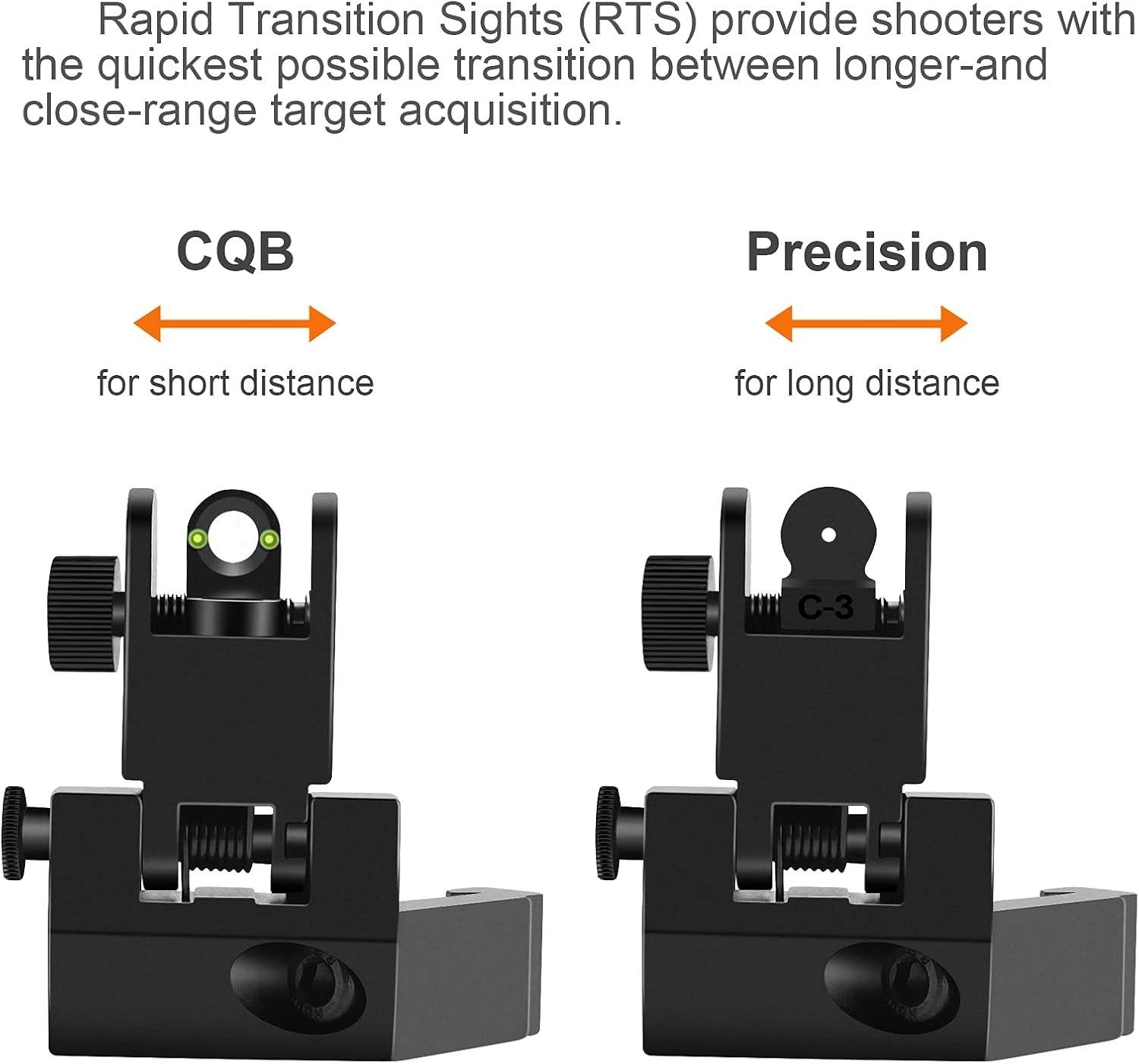
A: They’re 45-degree offset backup iron sights with fiber-optic inserts (red up front, green in back). They mount to Picatinny/Weaver rails, flip up when needed, and stay out of the way of a primary optic.
Q: Why 45-degree “canted” sights at all?
A: Offsetting lets us keep our primary optic zeroed and unobstructed. If the optic fogs, dies, or we need a different hold, we cant the rifle slightly and use the irons without removing anything.
Q: Do the fiber optics glow at night?
A: They’re not tritium. The rods gather ambient light, so they pop in daylight and dim conditions, but they don’t self-illuminate in darkness. Under true low/no light, they behave like standard irons.
Q: How’s the build quality?
A: All-metal construction feels solid for the price, but buyer reports are split: many call them good value and functional; others cite early failures (broken flip mechanisms, lose fiber rods). We’d label durability as budget-grade with some QC variance.
Q: will they fit my rail?
A: They’re designed for most Picatinny and Weaver rails. That said, a few users reported tight or poor fit on out-of-spec rails. We mount on a true MIL-STD-1913 top rail whenever possible and avoid polymer rails.
Q: Do they clear a red dot or LPVO?
A: Yes, that’s the idea. The sights extend roughly 2″ above the top rail when deployed and sit low when folded. In our setup, they didn’t interfere with a low red dot or a 1-6x LPVO. check clearance around chunky turrets and throw levers.
Q: How do we install them?
A: Use the included Allen wrench to clamp them to the rail. We snug the screws evenly, verify alignment, then add a drop of blue threadlocker. don’t over-torque-steel clamps can mar aluminum handguards.
Q: How do we adjust them?
A: Rear adjusts for windage; front adjusts for elevation using the included tool (A2-style). Some buyers mention a tight semicircular cutout on the rear making tool use fussy. A thinner tool and patient, positive clicks help.
Q: Do they lock up and down securely?
A: Mixed. Many sets positively lock; others report weak detents that either don’t lock fully or pop open under recoil. After installation,we always stress-test the flip mechanisms and detents before range time.
Q: Will they hold zero?
A: Reports vary. We’ve seen solid zero retention on typical .223/5.56 recoiland at least one buyer claims success on .308.Still,several users cite drift or mechanical issues. Treat them as backups,not precision primaries.
Q: How accurate can we expect them to be?
A: For backup irons, minute-of-target at carbine distances is realistic. Using the small rear aperture tightens groups; the large aperture is faster up close. Remember: when you cant the rifle 45°, mechanical offset changes-confirm holds at your zero distance.
Q: What zero distance do we like?
A: 36-50 yards is a practical sweet spot for many carbines. we confirm at our chosen distance, then verify at near and far points we actually shoot.
Q: Are they ambidextrous?
A: The offset favors right-handed shooters when mounted on the top rail to roll right. Southpaws can mirror the setup on the left side or choose a dedicated left-hand offset position.
Q: Any break-in or prep tips?
A: – Check every fastener, then re-check after the first range trip.
- Cycle the flip mechanisms a few dozen times; detents frequently enough smooth out.
- Inspect the fiber rods and protective housings; if a rod seems loose, consider a return rather than DIY fixes.
Q: Do they come with everything needed?
A: Yes-front and rear sights, an Allen wrenchand a front sight adjustment tool.
Q: What about warranty or returns?
A: There’s a stated 30-day warranty window. Given the mixed durability feedback, we’d test promptly so any defects show up while you can still exchange.
Q: Who are these best for?
A: budget-conscious shooters who want a lightweight, always-there backup to a primary optic and don’t mind a little tinkering.If you need duty-grade bombproof irons, spend more; if you want functional backups for range use or training, these can fit the bill.
experience Innovation
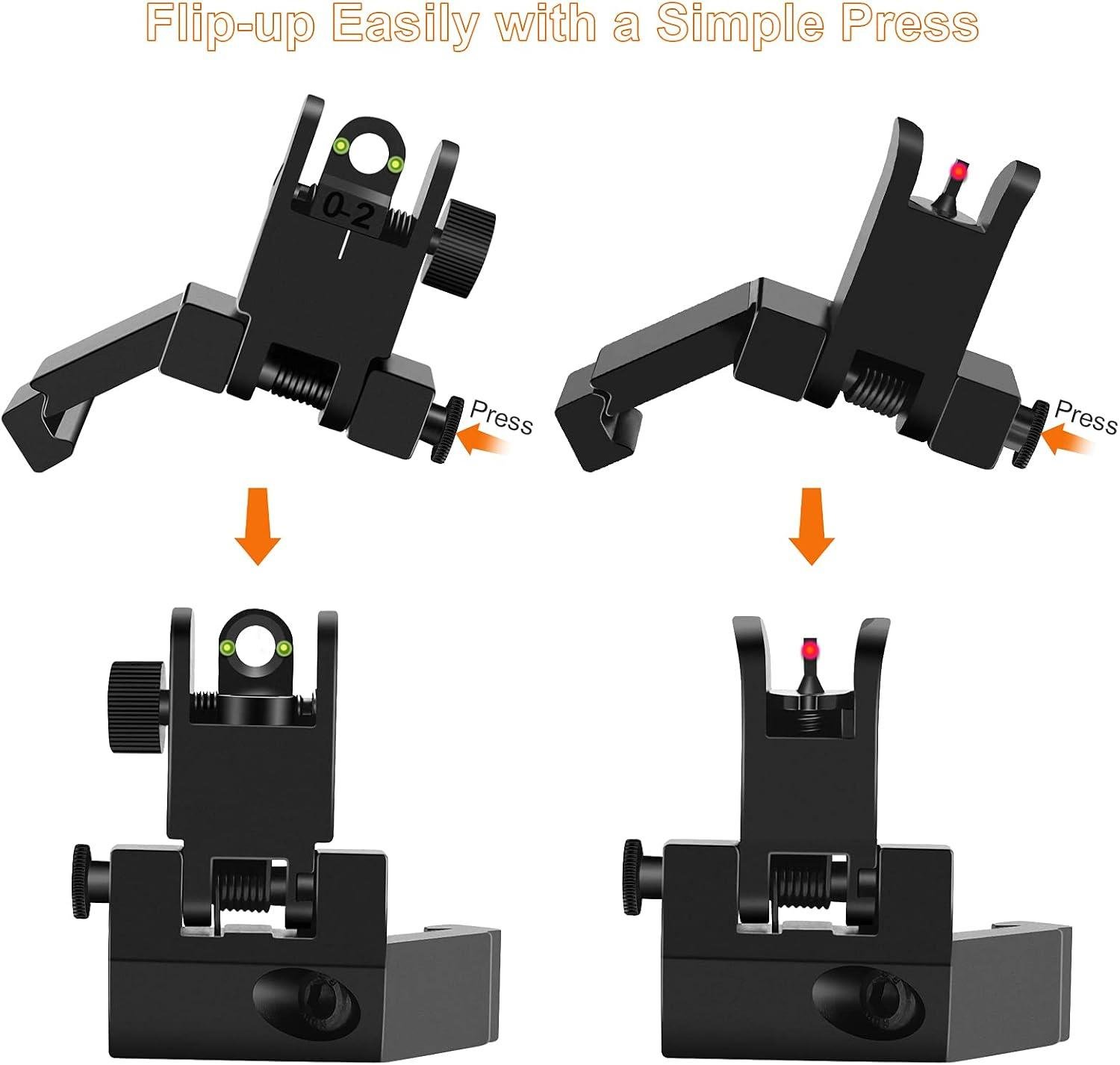
Wrapping up,these 45° offset fiber‑optic backups make a compelling budget add-on for optic-equipped rifles: fast to pick up in mixed light,easy to mount on Picatinny/Weaver rails,and low enough to clear primaries. We appreciated the included front-sight tool and the simple setup. Having mentioned that, reported variance in retention, durabilityand rear-aperture clearance means they’re best treated as true backups rather than duty-grade primaries. If you roll the dice, test lockup immediately, confirm zeroand lean on the 30‑day warranty if anything’s off.
For range days, training repsor a cost-conscious build that needs bright, quick-reference irons on the side, they fit the brief.If your priority is bombproof retention and long-term abuse tolerance, you may want to invest higher up the ladder.
Ready to check current pricing, specsand the latest user feedback?
See the product on Amazon