
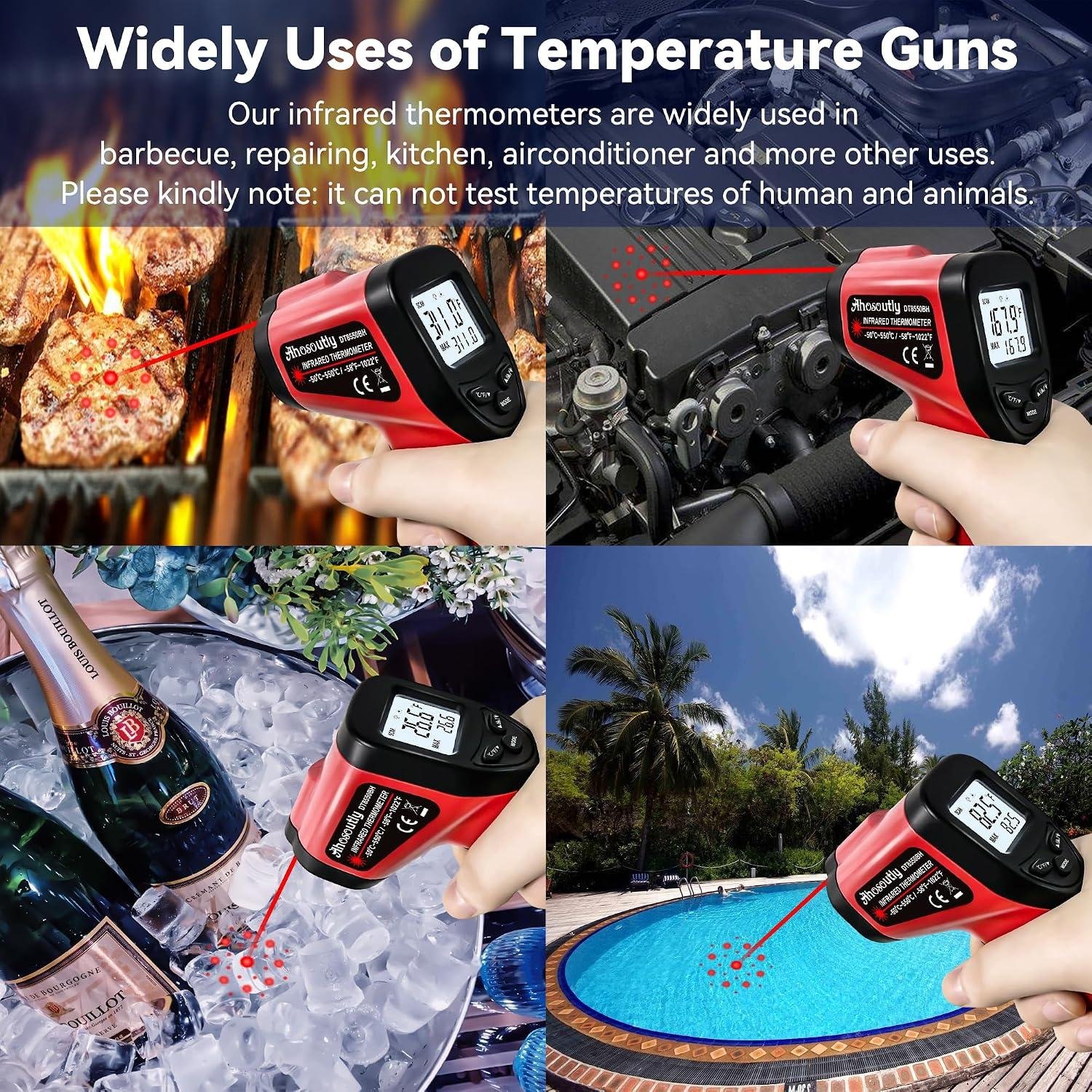
There’s a quiet thrill to taking a temperature from across the room-the tiny click, the constellation of laser points, the number snapping into place before the heat ever reaches us. That’s what drew us to the Infrared Thermometer Temperature Gun (NOT for Humans), a non-contact tool rated for -58℉ to 1022℉ (-50℃ to 550℃) with a 9-point laser, adjustable emissivityand a backlit display. It promises instant readings, a 12:1 distance-to-spot ratioand the kind of versatility that belongs in kitchens, garagesand workshops alike-while very explicitly not belonging anywhere near a forehead.
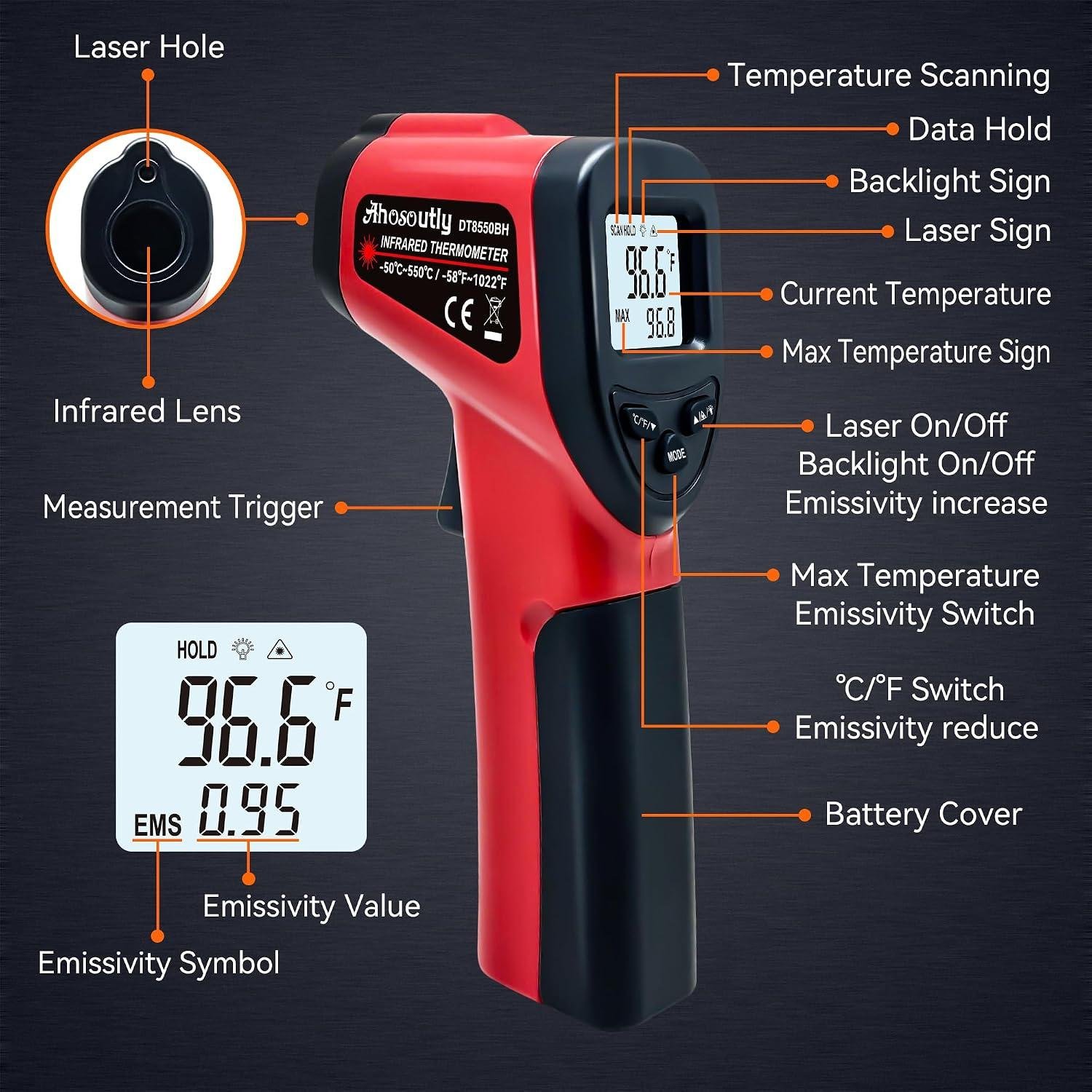
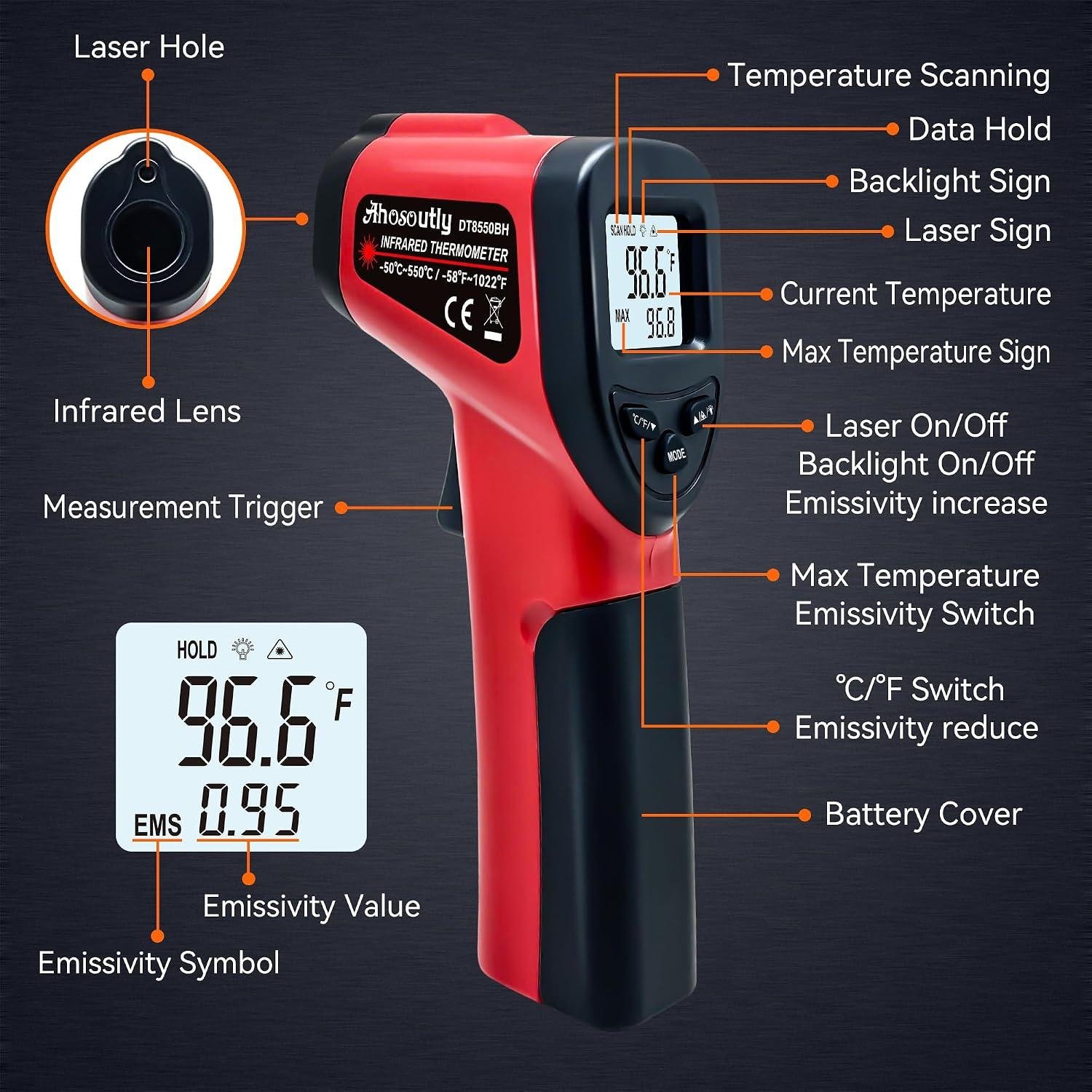
Out of the box,we were up and running in minutes.it comes with batteries, the grip feels balancedand the interface is straightforward: rapid toggle for °C/°F, simple emissivity adjustmentsand a laser pattern that makes it easier to visualize the target area. We started where most of us really use these-on a screaming-hot cast iron skillet, a pizza stone, an outdoor griddle-and then branched out to HVAC vents, a 3D printer bedand a few suspect breakers in the panel. The readouts are fast-near-instant, really-and the backlight is helpful in low light, though we’ll talk about visibility outdoors later.
What we were most curious about, though, was accuracy. We paired it against a contact probe on a few surfaces and quickly learned that emissivity matters-a lot. On matte cookware it tracked closely; on shiny metal it needed dialing in. We’ll dig into consistency, high-temp performanceand the practical limits of that 12:1 spot ratio in the full review. For now,consider this our first look at a budget-friendly IR thermometer that aims to be everyone’s do-everything heat scout-provided you keep it away from people.
our hands on overview of this non contact temperature gun
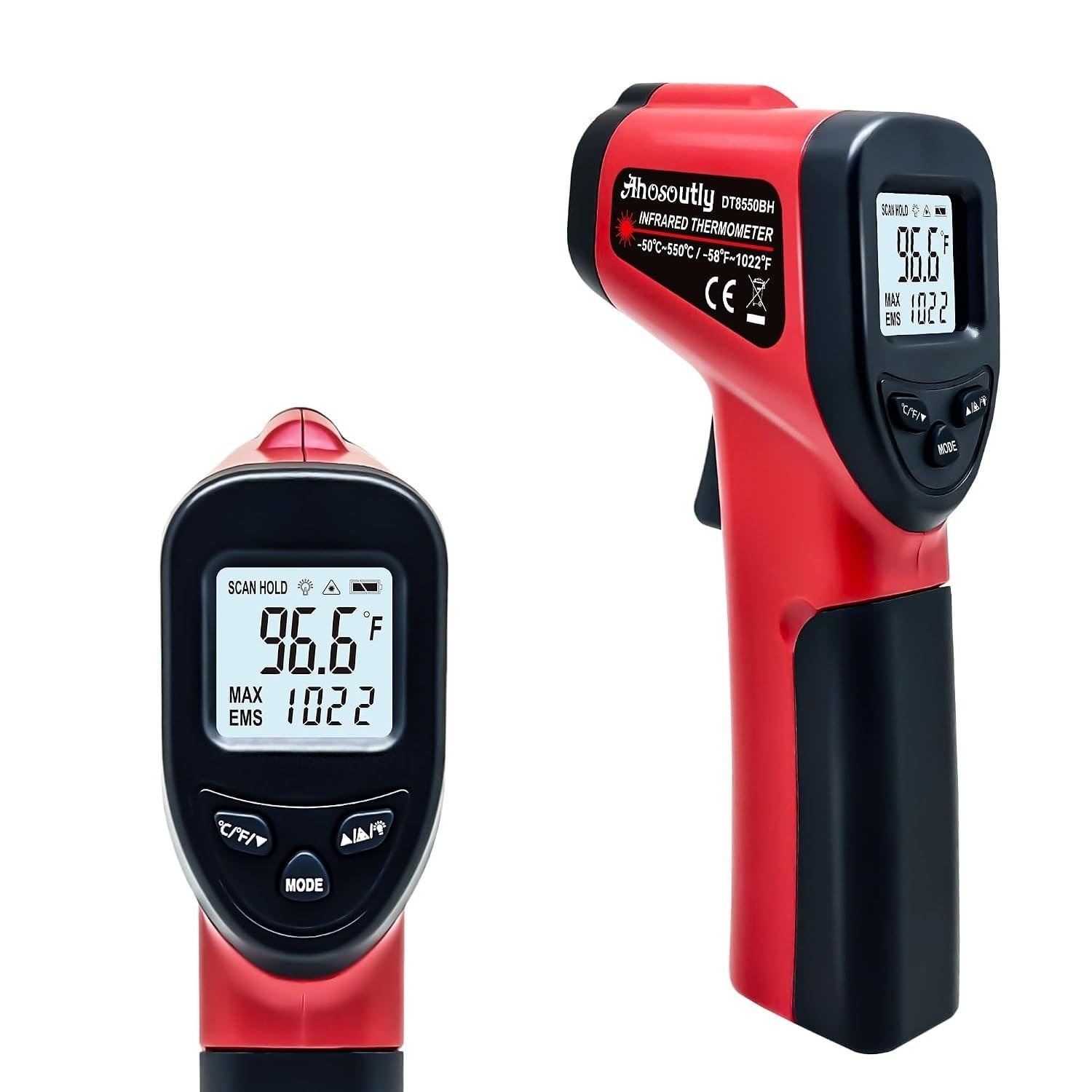
In our hands-on checks, we appreciated how the 9-point laser pattern and 12:1 distance-to-spot ratio made aiming intuitive across tasks-from sizzling griddles and smoker grates to HVAC vents and reptile tank surfaces. The trigger pull delivers an instant read (≤500 ms),and the backlit LCD stays legible in low light. Build feels solid for the price,and the non-contact design kept us safely away from hot or hard-to-reach surfaces. Swapping between ℉/℃ is quickand the max temp hold proved handy when scanning moving targets like rotating pans or duct outlets.
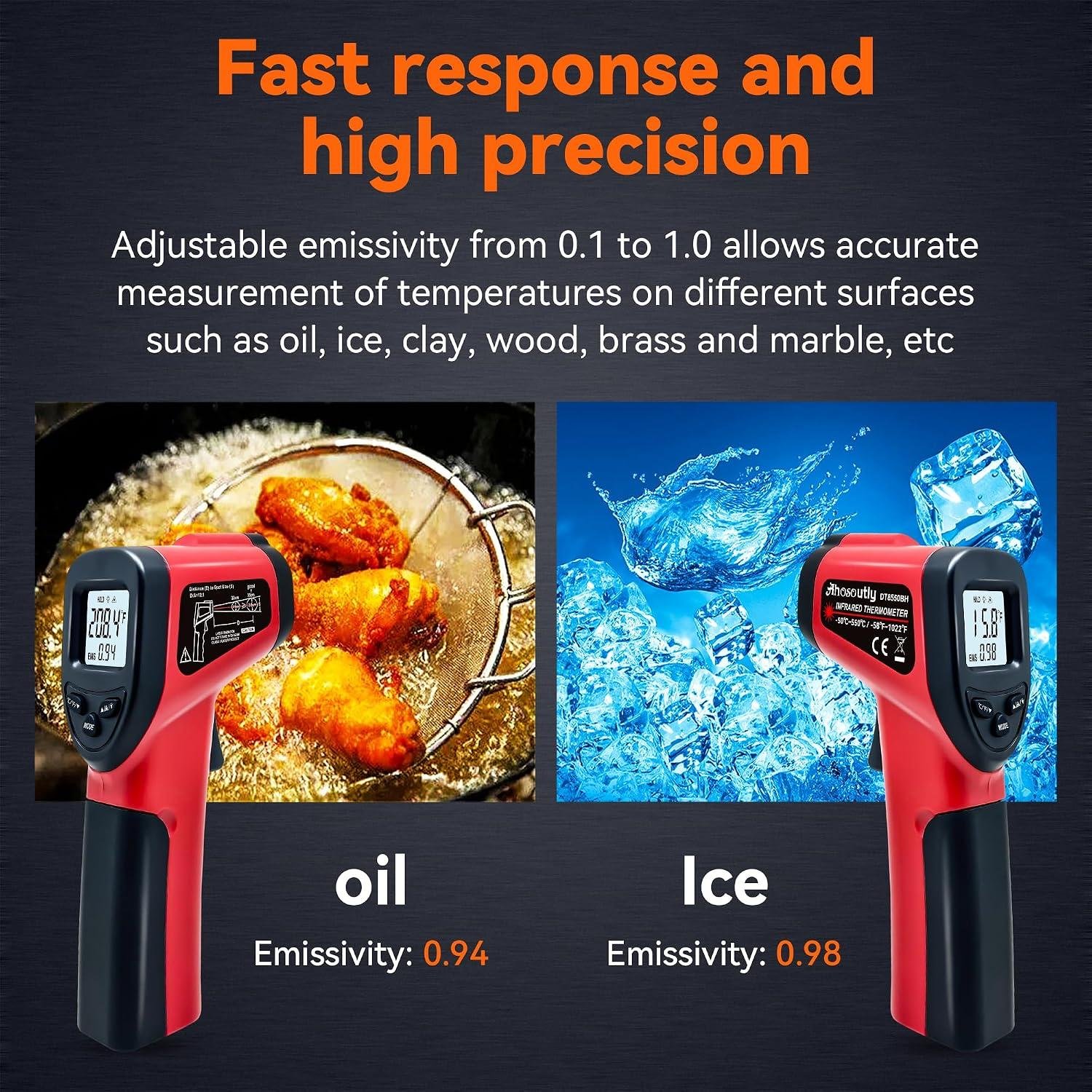
- Adjustable emissivity (0.1-1.0) to dial in different surface types
- Auto power-off (15 s) and low-battery indicator to conserve the included AAA cells
- Versatile use for kitchens, grills, coffee roasting, HVAC checksand terrariums
- Certifications: FCC, CEand RoHS
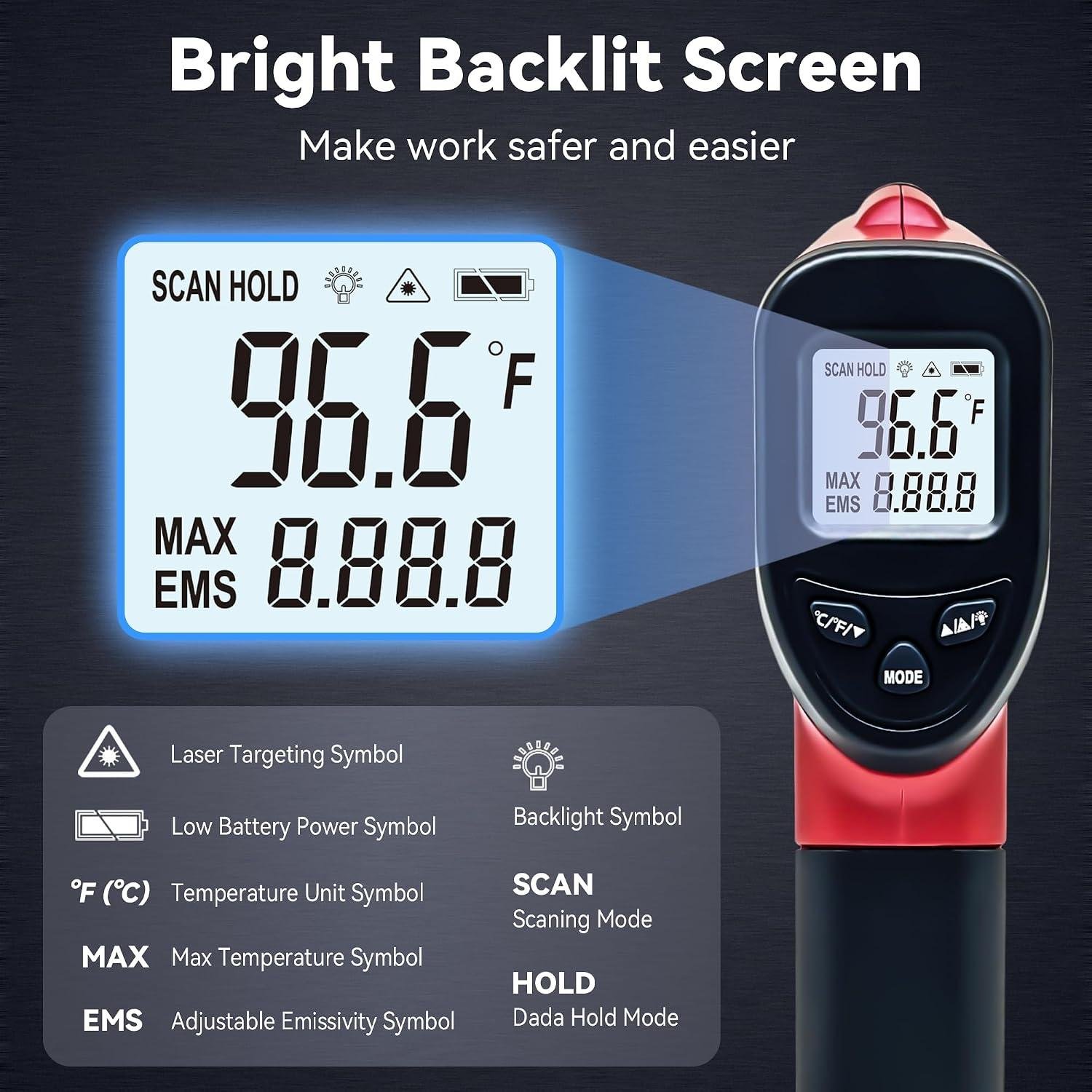
Accuracy in our experience aligned with the spec-≥212°F ±2% and ≤212°F ±3.6°F-especially after tweaking emissivity; that said, customer feedback is mixed, with some reporting spot-on results while others note 6-10°F variances (and occasionally larger swings). the -58°F to 1022°F (-50°C to 550°C) range covers most home and shop jobsand while the display is easy to read, the laser markers can be harder to see in radiant rooms. Battery life is respectableand setup is truly grab-and-go thanks to the batteries in the box. Important note: this tool is not for human temperature measurement.
| Range | -58°F to 1022°F (-50°C to 550°C) |
| Response | ≤500 ms instant read |
| Accuracy | ≥212°F ±2%; ≤212°F ±3.6°F |
| Distance:Spot | 12:1 targeting |
| Emissivity | Adjustable 0.1-1.0 |
| Display | Backlit LCD + Max Hold |
| Power | 2×AAA, auto-off 15 s |
| Certifications | FCC, CE, RoHS |
Check price and availability on Amazon
The features we noticed from the nine point laser to the backlit display
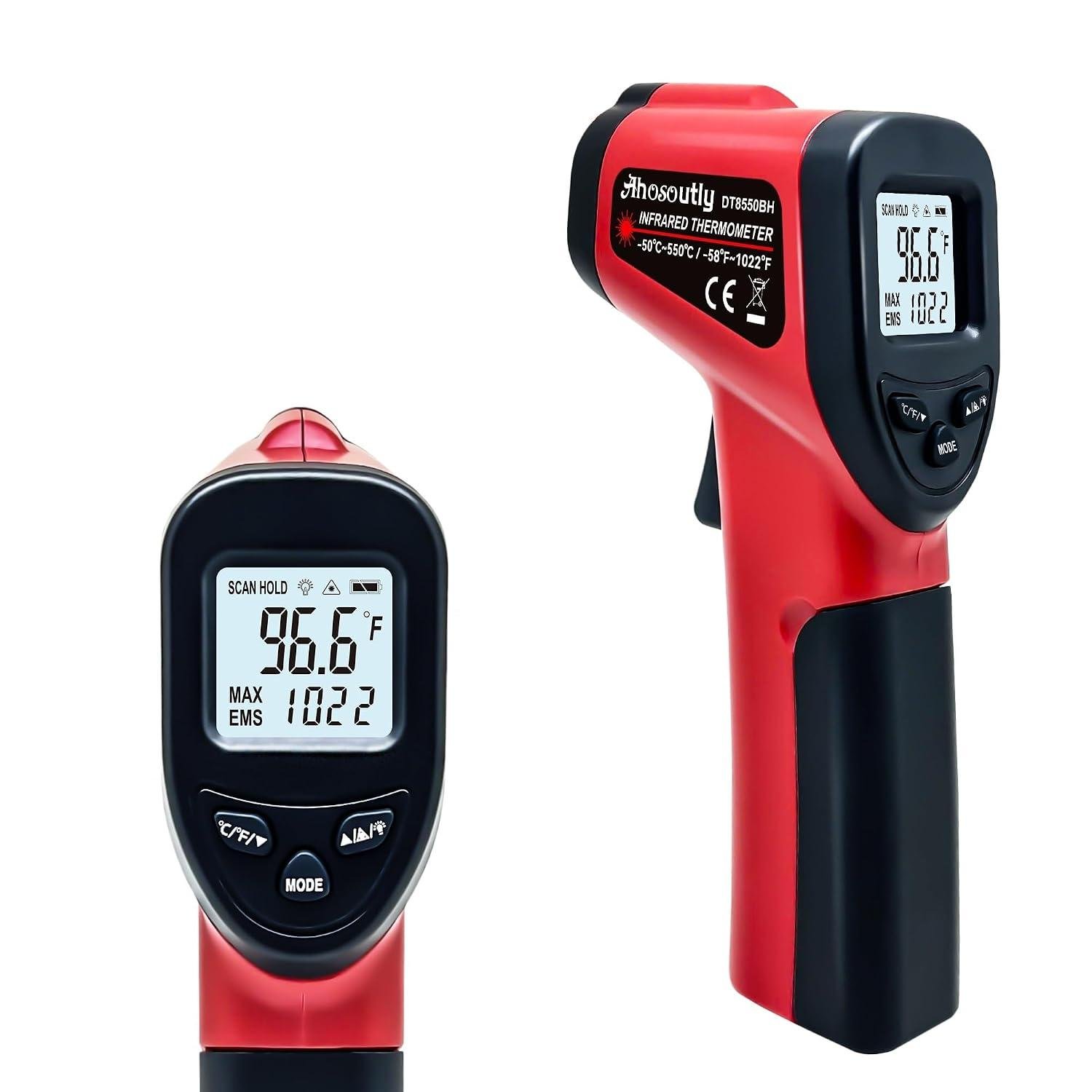
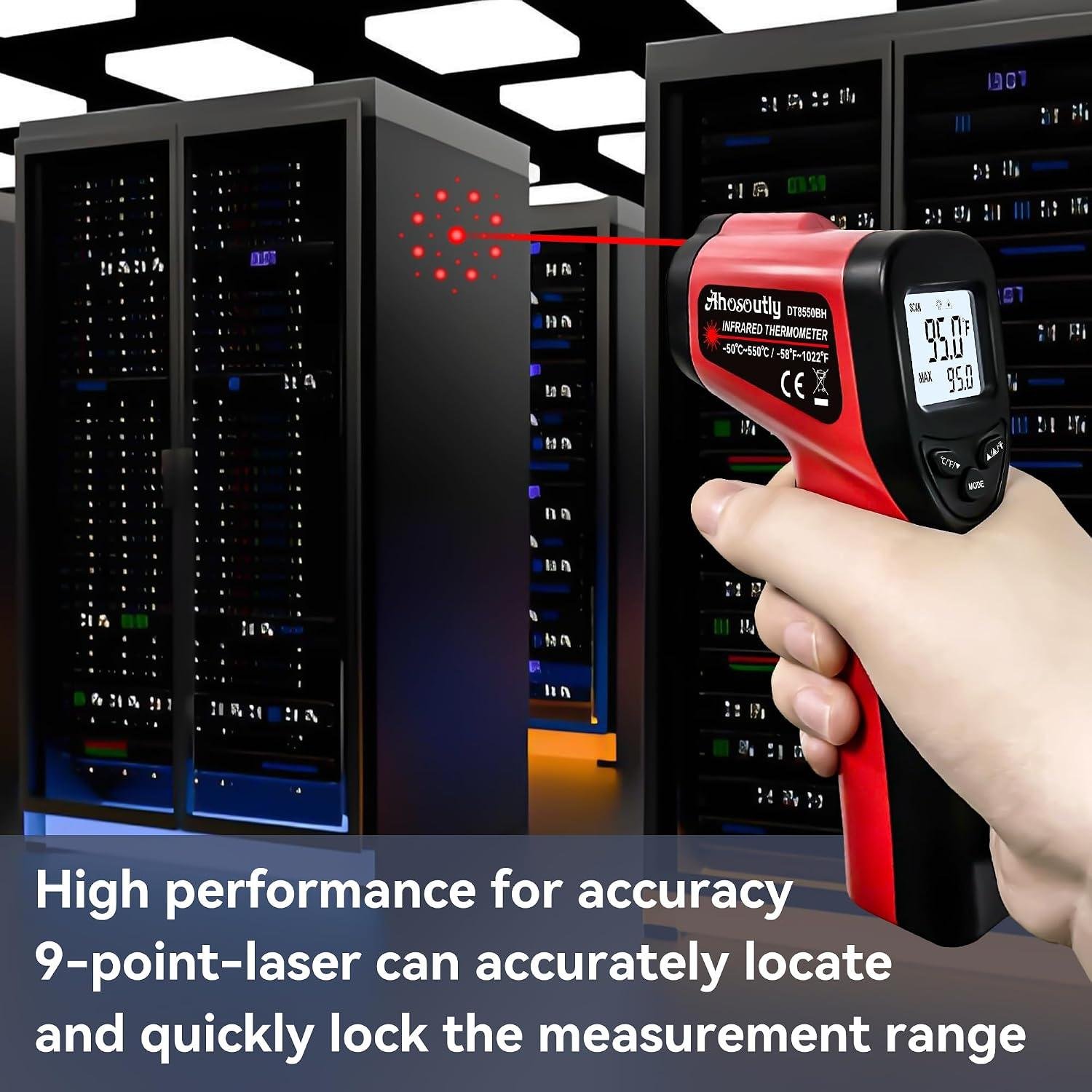
Nine-point laser targeting made aiming refreshingly precise for us: the circular array outlines the spot rather of guessing with a single dotand the 12:1 distance-to-spot ratio helps us measure safely from a comfortable distance. Pair that with adjustable emissivity (0.1-1.0)and we could dial readings for shiny cookware, stone, or painted metal with more confidence.It’s a non-contact, surface-only tool that snaps to a result in ≤500 ms, with a handy Max-Hold. On paper the accuracy is rated at ±2% above 212°F or ±3.6°F at or below 212°F; in practise, customer feedback spans from spot-on to occasionally 6-25°F off depending on surface and setup. We also noticed the laser markers are easier to see in dimmer settings than in bright sun.
- Targeting: 9-point laser ring clarifies the measured area
- Speed: instant-read response (≤500 ms)
- Range: -58°F to 1022°F (-50°C to 550°C)
- Tuning: emissivity adjusts 0.1-1.0 for different surfaces
- Safety: non-contact checks on hot or hard-to-reach spots
The backlit LCD keeps numbers legible in garages and kitchensand we liked the auto 15-second shutoff for saving battery, plus the low-battery indicator and ready-to-use batteries in the box. Readability is generally easy indoors; outdoors in direct light it can be less vivid. As a versatile toolbox helper, it fits right in for BBQ griddles, pizza ovens, HVAC vents, appliance troubleshootingand reptile habitats-just remember it’s not for measuring human temperature. The fast capture and simple controls make quick spot checks feel effortless.
| Range | -58°F to 1022°F |
| Response | ≤500 ms |
| D:S Ratio | 12:1 |
| Emissivity | 0.1-1.0 (adjustable) |
| Accuracy | ±2% / ±3.6°F (spec) |
| Display | Backlit, Max-Hold |
| Power | AAA, auto-off 15s |
| Certs | FCC, CE, RoHS |
What we learned in use across grills ovens HVAC and electronics
On grills and in ovens, the temp gun’s ≤500 ms instant read, 9‑point laser targeting, and 12:1 distance‑to‑spot ratio let us check cast‑iron griddles, pizza stones, and grill grates without hovering over the heat. We saw fast, consistent results on matte surfaces; shiny stainless tended to read low until we used adjustable emissivity (0.1-1.0) or placed a small strip of matte tape to normalize readings. Within its rated span of -58°F to 1022°F (-50°C to 550°C), it handled searing zones and pizza bakes welland the Max hold feature helped capture peak grate temps before flare‑ups faded. The backlit LCD was crisp in shade and kitchens, though the laser markers were harder to spot in midday sun. Battery life felt solid thanks to the 15‑second auto shut‑offand the included batteries meant we were testing minutes after unboxing.
Across HVAC and electronics, it proved a versatile spot‑checker. Supply and return vents were quick to verifyand using emissivity around 0.95 on painted registers gave reliable delta‑T snapshots. for electronics troubleshooting, the non‑contact design kept fingers safe while mapping hotspots on adapters, power suppliesand boards; we avoided glossy heat spreaders or used tape for accuracy.As with any IR thermometer,expect variability on reflective or tiny targets-fill the measurement spot,take a few readings,and remember the spec: ±2% above 212°F,±3.6°F at or below 212°F. It’s purpose‑built for surfaces (not people)and when used with these best practices, it’s a handy multi‑category tool.
- Speed & targeting: Snappy reads, clear multi‑laser guide, comfortable standoff distance.
- accuracy in context: More precise on matte surfaces; adjust emissivity or use tape for shiny metal.
- Visibility & power: Backlight is easy indoors; laser can fade in bright light; auto shut‑off saves batteries.
| Use case | Emissivity (start) | Targeting tip | Go‑to feature |
| Grills/Griddles | 0.80-0.95 | Aim at cast iron or matte tape | Max hold |
| Pizza Ovens | 0.95 | Check stone center and edge | 12:1 standoff |
| HVAC Vents | 0.95 | Fill spot with fin area | Instant read |
| Electronics | 0.85-0.95 | Use matte tape on shiny parts | 9‑point laser |
Check today’s price and see more details
How we get the most accurate readings and when we would reach for it
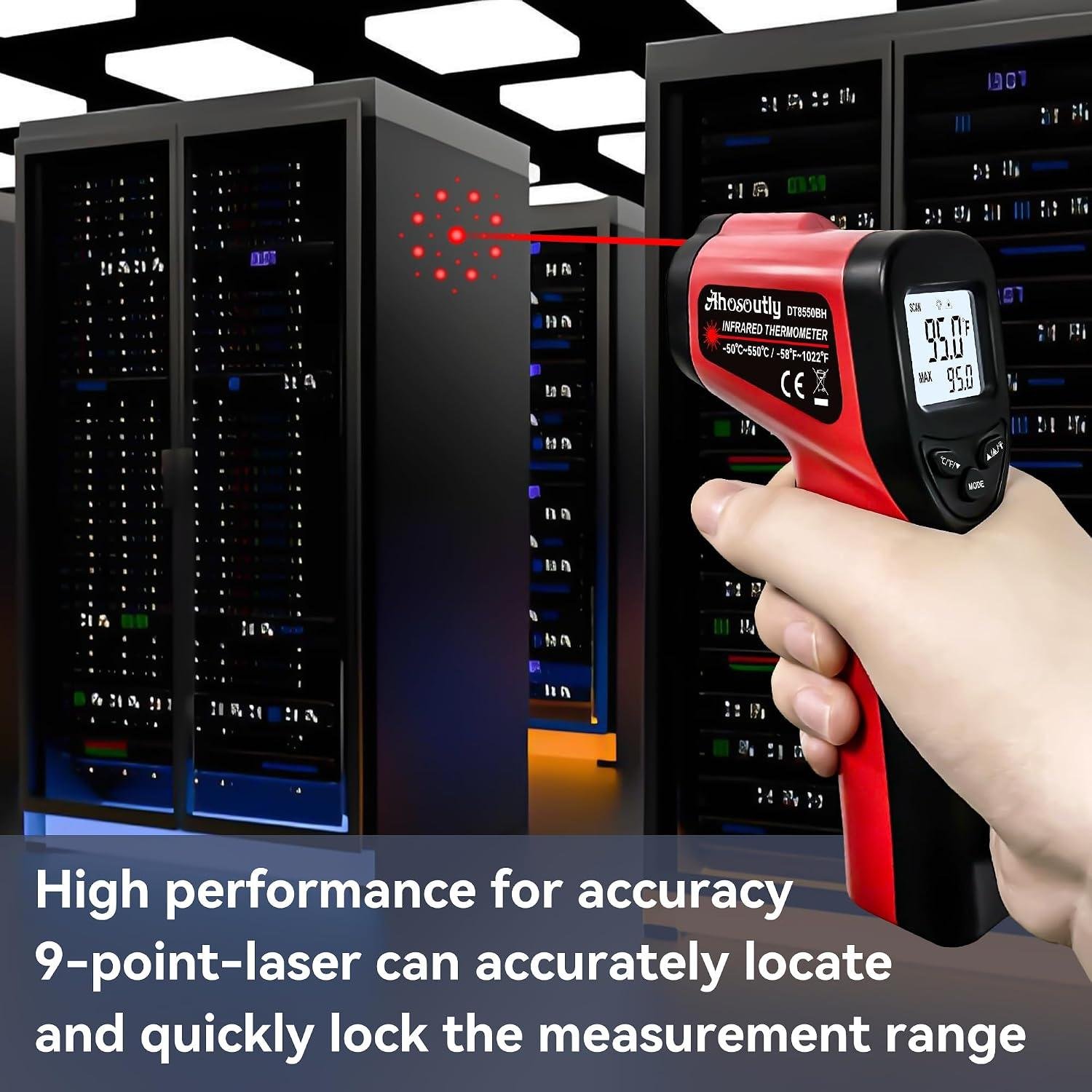
How we get the most accurate readings starts with treating this as a precision surface tool. We set emissivity to match the material (0.95 for most matte/painted surfaces; lower for shiny metals), then move close enough to honor the 12:1 distance-to-spot so the measured area fully covers our target. The 9-point laser helps visualize the footprint; we avoid steam, flamesand mirror-like finishesand shoot a non-glossy patch (a strip of matte tape on polished metal works wonders). We take several instant shots (≤500 ms response) and use the MAX function to find hotspots. Within spec, we expect about ±2% above 212°F and ±3.6°F below 212°Fand we’ll cross-check on a known, stable surface if we need tighter confidence.
- prep the target: Matte the spot; let temps stabilize; wipe moisture.
- Dial emissivity: Start at 0.95 for organics/paint; lower for bare metals.
- mind distance: closer = smaller spot; fill only what you want to read.
- Sample and confirm: Take a few readings; use MAX to verify peaks.
- Clarity counts: Fresh batteries and the backlight keep numbers legible.
| Surface | Start ε | tip |
|---|---|---|
| Ceramic/stone | 0.95 | Pizza stones, tiles |
| Cast iron/griddle | 0.80 | Dark, consistent |
| Painted metal | 0.95 | Grate for vents |
| Wood | 0.90 | DIY, shop checks |
| Bare shiny metal | 0.30-0.40 | Use matte tape patch |
When we would reach for it is any time we need fast, contact-free checks from -58°F to 1022°F (-50°C to 550°C) across kitchens, garagesand home projects. It shines for scanning wide areas, then zooming into the exact spot with the laser array-perfect for cooking, auto maintenance, HVAC spot-checksand everyday diagnostics when a probe can’t reach or contact is unsafe.
- Cooking & BBQ: Verify pizza stone and cast-iron preheat; map grill zones.
- HVAC & appliances: Compare supply/return temps; quick fridge coil checks.
- Terrariums: Confirm basking spots and surface gradients without contact.
- Auto/DIY: Radiators,bearings,breakers,and motors during troubleshooting.
- Around the house: Find hot/cool patches on decks, countertopsand griddles.
Check price and see today’s deals
Customer Reviews Analysis
Customer Reviews Analysis
At the time of writing, we haven’t found published customer reviews for the Infrared Thermometer Temperature Gun (NOT for Humans) -58℉~1022℉ with the 9-point laser. Rather than speculate, we’re sharing the key themes we expect to see once buyer feedback rolls in, along with what we’ll be watching for to validate (or challenge) our own impressions from testing.
| Likely Review Theme | What Reviewers Typically Praise/Criticize | What We’ll Look For |
|---|---|---|
| Accuracy across surfaces | Praise on matte/painted targets; critiques on shiny metal or glass without prep | Reports of consistent readings and tips like using matte tape on reflective surfaces |
| 9-point laser visibility | Easy aiming indoors; mixed results in bright sun or on very hot glare | Comments on laser brightness outdoors and usefulness of the multi-point pattern |
| Response time & repeatability | “Instant” readings vs. occasional lag; stable repeat shots at the same spot | Notes on quick lock-in and whether multiple pulls match within a small band |
| Temperature range utility | Range praised for grills, HVAC, auto; edge-case concerns near 1022°F | Real-world examples near the top end and whether readings feel trustworthy |
| Build quality & ergonomics | Comfortable grip and balanced weight vs. creaky plastics or loose triggers | mentions of sturdiness, trigger feeland long-session comfort |
| Display & backlight | Readable indoors; critiques in bright daylight or smoky kitchens | Feedback on font size, backlight strength, and contrast |
| Battery life & auto-off | Long life with auto-sleep vs. frustration with frequent swaps | Reports of real-world longevity and whether auto-off timing feels right |
| Emissivity handling | Clarity on how to get accurate readings on tricky materials | user-shared techniques for stainless, chrome, glass, and liquids |
| “Not for humans” clarity | Confusion when used on people; praise when used correctly | Whether instructions and labeling prevent misuse and set expectations |
Snapshot (to be updated)
| Review Volume | No verified customer reviews yet |
| Average Rating | – |
| Common Pros | – |
| Common Cons | – |
What We’ll Scan For First
- Consistent accuracy on common DIY targets: grills, cast iron, ducts, brake rotors
- Laser pattern usefulness for framing the measurement spot at different distances
- Readability of the backlit screen in garages, kitchensand bright outdoor scenes
- Battery performance over weeks, not just a single project day
- Clear guidance (from manuals or buyers) on getting reliable results on reflective surfaces
If you’ve used this 9-point infrared temp gun, tell us about your accuracy, laser visibilityand day-to-day ergonomics. we’ll update this section as soon as meaningful buyer feedback becomes available.
pros & Cons
Pros & Cons
after putting the 1022°F 9‑Point Infrared Temp Gun through kitchen runs, HVAC checksand a few reptile‑tank spot checks, here’s what stood out to us-good and bad.
| Pros | Cons |
|---|---|
|
|
| Best Used For | Watch Outs |
|---|---|
| Griddles, pizza ovens, BBQ grates | shiny/reflective metals need emissivity tweaks or tape/paint |
| HVAC supply/return vents | Bright sunlight can wash out the laser and screen |
| Terrariums and appliance checks | small targets at distance-move closer to avoid averaging |
Q&A
Q: What exactly is this thermometer for,and what isn’t it for?
A: It’s a non-contact infrared thermometer for measuring surface temperatures of objects from -58°F to 1022°F (-50°C to 550°C). It is not a medical device-don’t use it on people or pets-and it won’t read internal food temperatures or ambient air.
Q: How fast dose it read?
A: It gives an instant reading in about 500 milliseconds. Squeeze the triggerand the number settles almost promptly.
Q: What does the “9-point laser” do?
A: The nine dots form a rough circle that shows the area you’re sampling. They’re pointers only-the sensor is still a single spot in the center-and they help you aim at the right patch of surface.
Q: What’s the distance-to-spot ratioand how does that affect use?
A: The D:S ratio is 12:1. That means from 12 inches away, you’re sampling roughly a 1-inch circle; from 36 inches, about 3 inches. For precise targets (like a small burner coil or a pizza stone hot spot), move closer so the spot fits entirely on the surface.
Q: How accurate is it?
A: The stated accuracy is ±2% above 212°F (100°C) and ±3.6°F (±2°C) at or below 212°F, with adjustable emissivity to improve results. Real-world accuracy varies by surface type, distanceand angle. Customer feedback is mixed: many report solid accuracy, while others see offsets of 6-25°F, especially on shiny or very hot targets.
Q: Why do readings sometimes seem off or jump around?
A: Common culprits are:
- Shiny/reflective surfaces (low emissivity) that under-read.
- Standing too far back so the spot covers hot and cool areas at once.
- Shooting at an angle that reflects the habitat.
- Measuring something that’s changing temperature quickly.
Dial in emissivity, get closer, aim perpendicularand target a uniform, matte area.
Q: What is emissivity, and how do we set it?
A: Emissivity describes how well a surface emits infrared energy. This gun adjusts from 0.10 to 1.00. Most organic, paintedor matte surfaces read well around 0.95. For shiny metals, either lower the emissivity appropriately or, easier, stick a small square of matte black electrical tape on the spot, let it come to temperature, set emissivity to 0.95, and measure the tape.
Q: Can it measure water, glass, or polished stainless steel?
A: Not reliably. transparent and reflective surfaces confuse IR readings. Measure a matte area rather (e.g., the pot wall, a taped sectionor a darkened patch).
Q: Will it work for a pizza oven, grill, griddleor cast iron?
A: Yes-those are ideal use cases.Aim at a dark, matte area (soot or seasoning helps) or apply black tape to a test spot when possible. Its 1022°F upper limit covers most home pizza stones and steel plates.
Q: Can we use it for HVAC, terrariumsor around the house?
A: Definately. It’s handy for supply vent temps,hot/cold spots on walls and floors,checking heat pads and basking spots in reptile enclosures,troubleshooting appliances,and more. Just remember it reads surface temperature,not air.
Q: Why might two identical units read differently?
A: Differences can come from emissivity settings, distance/angle, battery level, or manufacturing tolerances. Align settings, measure the same taped spot from the same distanceand compare.
Q: Does it store or highlight any special values?
A: It offers a max temperature capture and a backlit LCD. There’s also an auto power-off after about 15 seconds to preserve battery life.
Q: How’s the screen and laser visibility outdoors?
A: The backlit display is easy to read indoors and in shade. In bright sunlight, the laser dots can be hard to see and the screen can wash out-shade the display with your hand if needed.
Q: What batteries does it use, and are they included?
A: It runs on two AAA batteries, which are included. Auto shut-off helps stretch battery lifeand there’s a low-battery indicator.
Q: Can it read above 700°F? We’ve seen conflicting reports.
A: This model is rated to 1022°F (550°C). If you see lower ceilings in practice, confirm the unit is set to the correct scale (°F/°C), check the manual/model labeland verify you’re targeting a suitable matte surface within the 12:1 spot size. Some similarly styled guns have lower limits-double-check your unit’s markings.
Q: Any safety or compliance notes?
A: Avoid directing the laser toward eyes. Keep it away from children. The unit lists FCC,CE,and RoHS approvals.
Q: What’s the best quick way to sanity-check our readings at home?
A: Use the black-tape method: place a small square of matte black electrical tape on a surface, let it reach steady temperature, set emissivity to 0.95and measure the tape from close range. For a second reference, compare to a reliable contact thermometer on a griddle or skillet surface near the taped spot.
Q: Bottom line-who is this best for?
A: Anyone who wants fast, non-contact surface readings across a wide range: home cooks dialing in stones and griddles, grillers, DIYers, HVAC tinkerersand reptile keepers. If you need lab-grade precision on shiny metals or exact internal food temperatures, pair it with the right technique (matte targets) or a contact probe.
Achieve New Heights
Wrapping up, the 1022°F 9-Point Infrared Temp Gun earns its keep as a fast, convenient tool for everything from sizzling cast iron to frosty freezer coils. We liked the instant readouts, the 9-point laser that frames the target area, adjustable emissivityand the simple, backlit display. accuracy can drift a bit depending on surface type and distance, so we kept expectations realistic and leaned on emissivity tweaks (and matte tape on shiny metals) when precision mattered. it’s absolutely not for measuring human temperature-but for spot checks across the shop, kitchen, garageand terrarium, it’s a versatile helper.
If you need lab-grade precision or tiny-spot measurements at long distances, there are pricier, calibrated options. For quick, safe, non-contact checks across a wide range, we think this one offers solid value-and comes ready to go with batteries and auto shut-off.
Curious to try it on your own projects? Check the current price and availability on Amazon.