
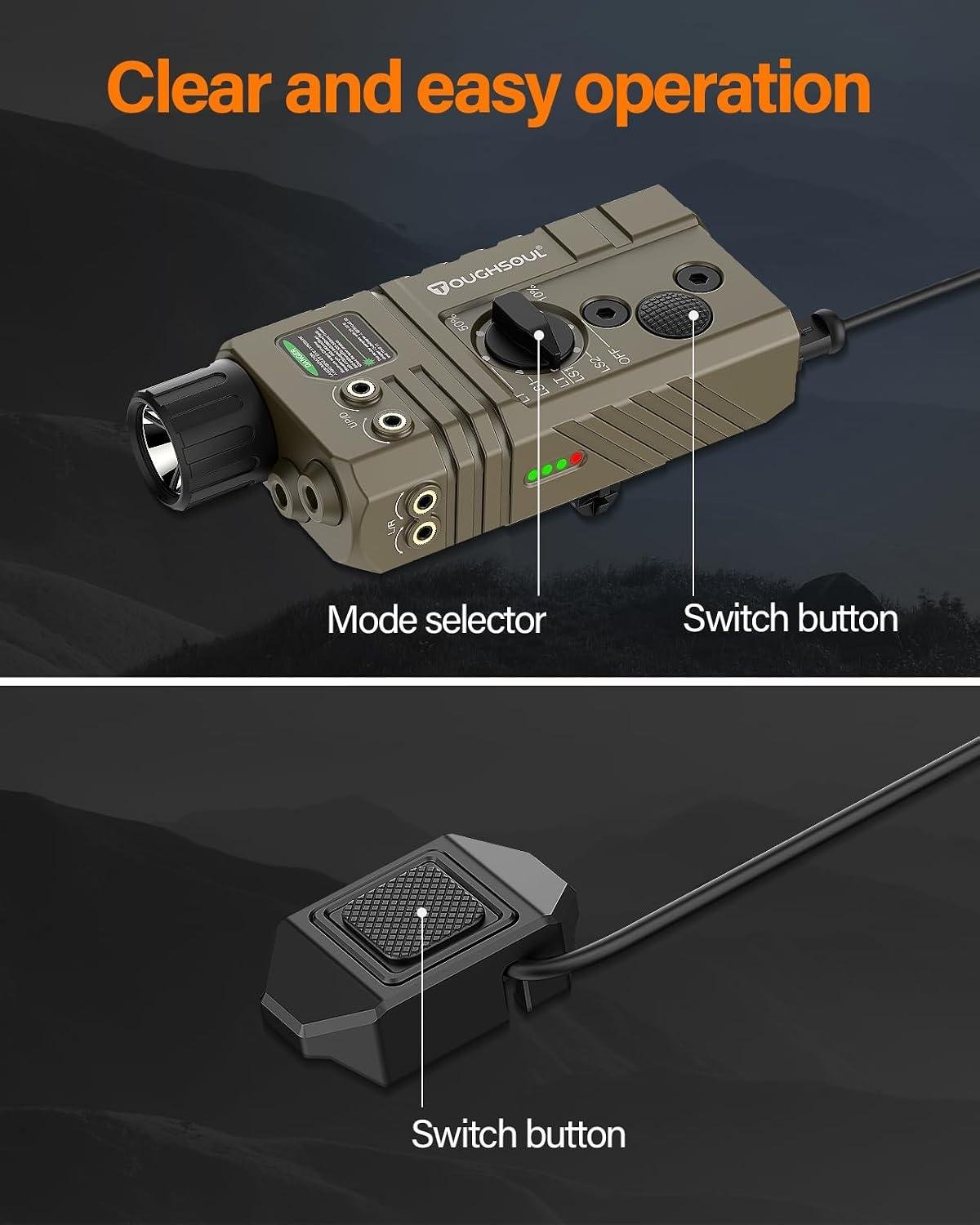
Some products arrive with a promise that feels bigger than teh box. That was our first thought as we clipped the Mlok/Picatinny Mounted tactical Light Green Laser Infrared(IR) Laser Combo | 1600 Lumen Light with Remote Pressure Switch for Rifle onto a rail and felt the housing settle into place. The unit looks purpose-built and unfussy-sturdy aluminum paired with reinforced nylon, sealed against weather, and ready for recoil. On the bench, the magnetic charging led snapped on with a satisfying click, and the control layout made immediate sense: a clear mode selector, a generous remote pad with a locking button, and no labyrinth of long-presses to memorize.
Out on a dim range, the 1600-lumen beam’s three brightness levels proved easy to cycle, and the green laser’s Class IIIA dot stayed crisp and daylight-visible within practical distances. The infrared side-850 nm LED/laser visible only through night vision-behaved as advertised,with the notable caveat baked into the design: the IR laser will not activate when the white LED is on. Both the light body and the pressure pad mounted cleanly to M-LOK and Picatinny without adapters, and the IPX6 rating shrugged off a passing drizzle.
In this review, we’ll walk through our hands-on setup experience, ergonomics, beam and laser performance, battery and charging quirks (including the built-in, non-replaceable Li‑Po pouch), and durability notes after a few sessions.Our goal is simple: separate spec-sheet promises from practical realities and help you decide if this 2‑in‑1 package fits your rail, your workflow, and your budget.
Our first impressions on the bench and on the rifle
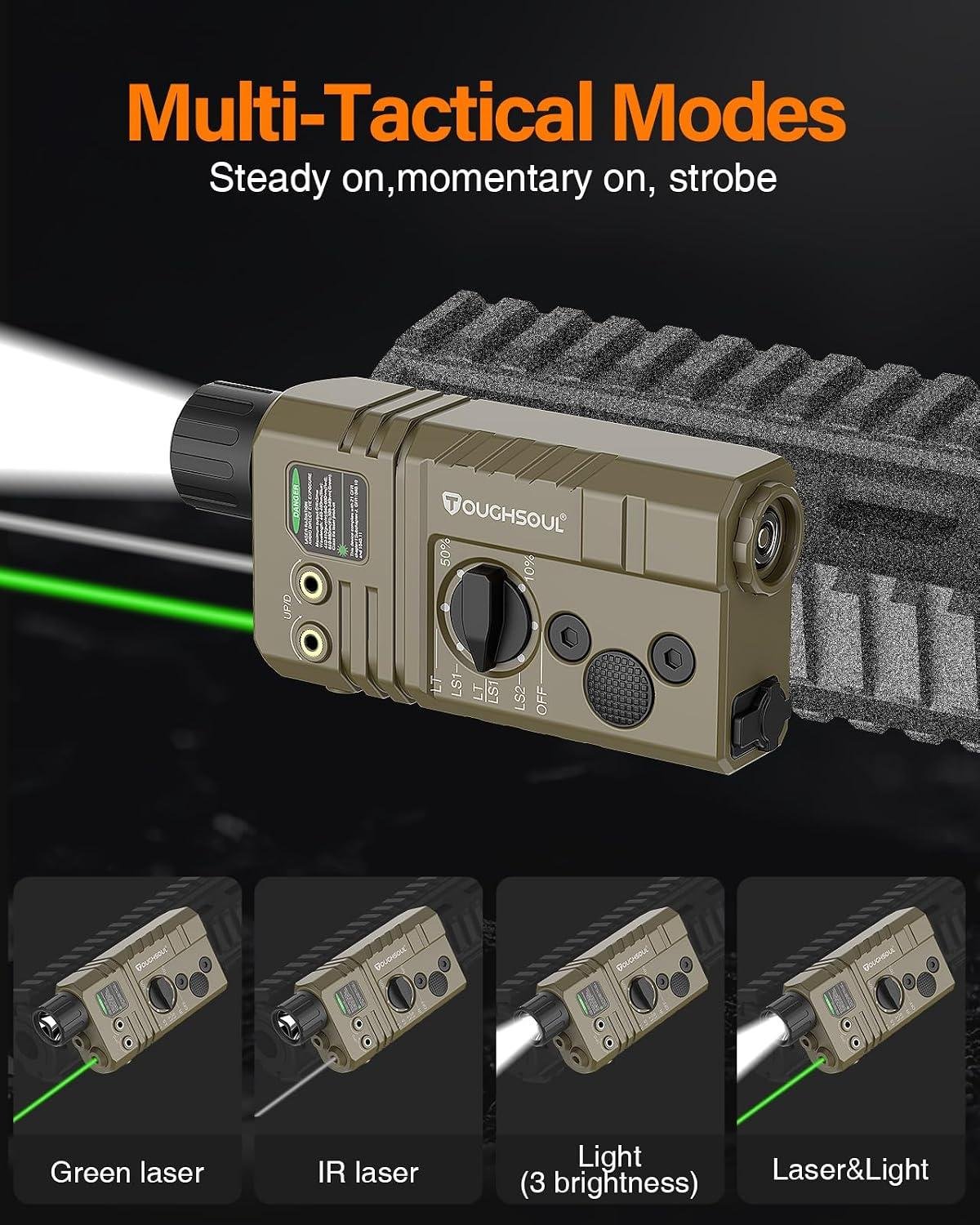
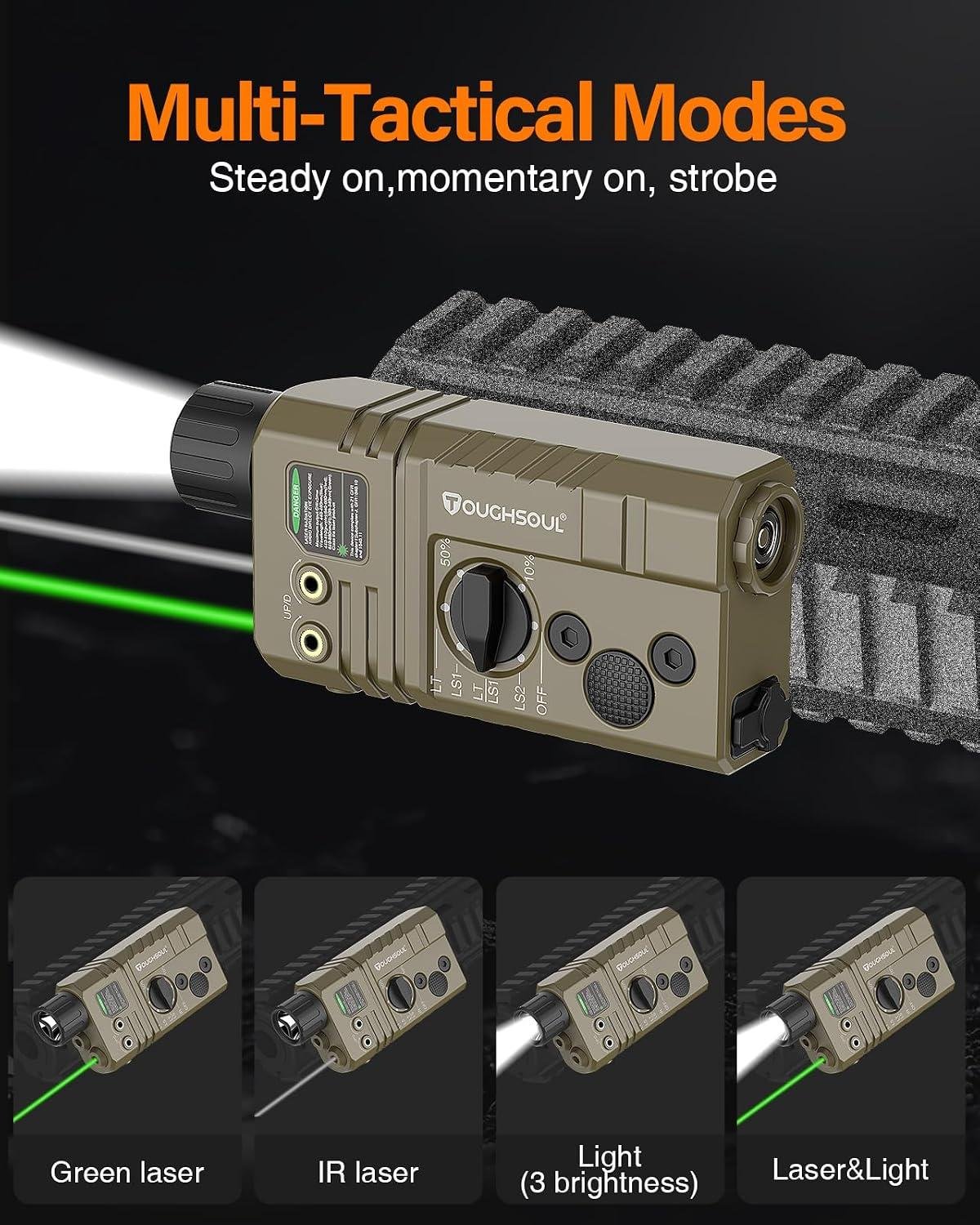
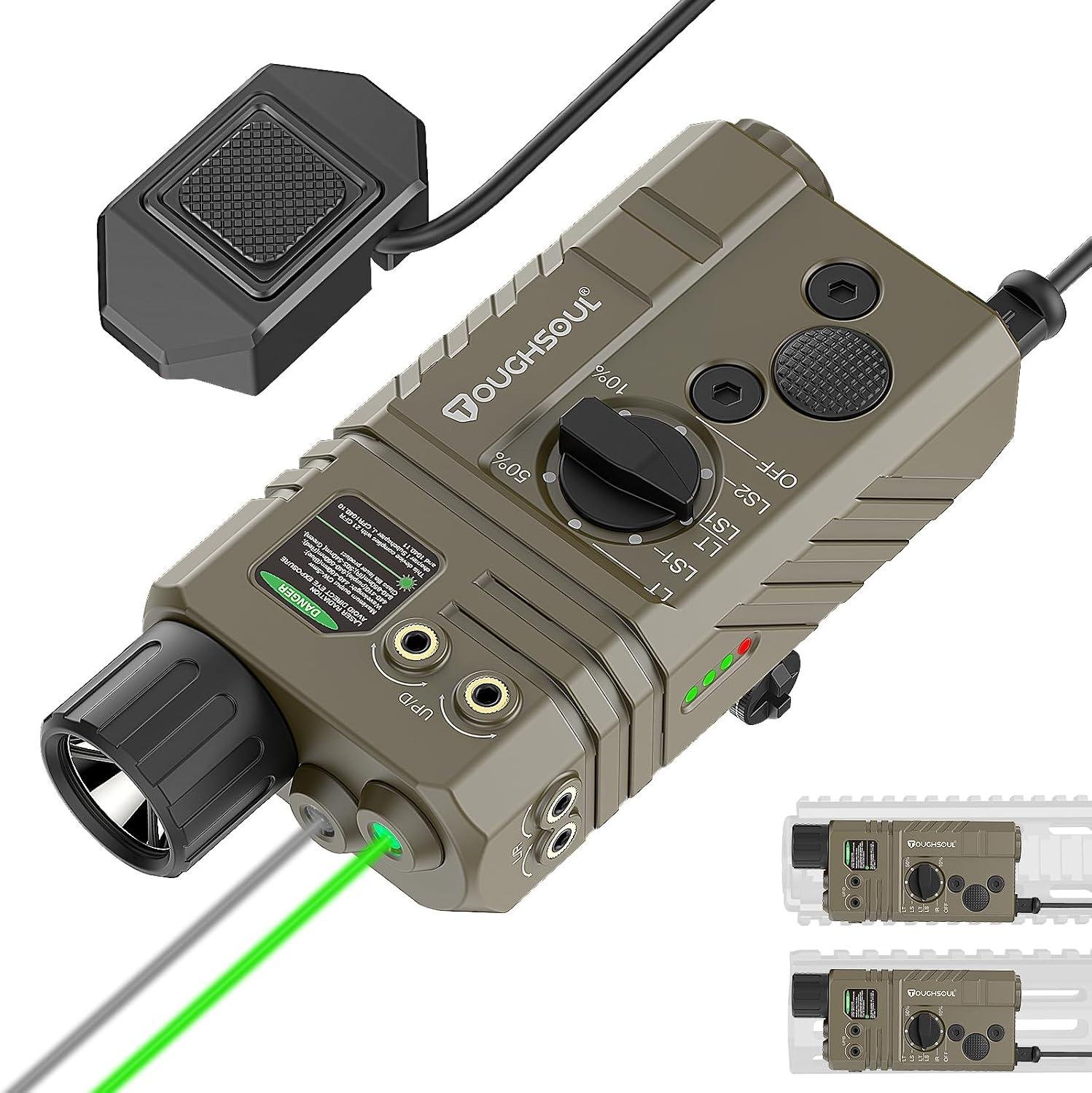
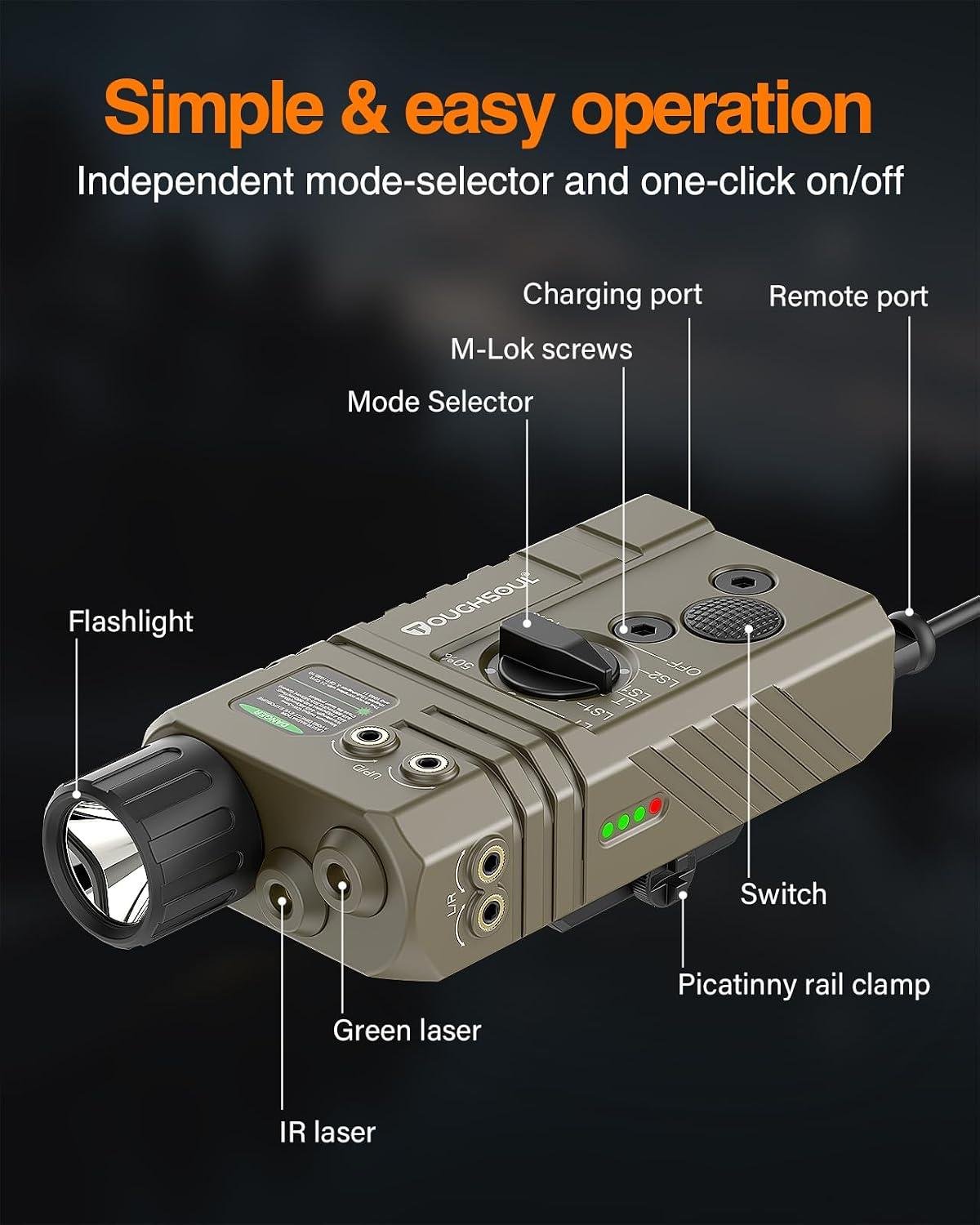
On the bench, the dual-rail compatibility is immediately reassuring-both the body and the remote pad clamp cleanly to M‑Lok or Picatinny without shims or adapters. The selector makes it easy to jump between white light only, green beam only, or a combined mode, and the multi-mode lighting (constant, momentary, strobe) is pleasantly direct rather than a maze of clicks. The remote tail pad’s large tap surface and locking button feel purpose-built, reducing accidental activations. Magnetic charging snaps on decisively, and while the built‑in Li‑Po pouch battery can’t be swapped, the convenience outweighs the tradeoff for most of us. Construction reads as field‑ready: aluminum plus reinforced nylon, IPX6 sealing, and 1.5 m drop resistance-paired with an anti‑abrasive lens that shrugs off bench dust and glove smudges. The IR emitter (850 nm) behaves as expected-only visible under NODs-and it won’t run alongside the LED by design, a smart safeguard.
On the rifle, the unit feels compact and balanced, and the 3‑step output (10% / 50% / 100%) lets us tailor spill and punch; at full tilt, the beam is every bit as assertive as a 1600‑lumen spec suggests. The class IIIA green laser (<5 mW, ~520-530 nm) tracks crisply in dim light and remains usable against shaded targets outdoors. we experienced no flicker or mode hiccups through recoil, and rail bite stayed secure after repeated handling. The IR setting integrates smoothly with night‑vision use,remaining intentionally isolated from the LED channel. first contact suggests a workhorse light/laser that emphasizes simple controls, confident mounting, and real‑world durability.
- What stood out fast: rock‑solid mounting, no-nonsense UI, assertive output
- Nice touches: magnetic charging, remote pad with lock, strobe on tap
- Good to know: built‑in battery (non‑replaceable); IR works only under NVD and not with LED
| Bench | On Rifle |
|---|---|
| Speedy M‑Lok/Picatinny fit; no adapter | Solid bite under recoil |
| Direct modes: constant, momentary, strobe | Remote pad lock prevents light ADs |
| IR (850 nm) verified under NODs | LED and IR run separately by design |
| 3‑level brightness for task tuning | 1600‑lumen punch at 100% |
| Magnetic charge; built‑in Li‑Po | No battery rattle or door to snag |
| IPX6, 1.5 m drop confidence | Lens stays clear after field bumps |
Mounting on Mlok Picatinny and remote pressure switch feel
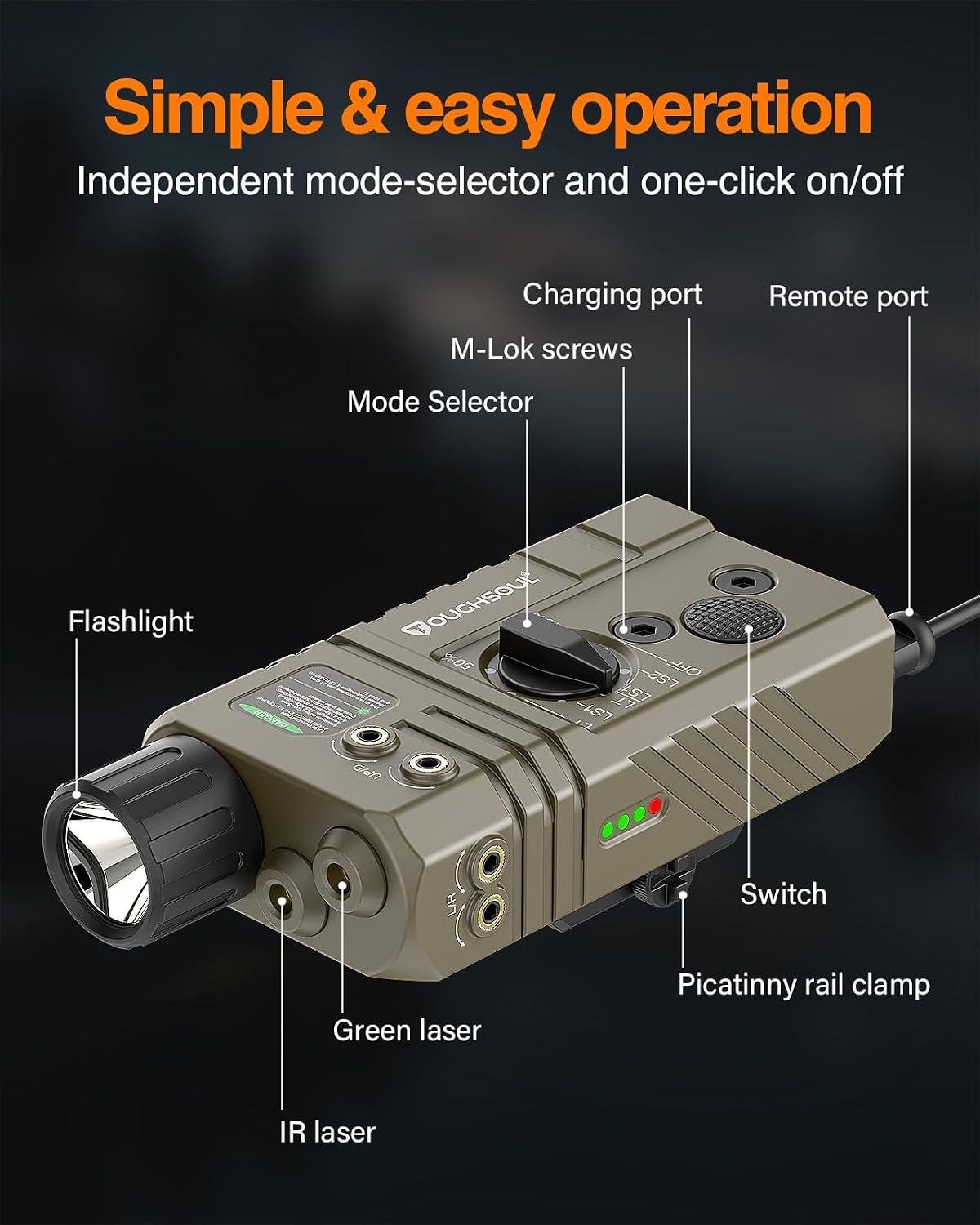
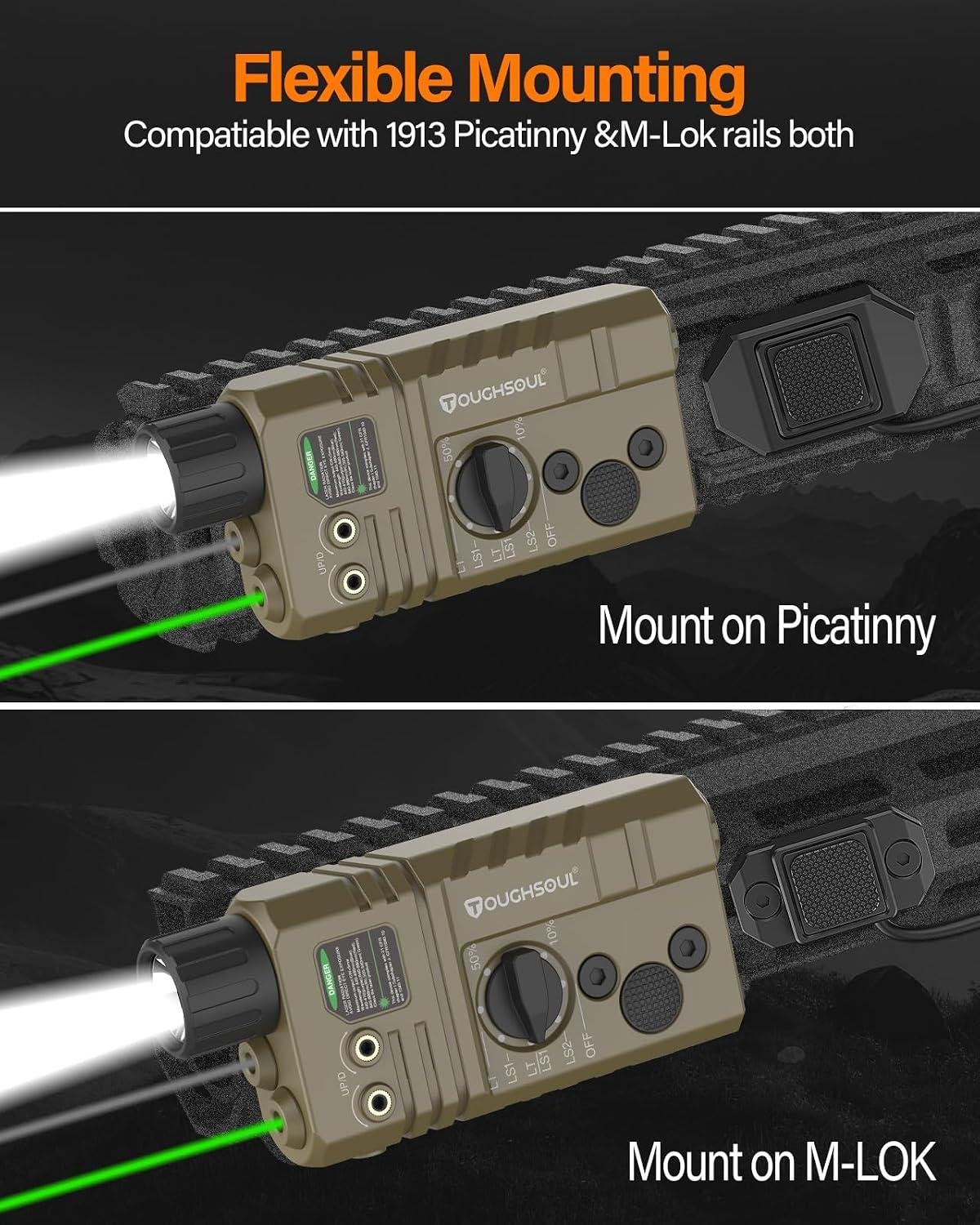
Mounting on both M‑Lok and Picatinny rails feels refreshingly straightforward and secure. The body’s aluminum and reinforced nylon construction bites the rail without wobble, and we didn’t need any adapter gymnastics to get a solid fit. Better yet,the pressure pad doesn’t play favorites-its base attaches to either rail type as confidently as the main unit,so placement options stay wide open for different hand positions. With IPX6 sealing, anti‑abrasive lens coating, and shockproofing rated for recoil and a 1.5 m drop,the setup stays planted and ready when the weather and range time get real.
- No adapter needed: native fit for both rail types
- Dual mounting: light and pad each attach to M‑Lok or Picatinny
- Built for recoil: sturdy alloy/nylon chassis keeps zero confident
- Weather‑ready: IPX6 with sealed o‑rings and tough lens coating
| Rail | Fit | Note |
|---|---|---|
| M‑Lok | Low‑profile | Clean handguard integration |
| Picatinny | Rock‑solid | Quick placement flexibility |
The remote pressure switch has a large, confidence‑inspiring tap pad with a positive feel, and the dedicated locking button helps prevent unintended activations when we reposition our grip. Mode changes are blissfully simple-choose constant or momentary for white light, green beam, or both together via the selector, and strobe is right there when you need extra disruption. Brightness steps at 10%, 50%, and 100% keep control intuitive, and the IR emitter remains separate (only visible under night vision, and it won’t activate with the LED on), which keeps the interface clear under stress.
- Big pad, crisp feel: fast, deliberate inputs
- Locking button: carry with confidence
- Mode simplicity: constant, momentary, strobe-no maze menus
- Three output levels: quick jumps for task‑tuned light
| Control | Response | Use Case |
|---|---|---|
| Tap Pad | Immediate | Momentary checks |
| lock | Secure | Transport/low‑profile carry |
| Selector | Direct | White / Green / Combo |
Check current price and see mounting options on Amazon
Light and laser performance in white green and IR
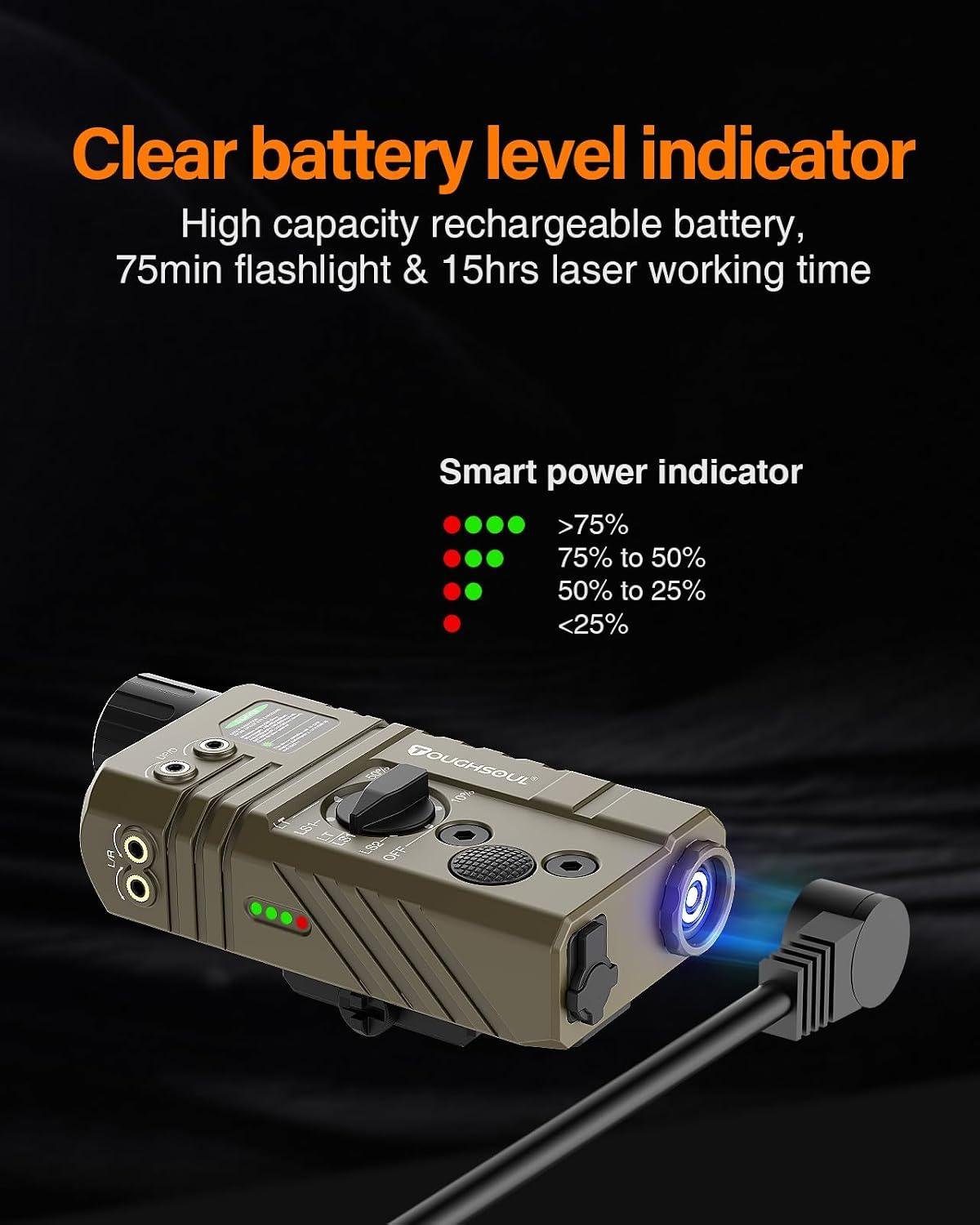
White light output is refreshingly straightforward to control: we can jump between constant,momentary,and strobe without the usual labyrinth of clicks,and pick from three intensity levels-10%,50%,or 100%-to match conditions. The mode selector lets us run white only, green laser only, or white + green together, and the included tail remote pressure switch (with a large tap pad and locking button) keeps inputs fast and deliberate. The green beam is a crisp Class IIIA (<5 mW) at 520-530 nm, giving us a clean aiming reference without overwhelming the scene.
- Brightness steps: 10% / 50% / 100%
- Modes: Constant, Momentary, Strobe
- Green laser: Class IIIA, <5 mW, 520-530 nm
- Combo: White light + Green beam on demand
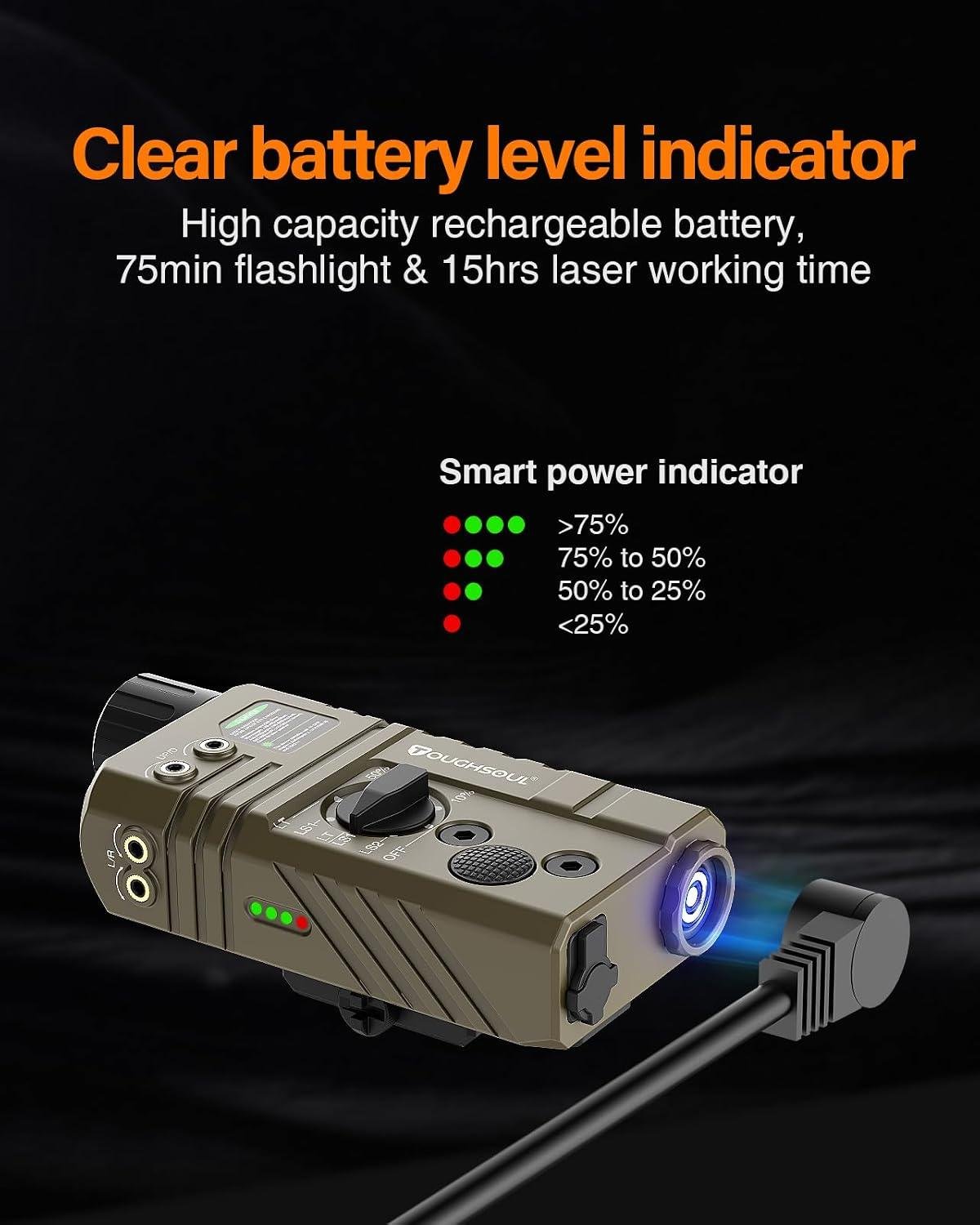
In the IR realm, both the infrared LED and the IR laser (850 nm) are visible only under night vision-exactly as they should be-and the unit smartly prevents the IR laser from activating when the white LED is on. Mounting is painless on either Picatinny or M‑Lok for both the light body and the pressure pad, so we can tailor ergonomics without adapters. Daily use is streamlined by the magnetic charging cord and a built‑in, non‑replaceable Li‑Po pouch battery, while the rugged aluminum/nylon construction, IPX6 sealing, and 1.5 m drop resistance keep performance intact when conditions turn rough.
| Mode | Best For | Notes |
|---|---|---|
| White Light | Positive ID, control | 10/50/100% + strobe |
| Green Laser | Fast indexing | Class IIIA, <5 mW |
| White + Green | Search + aim | Quick mode selector |
| IR Laser (850 nm) | NV‑only marking | Blocks when LED is on |
our recommendations for setup use and value
Setup is refreshingly straightforward. Choose your rail-M‑lok or Picatinny-then place the remote pad where your support hand naturally lands; the large tap surface and locking button prevent accidental activation. We recommend confirming zero for the Class IIIA green laser at your typical engagement distance, then using the mode selector to alternate between white light, green beam, or a combined setting. Remember: the IR (850 nm) laser is only visible through night-vision and won’t activate when the LED is on. Use the magnetic charger routinely and manage runtime with the three brightness levels (10%, 50%, 100%) rather than leaving it at max by default.
- Mounting: Secure both head and pressure pad directly to M‑Lok or Picatinny-no adapters needed.
- Controls: Keep momentary for quick IDs; reserve constant-on for steadier shots or admin tasks.
- IR Use: LED must be off; verify your NVD alignment in a safe training habitat.
- Power: Built‑in Li‑polymer is convenient; top off after sessions since it’s non‑replaceable.
- Durability: Aluminum + reinforced nylon, IPX6, and 1.5 m drop resistance-rain won’t end your night.
| Scenario | Light Mode | Laser | Brightness | Note |
|---|---|---|---|---|
| Indoor range | White | Green optional | 10-50% | Reduce bounce-back |
| Outdoor dusk | White | Green | 100% | Max contrast |
| NV training | LED off | IR only | N/A | IR visible via NVD |
| Rainy night | White | Green | 50-100% | IPX6 ready |
On value, this two-in-one package earns its keep by trimming rail clutter while giving us fast, intuitive control-constant, momentary, and strobe without clumsy cycling. The universal rail compatibility, magnetic charging, and durable build make it a compelling pick for cross‑platform setups and rough weather. Trade-offs exist: the IR lockout when the LED is active, and the non‑replaceable battery means you’ll plan charging instead of swapping cells. Even so, the feature density-clean mode selection, reliable remote pad, and a shining, selectable LED-lands this unit in the sweet spot for cost-conscious buyers who still want pro‑leaning controls and hard‑use materials.
See current price and availability
Customer Reviews Analysis
Customer Reviews Analysis
At the time of writing, we couldn’t locate verified customer reviews specifically for the “Mlok/Picatinny Mounted Tactical Light Green Laser Infrared (IR) Laser Combo | 1600 Lumen Light with Remote Pressure Switch for Rifle.” That often means one of two things: it’s either a newer listing that hasn’t circulated widely yet, or existing feedback is spread across multiple SKU variations and hasn’t consolidated. Rather than guess, we’re capturing what matters most to real owners once those reviews start rolling in.
What we’re watching for
| Theme | Why it matters | What good looks like | Red flags |
|---|---|---|---|
| brightness & Beam Pattern | 1600 lumens is headline power; candela and beam shape drive usable range. | Defined hotspot, usable spill, no artifacts; clear ID at distance. | Blowback glare, donut holes, “bright but dim at range.” |
| Laser Zero Retention | Green/IR lasers are only as good as their ability to hold zero under recoil. | Holds zero across sessions; precise, repeatable adjustments. | Drift after a few mags; mushy turrets; tool marks to keep zero. |
| Remote Pressure Switch Ergonomics | Momentary vs constant-on control can make or break usability. | Positive clicks, tactile differentiation, minimal cable snagging. | Intermittent activation,double-fires,adhesive failing on mounts. |
| Battery Life & Power Source | Runtime under real use (cold, high output) affects confidence. | Predictable runtime; easy cells (CR123A/18650) with safe fitment. | Thermal step-down too aggressive; finicky cell compatibility. |
| Mounting & Shift | M-LOK/Picatinny claims should translate to a solid, repeatable lockup. | Zero shift-free after bumps; hardware stays torqued. | Screws backing out; visible POI change after removal/reinstall. |
| IR laser Under NODs | IR visibility and bloom control determine night utility. | Clean dot, manageable bloom, usable divergence indoors/outdoors. | Overpowering bloom up close; fuzzy dot at distance. |
| Durability & Weatherproofing | Hard use demands shock and water resistance, not just specs. | No flicker after recoil or drops; seals handle rain/splash. | Water ingress, cracked housings, light flicker under recoil. |
| Support & Warranty | Fast, fair support rescues otherwise good gear. | Responsive RMA,clear parts availability. | Slow replies, unclear coverage, shipping at owner’s cost only. |
Patterns we expect (based on similar combos)
- Typical praise: powerful visible-white output for outdoor use; convenient all-in-one light/laser footprint; straightforward rail mounting.
- Typical critiques: pressure-switch reliability over time; laser zero drift on heavier calibers; cable management and snag potential; thermal step-down during long activations.
How we’ll interpret incoming reviews
| Rating trend | Our read | What we’ll verify hands-on |
|---|---|---|
| Mostly 5★ with photos/targets | Performance meets claims under varied setups. | Candela vs.spill, laser groupings after 200+ rounds. |
| Mixed 3-4★ with one recurring gripe | Strong value but a solvable pain point. | Root cause (e.g., switch, mount torque, battery choice). |
| Sub-3★ citing the same failure | Potential design or QC issue. | Replicate failure across multiple units. |
| Polarized (love/hate) feedback | Use-case mismatch or batch variance. | Tolerance checks, firmware/driver consistency. |
Questions we’ll be asking owners
- does the green and IR laser hold zero after transport and live fire? how many rounds and on what platform?
- Is the pressure switch truly independent by channel (light vs. laser), and can you lock out modes you don’t need?
- Candela aside from lumens: how far can you positively ID targets, and what’s the beam like in fog, dust, or rain?
- Any thermal step-down during long drills, and does it recover quickly?
- How secure is the M-LOK/Picatinny interface after repeated removal and reattachment?
- Under NODs, how clean is the IR dot, and is bloom manageable indoors?
Tips while reviews are sparse
- Request full specs: candela, beam angle, laser output (mW), divergence, and adjustment increments (mils/MOA).
- Confirm power options: supported batteries, protections, and whether onboard charging is used (and how).
- Ask if the light and lasers are slaved or adjusted independently, and whether there’s a visible-to-IR zero offset.
- Check rated waterproofing (IP67/68 or equivalent) and recoil testing (caliber and round count).
- Inspect what’s in the box: rail clamps, spare screws, cable guides, and tape-switch mounting hardware.
- Clarify warranty terms and typical turnaround for RMAs.
We’ll update this section as verified user reports surface, prioritizing reviews with round counts, target photos, mounting details, and environment notes (temperature, weather, indoor/outdoor).Until then, treat 1600 lumens as the starting line-and let candela, zero retention, and switch ergonomics decide the finish.
Pros & Cons
Pros & Cons
After getting hands-on time with the TF-9035 combo,we put together the quick hits below to help you decide if it fits your setup.
| Quick Feature Highlights | |
|---|---|
| light Output | Up to 1600 lm; 3 levels (10% / 50% / 100%) |
| Lasers | Green 520-530 nm,<5 mW,Class IIIA; IR 850 nm (NV-only) |
| Rails | Picatinny & M‑lok compatible (no adapter) |
| Power | Built-in Li‑po (non-replaceable),magnetic charging |
| controls | Constant,momentary,strobe; remote pad with lock |
| Durability | Aluminum + nylon,1.5 m drop, IPX6 weather resistance |
| Pros | Cons |
|---|---|
| True dual-rail mounting for both light and pressure pad | IR laser won’t run with white LED on (no IR + white together) |
| 1600 lumens with simple, non-fussy mode changes | Built-in, non-replaceable battery-no hot-swapping in the field |
| Crisp green Class IIIA beam; easy day/night visibility | Magnetic charge interface can attract debris/metal shavings |
| Integrated IR 850 nm option for NV use | IPX6 is rainproof, not submersible |
| Large, lockable remote pad enables precise activation | Charging downtime if you forget to top off (no spare cells) |
| magnetic charging is fast and convenient | At 100% output, expect heat and potential step-down over time |
| Sturdy build and coatings shrug off bumps and recoil | Light + pad together can crowd limited rail space |
Bottom line: we like the all-in-one versatility, clean controls, and rail flexibility. The fixed battery and the IR/white exclusivity are the trade-offs to weigh for your use case. Always follow local regulations and laser safety practices.
Q&A
Q: What exactly is this combo and who is it for?
A: It’s a dual-rail (M‑Lok and Picatinny) mountable white light/green laser/IR laser unit with an included remote pressure switch. We see it suiting folks who want a single, compact module for general carbine illumination, visible aiming (green), and night‑vision work (IR), without juggling adapters.
Q: Is the IR actually invisible to the naked eye?
A: Yes. Both the IR LED and the IR laser are only visible through a night‑vision device. The IR laser is specified at 850 nm.
Q: Can we run the white light and IR laser at the same time?
A: no. One quirk to note: the IR laser will not turn on when the white LED is on. You can run white light alone, green laser alone, or white light + green laser together.
Q: How bright is the white light and are there levels?
A: It’s rated at 1600 lumens with three selectable levels-approximately 10%, 50%, and 100%-plus constant, momentary, and strobe modes.
Q: What class is the green laser and is it eye‑safe?
A: The green laser is Class IIIA, under 5 mW at 520-530 nm. It meets US safety guidance, but like all lasers it demands care-avoid eye exposure, reflective surfaces, and prohibited use.
Q: How visible is the green laser in daylight?
A: As with most Class IIIA greens, it’s most useful indoors or in low light. in bright sun you’ll typically see it at shorter distances; at dusk or in shade it stands out more.
Q: Will it fit my rail without extra hardware?
A: Yes. The body mounts directly to either Picatinny or M‑Lok rails-no adapter needed. The remote pressure pad also mounts to both rail types.
Q: What’s the remote pad like in actual use?
A: It has a large tap pad for momentary control and a locking button to prevent accidental activation. We found it straightforward for gloved use.
Q: Is there a simple way to switch modes?
A: Yes.The selector lets us choose white only, green only, or white + green. The standard controls make constant‑on, momentary, and strobe easy to access without cycling through a maze.
Q: How tough is the housing?
A: The body is aluminum with reinforced nylon, rated IPX6 for weather (rain and heavy splashes) and 1.5 m drop resistance. It’s built to tolerate recoil and field knocks.Q: What about the power source and charging?
A: it uses a built‑in, non‑replaceable flat lithium‑polymer pouch battery. A magnetic charging cable is included for convenient top‑offs; there are no standalone batteries in the box.
Q: How long does the battery last?
A: The maker doesn’t publish a runtime. Expect shorter runtimes at 100% brightness and longer at 10%. We treat it like any high‑output light: charge before serious use and top off between sessions.
Q: Does it remember the last brightness setting?
A: There’s no published memory spec.In our use, we set brightness deliberately at the start of a session so we know what we’re getting when we hit the pad.
Q: Any installation tips?
A: Mount to clean rail slots, align square to the bore, and snug hardware to spec. Use thread locker if appropriate, route the cable to avoid pinch points, and test each mode before live use.
Q: Will the lasers hold zero under recoil?
A: The unit is designed for recoil, but zero retention always depends on mounting and firearm setup. After initial zero, we re‑check after the first few magazines and after any hard knocks.
Q: How “waterproof” is IPX6 in real life?
A: IPX6 handles rain and high‑pressure splashes.It’s not for submersion.If it takes a downpour, dry and inspect the unit and rail afterward.
Q: What’s in the box?
A: The light/laser combo, the dual‑rail remote pressure pad, mounting hardware for Picatinny and M‑Lok, and a magnetic charging cable.Q: Any legal or safety considerations?
A: Always follow local laws on lasers and night‑vision accessories. Never aim any laser at people, vehicles, aircraft, or reflective surfaces. Practice safe weapon handling at all times.
Q: Who should skip this model?
A: If you need swappable batteries, submersible waterproofing, or simultaneous white‑light and IR operation, this won’t check those boxes. Otherwise, it’s a compelling all‑in‑one for mixed daylight and NV use.
Achieve New heights
Wrapping up our hands-on with this 1600-lumen light/IR laser combo, we found a lot to like in its do-it-all approach: a bright white emitter with three output levels, a crisp Class IIIA green beam (<5 mW at ~520-530 nm), and an 850 nm IR laser that stays invisible to the naked eye but comes alive under night vision. The dual-rail compatibility (Picatinny and M-LOK) without adapters kept setup simple, and the remote pressure pad-with its large tap surface and lockout-made mode changes (constant, momentary, strobe) quick and deliberate. The aluminum/reinforced-nylon build, IPX6 rating, and 1.5 m drop resistance gave us confidence it can handle field bumps and bad weather.
A few caveats are worth noting. The IR laser won’t run when the white LED is on, so plan your workflow if you bounce between visible and NV use. The built-in lithium-polymer battery charges easily via the magnetic cable, but it isn’t user-replaceable, which could be a consideration for extended trips without power. otherwise, the package lands as a practical, rail-pleasant solution for users who want unified white light, green laser, and IR capability without juggling multiple housings.
If this setup matches your needs, you can check pricing, more specs, and availability here:
See the M-LOK/Picatinny Light + Green/IR laser Combo on Amazon