
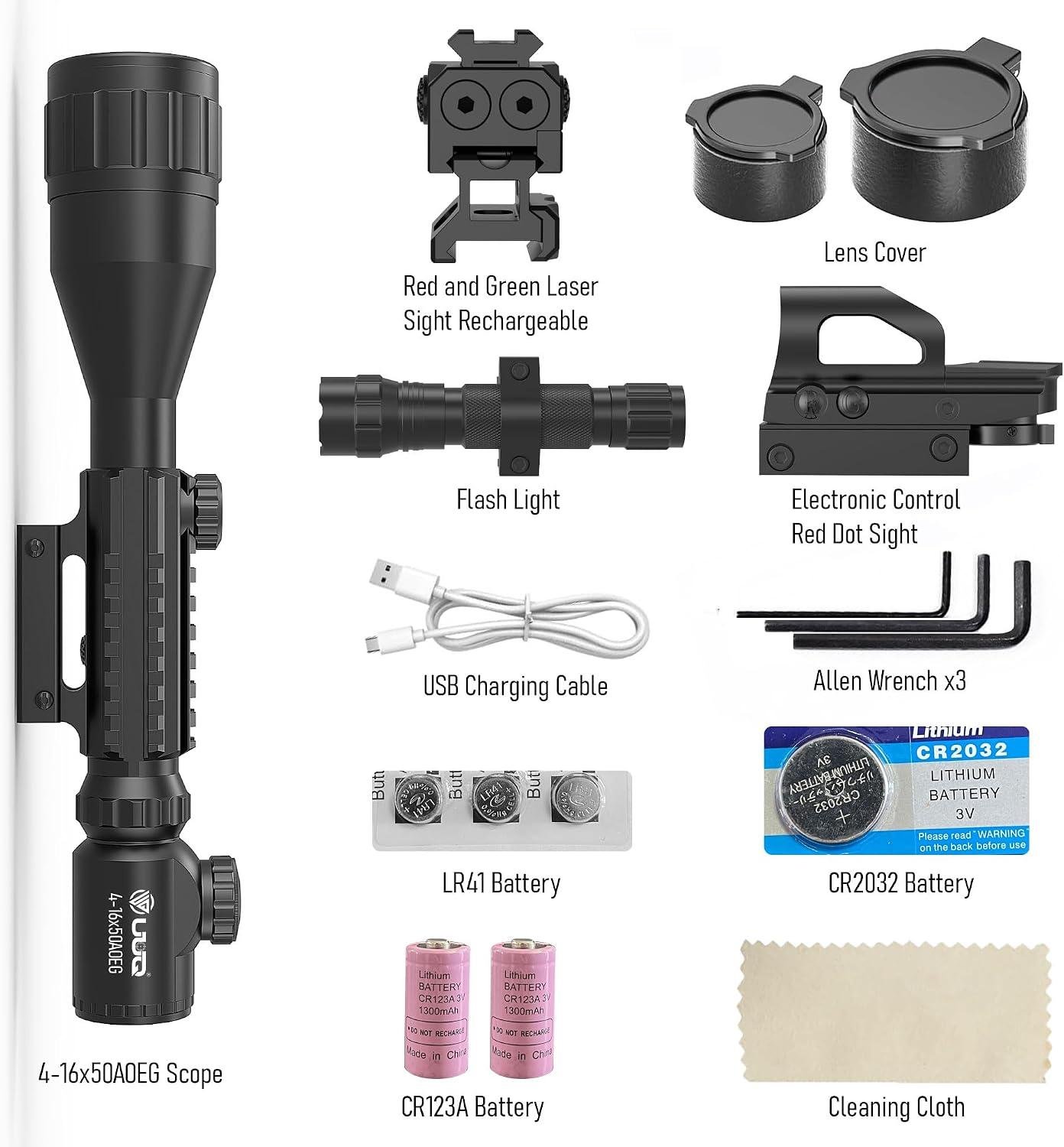
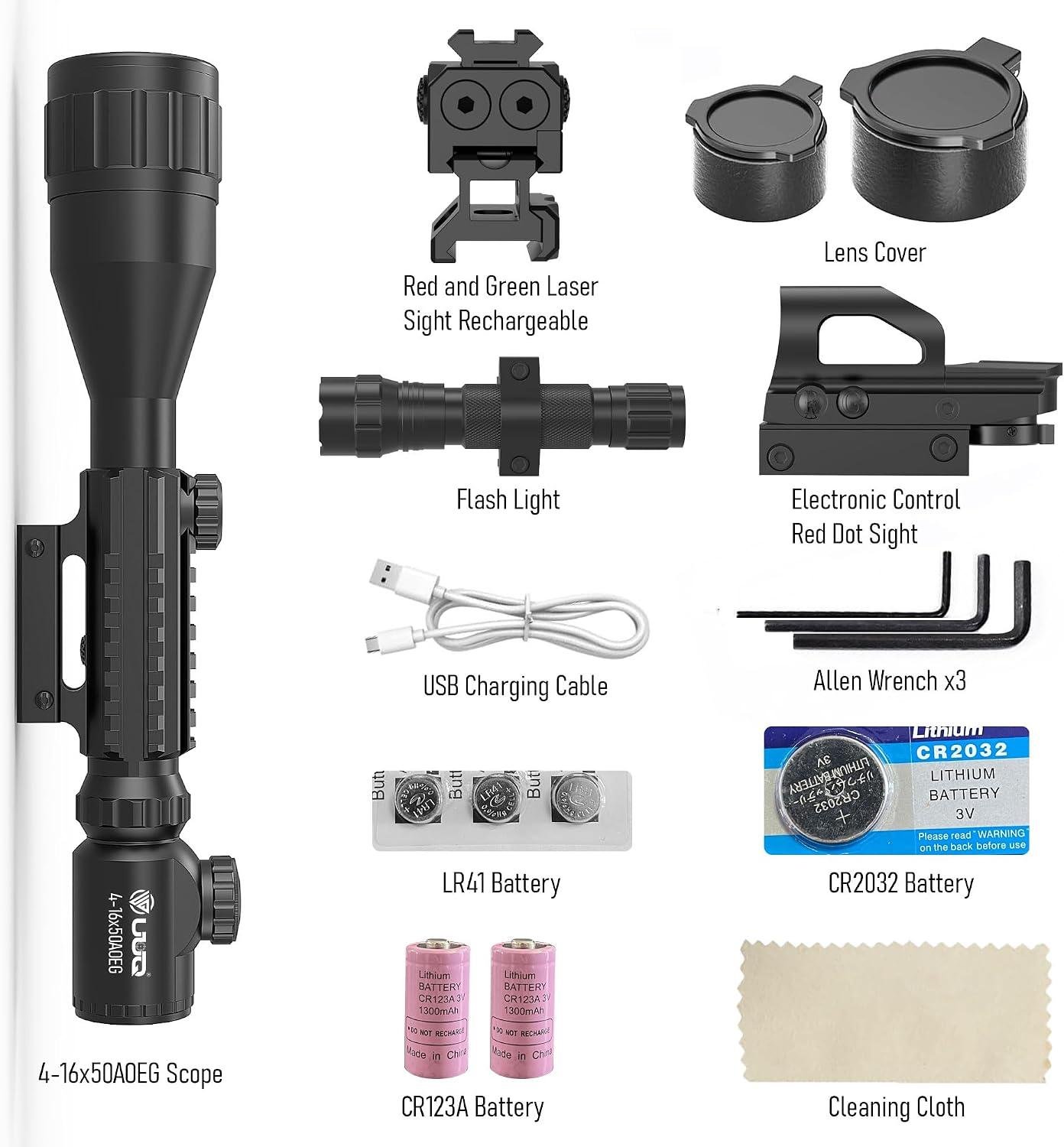
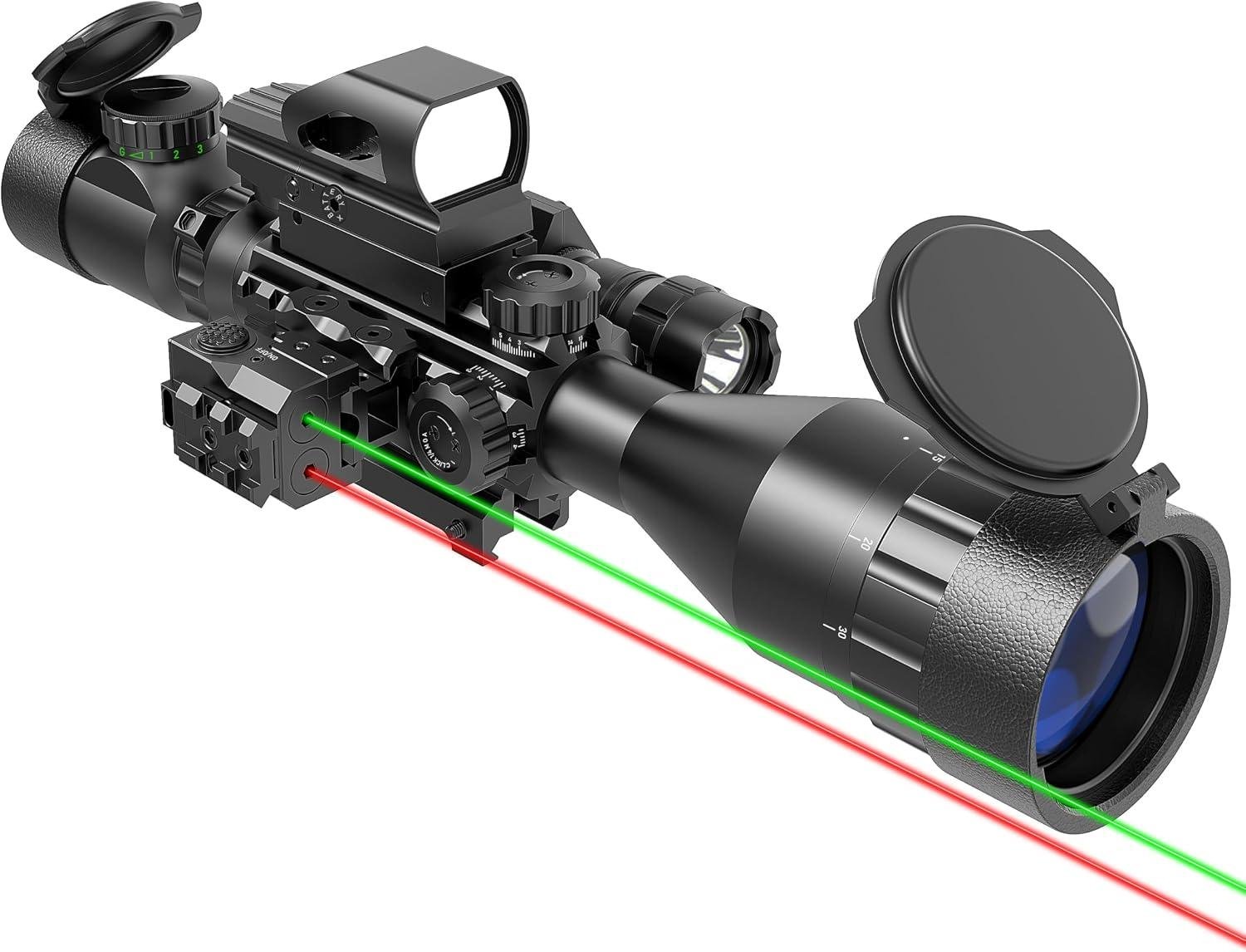
Some optics arrive as single-purpose tools; the UUQ 4-12&16X50 AO package shows up like a whole bench of gear in one box.Over a couple of weekends, we mounted its components-main scope, reflex red dot, dual-color laser, and 5-mode flashlight-individually on a 20mm Picatinny rail and set about seeing weather this do‑it‑all rig can actually do it all.
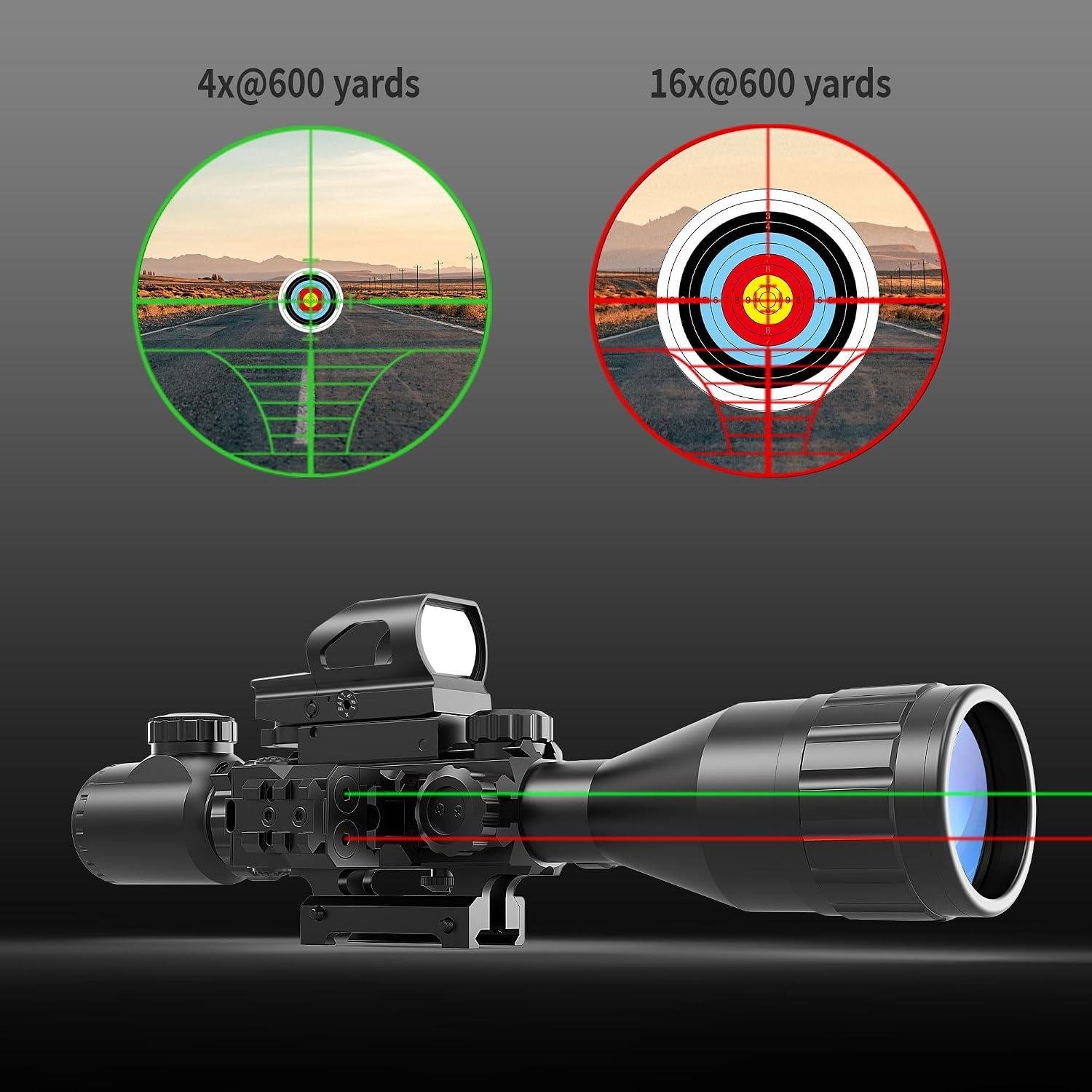
First impressions were promising. The main scope’s adjustable objective let us tune parallax from a rimfire-friendly 15 yards out to the horizon, and the 4-16x range gave us room to breathe between quick snapshots and deliberate holds. The range finder reticle’s red/green illumination offered five sensible brightness steps that stayed usable from midday glare to the last usable light. The reflex sight’s new electronic button controls felt intuitive under gloves, and the flashlight’s high/medium/low plus strobe and SOS made more sense in practice then on paper-especially during a dusky walk back from the berm.
Durability-wise,the high-strength aluminum chassis and fully sealed,nitrogen-filled housing shrugged off drizzle and a dusty bench,and it never fogged on us. The upgraded laser-Class 3R (IIIa),under 5 mW-lets you choose red,green,or both; we found the green stood out better against sunlit targets,with visibility stretching well beyond typical backyard distances.
This isn’t a minimalist setup. It’s a modular, feature-forward stack of optics. The question we set out to answer: does the versatility justify the complexity and weight, and how well do these parts play together in real use?
Our overview after range time with the UUQ scope reflex sight and laser combo
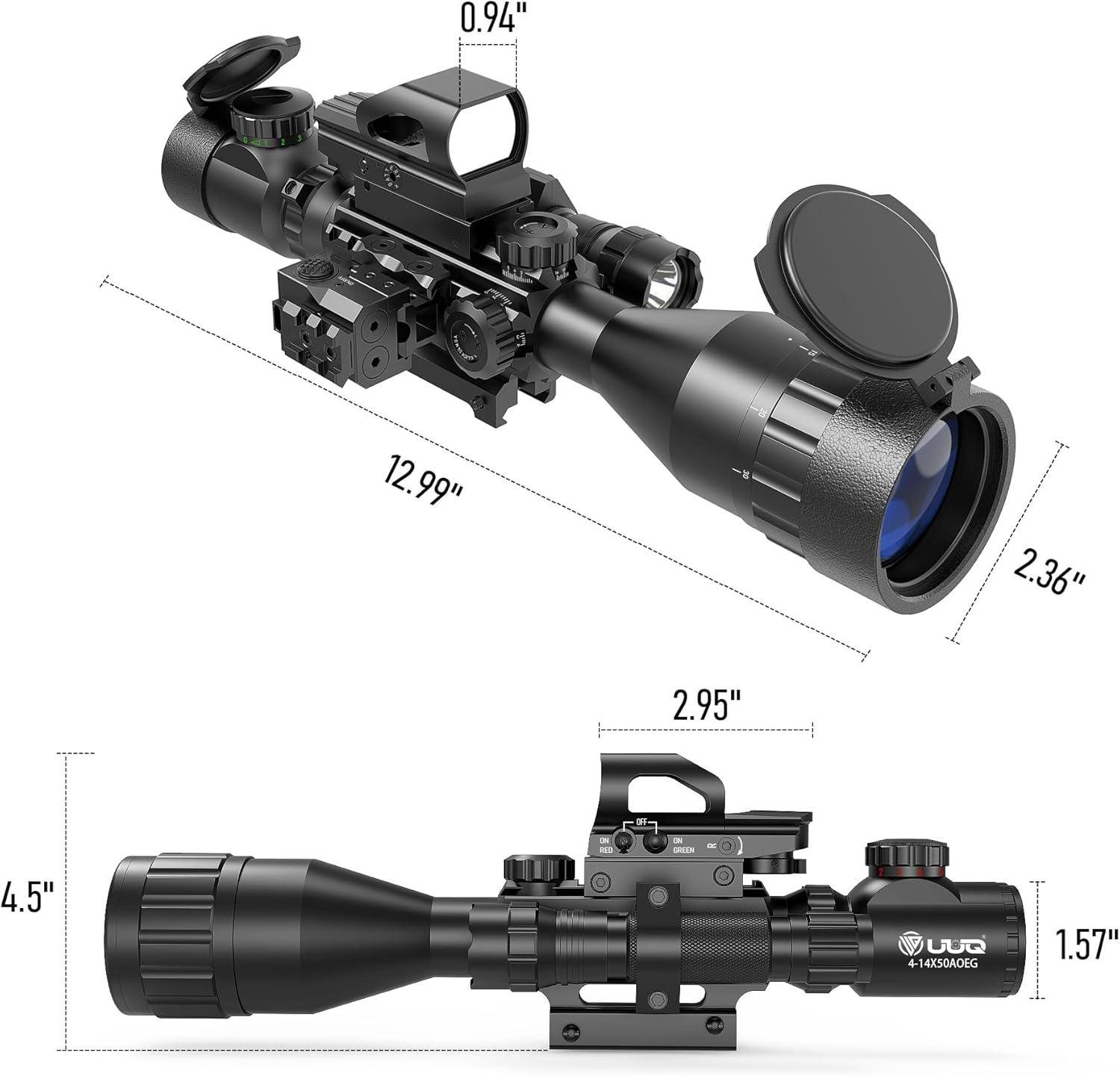
After a full afternoon dialing in glass,dot,and beams,we came away impressed by the versatility and rugged feel. The adjustable objective let us snap focus from 15 yards to distant steel,and the 4-16x range covered everything from quick zero checks at 50 to precise holds past 200. Five levels of red/green illumination on the range-finder reticle were genuinely useful; in harsh midday sun we favored green on higher settings, while dusk made red pop without bloom. The reflex sight’s electronic button controls felt intuitive, making close-in transitions seamless when we moved off magnification. Both the red and green lasers (Class 3R, <5 mW) tracked consistently, and visibility stretched well beyond 300 yards at last light.
Build-wise,the high-strength aluminum body inspired confidence. Everything mounts individually on 20mm picatinny/Weaver rails, and the fully sealed, nitrogen-filled design stayed fog-proof and waterproof as temps shifted. Recoil didn’t faze it-shock testing up to 1000G shows. The included 5-mode LED flashlight (high/medium/low/strobe/SOS) proved handy under the overhang and along shaded berms. Our only caveats: managing multiple components means more rail real estate and power sources, and the all-in-one setup adds heft-but the upside is modularity and redundancy.
- Clarity and control: AO parallax from 15 yds to infinity kept images crisp across magnifications.
- Low-light toolkit: 5-mode flashlight plus reticle illumination adapted smoothly from noon to dusk.
- Dual-beam flexibility: red/green lasers can run solo or together for rapid indexing.
- Ruggedized build: Sealed, nitrogen-filled, fog-proof, waterproof, shock-tested to 1000G.
- trade-offs: Occupies more rail space; multi-battery management adds minor upkeep.
| Range setup | On-range takeaway |
| 4x | 15-50 yds | Fast target ID with crisp AO focus |
| 10x | 100 yds | Clean reticle picture; green level 3 handled glare |
| 16x | 200-300 yds | Fine detail; parallax adjustments tightened groups |
| Reflex + green laser | Speedy transitions; alignment stayed consistent |
Check price and see today’s deals
Glass quality illumination flashlight and laser performance that stood out to us
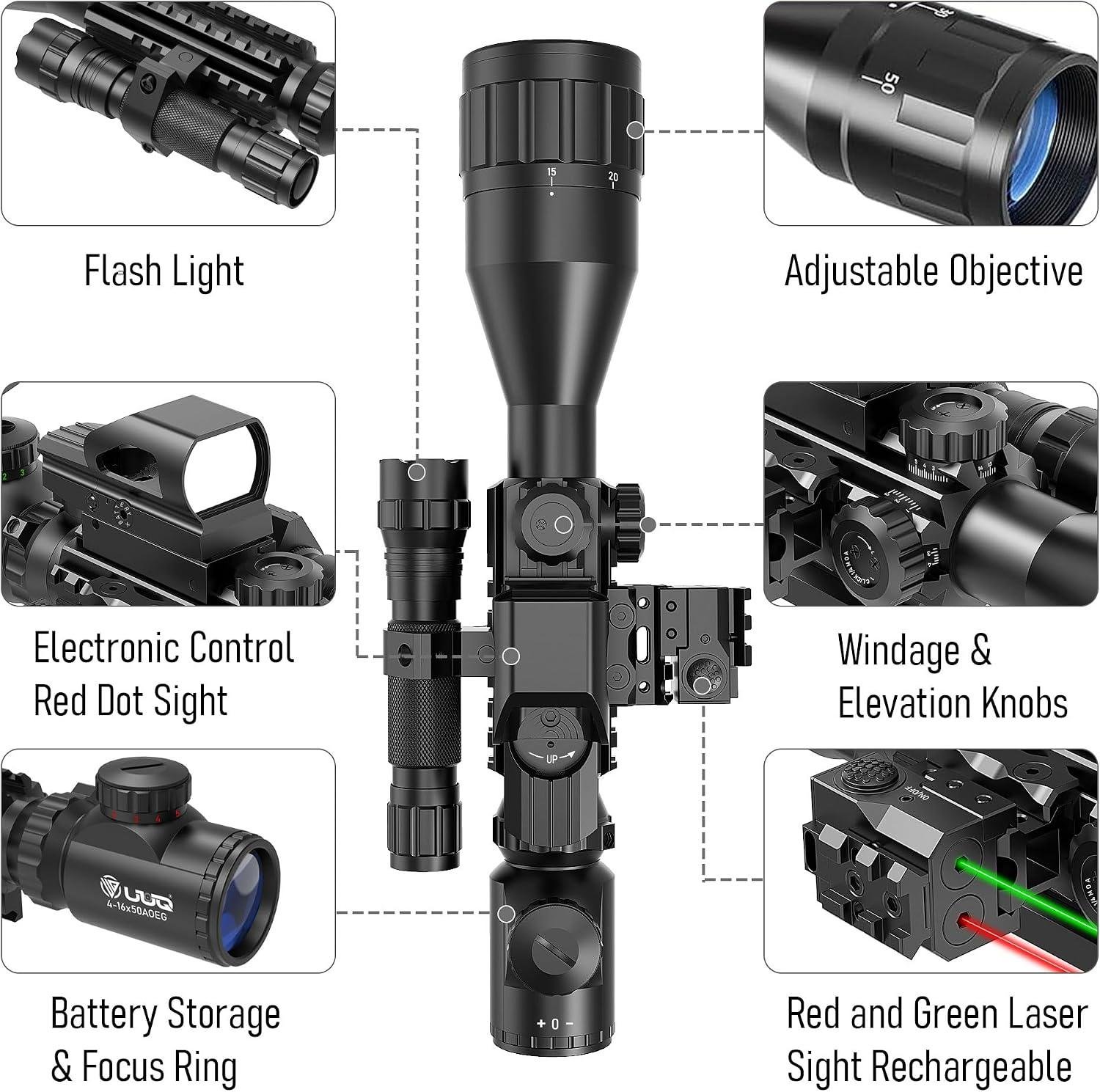
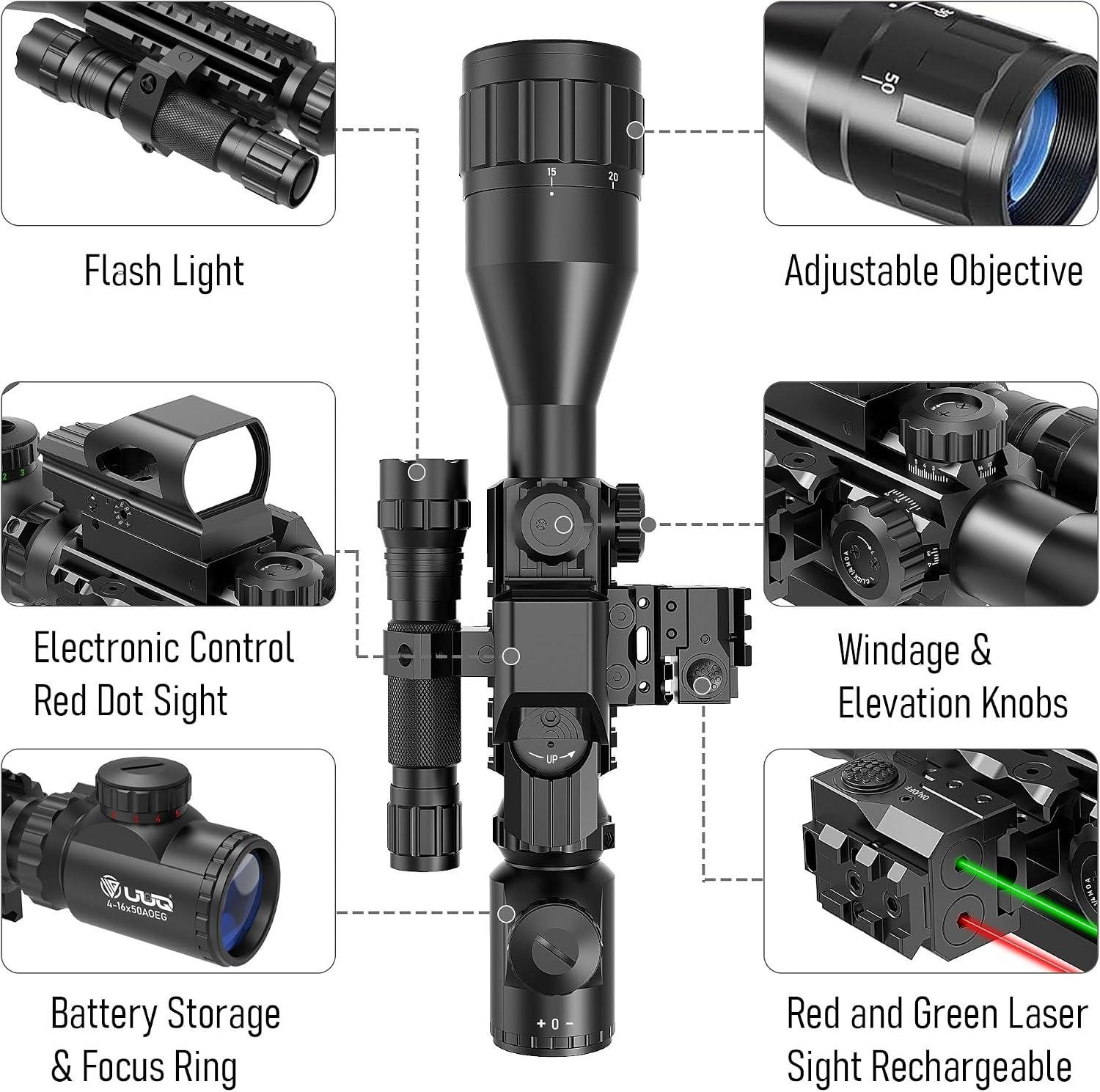
Glass and illumination impressed us right away: the adjustable objective dials out parallax cleanly from 15 yards to infinity, and the 4-16X range kept our sight picture sharp with minimal color fringing. The range-finder reticle’s five-level red/green brightness let us tune contrast for glare or low light without washing out the target. Build quality helps here too-fully sealed, nitrogen-filled, and both fog- and waterproof-so the image stayed consistent when temps and humidity shifted. We also liked the reflex sight’s new electronic button controls; they’re faster and more intuitive than rotary dials when swapping from bright noon to shaded timber.
- AO focus: Snap-clear edge detail from close-in rimfire ranges to distant steel.
- Illuminated reticle: Red or green with 5 steps to match ambient light.
- Tactile reflex controls: easy adjustments without breaking cheek weld.
Flashlight and laser performance stood out: the included LED offers five modes-high,medium,low,strobe,and SOS-covering navigation,map checks,and signaling without adding bulk. the upgraded laser module brings both red and green beams that can run solo or together; visibility extended beyond 300 yards in favorable conditions during our checks. With a Class 3R (IIIa) designation and <5 mW output, beam quality remained crisp, and the unit held up to rough handling thanks to the high-strength aluminum housing and 1000G shock testing. Modular mounting on any 20mm Picatinny/Weaver rail made setup straightforward across different platforms.
| Feature | What We Noticed |
|---|---|
| Red/Green Lasers | Bright, trackable dots; visibility past 300 yds in clear dusk |
| 5-mode Flashlight | High for field scan, Low for maps, SOS for emergencies |
| reflex Controls | button presses beat knobs for quick swaps in lighting |
| Weather Sealing | Fog-proof glass; no haze after temperature swings |
check current price and availability
Real world handling mounting zero stability and battery life insights
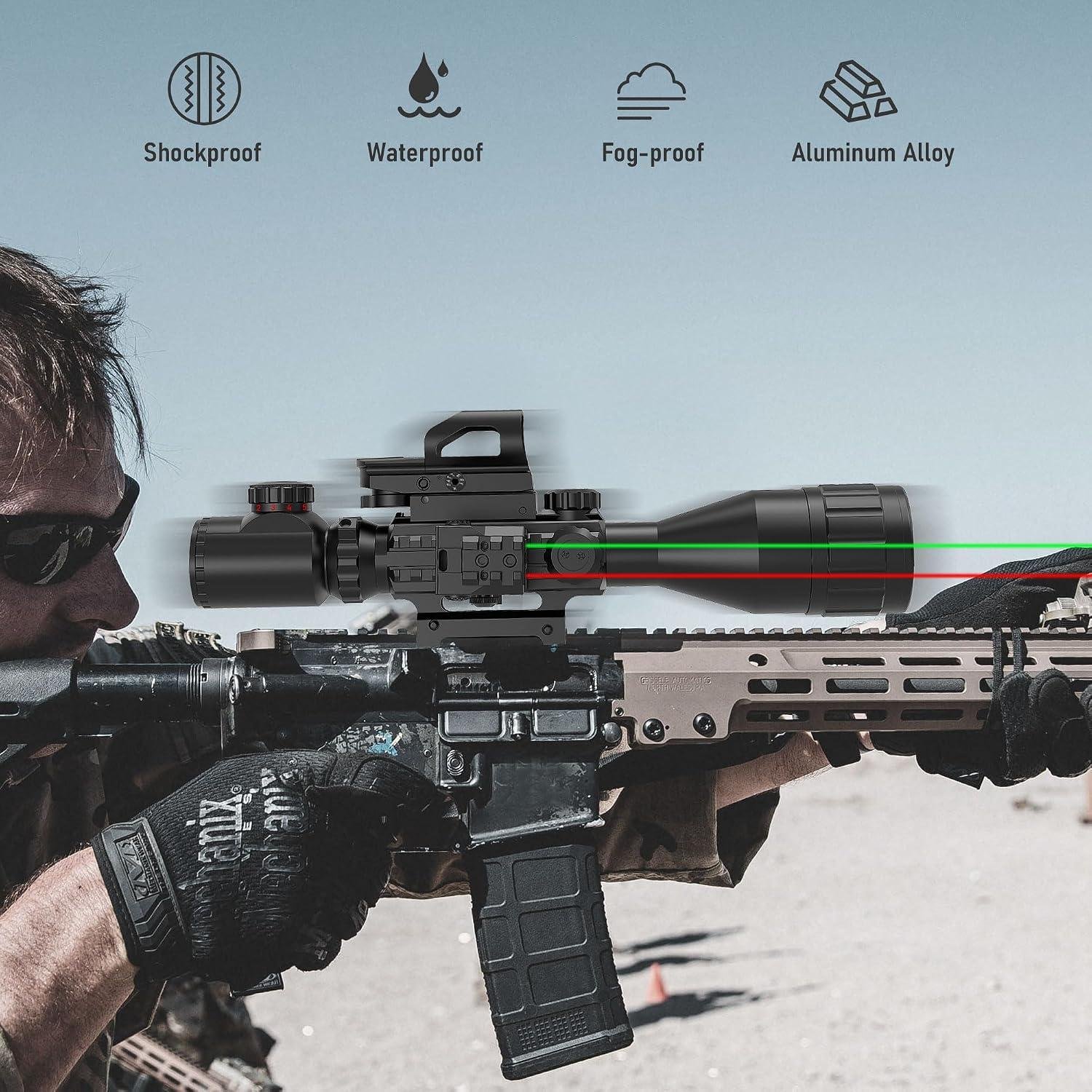
Mounting and handling felt intuitive in the field: each module clamps individually to a 20 mm Picatinny/weaver rail, letting us balance the main optic, reflex, laser, and light without crowding. The high‑strength aluminum body is fully sealed, nitrogen‑filled, fog‑proof, and waterproof; coupled with a 1000G shock test, that translated to quiet confidence-no shift after transport, drizzle, or a full day of recoil. We leveled the range‑finder reticle, used the adjustable objective to match distance (15 yards to infinity), and checked tracking from 4X through 16X. Zero stability impressed us: once properly torqued, point of impact held through magnification changes and repeated strings. Five‑level red/green illumination prevented reticle bloom in bright conditions, the reflex sight’s new electronic buttons were glove‑friendly, and the upgraded red/green lasers (individually or together) stayed aligned with visibility pushing past 300 yards in low light.
- AO dial minimized parallax on near targets and long steel alike.
- Reflex controls responded cleanly, even with cold-weather gloves.
- Sealed optics stayed fog‑free at dawn and during light rain.
- Dual lasers co‑witnessed reliably and returned to aim after recoil.
- Modular layout made it easy to fine‑tune eye relief and rail real estate.
| Module | Relative Drain | Field Note |
|---|---|---|
| LED Flashlight (High) | High | Use briefly; brightest for IDs |
| LED Flashlight (Low/Med) | Low-Med | Best balance for long sessions |
| Reticle Illumination (lv 1-2) | Low | keeps the glass uncluttered |
| Reticle Illumination (Lv 5) | Med | Only for bright noon sun |
| Reflex Sight (mid) | Low | Electronic buttons = quick tweaks |
| Single Laser (3R, <5 mW) | Low-Med | Efficient for daytime zero checks |
| Dual Lasers (Red+Green) | Med-High | Great visibility; plan spare cells |
Battery life insights track with use-case: Class 3R (IIIa) lasers sip power compared to the 5‑mode LED flashlight, which is the primary draw on High; strobe/SOS pulse patterns help stretch runtime. We got the most longevity by running one laser at a time and keeping the reticle on the lowest practical brightness.The system’s weather sealing kept contacts dry-no flicker after wet slings or cold mornings. For all‑day outings, we treat power like ammo: planned, staged, and checked at breaks.
- Start with fresh cells across modules; stash spares in a dry pouch.
- Use Low/Medium on the flashlight; reserve High/Strobe/SOS for short bursts.
- Set reticle brightness to the minimum that’s clearly visible.
- Run a single laser unless you truly need both together.
- After transport, re‑confirm mounts and verify zero with a quick 3‑shot group.
Check price, specs, and current deals
Our recommendations for setup use cases and value for the money
Setup and use cases: we favor a modular, keep-it-simple approach that highlights the kit’s strengths. Make the variable optic your primary for mid-to-long work, keep the reflex sight ready for snap shots, and use the dual‑color laser for rapid indexing when speed beats precision. With an adjustable objective from 15 yards to infinity, 4-16× zoom, and a 5‑level red/green illuminated range‑finder reticle, it adapts from short indoor lanes to open fields.Each component mounts individually on a standard 20 mm Picatinny/Weaver rail, and the high‑strength aluminum build is sealed, nitrogen‑filled, fog‑proof, waterproof, and shock‑tested to 1000G-handy when weather and transport get rough.
- Magnification tips: stay around 4-8× for fast transitions; push to 12-16× when you need fine detail at distance.
- Illumination: green tends to pop in bright sun; red is easy on the eyes in low light-both offer five brightness levels.
- Reflex sight: the electronic button controls make quick brightness tweaks easy with gloves or rain.
- Dual lasers (Class 3R, <5 mW): run red, green, or both; effective out past 300 yards. Always use responsibly and avoid eye exposure.
- 5‑mode flashlight: high/medium/low for ID and navigation,strobe for signaling,SOS for emergencies.
Value for the money: as an all‑in‑one optics bundle, this setup reduces the usual piecemeal costs and compatibility headaches while covering close, mid, and low‑light needs. The combination of an AO variable scope, reflex sight with electronic controls, dual‑color lasers, and a 5‑mode flashlight would typically require multiple purchases; here, they arrive rail‑ready with durable construction. We see the best return for first‑time optics buyers, range‑goers who bounce between short and long lanes, and budget‑minded tinkerers who want versatility without a drawer full of adapters.
| Component | What You Get | Typical Separate cost (est.) | Our Take |
|---|---|---|---|
| AO Variable Scope | 4-16×, 15 yds-∞, R/G illuminated reticle | $110-$140 | Strong core optic |
| Reflex Sight | Electronic button controls | $45-$70 | Fast target pickup |
| Dual Lasers | Red & green, Class 3R (<5 mW) | $50-$80 | Day/night flexibility |
| LED Flashlight | High/Med/Low/Strobe/SOS | $25-$40 | Useful utility add‑on |
| Mounting & Build | 20 mm rail ready, sealed, fog/waterproof | – | Reliability bonus |
Check today’s price and bundle value
Customer Reviews Analysis
Customer Reviews Analysis
At the time of publishing our hands-on with the UUQ 4-16×50 optics combo, we weren’t able to locate verified customer reviews for this exact bundle (scope + green laser + holographic reflex red dot + flashlight). That means there’s no aggregated buyer sentiment to quote yet. Below, we outline the themes we expect to surface once feedback rolls in, and how we plan to read between the lines when it does.
| Review Status | Snapshot |
|---|---|
| Volume of Reviews | No verified customer reviews yet |
| Average Rating | N/A |
| Most-Cited Pros | To be determined |
| Most-Cited Cons | To be determined |
What We’ll Be Watching For
- Optical clarity and edge-to-edge sharpness at higher magnification (12x-16x),especially in mixed light.
- Ability to hold zero after routine range sessions and transport.
- Laser alignment stability over time and after adjustments.
- red/green illuminated reticle visibility in bright daylight versus dusk.
- Mount tolerances, ring quality, and hardware durability (stripped screws, shifting, etc.).
- Battery life across the laser, reflex sight, and the 5-mode flashlight.
- Reflex sight window clarity, parallax behavior, and co-mounting ergonomics.
- Usability of the AO (adjustable objective) for quick parallax correction in the field.
How We’ll Interpret Early Feedback
| Theme | What It Might Mean | Our Take |
|---|---|---|
| “Loses zero” reports | Mount slippage, ring torque, or internal turret tracking variance | We’ll look for patterns across multiple users rather than one-off cases. |
| Mixed clarity notes | Expectations at 16x vs. price class; eye relief/diopter setup | We’ll weigh comments that include setup details more heavily. |
| Laser drift complaints | Adjustment screw wear, vibration, or mounting surface issues | Consistent mentions over time signal a hardware trend worth flagging. |
| Illumination brightness | Daylight washout vs. low-light strength; battery status variability | We’ll separate daylight use-cases from dusk/night impressions. |
| bundle value praise | All-in-one convenience beating piecemeal costs | we’ll compare this to comments on long-term durability to gauge true value. |
Signals That Carry Extra Weight
- Multiple reviewers citing the same mechanical issue across different dates (suggests batch-level consistency).
- Feedback that includes mounting context, distances, and conditions (helps separate setup from hardware faults).
- Updates after 3-6 months of use (durability trends beat out-of-box impressions).
Use-Case Fit: What Reviewers May Emphasize
- Casual range and varmint use: convenience of the all-in-one bundle and fast target acquisition with the reflex sight.
- Low-light scenarios: flashlight beam usefulness and reticle illumination control granularity.
- Training and plinking: repeatability of zero after frequent mounting/dismounting.
If you’ve spent time with the UUQ 4-12&16X50 AO Rifle Scope with red/green illumination, integrated range-finder reticle, green laser, holographic reflex sight, and 5-mode flashlight, we’d love to hear about your experience-what impressed you, what didn’t, and how the combo has held up over time.Your insights will help shape a clearer picture once customer reviews begin to accumulate.
Pros & Cons
Pros & Cons
After spending time dialing in and living with the UUQ 4-16×50 optics combo, here’s where it shines-and where it asks for a few trade-offs.
| Pros | cons |
|---|---|
| versatile 4-16x AO with parallax from 15 yds to infinity for close-to-long-range flexibility. | eye box tightens at higher magnification; more finicky head position at 14-16x. |
| All-in-one kit: scope + holographic reflex + dual-color (red/green) laser + 5-mode flashlight. | Bulkier and heavier than a minimalist setup; shifts balance forward. |
| 5-level red/green illuminated range-finder reticle aids visibility in changing light. | Can bloom or wash out targets if brightness is set too high at night. |
| Reflex sight uses an electronic button system that’s simple to operate. | Dependent on batteries; button feel and layout take getting used to with gloves. |
| Durable build: high-strength alloy, nitrogen-filled, fog-proof, waterproof, shock-tested to 1000G. | Multiple mounting points mean more fasteners to check; periodic re-tightening recommended. |
| Each component mounts individually on 20mm Picatinny/Weaver rails for flexible placement. | Needs ample rail space; stacking can effect cheek weld and sight height. |
| Upgraded red/green lasers can be used solo or together and are rated beyond 300 yds. | Daylight visibility varies; always verify local laws and range rules for laser use. |
| 5-mode LED flashlight (high/med/low/strobe/SOS) adds real utility after dark. | Another device to power and manage; bezel and spill add to the front-end footprint. |
| Good bundle value compared with piecing out separate components. | If you only need a scope, the extras add cost and clutter. |
| Best For | Not Ideal For |
|---|---|
| Builders who want a feature-rich, do‑most combo | Ultra-lightweight, ounce-counting setups |
| Range days that roll from daylight into dusk | Minimalists who prefer a single optic |
| Platforms with generous Picatinny/Weaver rail space | short rails or tight cheek-weld requirements |
Safety & Compliance Note: The included lasers are Class 3R (IIIa), <5 mW. Always follow local laws and range rules, avoid reflective surfaces, and never direct any beam toward people, animals, or aircraft. Handle all firearms responsibly and verify secure mounting and safe operation before use.
Q&A
Q: What exactly is included in the UUQ 4-16×50 Optics Combo?
A: ours came as a modular setup: a 4-16×50 AO main scope with illuminated range-finder reticle, a button-controlled holographic reflex red dot, a dual-color (red/green) laser module, and a 5-mode LED flashlight.each piece mounts independently on a 20 mm Picatinny/Weaver rail.
Q: Who is this combo best suited for?
A: It’s for shooters who want an all-in-one solution that covers close, mid, and low-light scenarios without buying separate optics. If you like modular setups and don’t mind a bit more rail real estate, it’s a versatile package.
Q: How did the main scope perform in our hands-on time?
A: The 4-16x magnification gave us flexible reach for typical range work. The adjustable objective (AO) let us dial parallax from 15 yards to infinity, which was handy for both rimfire distances and longer stretches.
Q: Is the reticle illuminated, and is it useful in daylight?
A: Yes-red and green illumination with 5 brightness levels. We found the lower settings fine for dawn/dusk and shaded targets; in bright midday sun, the reticle’s etching did most of the work with illumination as a subtle boost.Q: What’s different about the reflex sight’s controls?
A: rather of old-school knobs, it uses electronic buttons. In practice, that meant quicker, more repeatable brightness changes with less fiddling-nice when you’re swapping between lighting conditions.
Q: Can we run the lasers in both colors?
A: Yes.The upgraded laser sight offers red and green beams that can run individually or together. The spec claims visibility past 300 yards; we’d add that ambient light and target surface make a big difference in what you can actually see.
Q: Any laser safety or legal notes we should know?
A: It’s a Class 3R (IIIa) laser with <5 mW output. Never direct it toward eyes, people, vehicles, or aircraft; avoid reflective surfaces; and follow all local laws and range rules. Use a safe backstop and maintain awareness of the beam path.
Q: How useful is the included flashlight?
A: The five modes-High, Medium, Low, Strobe, SOS-covered our needs from quick ID to signaling. It’s not a dedicated long-throw searchlight, but it’s a practical add-on for low-light navigation and target identification.
Q: Does everything need to be mounted at once?
A: not at all. Because each component is standalone, we mixed and matched depending on the day-scope only for a lighter setup, scope + reflex for fast transitions, or adding the flashlight/laser for low-light or training scenarios.Q: How did durability shake out?
A: The build is aluminum alloy, fully sealed and nitrogen-filled. It’s rated fog-proof, waterproof, and shock-tested to 1000G. Ours shrugged off typical range bumps and a soggy afternoon without drama.
Q: Will it fit my rifle?
A: If you’ve got a 20 mm Picatinny or Weaver rail, you’re in business. Just plan your rail space; with multiple modules, thoughtful positioning keeps controls accessible and avoids crowding.
Q: How is the combo for close vs. mid-range use?
A: Close range: the reflex sight excels-fast target acquisition with both eyes open. Mid-range: the 4-16x scope covers most hunting and target distances, with AO parallax letting us fine-tune focus as ranges change.Q: What about battery types and runtime?
A: Each module typically uses its own battery type. Because specifics can vary, we recommend checking the included manual and packing spares before a long day out.
Q: Does the range-finder reticle help with holdovers?
A: it’s designed with range-finder style markings and illumination options.We treated it as a reference grid; for precise holds, you’ll want to confirm your ballistics and dope with your rifle/ammo in live-fire testing.Q: can we co-witness the reflex with the main scope?
A: The reflex is intended as a separate sighting channel (usually mounted on top or at 45 degrees), not for co-witnessing through the magnified optic. We switched between them based on target distance.
Q: Any drawbacks we noticed?
A: The trade-off for versatility is complexity: more mass on the rail, more controls to learn, and multiple batteries to manage. Keep a small tool kit and spare batteries in your bag, and give yourself time to set up and practice with the layout.
Q: How visible is the laser in daylight?
A: Usable visibility drops as ambient brightness climbs. We found lasers most practical in shaded conditions, overcast days, or at dusk/dawn. For bright noon sun,they’re more about close-range indexing than long-distance pointing.
Q: Is it airgun-friendly?
A: The 1000G shock test is reassuring, but airgun recoil is unique. If you’re mounting on a springer or gas-piston rifle, we’d still consult the manufacturer’s guidance and recheck fasteners after your first sessions.Q: What maintenance do we recommend?
A: Keep lenses clean with a proper cloth/brush, snug up mounting screws periodically, store with caps on, and remove batteries for long-term storage. After wet outings, dry everything before stowing.
Q: Bottom line-what’s our verdict on the combo approach?
A: As a single-box toolkit,it’s compelling: a capable AO scope for distance,a quick reflex for up-close,lasers for indexing/ID,and a practical flashlight. If you appreciate modularity and don’t mind the extra kit on your rail, it delivers a lot of function for the footprint.
seize the Prospect
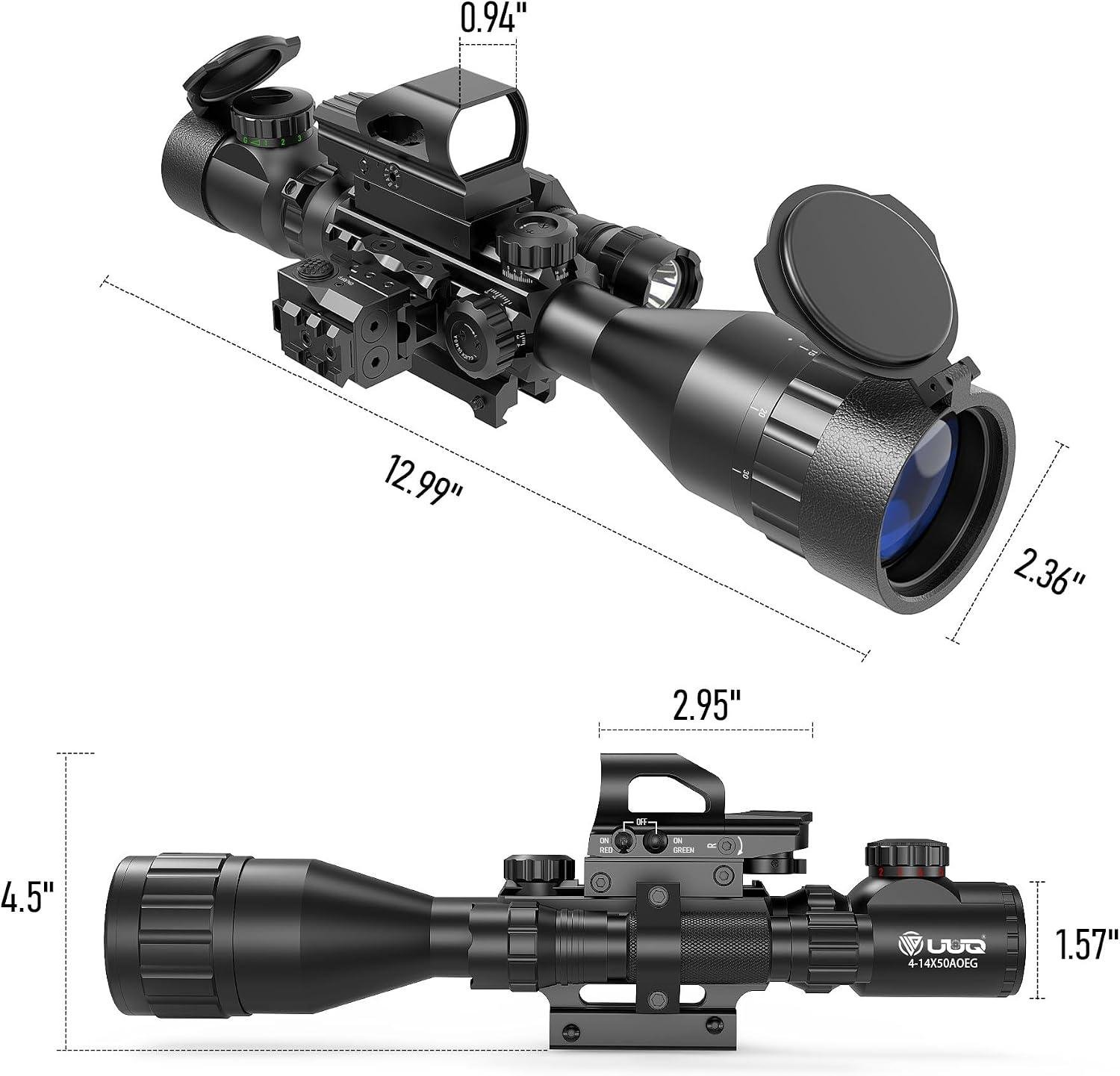
After putting the UUQ 4-16×50 combo through its paces, we came away seeing it as a true “kit-in-a-box”: a capable AO scope with a usable illuminated range-finder reticle, a reflex sight that’s quicker to run with its button controls, dual-color lasers that reach out farther than we expected, and a five-mode flashlight for low-light utility. The individually mounted components and rugged, sealed construction add confidence once everything is dialed in.
It won’t be for minimalists or those chasing ultralight builds,and there’s a learning curve in managing zeroes,batteries,and controls. But if we’re evaluating value and versatility in a single, modular package, this setup earns a serious look for range time, training, and general-purpose rifle roles.
As always, practice safe handling, follow local laws-especially regarding laser use-and take the time to mount and zero each element correctly. If that sounds like your speed, you can check current pricing and full specs here:
See the UUQ 4-16×50 Optics Combo on Amazon